Tragedy fails to leave a lasting impression
Advertisement
Read this article for free:
or
Already have an account? Log in here »
To continue reading, please subscribe:

Digital Subscription
One year of digital access for only $205*
- Enjoy unlimited reading on winnipegfreepress.com
- Read the E-Edition, our digital replica newspaper
- Access News Break, our award-winning app
- Play interactive puzzles
*First annual payment billed as $205.00 + GST for one year. This annual subscription will automatically renew at $233.00 + GST every 52 weeks (10% off the regular annual price of $259.35). Offer available to new and qualified returning subscribers only. Cancel any time.
To continue reading, please subscribe:
Add Free Press access to your Brandon Sun subscription for only an additional
$1 for the first 4 weeks*
- Enjoy unlimited reading on winnipegfreepress.com
- Read the E-Edition, our digital replica newspaper
- Access News Break, our award-winning app
- Play interactive puzzles
*Your next Brandon Sun subscription payment will increase by $1.00 and you will be charged $17.95 plus GST for four weeks. After four weeks, your payment will increase to $24.95 plus GST every four weeks.
Read unlimited articles for free today:
or
Already have an account? Log in here »
Hey there, time traveller!
This article was published 19/09/2015 (4002 days ago), so information in it may no longer be current.
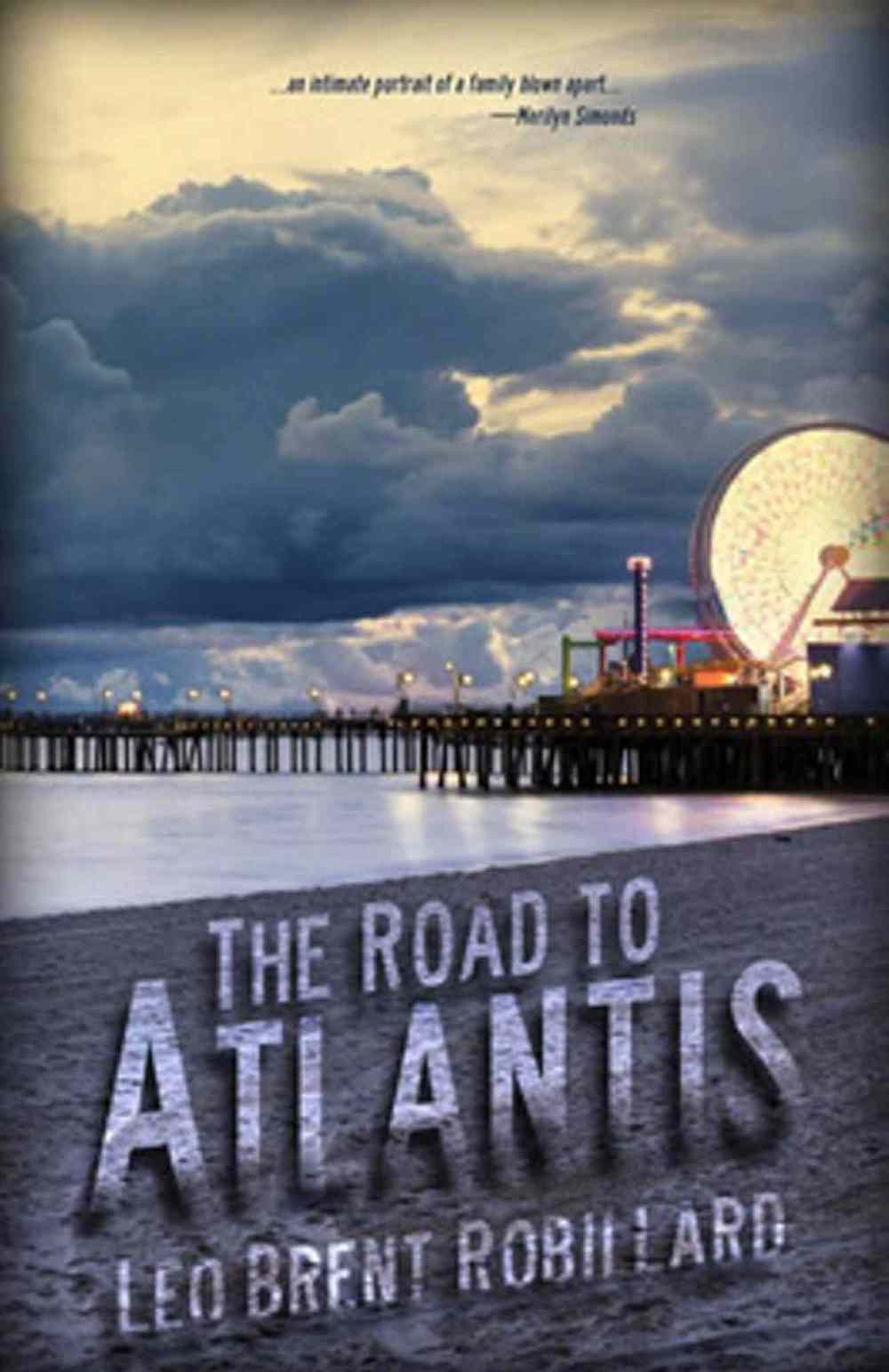
The Road to Atlantis, Leo Brent Robillard’s fourth novel, begins innocently enough with a day at the beach for the Henrys — David, Anne, their eldest daughter Nat and their son Matty — but ends in unspeakable tragedy. How does a family torn apart by grief put itself back together? For some, it may not be possible, and it looks as though the Henrys, their marriage already on tenuous ground, may not make it.
Robillard is a Canadian fiction writer who now lives in eastern Ontario with his family. He has published three previous novels: Leaving Wyoming (2004), which was listed in the Globe and Mail’s Top Five for Best Fiction; Houdini’s Shadow (2006); and Drift (2011), which was short-listed for the ReLit Award.
But despite Robillard’s impressive writing chops, stories about dysfunctional families are ubiquitous, and The Road to Atlantis fails to make much of an impression.
After returning to their home in the suburbs of Ottawa, things are understandably tense in the Henry household, and David and Anne’s marriage is further fractured by David’s drinking and Anne’s relationship with her boss. When she announces she is leaving David, it comes as no great surprise.
Robillard then jumps 10 years ahead. David has lost his job and is working in a convenience store, where he comes across a copy of Modern Railroader magazine. He quickly becomes a convert, creating a model world of his own, one that runs like clockwork, without a hitch; he is both creator and controller, roles he most desperately wants to inhabit, even if it’s make-believe.
The novel is littered with imagery and references to water — from the day at the beach to Anne’s job at the Department of Fisheries and Oceans to David’s rental house on Water Street to his recurring, sometimes-ominous dreams about being engulfed in water. Obvious, to be sure, but they are a reminder of the legend of the Atlantis of the book’s title, which often presents the lost, submerged city as a wise and utopian society. Instead, David and his family are prisoners of a world that is far from perfect and, in fact, unspeakably cruel.
As David and Anne struggle to stay afloat, Matty is fighting demons of his own, indulging in liquor and drugs as well as wild parties. At one such party he meets the mysterious and alluring Kim, and at first, their relationship seems like a lifeboat sent to save him. But this lifeboat definitely has a leak.
David becomes mostly an observer as the story progresses, barely batting an eye when his son and girlfriend, now pregnant, move in with him after Anne declares she can no longer control their unruly son. David appears similarly unfazed at the reappearance of his father, Larry, whom he hasn’t seen since he abandoned the family during David’s childhood. Larry soon moves in as well, and together they begin to form an alternative kind of family. Perhaps a healing of sorts is possible, though there are also signs of more destruction ahead.

Though Robillard offers occasional glimpses into the minds of David and other family members, there are gaping holes in the treatment of his characters. The circumstances are most definitely tragic, and the Henrys are clearly all suffering, still hearkening back to memories of Nat 10 years later.
But despite Robillard’s best intentions, The Road to Atlantis seems told from too great a distance, allowing the reader no more than a fleeting connection with the characters.
A pivotal scene near the end of the book — clearly meant to be climactic — will likely be undermined by the readers’ indifference.
Lindsay McKnight works in the arts in Winnipeg.