Regrets? Ian Brown’s had a few
Advertisement
Read this article for free:
or
Already have an account? Log in here »
To continue reading, please subscribe:

Digital Subscription
One year of digital access for only $205*
- Enjoy unlimited reading on winnipegfreepress.com
- Read the E-Edition, our digital replica newspaper
- Access News Break, our award-winning app
- Play interactive puzzles
*First annual payment billed as $205.00 + GST for one year. This annual subscription will automatically renew at $233.00 + GST every 52 weeks (10% off the regular annual price of $259.35). Offer available to new and qualified returning subscribers only. Cancel any time.
To continue reading, please subscribe:
Add Free Press access to your Brandon Sun subscription for only an additional
$1 for the first 4 weeks*
- Enjoy unlimited reading on winnipegfreepress.com
- Read the E-Edition, our digital replica newspaper
- Access News Break, our award-winning app
- Play interactive puzzles
*Your next Brandon Sun subscription payment will increase by $1.00 and you will be charged $17.95 plus GST for four weeks. After four weeks, your payment will increase to $24.95 plus GST every four weeks.
Read unlimited articles for free today:
or
Already have an account? Log in here »
Hey there, time traveller!
This article was published 24/10/2015 (3954 days ago), so information in it may no longer be current.
In February 2014, Torontonian Ian Brown entered his seventh decade. Like most youth-worshipping baby boomers, he was in denial about hitting that milestone.
On his 60th birthday, Brown vented his dissatisfaction on his Facebook page when he posted a heartfelt diatribe: “How did I get to be this old?”
The Globe and Mail feature writer and award-winning author decided to track his wayward thoughts in diary form for a full year.
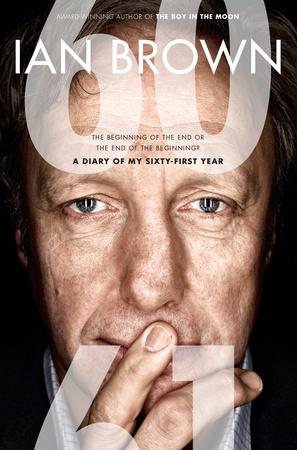
Sixty is a collection of Brown’s mixture of eloquent and self-pitying entries on aging, his health, his marriage to fellow writer Johanna Schneller, their children Hayley and Walker, his career prospects, his late parents and his brother Tim.
Like everything Brown writes, there’s a smooth quality to the prose. The reader is carried along effortlessly on Brown’s thought waves, his regrets (he has wasted his life) and his follies (overspending yet dedicating himself entirely to underpaid journalism).
If only he’d had the guts to write a novel. Brown is at his best when he pulls back the thin veneer of fake politeness. When middle-aged colleague Elizabeth Renzetti publishes her first novel, Brown is green with envy and doesn’t conceal it.
Brown compares bald spots with younger Globe staffers, complains about cuts to his lengthy feature on the depressing Norwegian life-writer Karl Ove Knausgaard, and frets constantly about whether or not the opposite sex still finds him attractive.
His major regret seems to be a common one in the newspaper trade: Brown never gets to write what he actually wants to write. Instead, he expends weeks of precious energy researching, interviewing and writing about, in one instance, abusive men — a difficult topic that drains and confounds the seasoned feature writer.
The diarist is caught in the middle-class vortex of a Toronto mortgage, a daughter at McGill, a handicapped son who needs additional care and a freelance-writer spouse. He’s also self-consciously mired in the clichéd, competitive urban expectations of status, success and greed.
Brown laments that he hasn’t written a hit HBO series. But he thinks it’s too late now, ’cause he’s 60. That’s the other significant theme in this diary: it’s too late.
The writer states that he’s past his prime since he’s bartered his talent for a national byline, a steady paycheque and a pension at the end. Oh, except that 15-year break he took from the Globe to freelance means his pension is now diminished.
Newspapers and publishers have been through a harrowing decade of decline. Brown is on the front lines — he braves the daily assault from the pithy yet shallow world of youthful social media, which has clearly taken a toll on the talented scribe.
If you’re seeking reassurance, escapism or like to read for pleasure, perhaps this is not your book. It’s a cautionary tale for any deluded emerging writer who romanticizes the writing life and its false promise of impressive royalty cheques, ego stroking and book-launch groupies.
Brown is typical of Canadian scribes — he’s an award winner with a massive line of credit and, unless he pens a Yann Martel-esque epic, can’t afford to quit his day job.

“So what do I do? Take the last great risks? Write the shit out of what is left? Live the shit out of what is left?” Brown decries as he considers his options, post-60.
Seen through a more positive lens, one could view Brown’s life as enviable and privileged: a platform at a national newspaper, a house in one of Canada’s most expensive cities, a compatible marriage, two children he loves dearly, an award-winning book about his son (2009’s The Boy in the Moon: A Father’s Search for His Disabled Son), and the leisure time to pen a diary every morning at the behest of a major publisher.
Yes, this is Sixty. Readers are granted a rare private tour of a very bright, introspective and sensitive man’s brain. It’s raw, it’s real and it’s scary as hell.
Patricia Dawn Robertson frequently gets to write what she wants from her small-town perch in Wakaw, Sask.