Vatican harboured would-be Hitler assassins
Advertisement
Read this article for free:
or
Already have an account? Log in here »
To continue reading, please subscribe:

Digital Subscription
One year of digital access for only $205*
- Enjoy unlimited reading on winnipegfreepress.com
- Read the E-Edition, our digital replica newspaper
- Access News Break, our award-winning app
- Play interactive puzzles
*First annual payment billed as $205.00 + GST for one year. This annual subscription will automatically renew at $233.00 + GST every 52 weeks (10% off the regular annual price of $259.35). Offer available to new and qualified returning subscribers only. Cancel any time.
To continue reading, please subscribe:
Add Free Press access to your Brandon Sun subscription for only an additional
$1 for the first 4 weeks*
- Enjoy unlimited reading on winnipegfreepress.com
- Read the E-Edition, our digital replica newspaper
- Access News Break, our award-winning app
- Play interactive puzzles
*Your next Brandon Sun subscription payment will increase by $1.00 and you will be charged $17.95 plus GST for four weeks. After four weeks, your payment will increase to $24.95 plus GST every four weeks.
Read unlimited articles for free today:
or
Already have an account? Log in here »
Hey there, time traveller!
This article was published 07/11/2015 (3939 days ago), so information in it may no longer be current.
Mark Riebling’s Church of Spies is an attempt to rehabilitate the reputation of the Roman Catholic Church and Pope Pius XII for his actions, or lack thereof, in the face of Nazi atrocities before and during the Second World War.
History has not been kind to Pius, who has been called Hitler’s Pope and accused of complicity in the Holocaust due to his lack of public words or actions denouncing Hitler. Early in Church of Spies, Riebling rationalizes Pius’s silence regarding the Nazi’s actions toward European Jewry, saying the Pope did not want to anger the fuehrer and worsen the situation for the Jews and Catholics.
(Although, it must be noted, much of the resistance within the Catholic Church was in response to Hitler’s hatred of the church, which he vowed to destroy because he saw it as a threat to his plans for a “thousand-year reich.”)
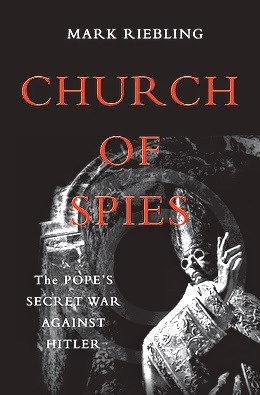
Riebling presents a narrative contradicting conventional wisdom, and paints Pius as actively opposing Hitler and helping plot to assassinate him.
Based on Riebling’s evidence, however, it would appear Pius was less involved in assassination plots and more of a facilitator, allowing would-be assassins, German civilians, men of the cloth and high-ranking military men to use Vatican resources for their plots, but doing little else other than signing off on the plans and asking Allied powers to ensure a favourable outcome for “decent Germany” (non-Nazis who opposed the fuehrer) after Hitler was dead.
One shocking aspect of Church of Spies is the amount of hand-wringing that went on with regards to the moral implications of attempting to kill Hitler.
While the plotters (most of them Catholic) agreed Hitler had to go, many of them worried plotting to kill someone they agreed was truly evil would land them on the wrong side of God’s moral ledger.
It was a concern that led some to refuse to take part in the plots, and others to take part only after lengthy consultation of the Bible.
While Pius seems little more than a periphery player in Church of Spies, the most compelling figure is Josef Muller, a.k.a. Ochsensepp or Joey Ox. A lawyer and devout Catholic, he was a dedicated and central figure in the assassination plots, took untold risks, stood up to the Nazis on many occasions and endured beatings, torture and imprisonment at their hands.
While Church of Spies adequately tells the story of the Catholic Church’s involvement in the plots to kill Hitler, through no fault of Riebling’s, it lacks any real suspense — the outcome of the plots and the Second World War are known before the first word is read. Riebling can be criticized, though, for failing to address the church’s complicity in helping Nazis escape Europe after the war.
If the goal of Church of Spies is to rehabilitate Pius and the Vatican’s reputation for the Catholic Church’s actions (or inactions) during the Second World War, it is successful in that the Vatican is seen to have been actively involved, at least to some degree, in helping plot to kill Hitler — although ultimately none of those plots came to fruition.
Whether the Vatican was acting for the benefit of all of mankind, in its own self-interest or a combination of the two is up to the reader to decide.
Gilbert Gregory is a Free Press copy editor.
History
Updated on Saturday, November 7, 2015 9:13 AM CST: Formatting.