Confounding concept, with a bit of whimsy
Advertisement
Read this article for free:
or
Already have an account? Log in here »
To continue reading, please subscribe:

Digital Subscription
One year of digital access for only $205*
- Enjoy unlimited reading on winnipegfreepress.com
- Read the E-Edition, our digital replica newspaper
- Access News Break, our award-winning app
- Play interactive puzzles
*First annual payment billed as $205.00 + GST for one year. This annual subscription will automatically renew at $233.00 + GST every 52 weeks (10% off the regular annual price of $259.35). Offer available to new and qualified returning subscribers only. Cancel any time.
To continue reading, please subscribe:
Add Free Press access to your Brandon Sun subscription for only an additional
$1 for the first 4 weeks*
- Enjoy unlimited reading on winnipegfreepress.com
- Read the E-Edition, our digital replica newspaper
- Access News Break, our award-winning app
- Play interactive puzzles
*Your next Brandon Sun subscription payment will increase by $1.00 and you will be charged $17.95 plus GST for four weeks. After four weeks, your payment will increase to $24.95 plus GST every four weeks.
Read unlimited articles for free today:
or
Already have an account? Log in here »
Hey there, time traveller!
This article was published 20/02/2016 (3835 days ago), so information in it may no longer be current.
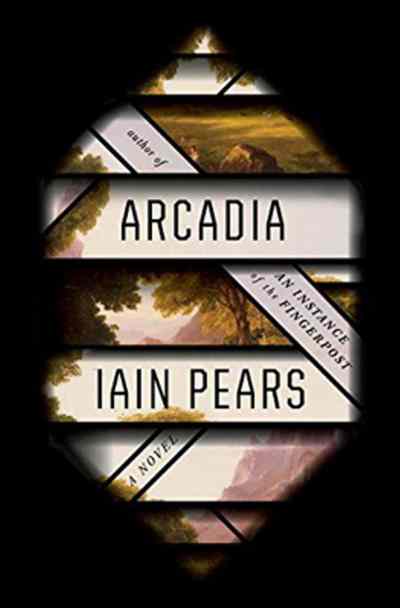
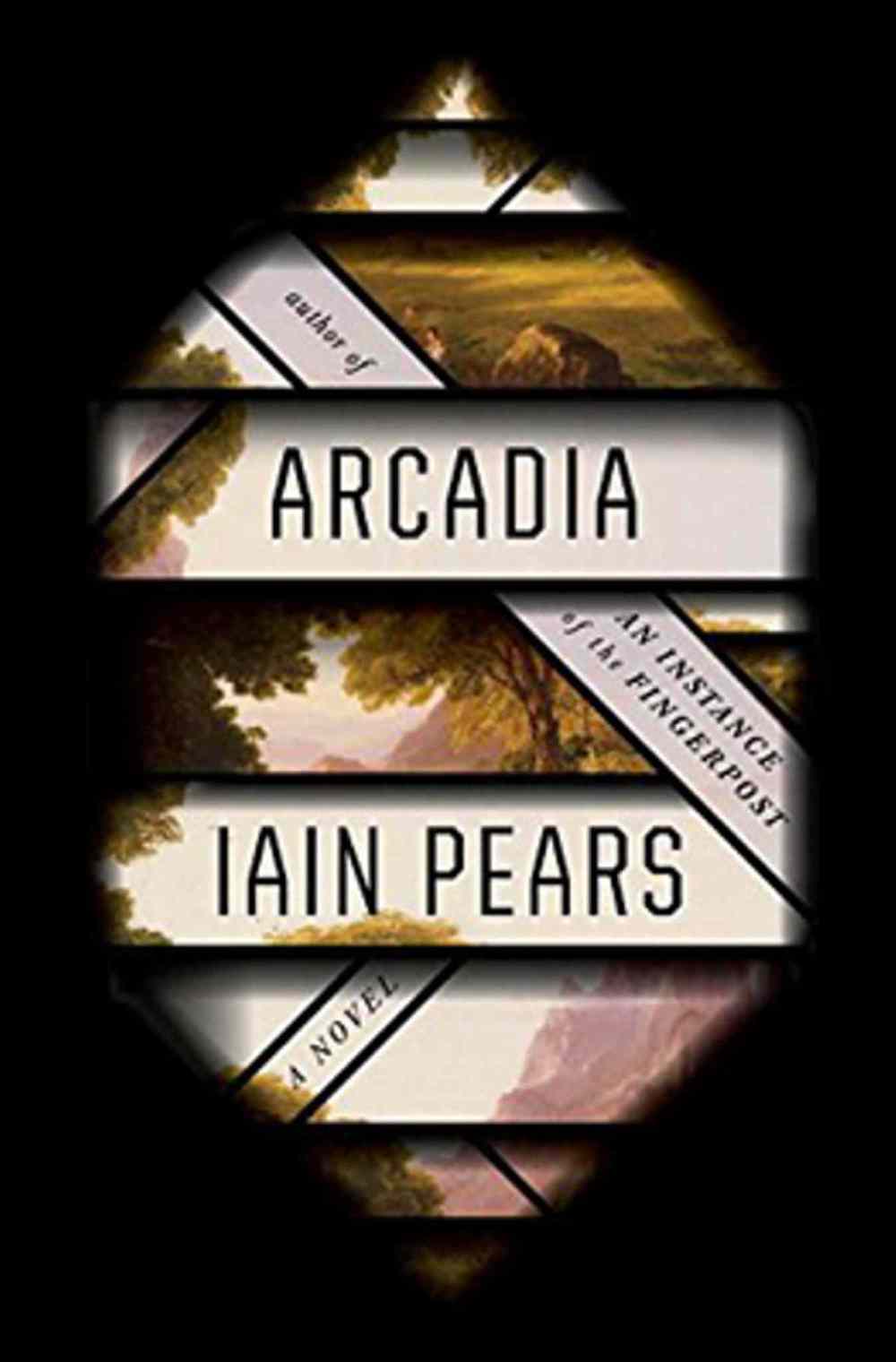
WHEN Iain Pears’ latest novel Arcadia was announced, the format — 10 intertwined stories in three distinct time periods, to be released as both a book and an interactive app — seemed ambitious but unsurprising. Pears has long shown himself to be inclined towards, and successful at, experimental storytelling — whether exhibiting multiple perspectives on the same event in An Instance of the Fingerpost or weaving a trio of narratives together in The Dream of Scipio.
The results this time, however, are more leaden than the concept — and Pears’ previous works — would suggest. Linking its pastiche of familiar-feeling tales through time travel and magic doorways, Pears largely eschews both character and craft in favour of the meticulous, high-stakes plotting required to justify the book’s imposing heft and structure.
The novel begins in Anterworld, the pastoral creation of Henry Lytten, a professor (and former wartime spy) in the 1960s who has spent years outlining every inch of his seemingly fictional, fantastical construct. Seemingly, because — as Rosie, the young girl who looks after his cat, accidentally discovers — Lytten maintains a mystic doorway to Anterworld in his basement.
The doorway’s origins are revealed as the novel sidesteps into a dystopian future, where we are introduced to Angela Meerson, inventor of the time machine. She uses the apparently versatile machine both to initiate an affair with Lytten during his wartime days and to run a working simulation of Anterworld. From this complex set-up, it’s revealed that Rosie’s journey into Anterworld in the novel’s “present” causes an expansion of the fiction that threatens to engulf the real world whole — a fate Pears’ array of characters must now strive to prevent.
Tonally, Arcadia traffics in whimsy, nodding vigorously towards the obvious inspirations of Alice in Wonderland and Narnia, but perhaps standing more firmly at the intersection of current young-adult serialized fiction and the arch fantasy of a Piers Anthony or a Neil Gaiman. This serves the story well — easing and undercutting the intense, world-shattering drama — but unfortunately also radically oversimplifies the characters, adding a flimsy cartoonishness to their thoughts and dialogue.
As for the app: it ostensibly provides a different reading experience, laying out the full text (plus additional material) with each character’s storyline arranged individually. But while other novels — notably Julio Cortázar’s Hopscotch — have employed various rearrangements of the text to vividly enhance the story, the Arcadia app essentially presents a shuffle of papers, taking the chapters and spreading them out on a colourful, multi-tiered subway map. And, as the 1963 publication date on Cortázar’s masterpiece shows, the authorial sleight-ofhand required to build an interchangeable narrative doesn’t actually require the aid of modern technology.
Unfortunately, what the app highlights is the lack of propulsion and urgency in the narrative as a whole, presenting the chapters and stories as static and equivalent. It also asks, and inadvertently answers in its flat effect, what readers want from a story at all and what the role of the writer should be in providing it. Pears’ publishers herald the app as a way of making the reader the “master of their own journey through the book” — as though readers had been clamouring for that particular power.

It’s possible the Arcadia app ultimately suggests the opposite: that storytelling of this sort may best be experienced as a journey with a guide, one that is enhanced — rather than structured or steered — by the reader’s imagination. By nestling so many references to the seemingly invulnerable tales of Shakespeare, Tolkien, Bradbury and le Carré within his diffuse, tangled narrative, Pears may, unfortunately, have created a comparison point that does damage to the structure — if not the very foundation — of his experiment.
Doug McLean is a Winnipeg writer and musician.