A necessary dialogue

Vowel's accessible, thoughtful book a must-read for all Canadians

Advertisement

Advertise with us

In 2013, the Thompson Citizen shut down its Facebook page to deny a platform for, in the words of editor John Barker, “anti-aboriginal racists and haters (to) spew their evil.” Similarly, in late November 2015, the CBC suspended all comments for articles and features related to indigenous issues, citing the frequency of “hateful, vitriolic (and) ignorant” comments. (For its part, this newspaper restricts commenting privileges to subscribers only).

Read this article for free:


or

Already have an account? Log in here »

To continue reading, please subscribe:

Subscribe and receive a limited-edition Free Press branded hat or tote.

Digital Subscription

One year of digital access for only $205*

  • Enjoy unlimited reading on winnipegfreepress.com
  • Read the E-Edition, our digital replica newspaper
  • Access News Break, our award-winning app
  • Play interactive puzzles

*First annual payment billed as $205.00 + GST for one year. This annual subscription will automatically renew at $233.00 + GST every 52 weeks (10% off the regular annual price of $259.35). Offer available to new and qualified returning subscribers only. Cancel any time.

To continue reading, please subscribe:

Add Free Press access to your Brandon Sun subscription for only an additional

$1 for the first 4 weeks*

  • Enjoy unlimited reading on winnipegfreepress.com
  • Read the E-Edition, our digital replica newspaper
  • Access News Break, our award-winning app
  • Play interactive puzzles
Start now

*Your next Brandon Sun subscription payment will increase by $1.00 and you will be charged $17.95 plus GST for four weeks. After four weeks, your payment will increase to $24.95 plus GST every four weeks.

Hey there, time traveller!
This article was published 24/09/2016 (3638 days ago), so information in it may no longer be current.

In 2013, the Thompson Citizen shut down its Facebook page to deny a platform for, in the words of editor John Barker, “anti-aboriginal racists and haters (to) spew their evil.” Similarly, in late November 2015, the CBC suspended all comments for articles and features related to indigenous issues, citing the frequency of “hateful, vitriolic (and) ignorant” comments. (For its part, this newspaper restricts commenting privileges to subscribers only).

In the face of this public bigotry and ignorance, Chelsea Vowel wants to help shape our relationship as non-indigenous and indigenous Canadians by engaging us in a badly needed, non-confrontational and — most of all — respectful conversation.

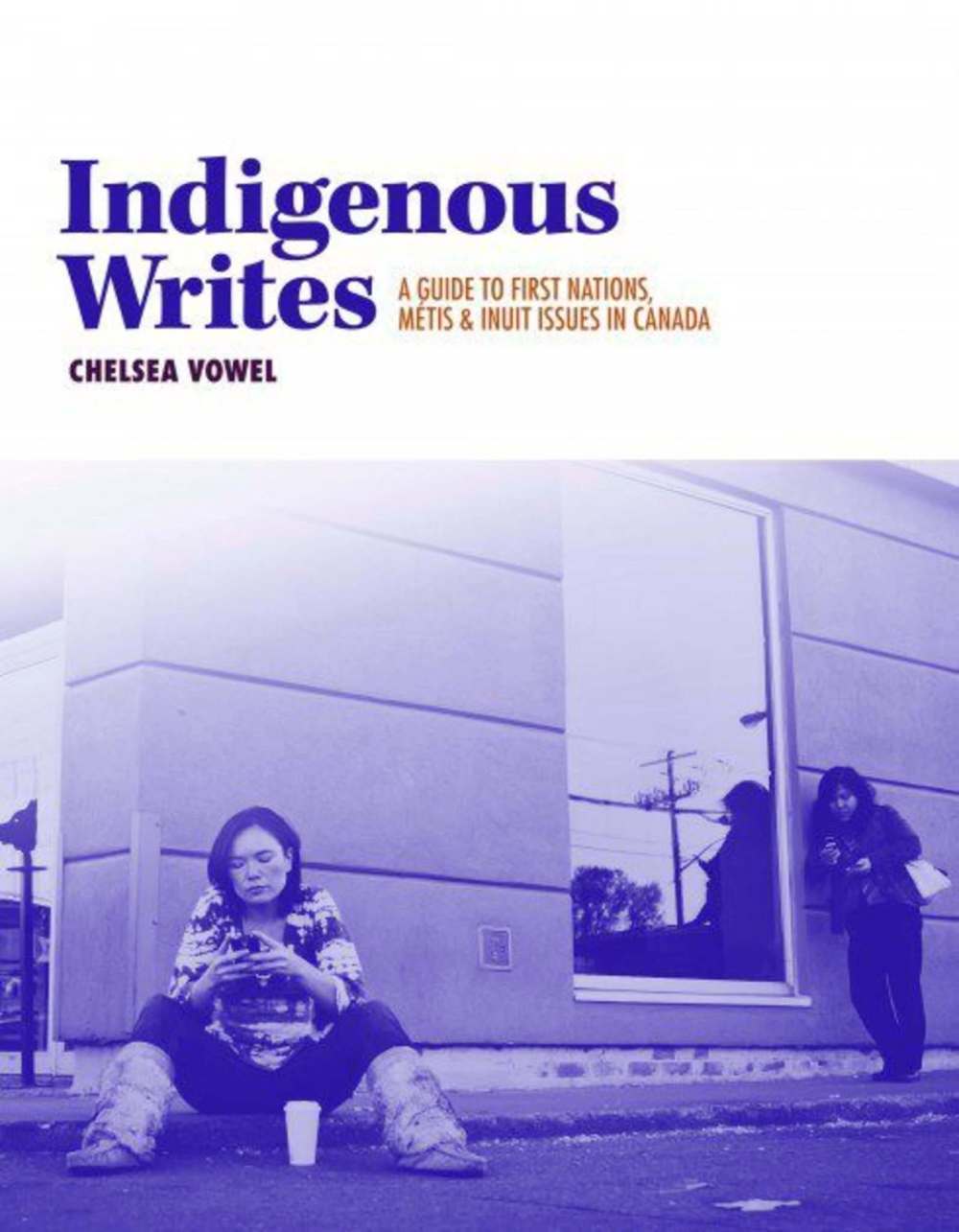
In her meticulously organized and highly accessible new book Indigenous Writes, Vowel, a Cree-speaking Métis writer and educator based in Montreal, both addresses and demolishes the many myths, misconceptions and stereotypes that have for so long poisoned public discourse and done endless harm to indigenous peoples.
SEAN KILPATRICK / CANADIAN PRESS FILES 
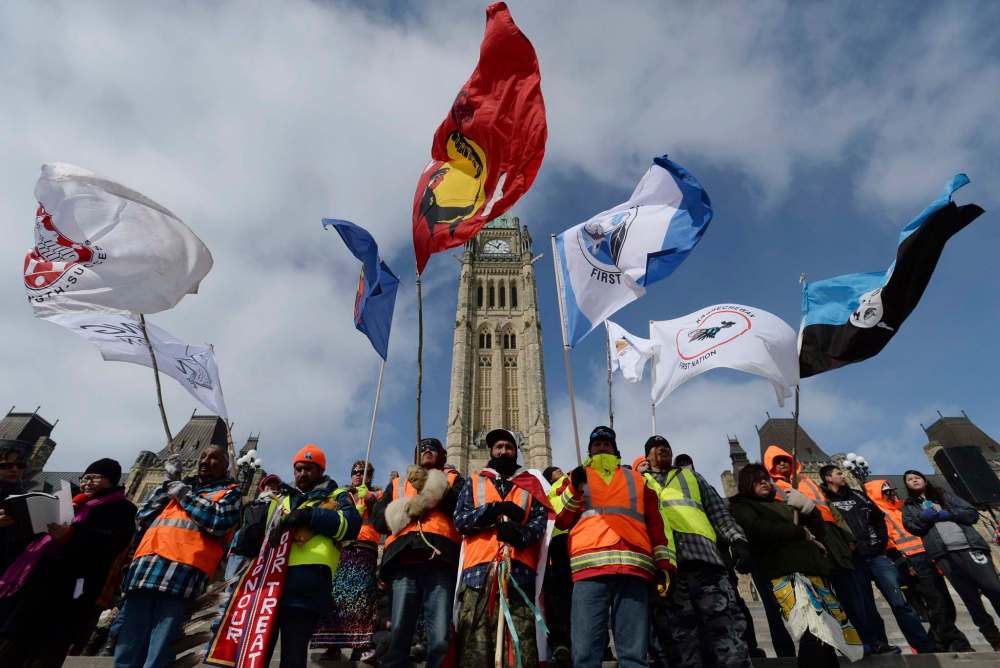
In 2014, a group of 25 adults and youth walked 1,700 kilometres from Attawapiskat First Nation to Ottawa to raise awareness about broken treaties as well as land, water protection and human rights issues.
SEAN KILPATRICK / CANADIAN PRESS FILES In 2014, a group of 25 adults and youth walked 1,700 kilometres from Attawapiskat First Nation to Ottawa to raise awareness about broken treaties as well as land, water protection and human rights issues.

Indigenous Writes is the latest release in Portage & Main Press’ Debwe series edited by the University of Manitoba’s Niigaanwewidam James Sinclair. While her title is a play on words which can be read several ways, it powerfully underscores Vowel’s agency as an indigenous author, which is consistent with Debwe’s mandate.

Over 31 brief chapters, Vowel maintains a personal and frequently humorous tone as she engages directly with non-indigenous readers (such as this reviewer) — or, more accurately, those “who form the European-descended socio-political majority,” with the recognition that the descendants of African slaves cannot be seen as “settlers.”

Such concern over naming might seem pedantic, but it is this care in establishing the basis for the conversation at hand that characterizes her thoughtful approach in responding to the misunderstandings over which our nations-to-nation relationships have foundered.

Many of these, she is quick to point out, are not entirely our fault: Canada’s history of colonization and assimilation through unequal treaty-making, unjust legislation, obfuscation and racialized oppression is bewilderingly (and in her view, deliberately) confusing. Much as she does on her outstanding blog, âpihtawikosisân, issues such as status and non-status Indians, “blood quantum,” the treaties, indigenous identity, cultural appropriation, rights and legal decisions on aboriginal titles are explained and clarified, often by contextualizing these within the legal foundations and rights enjoyed by non-indigenous Canadians.

More importantly, a host of pernicious myths are assiduously debunked, chief among them that aboriginal people pay no taxes. As she makes abundantly clear, the Indian Act tax exemption for on-reserve income and property is enjoyed by a mere 192,000 people, or 0.5 per cent of the population — hardly an undue burden on non-indigenous taxpayers who have, needless to say, benefited beyond all conventional financial measures from access to indigenous lands.

SUPPLIED PHOTO
Author Chelsea Vowel.
SUPPLIED PHOTO Author Chelsea Vowel.

Significantly, she counters not just the common bread-and-butter arguments of misinformed anonymous commenters, but the writings of well-known Canadian media personalities such as Conrad Black, the Province’s Gordon Clark and public intellectuals such as John Ralston Saul.

Fortunately, Vowel is able to call on her law degree to provide easily understood explanations and contexts for the general reader, supported by extensive lists of recommended reading.

Yet it is all accomplished with such disarming informality and even nerdiness (she is a fan of Canadian science-fiction author Rob Sawyer and the Civilization video games) that the book is unabashedly engaging. In a brilliantly satiric turn, she even adopts the rhetoric of the online trolls themselves to demonstrate the colonial vapidity of the arguments so often made against inherent indigenous rights.

While subtitled A Guide to First Nations, Métis and Inuit Issues in Canada, it would be a mistake to see Indigenous Writes as a book primarily about indigenous people. Instead, it is much more about all of us — our relationship as non-indigenous and indigenous Canadians, and how it has been shaped (and misshaped) by the historic and contemporary governance of these issues.

For any Canadian who wishes to have an informed opinion about the country that we share — or, more to the point, publicly share that opinion — Indigenous Writes is essential reading.
Michael Dudley is the librarian for indigenous studies at the University of Winnipeg.


Report Error Submit a Tip

More Stories

Weekender festivities to take over downtown

Sheldon Birnie 3 minute read Preview

Weekender festivities to take over downtown

Sheldon Birnie 3 minute read Yesterday at 6:00 AM CDT

Come one, come all, to Graham Avenue this weekend.

Organizers of the Weekender hope to welcome thousands of Winnipeggers to the streets and parking lots in and around the Graham Avenue pedestrian mall in what they are billing as “Downtown’s Biggest Street Party.”

Starting Friday evening and running through Sunday, the free festival boasts a plethora of ways by which visitors can enjoy themselves. From food trucks to markets, games to live music, classic cars and free bike repairs, the festival aims to provide a little something for everyone.

“The Weekender is truly about bringing people together, to have fun, to experience all that downtown has to offer,” says Olivia Billson, director of communications and public relations for Downtown Winnipeg BIZ, which is putting on the festival in conjunction with Smith Events and Arch Events.

Read
Yesterday at 6:00 AM CDT

Manitoba gains doctors for third straight year, but loses at pandemic-level rate: report

Scott Billeck 5 minute read Preview

Manitoba gains doctors for third straight year, but loses at pandemic-level rate: report

Scott Billeck 5 minute read Updated: Yesterday at 7:44 PM CDT

Manitoba is adding doctors at a record clip — but it’s also losing them at a rate not seen since the depths of the COVID-19 pandemic, a physicians advocacy organization cautioned Wednesday.

Read
Updated: Yesterday at 7:44 PM CDT

All quiet on the Hellebuyck front

Mike McIntyre 8 minute read Preview

All quiet on the Hellebuyck front

Mike McIntyre 8 minute read Tuesday, Sep. 8, 2026

Pull up a chair, folks, as we address the elephant in the room. Or, to be more precise, the decorated goaltender who is not in the room. Or on the ice. Or even in the city.

Not surprisingly, the Connor Hellebuyck situation took centre stage Tuesday as members of the Winnipeg Jets held their first media session following an informal, pre-training camp skate.

“We’re definitely going to get asked about it. That’s no chirp to anybody. I think that’s just the reality of the situation,” admitted veteran defenceman Dylan DeMelo, who took part in an hour-long practice at Hockey For All Centre that involved nearly every member of the organization.

With one very notable exception, of course.

Read
Tuesday, Sep. 8, 2026

Winkler-based internet provider delivering high-speed service to 30 rural and First Nations Manitoba communities

Nicole Buffie 3 minute read Preview

Winkler-based internet provider delivering high-speed service to 30 rural and First Nations Manitoba communities

Nicole Buffie 3 minute read Tuesday, Sep. 8, 2026

Valley Fiber says it is undertaking one of its largest fibre optic projects and is building infrastructure that will deliver internet to 10,000 homes and businesses in rural and First Nations communities across Manitoba.

“These communities will now have access to the fastest internet network in Manitoba, and it will power their lives and their business,” Ryan Klassen, chief executive officer of the Winkler-based internet provider, said Tuesday from Fisher River Cree Nation.

The province has granted Valley Fiber use of two of its underused cables on the existing Manitoba Hydro fibre optic network for up to 20 years as part of the project, which will connect nearly 30 communities — including Buffalo Point, Hollow Water, Black River and Peguis First Nations, along with Fisher River and Fox Lake Cree Nations — to high-speed internet.

Construction should be finished by 2027.

Read
Tuesday, Sep. 8, 2026

Cultivating compassion in young people

Jordan Laidlaw 5 minute read 2:00 AM CDT

We live in the unenviable era of rising American imperialism and the emergence of a precarious new world order.

As U.S. President Donald Trump escalates his annexation threats over Canada, Greenland and Venezuela; deteriorates decades-long relations with NATO; and offers concessions to totalitarian North Korea; we must remain steadfast and vigilantly united against these ominous — and markedly unusual — sociopolitical developments.

We have so much to learn from our past. As historical patterns suggest, these threats are not idle nor mere political rhetoric. Rather, these threats should be treated with utmost seriousness. As Winston Churchill so famously uttered, “Those that fail to learn from history are doomed to repeat it.”

As a Canadian public educator, I hold the vehement conviction that we need to instruct our youth on the societal dangers of imperialism, while simultaneously exploring the “contentious” concepts of sharing and acceptance.

Grieving families, local leaders want review of Interlake intersection after teens die in crash

Chris Kitching 8 minute read Preview

Grieving families, local leaders want review of Interlake intersection after teens die in crash

Chris Kitching 8 minute read Tuesday, Sep. 8, 2026

A two-vehicle crash that killed four teenage friends in the Interlake Sunday night prompted outpourings of grief in several communities and calls for safety improvements at the intersection, which was also the site of a death in July.

Recent high school graduates Maya Borsa and Chloe Vermette, both 18, were identified by their families as victims of the collision at Highway 8 and Provincial Road 229, just west of Winnipeg Beach.

“(Chloe) was a very bubbly, loving personality. Always giving, always caring. Her friends meant the world to her,” said her mother, Veronique Vermette, who struggled to comprehend the tragedy when she went to the scene Monday. “We sat in the rain for hours, and it blew my mind that four lives were taken.”

The teens’ parents are waiting for RCMP to provide more information about the cause of the crash. Chloe, who graduated from Windsor Park Collegiate in Winnipeg in July, was driving one of the vehicles, her mother said.

Read
Tuesday, Sep. 8, 2026