London plague story riveting
Advertisement
Read this article for free:
or
Already have an account? Log in here »
To continue reading, please subscribe:

Digital Subscription
One year of digital access for only $205*
- Enjoy unlimited reading on winnipegfreepress.com
- Read the E-Edition, our digital replica newspaper
- Access News Break, our award-winning app
- Play interactive puzzles
*First annual payment billed as $205.00 + GST for one year. This annual subscription will automatically renew at $233.00 + GST every 52 weeks (10% off the regular annual price of $259.35). Offer available to new and qualified returning subscribers only. Cancel any time.
To continue reading, please subscribe:
Add Free Press access to your Brandon Sun subscription for only an additional
$1 for the first 4 weeks*
- Enjoy unlimited reading on winnipegfreepress.com
- Read the E-Edition, our digital replica newspaper
- Access News Break, our award-winning app
- Play interactive puzzles
*Your next Brandon Sun subscription payment will increase by $1.00 and you will be charged $17.95 plus GST for four weeks. After four weeks, your payment will increase to $24.95 plus GST every four weeks.
Read unlimited articles for free today:
or
Already have an account? Log in here »
Hey there, time traveller!
This article was published 19/11/2016 (3593 days ago), so information in it may no longer be current.
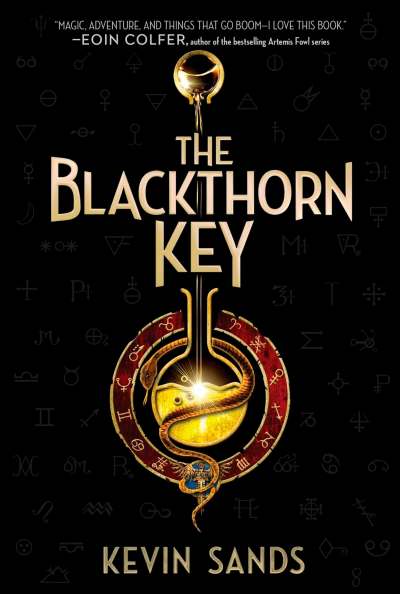
Set in 17th-century London, Kevin Sands’ first book The Blackthorn Key — about apprentice apothecary Christopher Rowe — attracted international attention. He’s back with a sequel that is equally riveting, Mark of the Plague (Aladdin/Simon and Schuster, 529 pages, $23, hardcover).
London in 1665 is in the grip of the plague, a return of the fearful epidemic that visited the continent in the 14th century. Christopher has inherited his master’s shop, but the treasure and his cures for the plague remain hidden. When a “prophet” that predicts who will die of the sickness appears — followed by a saviour who can cure it — Christopher’s apothecary shop is enlisted to produce the cure. But when his friend Tom is targeted by the prophet and becomes deathly ill, Christopher finds he’s not fighting fate, but deliberate evil.
Sands, a Torontonian who was trained in theoretical physics before becoming an author, includes codes, riddles and mysterious clues that will lead readers on an intriguing chase. For ages 8-12.

● ● ●
If you (or your young reader) enjoy fairy tales, then The Girl Who Drank the Moon (Algonquin Young Readers, 400 pages, $26, hardcover) by Minnesota author Kelly Barnhill has all the right ingredients: witches, an enchanted heroine, dragons and (friendly) monsters.
Barnhill describes a land in which every year a baby must be sacrificed to a wicked witch who lives in a forbidden forest on the slopes of a volcano. No one questions the practice until a lone man, Antain, refuses to surrender his child and defies the rulers of the protectorate. Yet in alternating chapters, we learn the witch is not wicked and the child she saved who drank in magic with moonlight has incredible powers, but has never forgotten her real mother.
Barnhill’s prose is often lyrical and her characters appealing. The plot would have had more impact if the book had been shortened, but readers ages 8-12 who like fantasy will enjoy this triumph of good over evil.
● ● ●
The Liszts (Tundra, 40 pages, $22, hardcover) by Toronto author Kyo Maclear, with illustrations by Júlia Sardà, is not only fun for young readers (ages 5-9), but for adult readers as well.
“The Liszts made lists./Scritch, scratch./ They made lists most usual/ And lists most unusual” begins this entertaining picture book. Sometimes the humour seems a little tongue-in-cheek: “They made lists every day except Sundays, which were listless.”
Every members of the family has a different reason to make a list, until a stranger appears who encourages Edward, the middle child, to ask all the questions he has been saving up for years and to pause in his lists to actually act.
Barcelona artist Júlia Sardà has contributed wonderful paintings in a suitably whimsical style that make this a joy to read.
● ● ●
If you’re looking for a particularly attractive picture book for preschoolers, pick up That’s Not a Hippopotamus (Gecko Press, 32 pages, hardcover) by New Zealand author Juliette MacIver, with illustrations by Sarah Davis.
When Liam’s school class visits Don’s Safari Park, Don boasts it contains every living creature. But the hippopotamus is missing, which leads to a riotous series of misidentifications. The pictures in this book are hilarious as children lasso a giraffe, make friends with a warthog, dive into a whale’s pool and get tangled up with a boa constrictor. Sarah Davis, the artist, has illustrated over 30 books for children, all in her own colourful and distinctive style.
MacIver’s text is witty, rhyming and rhythmic, making this a great read-aloud book for youngest book-lovers (4-8).
Helen Norrie is a former teacher/ librarian who enjoys sharing her love of children’s books.