Harvester of sorrow
John Darnielle's sophomore novel a harrowing midwestern mystery
Advertisement
Read this article for free:
or
Already have an account? Log in here »
To continue reading, please subscribe:

Digital Subscription
One year of digital access for only $205*
- Enjoy unlimited reading on winnipegfreepress.com
- Read the E-Edition, our digital replica newspaper
- Access News Break, our award-winning app
- Play interactive puzzles
*First annual payment billed as $205.00 + GST for one year. This annual subscription will automatically renew at $233.00 + GST every 52 weeks (10% off the regular annual price of $259.35). Offer available to new and qualified returning subscribers only. Cancel any time.
To continue reading, please subscribe:
Add Free Press access to your Brandon Sun subscription for only an additional
$1 for the first 4 weeks*
- Enjoy unlimited reading on winnipegfreepress.com
- Read the E-Edition, our digital replica newspaper
- Access News Break, our award-winning app
- Play interactive puzzles
*Your next Brandon Sun subscription payment will increase by $1.00 and you will be charged $17.95 plus GST for four weeks. After four weeks, your payment will increase to $24.95 plus GST every four weeks.
Read unlimited articles for free today:
or
Already have an account? Log in here »
Hey there, time traveller!
This article was published 04/03/2017 (3456 days ago), so information in it may no longer be current.
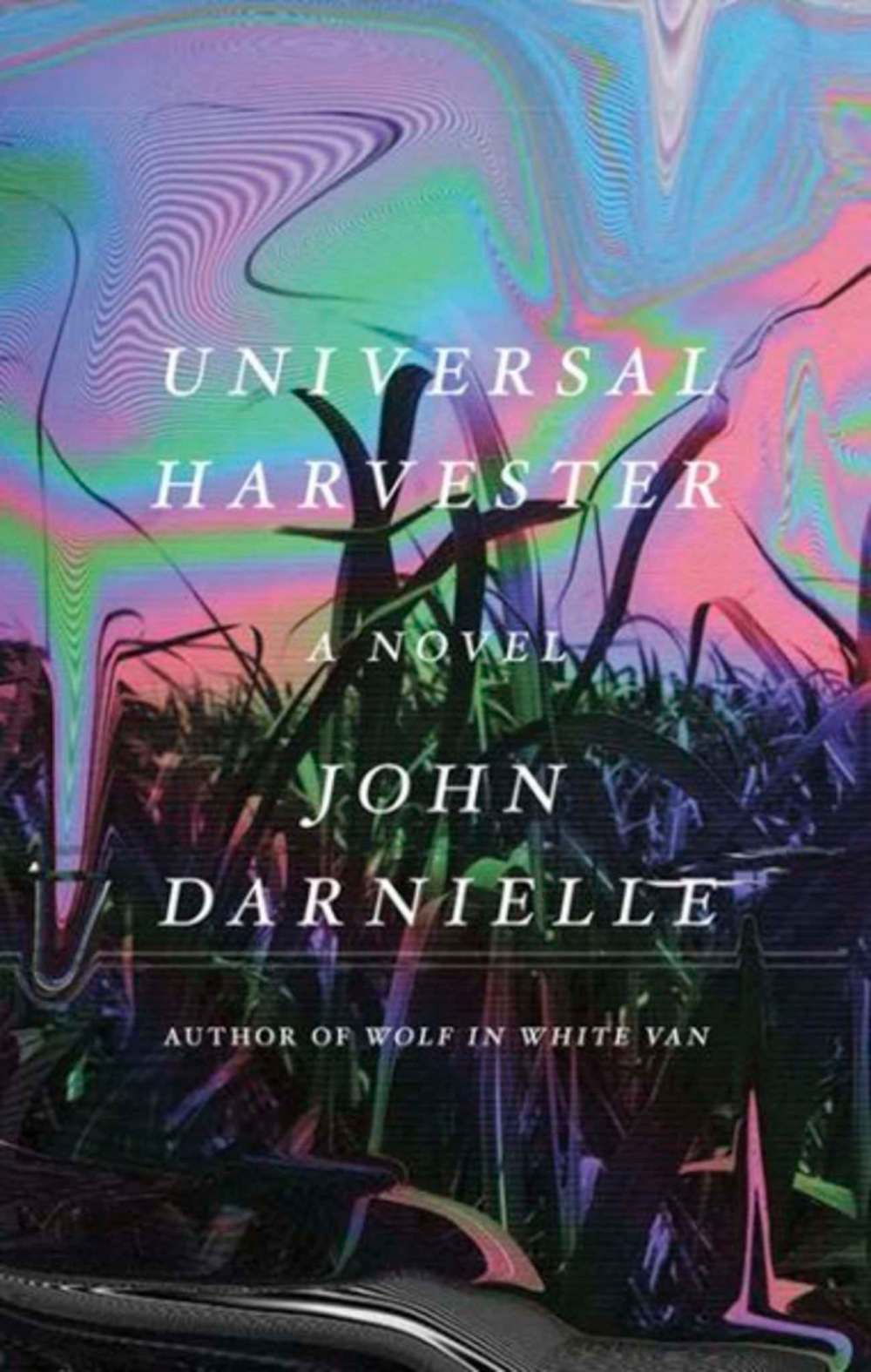
In his taut, unsettling sophomore novel Universal Harvester, John Darnielle takes the reader to rural Iowa and presses play on a seemingly ominous chain of events, before rewinding and fast-forwarding through time and in the process crafting a rumination on grief, trauma and loss.
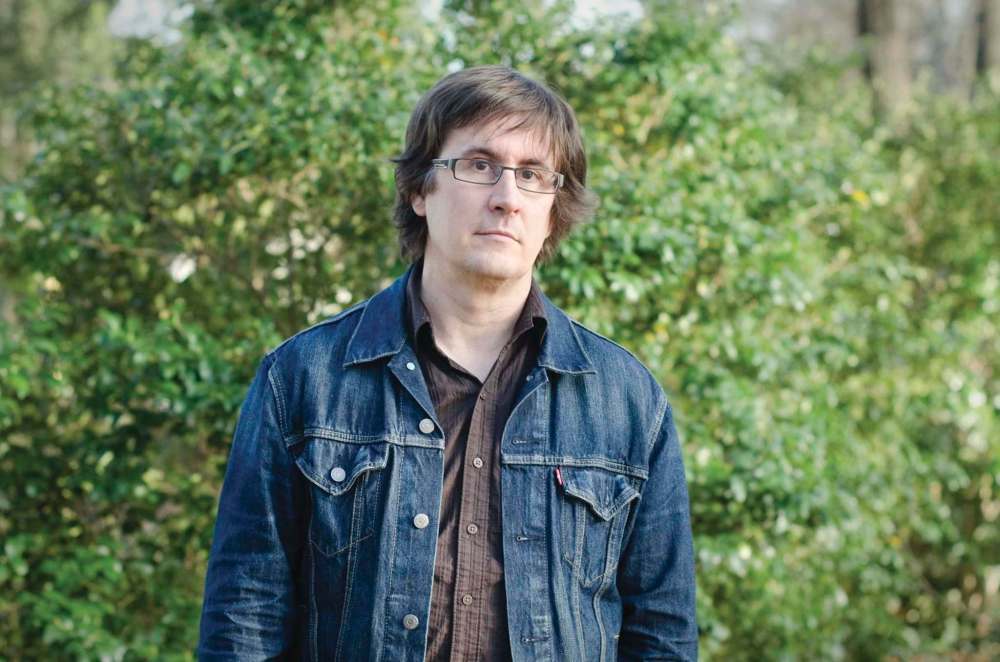
The Durham, N.C.-based Darnielle’s critically acclaimed debut novel, 2014’s Wolf in White Van, tells the story of a loner in Southern California who invents a text-based role-playing game he orchestrates by mail. Prior to delving into fiction, Darnielle had already made a name for himself as a literary wordsmith as the principal songwriter in his band the Mountain Goats (whose new record Goths comes out this spring).
Universal Harvester begins in the late 1990s in the town of Nevada (proncounced Ne-VAY-dah), where Jeremy Heldt spends most of his days working at the local Video Hut.
When a couple of the tapes are returned by customers who claim to have seen bits of strange videos seemingly spliced into their movies, Jeremy, his boss Sarah Jane and Stephanie, one of the customers in question, each try to piece together the story of the freaky, The Ring/Blair Witch-like fragments.
Much of the rest of the novel is spent trying to figure out where the snippets were filmed, who was behind the camera, and what they all mean.
Darnielle’s Iowa is sparse, a vast expanse of the American Midwest rich with cornfields and where the wind “comes across the plains not howling but singing.”
This isn’t a densely populated novel; the Video Hut is usually devoid of customers, populated only by Jeremy who, like many of the characters, spends plenty of time alone (and watching movies).
The video snippets on the store’s rental tapes come to haunt the characters. Heavy breathing is heard just off camera; hooded figures, seemingly held captive, are seen milling about in a farm’s shed; another hooded figure, at first thought to be tied to a chair, rises and begins a series of creepy poses.
Sarah Jane eventually recognizes some of the background in the inserted footage, quietly makes the trip to a nearby farmhouse and meets Lisa Semple, who is somehow connected to the tapes.
Lisa’s childhood and the gradual disappearance of her mother Irene in the 1970s is detailed in the second section of the novel, as Irene falls prey to a religious cult.
It’s all connected in some way to the tape snippets, although those connections are left unclear throughout most of the novel.
Absence is a key component of Universal Harvester, particularly the absence of mothers. Not only does Irene disappear, but Jeremy’s mother was killed in a car accident six years before the story begins, leaving him and his father, to make their way in the world with a gaping hole in their family.
The final segment of the novel jumps ahead to the present, where a retired California couple have moved into the farmhouse that had once belonged to Lisa. Their adult children come for a visit, discover piles of videotapes and, intrigued, begin trying to piece the story together.
Darnielle ups the creepy factor in Universal Harvester by occasionally shifting the omniscient, third-person narration to a mysterious first-person voice that ratchets up the tension and dread. Who is this “I” telling this story? What role did s/he have in the creation of the video snippets?
The narrative uncertainty in Universal Harvester is furthered by a number of what-if variations that are offered and then dismissed by the narrator, who at times addresses the reader directly: “It would be great to tell you that you’re going to see Irene Sample again — that we’ve shifted our focus in order to make her return all the more joyous and conflicted,” we are told.
Then, after a page-and-a-half of outlining potential scenarios: “None of this is true, or maybe some of it is.”
Darnielle doesn’t provide all the answers easily here. And while the potential is there for the reader to come away a tad frustrated, what instead lingers long after the final pages of Universal Harvester is a haunting sense of the timeless power of grief and absence.
Ben MacPhee-Sigurdson is the Free Press literary editor.