Nicholas II’s post-abdication plight detailed in new biography

Falling tsar

Advertisement

Advertise with us

When Nicholas II, Emperor of all the Russias, abdicated in March 1917, he had no intention of becoming Russia’s last tsar. However, with the failure of his plans to transfer power to either his brother or his young son, such was his fate. For the next 16 months, together with his family and servants, he became a prisoner of the revolutionary governments that replaced him until he was killed in July 1918.

Read this article for free:


or

Already have an account? Log in here »

To continue reading, please subscribe:

Subscribe and receive a limited-edition Free Press branded hat or tote.

Digital Subscription

One year of digital access for only $205*

  • Enjoy unlimited reading on winnipegfreepress.com
  • Read the E-Edition, our digital replica newspaper
  • Access News Break, our award-winning app
  • Play interactive puzzles

*First annual payment billed as $205.00 + GST for one year. This annual subscription will automatically renew at $233.00 + GST every 52 weeks (10% off the regular annual price of $259.35). Offer available to new and qualified returning subscribers only. Cancel any time.

To continue reading, please subscribe:

Add Free Press access to your Brandon Sun subscription for only an additional

$1 for the first 4 weeks*

  • Enjoy unlimited reading on winnipegfreepress.com
  • Read the E-Edition, our digital replica newspaper
  • Access News Break, our award-winning app
  • Play interactive puzzles
Start now

*Your next Brandon Sun subscription payment will increase by $1.00 and you will be charged $17.95 plus GST for four weeks. After four weeks, your payment will increase to $24.95 plus GST every four weeks.

Hey there, time traveller!
This article was published 13/05/2017 (3407 days ago), so information in it may no longer be current.

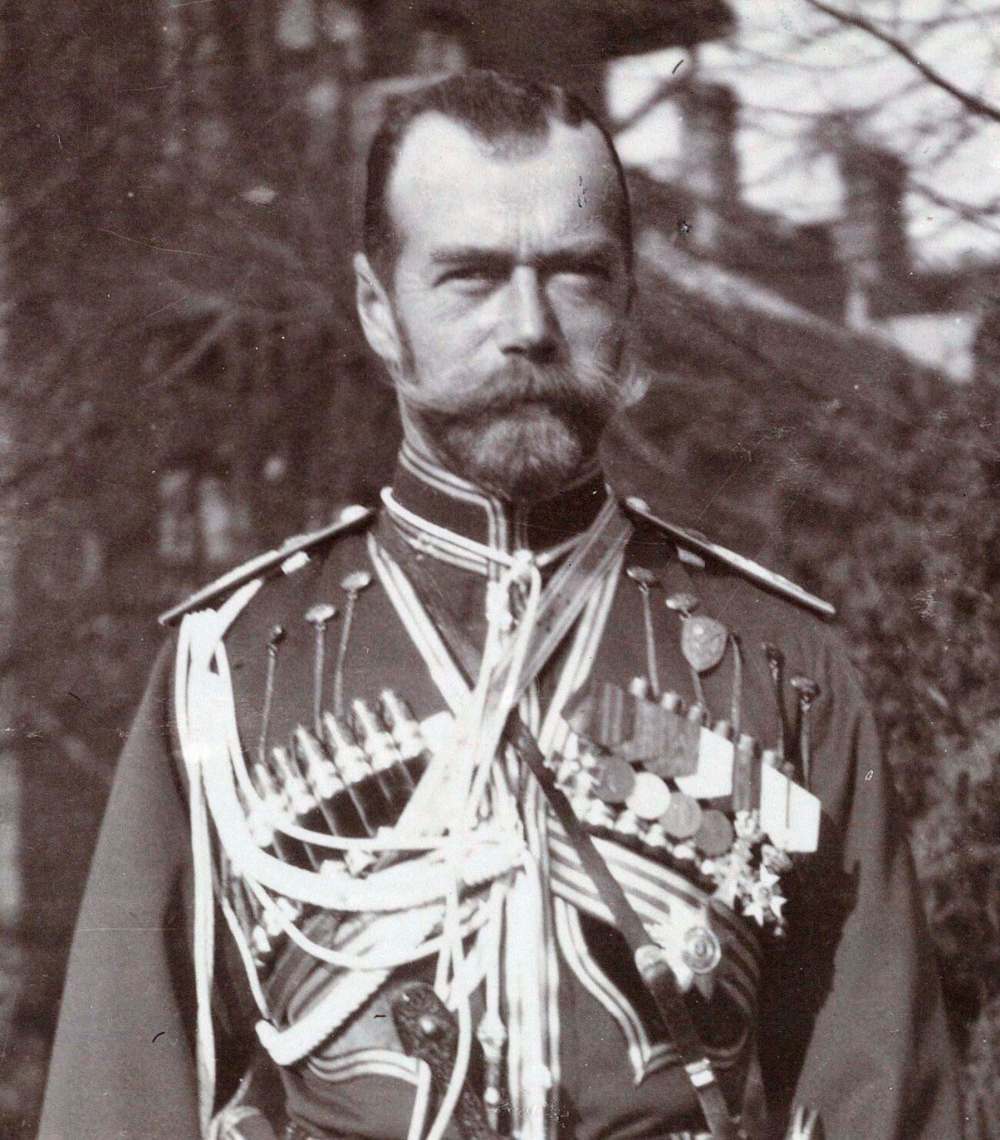
When Nicholas II, Emperor of all the Russias, abdicated in March 1917, he had no intention of becoming Russia’s last tsar. However, with the failure of his plans to transfer power to either his brother or his young son, such was his fate. For the next 16 months, together with his family and servants, he became a prisoner of the revolutionary governments that replaced him until he was killed in July 1918.

It is this final chapter in Nicholas’s life — from his abdication to his execution — that forms the subject of Oxford University historian Robert Service’s deeply researched, richly detailed and absorbing study, The Last of the Tsars.

In addition to exploring Nicholas’s experiences at the hands of his captors, Service places him in the political context of a Russia whose system of government had collapsed, where the economy was barely functioning, where different groups struggled for political power and where the safety of Nicholas and his family was often at risk.
Wikimedia
Wikimedia

Nicholas’s abdication created major problems for the provisional government that took his place. It had to take control of Russia’s faltering war effort, design a new constitution, cope with growing social unrest, respond to its political opponents on both the right and the left and decide what to do with Nicholas himself.

Initially, the provisional government sequestered Nicholas, his wife Alexandra and their five children and their servants in the relative comfort of the royal estate at Tsarkoe Seloe near St. Petersburg. There was even talk of sending them into exile in England until the British government ruled against it.

Instead, in August 1917 they were sent to the remote Siberian town of Tobolsk, which the Russian government judged to be safely distant from the political turmoil beginning to engulf Russia. A few months later, they were moved again, this time to Ekaterinburg, a provincial city where revolutionary Bolsheviks were the dominant political force.

Many of the revolutionaries who controlled Ekaterinburg saw Nicholas’s death as the solution to the problem of what to do with him, especially when anti-Bolshevik forces closed in on the city, leading to rumours of attempts being planned to free him and his entourage.

For its part, the Bolshevik government in Moscow entertained the idea of a public show trial but they faced one basic problem: given the chaos in Russia, could Nicholas be safely transported to Moscow? The problem was solved by the Ekaterinburg Bolsheviks’ execution of Nicholas and his family, together with their doctor and three servants.

Service concludes that while there is no surviving evidence that Lenin and his Moscow colleagues gave a direct order to kill Nicholas, they knew what the local Ekaterinburg revolutionaries intended and indicated their approval, all the while ensuring that there was no paper trail to link them to the deed.

As with many historians, Service sees Nicholas as a devoted family man and dutiful old-style Russian patriot (and “virulent anti-Semite”) who was unable to cope with the economic and social forces that were re-shaping Russia and with the challenges arising from Russia’s involvement in the First World War.

In Service’s estimation, this “modest, inadequate ex-ruler suffered personal tragedy in a country he had played no small part in bringing to catastrophe.” In making this case, he has given us a powerful description of the final months of Nicholas and his family and of the revolutions that engulfed Russia a century ago.

Ken Osborne is Professor Emeritus in the faculty of education, University of Manitoba.

Report Error Submit a Tip

More Stories

Manitoba-Canada Defence Alliance unveiled

Gabrielle Piché 5 minute read Preview

Manitoba-Canada Defence Alliance unveiled

Gabrielle Piché 5 minute read 8:11 PM CDT

Despite Ottawa’s promises of increased defence spending, Jack Enns has seen slowdowns.

Tit-for-tat tariffs between Canada and the United States have lessened demand for some of A. Adams Supply (1969) Ltd.’s products, the firm’s general manager said.

The Winnipeg company ships specialized tools to aerospace manufacturers, metalworkers and transport firms.

More clients could be useful — and so would local companies winning defence contracts, Enns said. If that happened, vendors such as A. Adams Supply may get more orders, boosting business.

Read
8:11 PM CDT

All that glitters … could work here

Editorial 4 minute read Preview

All that glitters … could work here

Editorial 4 minute read Yesterday at 2:00 AM CDT

Sometimes, it’s hard to even suggest a change, because it seems there is always a plethora of people ready to tell you that your idea just won’t work.

Read
Yesterday at 2:00 AM CDT

Flash, bang … oops: police raid leads to lawsuit

Erik Pindera 4 minute read Preview

Flash, bang … oops: police raid leads to lawsuit

Erik Pindera 4 minute read 6:00 AM CDT

A couple suing the city allege Winnipeg Police Service officers trying to execute a search warrant at their condominium complex rappelled down the side of the building, broke in their glass patio door and fired off a stun grenade before realizing they were in the wrong unit.

Saeid Ghavami and Shahla Shojaei, a married couple who are academics and scientific researchers at the University of Manitoba, filed the lawsuit in Court of King’s Bench last month over the Jan. 31, 2025 incident.

The claim names the City of Winnipeg and several officers involved in the operation, whose identities are, at this point, unknown to the couple, and are referred to as “John Does.”

Officers were attempting to execute the warrant on the third floor of the eight-storey Pembina Highway building, the court filing says. The couple lives on the fourth floor.

Read
6:00 AM CDT

Leadership turnover at Hydro not a concern: Kinew

Free Press staff 2 minute read Preview

Leadership turnover at Hydro not a concern: Kinew

Free Press staff 2 minute read 7:05 PM CDT

Premier Wab Kinew addressed the recent departure of Manitoba Hydro CEO Allan Danroth for the first time Wednesday, saying he’s not worried about turnover at the top of the province’s Crown jewel.

“I wish Mr. Danroth well,” Kinew said when asked about the resignation of the CEO hired just two years ago.

“I guess this is my first time addressing his departure, so I do want to thank him for his time with the Crown utility,” the premier said at an unrelated event. Danroth, who quit for personal reasons, replaced Jay Grewal, who was fired after the NDP formed government.

Kinew was asked if he has concerns about having a steady hand at the wheel of the province’s power company.

Read
7:05 PM CDT

Carney warns of tough times ahead in national address as retaliatory tariffs begin

Nick Murray, The Canadian Press 5 minute read Preview

Carney warns of tough times ahead in national address as retaliatory tariffs begin

Nick Murray, The Canadian Press 5 minute read Updated: Yesterday at 4:10 PM CDT

OTTAWA - Canada's pivot away from the United States will "come at a cost" but the alternative would be far worse, Prime Minister Mark Carney said Tuesday.

Carney made the remarks in a video released just hours after his government made good on a promise to implement retaliatory tariffs on the United States. Those tariffs respond to American duties imposed last month by U.S. President Donald Trump, after the two countries could not come to an agreement to settle some outstanding trade irritants.

Carney spent much of the video laying out Canada's response to Trump's protectionist trade policies, including expanding trade with other countries and building more capacity domestically.

But he said it "won't be easy."

Read
Updated: Yesterday at 4:10 PM CDT

Winkler-based internet provider delivering high-speed service to 30 rural and First Nations Manitoba communities

Nicole Buffie 3 minute read Preview

Winkler-based internet provider delivering high-speed service to 30 rural and First Nations Manitoba communities

Nicole Buffie 3 minute read Yesterday at 7:12 PM CDT

Valley Fiber says it is undertaking one of its largest fibre optic projects and is building infrastructure that will deliver internet to 10,000 homes and businesses in rural and First Nations communities across Manitoba.

“These communities will now have access to the fastest internet network in Manitoba, and it will power their lives and their business,” Ryan Klassen, chief executive officer of the Winkler-based internet provider, said Tuesday from Fisher River Cree Nation.

The province has granted Valley Fiber use of two of its underused cables on the existing Manitoba Hydro fibre optic network for up to 20 years as part of the project, which will connect nearly 30 communities — including Buffalo Point, Hollow Water, Black River and Peguis First Nations, along with Fisher River and Fox Lake Cree Nations — to high-speed internet.

Construction should be finished by 2027.

Read
Yesterday at 7:12 PM CDT