Mechanics of civil wars masterfully detailed

Advertisement

Advertise with us

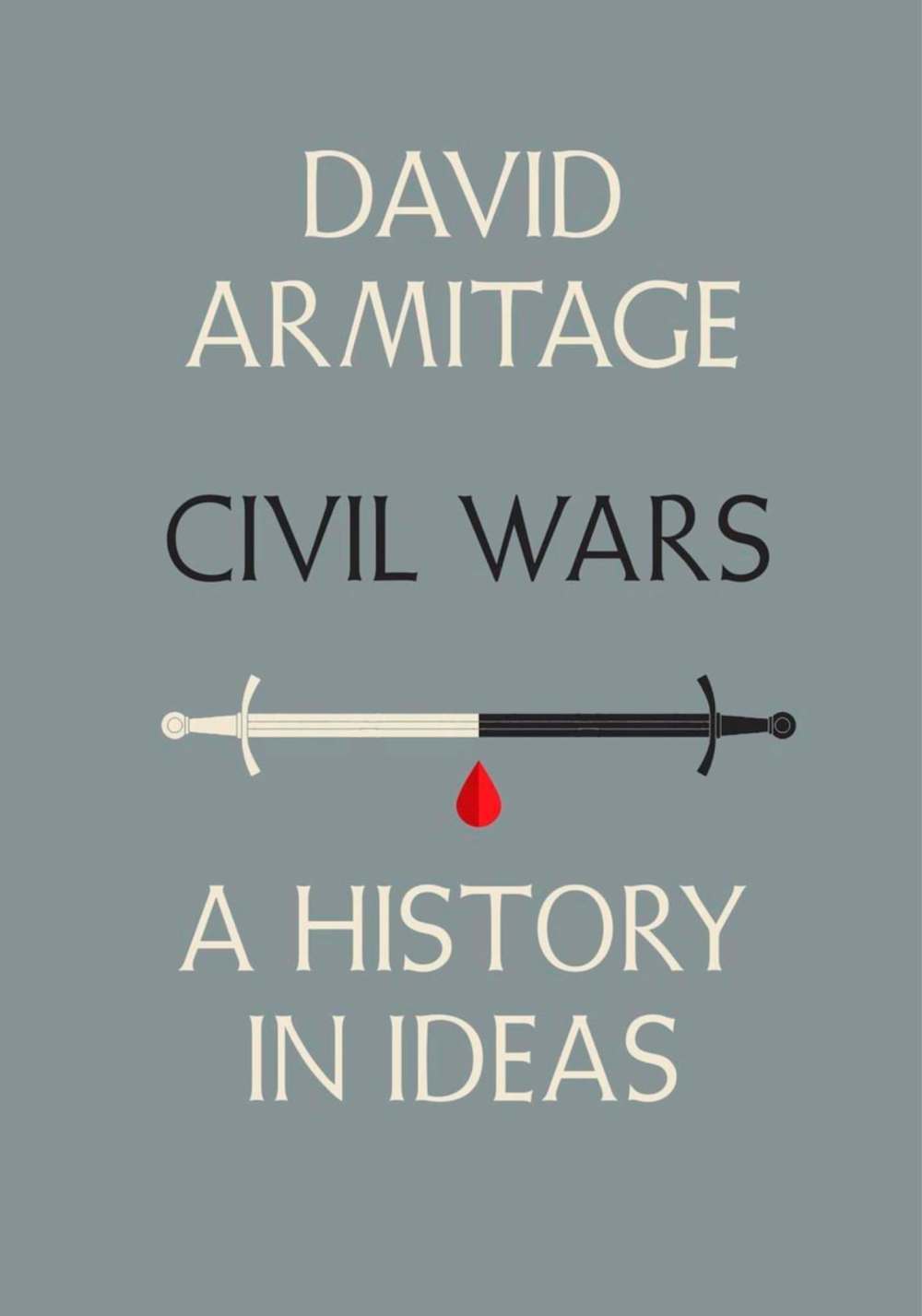
AS is now so often the case with a work of excellent, earnest scholarship, the key is found in David Armitage’s book’s subtitle: A History in Ideas. This is not an intellectual history “of” ideas, it is an intellectual history of a slippery political concept — civil war — as bandied about “in” the minds of select, brilliant, dazzling writers over the centuries.

Read this article for free:


or

Already have an account? Log in here »

To continue reading, please subscribe:

Subscribe and receive a limited-edition Free Press branded hat or tote.

Digital Subscription

One year of digital access for only $205*

  • Enjoy unlimited reading on winnipegfreepress.com
  • Read the E-Edition, our digital replica newspaper
  • Access News Break, our award-winning app
  • Play interactive puzzles

*First annual payment billed as $205.00 + GST for one year. This annual subscription will automatically renew at $233.00 + GST every 52 weeks (10% off the regular annual price of $259.35). Offer available to new and qualified returning subscribers only. Cancel any time.

To continue reading, please subscribe:

Add Free Press access to your Brandon Sun subscription for only an additional

$1 for the first 4 weeks*

  • Enjoy unlimited reading on winnipegfreepress.com
  • Read the E-Edition, our digital replica newspaper
  • Access News Break, our award-winning app
  • Play interactive puzzles
Start now

*Your next Brandon Sun subscription payment will increase by $1.00 and you will be charged $17.95 plus GST for four weeks. After four weeks, your payment will increase to $24.95 plus GST every four weeks.

Hey there, time traveller!
This article was published 19/08/2017 (3329 days ago), so information in it may no longer be current.

AS is now so often the case with a work of excellent, earnest scholarship, the key is found in David Armitage’s book’s subtitle: A History in Ideas. This is not an intellectual history “of” ideas, it is an intellectual history of a slippery political concept — civil war — as bandied about “in” the minds of select, brilliant, dazzling writers over the centuries.

Armitage, born, raised and trained in England, is a professor and the former chair of history at Harvard, having meandered to the field of sprawling intellectual histories from English literature (especially through John Milton). His work, as is the case with this book, typically involves peering painstakingly at the political underpinnings of great works of western literature and history.

This exhaustively researched and documented book is a desperately welcoming and frequently gripping read. Writing in graceful, easy prose, Armitage admits a comprehensive history of this curious political label “civil war” is impossible in a single book or even career, and so aptly opts for an eclectic threefold focus. First, the ancient roots of the term in the Classical world, paying attention to the Greeks but homing in on the Romans (who both engaged more addictively in civil war and wrote more ruefully and obsessively about it). Second, early modern Europe and its dark habit of civil war and more auspicious tendency toward “revolution,” concentrating here especially on the English Civil Wars (1642-51), the American Revolution (1765-83) and the French Revolution (1789-99). Finally, the 19th century and beyond, with an expected and climactic focus on the U.S. Civil War (1861-65).
Throughout, Armitage is careful to trace, with persistent pause and elegant elaboration, the contours of the ways “civil war” has been deployed as a descriptive category by keenly thinking intellects. One would guess the adjective “civil” wants simply and plainly to refer to “within a particular city-state” (or corresponding discrete political unit), but it is more complicated and tricky than that. At various points, for just one example, historians and theorists have understood “civil” to mean “within one’s own religion.” In that line of thinking, any Christian nation-state that engages in armed conflict with another Christian nation-state is embroiled, technically, in a “civil war.” Throw in haphazardly deployed and differently connoting terms such as “revolution” and “rebellion” and “insurrection” and “secession” and you have waters thoroughly muddied.

Despite these (intriguing) bits of semantic minutiae, Armitage lays out and clings to a few resounding points. The most arresting one is cynically ironic: Those states beset and hounded by civil war are invariably horrified by it, and by themselves, and therefore seek to make amends by documenting it carefully, even celebrating lessons to be learned painfully from it.

But the rub is right there: the more a state retells and remains conscious of its own civilly bellicose past, the more it is likely to descend once again into its awful snare. The Romans learned this. The Early Modern Europeans knew this. Americans ought to know this, but have perhaps not quite caught that point yet. To escape the crippling contagion of “civil war,” one must wilfully stop shining a beacon on it. The choking dust is churned up too easily.

It takes a busy, productive, deft mind to craft a timely history book such as this — and, even more, to deliver it in a form that both experts and lay people alike can absorb handily.

Laurence Broadhurst teaches English, history and religion at St. Paul’s High School in Winnipeg.
Report Error Submit a Tip

More Stories

Billions of dollars spent on health, but scattershot financial reporting leaves decision-makers, Manitobans in the dark, auditor general says

Nicole Buffie 3 minute read Preview

Billions of dollars spent on health, but scattershot financial reporting leaves decision-makers, Manitobans in the dark, auditor general says

Nicole Buffie 3 minute read 5:20 PM CDT

Manitoba’s auditor general says significant gaps in health-sector financial reporting make it difficult to understand how billions of dollars in public funds are spent.

Auditor General Tyson Shtykalo is calling for clearer, more transparent reporting in his latest report, titled Observations on Health Sector Financial Reporting and Accountability in Manitoba.

“Manitoba spends nearly $10 billion annually on health care, but current financial reporting does not provide a clear picture of how that money is spent, what services cost, or the financial pressures facing the system,” Shtykalo said in a news release.

While some financial information is available, the reports do not provide a “complete, consistent, or easily understood” picture of how health-care funds are spent, the report said.

Read
5:20 PM CDT

Orange Shirt Day project fits students to a tee

Maggie Macintosh 5 minute read Preview

Orange Shirt Day project fits students to a tee

Maggie Macintosh 5 minute read Yesterday at 6:57 PM CDT

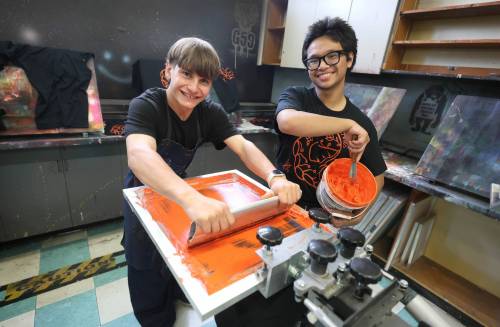
On the eve of Orange Shirt Day, hundreds of black T-shirts will be handed out to teenagers at Elmwood High School — and there wasn’t a mixup in the clothing procurement process.

The student-run business behind the initiative wanted to make a statement about “truth and reconciliation” being a year-round activity, said Daniel Concepcion, a Grade 12 student.

Daniel said given that black is a staple in the wardrobe of teenagers, he hopes these shirts won’t sit on hangers for 364 days of the year.

“Every child matters, every part of the day, every day,” the 17-year-old said.

Read
Yesterday at 6:57 PM CDT

Port of Churchill signs agreement with Dutch port

Aaron Epp 2 minute read Preview

Port of Churchill signs agreement with Dutch port

Aaron Epp 2 minute read 4:40 PM CDT

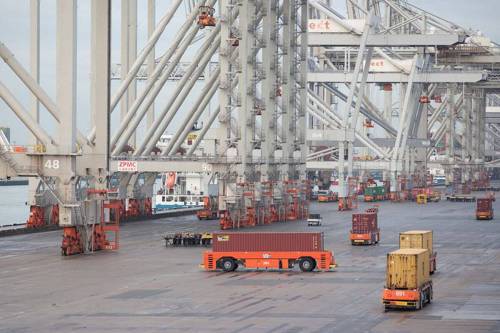
Arctic Gateway Group, operator of the Port of Churchill, has signed an agreement with the Port of Rotterdam in the Netherlands to attract business and strengthen supply chains linking Western Canada and Europe.

The agreement enables the two ports to work together to develop new trade in critical minerals and energy products, connect Canadian producers with European buyers, and identify opportunities to improve the supply chain from Western Canadian resource projects through Churchill and into European markets.

The Port of Rotterdam is Europe’s largest port and home to more than 3,000 businesses across its industrial complex, serving as a major gateway for critical raw materials and energy.

Meanwhile, the Port of Churchill has been identified as a transformative national strategy for Canada and is emerging as a northern trade corridor connecting Western Canada’s resources to global markets.

Read
4:40 PM CDT

Bathhouse owner upset after judge grants bail to man accused in foiled bombing

Dean Pritchard and Morgan Modjeski 5 minute read Preview

Bathhouse owner upset after judge grants bail to man accused in foiled bombing

Dean Pritchard and Morgan Modjeski 5 minute read Updated: Yesterday at 5:00 PM CDT

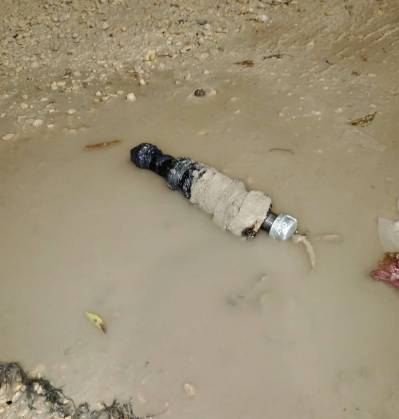
The owner of a Notre Dame Avenue bathhouse is troubled after a man accused of planting a pipe bomb outside his club was granted bail.

Erik Lymen Olson, 59, was granted release following a contested bail hearing last Monday.

“I don’t think he should have got out with something like this — at all,” said Christopher Gregoire, owner of AQ Sauna.

Olson was arrested Sept. 12, one day after allegedly planting a pipe bomb outside the sex and lifestyle club.

Read
Updated: Yesterday at 5:00 PM CDT

Province to acquire campground near former residential school

Morgan Modjeski 3 minute read Preview

Province to acquire campground near former residential school

Morgan Modjeski 3 minute read 6:00 AM CDT

A burial site for dozens of children who died while attending the Brandon Indian Residential School will be acquired by the province, the Free Press has learned.

Premier Wab Kinew will announce the province’s plan to protect Turtle Crossing Campground at a news conference in Brandon Wednesday to mark National Day for Truth and Reconciliation. The move is in partnership with the City of Brandon.

The graves of at least 56 children are located at the campground, the Sioux Valley Dakota Nation has said, pointing to a geophysical study conducted by an archaeology firm in 2018.

There have been longstanding concerns from Indigenous leaders and community members that people were camping on the resting place of children victimized by colonialism.

Read
6:00 AM CDT

Completely separating inmates unrealistic, inquest judge says in report on three Stony Mountain slayings

Erik Pindera 5 minute read Preview

Completely separating inmates unrealistic, inquest judge says in report on three Stony Mountain slayings

Erik Pindera 5 minute read 1:43 PM CDT

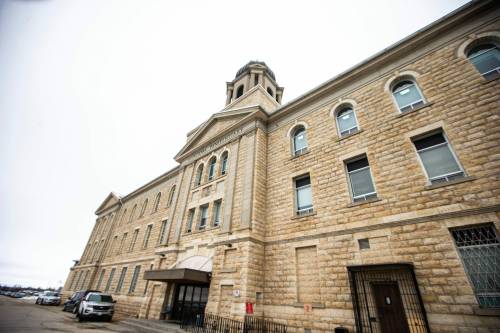
Nothing short of keeping inmates separated at all times could have prevented three unrelated prisoner-on-prisoner killings several years ago in Stony Mountain Institution’s maximum-security unit, an inquest judge has found.

Provincial court Judge Lindy Choy made the finding after overseeing an inquest earlier this year into the slayings of Adrian Fillion, 42, Michael Monney, 27, and Nolan Thomas, 26, all of which occurred at the hands of fellow maximum-security inmates in the federal prison just north of Winnipeg. The killings occurred when cells were unlocked, allowing inmates to briefly move around to other areas in the cell block.

“The overall impression I was left with from the (Stony Mountain Institution) witnesses was that management of inmates in a custodial facility is a very complex undertaking. There are clearly multiple levels of oversight involved in any decisions that are made and it is all done in a very structured manner,” Choy wrote in her report on the inquest, which was made public Tuesday.

“While maintaining complete physical distance between inmates at all times would have prevented the homicides from occurring, we know that from a social and psychological perspective, this is not generally realistic nor acceptable.”

Read
1:43 PM CDT