Greek tragedy offers modern life lessons

Advertisement

Advertise with us

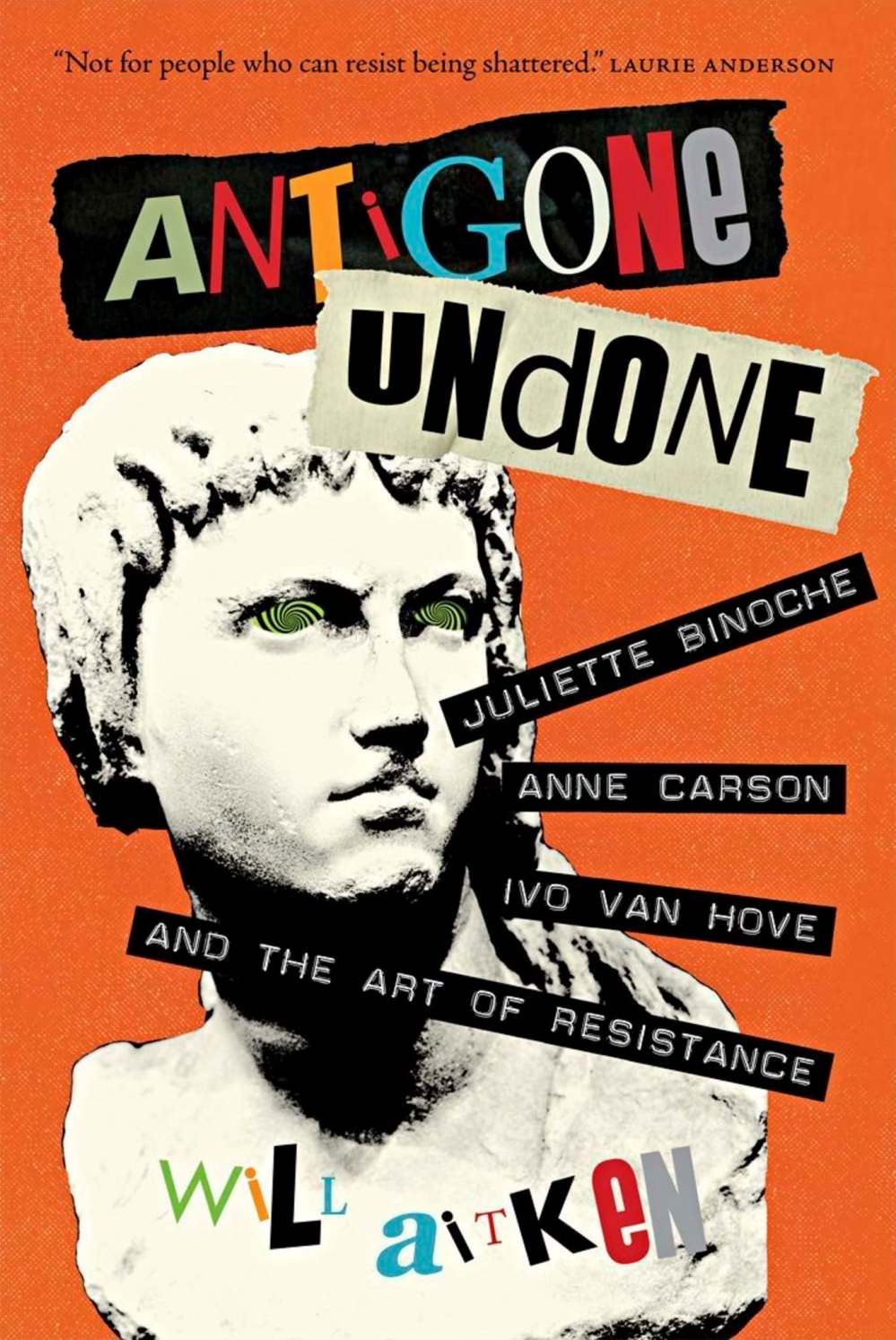
For Will Aitken, Montreal-based American-Canadian novelist, journalist and film critic, the story of Antigone Undone — part memoir, part travelogue, part criticism and a thoroughly engaging read — begins in 2015 when poet Anne Carson invites him to Luxembourg. He is there to witness the opening of the play Antigone, translated by Carson, starring French actress Juliette Binoche and staged by Belgian director Ivo van Hove.

Read this article for free:


or

Already have an account? Log in here »

To continue reading, please subscribe:

Subscribe and receive a limited-edition Free Press branded hat or tote.

Digital Subscription

One year of digital access for only $205*

  • Enjoy unlimited reading on winnipegfreepress.com
  • Read the E-Edition, our digital replica newspaper
  • Access News Break, our award-winning app
  • Play interactive puzzles

*First annual payment billed as $205.00 + GST for one year. This annual subscription will automatically renew at $233.00 + GST every 52 weeks (10% off the regular annual price of $259.35). Offer available to new and qualified returning subscribers only. Cancel any time.

To continue reading, please subscribe:

Add Free Press access to your Brandon Sun subscription for only an additional

$1 for the first 4 weeks*

  • Enjoy unlimited reading on winnipegfreepress.com
  • Read the E-Edition, our digital replica newspaper
  • Access News Break, our award-winning app
  • Play interactive puzzles
Start now

*Your next Brandon Sun subscription payment will increase by $1.00 and you will be charged $17.95 plus GST for four weeks. After four weeks, your payment will increase to $24.95 plus GST every four weeks.

Hey there, time traveller!
This article was published 10/02/2018 (3152 days ago), so information in it may no longer be current.

For Will Aitken, Montreal-based American-Canadian novelist, journalist and film critic, the story of Antigone Undone — part memoir, part travelogue, part criticism and a thoroughly engaging read — begins in 2015 when poet Anne Carson invites him to Luxembourg. He is there to witness the opening of the play Antigone, translated by Carson, starring French actress Juliette Binoche and staged by Belgian director Ivo van Hove.

Aitken observes the rehearsals and then the performances, and gets to question Carson’s, the actors’ and the director’s creative choices. He succinctly compiles the best of his interviews in the second part of book. He offers insight into the dramatic process, but also stands back to take stock of the production’s effect on its audience, and opens the play and the character of Antigone up for critical and political readings.

In Sophokles’ fifth-century BC Greek tragedy Antigone, the teenage princess of Thebes, rebels against her uncle Kreon’s law and sneaks outside of the city to bury her “traitor to the state” and fallen brother Polynices. When she is found out, Antigone is sentenced to death and locked in a tomb, where she hangs herself. Although Kreon relents, his pardon comes too late. In turn, his son, engaged to Antigone, kills himself and Kreon’s grieving wife also takes her own life.
It’s a dark play, but as we are witnessing today’s political stage of the White House, where a despotic ruler passes laws that jeopardize rights and freedoms long established, Antigone’s resistance doesn’t seem so far removed. Her standing up to a man cloaked in the authority of a corrupt system resonates even further in the context of the #MeToo movement. The play eerily speaks to our world, our fears.

So it’s not surprising that the book is also the story of Aitken’s identification with Antigone and his unravelling — the depression and suicidal thoughts founded in past familial dysfunction and possible abuse Aitken alludes to.

While aspects of travel journalism, memoir and criticism in the book sometimes clash tone-wise, far more important than Aitken’s wit, colourful descriptions and pointed observations is his honesty about the effect the play has on him. In exposing his vulnerability, he allows us to embrace our own.

After his immersion in the play, Aitken describes emerging from an unwanted and threatening encounter in the basement of a queer Amsterdam bar — which is suffocating and has an uncanny resemblance to Antigone’s tomb — and also writes of his ­devastation at the near death of his dog. This makes sense since for most of us, our resistance to the dumb brutality of today’s world will not be the thing of a Greek tragedy, but will occur in the context of our everyday acts and experiences.

Aitken also discusses how Antigone’s story has influenced various thinkers including Georg Hegel, Virginia Woolf and Judith Butler. This reader groaned seeing Søren Kierkegaard’s name, but Aiken’s take on and challenge of Kierkegaard’s portrayal of Antigone is original and amusing. Even when discussing philosophy, Aitken’s writing is clear and visceral, and he never speaks down to his readers.

As disparate as the book’s three parts are, they work together to convince us that Antigone, similarly to other great art, affects and changes us.

Aitken ends his book with all the major players together after Antigone’s closing performance — Aitken, Binoche and Carson face each other around Carson’s kitchen table. They converse, and Binoche’s last words reverberate: “I express the world’s pain and try to heal it. Or maybe the expression of it is healing in itself.”

In today’s political climate, it’s as good a starting point as any.

Barbara Romanik resides in Winnipeg and is a fiction writer, editor and an academic.
Report Error Submit a Tip

More Stories

Museum warehouse holds the history of electrical power in Manitoba

Sheldon Birnie 8 minute read Preview

Museum warehouse holds the history of electrical power in Manitoba

Sheldon Birnie 8 minute read 6:00 AM CDT

The work it takes to bring any endeavour to light is rarely, if ever, seen by those who look upon the final result — be that a creative work such as a feature film or a museum display.

Since 2001, the Manitoba Electrical Museum and Education Centre, located at 680 Harrow St., has provided thousands of visitors with a century’s worth of history on electrical power in Manitoba.

“Everyone who comes in here is amazed at how much we can pack into such a small space,” says executive director Beryth Strong, who took on the role last November.

The museum is open to the public Tuesday to Saturday from 1 to 4 p.m. and hosts large groups of students throughout the school year. While the museum itself boasts numerous displays featuring approximately 220 electrical artifacts, including household appliances, computers, telephones, technical gear and much more, along with a collection of nearly 20,000 photos documenting major electrical construction projects, its warehouse just south of McGillivray Boulevard houses thousands more unique items.

Read
6:00 AM CDT

Patrol volunteers provide aid when skiers take a tumble

AV Kitching 5 minute read Preview

Patrol volunteers provide aid when skiers take a tumble

AV Kitching 5 minute read 2:00 AM CDT

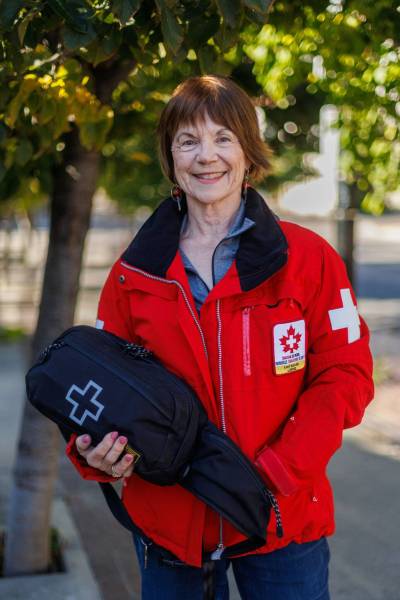
It’s not yet winter but that hasn’t stopped Lori Natuik from preparing for when snow hits the ground.

Read
2:00 AM CDT

What’s open, what’s closed, what’s up in Winnipeg on National Day of Truth and Reconciliation Sept. 30, 2026

Free Press staff 4 minute read Preview

What’s open, what’s closed, what’s up in Winnipeg on National Day of Truth and Reconciliation Sept. 30, 2026

Free Press staff 4 minute read Yesterday at 10:38 AM CDT

The National Day of Truth and Reconciliation, or Orange Shirt Day, as it's known in Manitoba, happens Sept. 30 with many commemorative community events scheduled.

Read
Yesterday at 10:38 AM CDT

Bison kicker Turner named captain, shows she belongs

Joshua Frey-Sam 7 minute read Preview

Bison kicker Turner named captain, shows she belongs

Joshua Frey-Sam 7 minute read Saturday, Sep. 26, 2026

Even on nights like this, Maya Turner can appreciate how far she’s come.

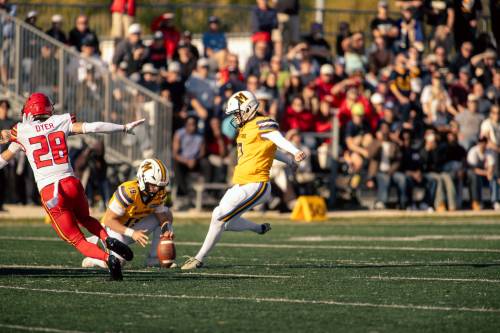
Though it feels like yesterday that the Manitoba Bisons kicker arrived on the scene with an unheralded right leg and a point to prove, these days the fifth-year student-athlete is lining up to split the uprights with a veteran boot and the added responsibility of being a team captain.

Getting to this point wasn’t easy, though.

It’s now four years ago that Turner ditched her NCAA Division 1 soccer career at Loyola University in Chicago to kick a different ball on the gridiron and signed with the Bisons, who were one of more than one hundred programs across North America that she sent tape to in hopes of realizing a new dream.

Read
Saturday, Sep. 26, 2026

Positive anticipation is growing about major housing developments underway in Winnipeg’s downtown

Gabrielle Piché 10 minute read Preview

Positive anticipation is growing about major housing developments underway in Winnipeg’s downtown

Gabrielle Piché 10 minute read Friday, Sep. 25, 2026

If traffic is light and the wind is down, Somia Sadiq is able to hear the roar of Winnipeg Jets fans twice: first through her window, then on TV.

From her apartment view high above downtown, she can look out at Graham Avenue’s painted pedestrian landscape, see construction cranes and hear the heavy equipment at work as massive housing projects take shape at The Forks, at what used to be Portage Place shopping centre and at the former Hudson’s Bay building.

Sadiq has lived at 300 Main for 2 1/2 years, a few steps from the city’s famous, windy and reopened-to-pedestrians Portage Avenue intersection. At 42 storeys, it’s the tallest building in Winnipeg.

She is among 18,000 downtown residents who will soon be joined by thousands of others attracted to the city’s core by the new wave of major construction projects.

Read
Friday, Sep. 25, 2026

Winnipeg Police Service recognizes, honours residential school survivors as Orange Shirt Day approaches

Malak Abas 3 minute read Preview

Winnipeg Police Service recognizes, honours residential school survivors as Orange Shirt Day approaches

Malak Abas 3 minute read Yesterday at 7:27 PM CDT

Winnipeg Police Service members lit a sacred fire outside of their North District Station in recognition of residential school survivors ahead of the upcoming Orange Shirt Day.

“We know that the relationship between policing and Indigenous communities has not always been one of trust,” WPS Chief Gene Bowers told visitors at a gathering outside of the station Sunday afternoon.

“We cannot change that history, but we can acknowledge it, we can learn from it, and we can take responsibility for how we move forward.”

The sacred fire, guided by elder Mike Calder, will burn for 24 hours at the Sinclair Street station, and then be allowed to extinguish naturally. It’s the second year the WPS has lit a sacred fire in recognition of residential school survivors — last year, the fire was lit outside of WPS headquarters on Smith Street.

Read
Yesterday at 7:27 PM CDT