Tip of the iceberg
Book explores effects of Type 2 diabetes on Indigenous youth
Advertisement
Read this article for free:
or
Already have an account? Log in here »
To continue reading, please subscribe:

Digital Subscription
One year of digital access for only $205*
- Enjoy unlimited reading on winnipegfreepress.com
- Read the E-Edition, our digital replica newspaper
- Access News Break, our award-winning app
- Play interactive puzzles
*First annual payment billed as $205.00 + GST for one year. This annual subscription will automatically renew at $233.00 + GST every 52 weeks (10% off the regular annual price of $259.35). Offer available to new and qualified returning subscribers only. Cancel any time.
To continue reading, please subscribe:
Add Free Press access to your Brandon Sun subscription for only an additional
$1 for the first 4 weeks*
- Enjoy unlimited reading on winnipegfreepress.com
- Read the E-Edition, our digital replica newspaper
- Access News Break, our award-winning app
- Play interactive puzzles
*Your next Brandon Sun subscription payment will increase by $1.00 and you will be charged $17.95 plus GST for four weeks. After four weeks, your payment will increase to $24.95 plus GST every four weeks.
Read unlimited articles for free today:
or
Already have an account? Log in here »
Hey there, time traveller!
This article was published 24/03/2018 (3090 days ago), so information in it may no longer be current.
In the late 1980s, pediatric endocrinologists at the Children’s Hospital in Winnipeg began to notice Indigenous youth from two First Nations in northern Manitoba and northwestern Ontario coming to clinics with what looked like Type 2 diabetes, until then a condition seen only in adults. But these young patients were just the tip of the iceberg. Over the next few decades, more children would confront what was turning into not only a medical but also a social and community challenge.
Through dozens of interviews, Larry Krotz shows the impact of Type 2 diabetes on the lives of individuals and families, as well as the challenges caregivers face diagnosing and then responding to the complex and perplexing disease, especially in communities far removed from the medical personnel and facilities available in the southern Canada.
● ● ●

One spring day in 1987, Dr. Ron Mundy, a physician working for Manitoba’s Northern Medical Unit serving two communities in an isolated corner of the province’s northeast, examined a fourteen-year-old girl who had been brought by her mother to his clinic on the St. Theresa Point First Nation. The mother had Type 2 diabetes, a disease rapidly gaining ground among older people in Indigenous communities all across Canada. Mindful of her own situation, she had become concerned about her daughter’s lethargy and, on a hunch, had used her own blood sugar meter to test the teenager. She was alarmed by the young girl’s sugar levels and brought her to the nursing station. Mundy understood the mother’s concern but found that other than the daughter being slightly overweight, there seemed to be nothing wrong with her. Should the problem be diabetes, anyone so young would most likely have Type 1, then known as juvenile diabetes or insulin-dependent diabetes (IDDM). That didn’t seem to be the case here. The classic symptoms for Type 1 diabetes were an abrupt and dramatic onset of insatiable thirst, frequent trips to the bathroom during day and night, and rapid weight loss. Without insulin injections, the patient dies. But the girl was experiencing none of these. A month later, the mother brought the girl’s younger sister to the nursing station for the same reason — high blood sugar levels.
At a loss as to how he should treat these young patients, Mundy decided to seek outside help. He sent both sisters south to the Children’s Hospital diabetes clinic in Winnipeg, along with a letter to the medical director, Dr. Heather Dean. In it, he explained that although the family had a history of Type 2 or adult-onset diabetes, the girls themselves had no significant past history other than the older one feeling unwell and drowsy and both sisters having blood sugar levels that were very high. He told Dean that she would be interested to meet and would be challenged by these two young patients.
Dean, a native of southern Ontario and a graduate of Queen’s University, had by then been in Manitoba for eight years. Initially, she worked as an endocrinology resident after pediatric training in Montreal and Ottawa. Early on, she had become interested in diabetes. It was a propitious time to have such an interest: diabetes, both in its juvenile form and late-onset or adult forms, had come to the fore of both public and, more importantly, official attention. The Children’s Hospital of Winnipeg had a newly minted clinic called the DERCA (Diabetes Education and Resources for Children and Adolescents). It was set up two years earlier, in 1985, as part of a Manitoba-wide initiative to promote education about diabetes and to treat a disease considered to be increasingly worrisome. Dean was its first medical director. The DERCA quickly amassed a patient base of 150 young people, all with Type 1 diabetes. The staff monitored the patients and provided information about how to take the insulin necessary to keep them alive and what to watch for in terms of future complications. By helping young people get access to programs like group counseling and special summer camps, the program set out to support them and their families in what they knew was a challenging lifestyle.

Soon, however, additional youngsters began to drop into this cohort. These new patients — a couple at first and then several more — were not white like the overwhelming majority in the Children’s Hospital clinic, they were First Nations children and teenagers with roots in the province’s north. Like everybody else, they were put on insulin. But as time passed and more Indigenous kids showed up, it became apparent that these cases were not the same as the rest. The young Indigenous patients appeared to face a unique condition; they exhibited high blood sugar levels but few of the other symptoms consistent with the Type 1 diabetes.
Puzzled, Dean turned to her textbooks. “People were saying it couldn’t be Type 2 diabetes because that was something you only got later in life,” she recalls, looking back. “But if that were the case, then we didn’t know what it was.” In the textbooks, she found that there had been very rare cases of children with a genetic condition called Prader-Willi syndrome who showed symptoms akin to diabetes. With this condition, the patients, perpetually hungry, basically eat themselves into extreme obesity, and then suffer when their pancreas fails to cope. But the children currently in front of her did not fit that profile. They had vague or no symptoms prior to diagnosis and the high blood sugar was only discovered because someone in the family with Type 2 diabetes suspected something was wrong. Many of these northern families had no running water at home and relied on an outhouse (or a bucket during the winter), so had their children been experiencing extreme thirst or frequent urination, it would have been noted by the whole family. This was not the case. As well, rather than losing weight, these children were usually obese with no recent weight loss. The physician was stumped about how to treat young persons who obviously had symptoms, although not of Type 1 or IDDM. In one case, she recalls, “Though her blood sugar was high, I did not start her on insulin or advise insulin because she didn’t have any other symptoms. Instead we advised the family about healthy eating and exercise and sent her home.”
In a letter back to Mundy — who at that point she had never met but only talked to on the phone — Dean noted how she was paying special attention to the young Indigenous patients now coming into her purview. The majority, she observed, seemed to do well with dietary restrictions but noted that management would be a challenge. The DERCA staff then took a second look at earlier patients. The other names for Type 1 or IDDM and Type 2 or Non-Insulin-Dependent Diabetes Mellitus (NIDDM ) were “juvenile-onset” and “adult-onset.” Thus far, Type 2 diabetes appeared to be strictly a disease of adults, usually adults well into their forties to sixties. This is where Dean and her colleagues needed to take a philosophical leap. A couple of young girls who had come on the scene as early as 1980 and had been treated as if they had Type 1 presented all the manifestations of Type 2 diabetes — as did, Dean observed, the two sisters sent to her by Dr. Mundy. This was a shock, as was the realization that the Indigenous patients came overwhelmingly from the same area, a set of four isolated First Nations in the northeast corner of Manitoba called Island Lake (one of the four communities being St. Theresa Point). Even if the young people were living in Winnipeg at the time of their diagnosis, Island Lake was where their roots were. Putting these pieces together became Dean and her team’s “aha moment.” From then on, contrary to the conventional medical wisdom of the day, the Winnipeg pediatrician came to believe that NIDDM, or what would commonly come to be known as Type 2 diabetes, could show up in persons under the age of eighteen. “The shoe dropped. If we start to look for it,” she remembers thinking, “we’re going to find it.”
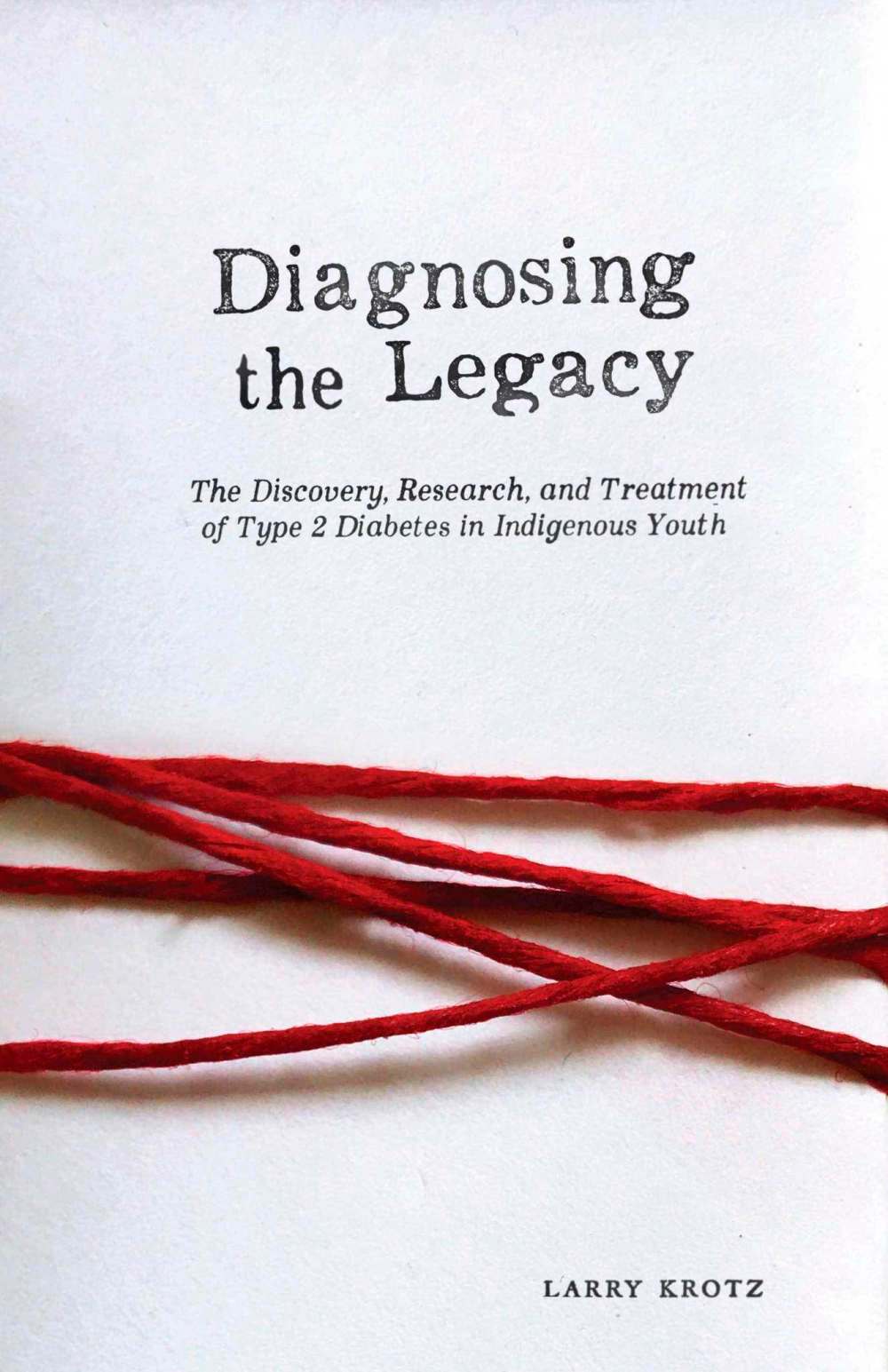
Excerpt from Diagnosing the Legacy: The Discovery, Research, and Treatment of Type 2 Diabetes in Indigenous Youth (University of Manitoba Press). Larry Krotz has, as writer and filmmaker, explored the ways our actions affect our world from Africa to Canada’s North. He is the author of five books, including Piecing the Puzzle: the Genesis of AIDS Research in Africa.