Napoleon’s rise and fall fuelled by ambition
Advertisement
Read this article for free:
or
Already have an account? Log in here »
To continue reading, please subscribe:

Digital Subscription
One year of digital access for only $205*
- Enjoy unlimited reading on winnipegfreepress.com
- Read the E-Edition, our digital replica newspaper
- Access News Break, our award-winning app
- Play interactive puzzles
*First annual payment billed as $205.00 + GST for one year. This annual subscription will automatically renew at $233.00 + GST every 52 weeks (10% off the regular annual price of $259.35). Offer available to new and qualified returning subscribers only. Cancel any time.
To continue reading, please subscribe:
Add Free Press access to your Brandon Sun subscription for only an additional
$1 for the first 4 weeks*
- Enjoy unlimited reading on winnipegfreepress.com
- Read the E-Edition, our digital replica newspaper
- Access News Break, our award-winning app
- Play interactive puzzles
*Your next Brandon Sun subscription payment will increase by $1.00 and you will be charged $17.95 plus GST for four weeks. After four weeks, your payment will increase to $24.95 plus GST every four weeks.
Read unlimited articles for free today:
or
Already have an account? Log in here »
Hey there, time traveller!
This article was published 01/12/2018 (2854 days ago), so information in it may no longer be current.
British historian Adam Zamoyski writes that the aim of his book is “not to justify or condemn, but to piece together the life of a man… and to examine how he became ‘Napoleon’ and achieved what he did, and how it came about that he undid it.”
A masterful historian, Zamoyski fulfils this task eloquently.
Napoleon is often called a military and political genius, but in reading Zamoyski, the question arises: how much of Napoleon’s perceived greatness was owing to his military foes’ incompetence, and to timing and circumstance in the stormy political world of 18th-century revolutionary France?
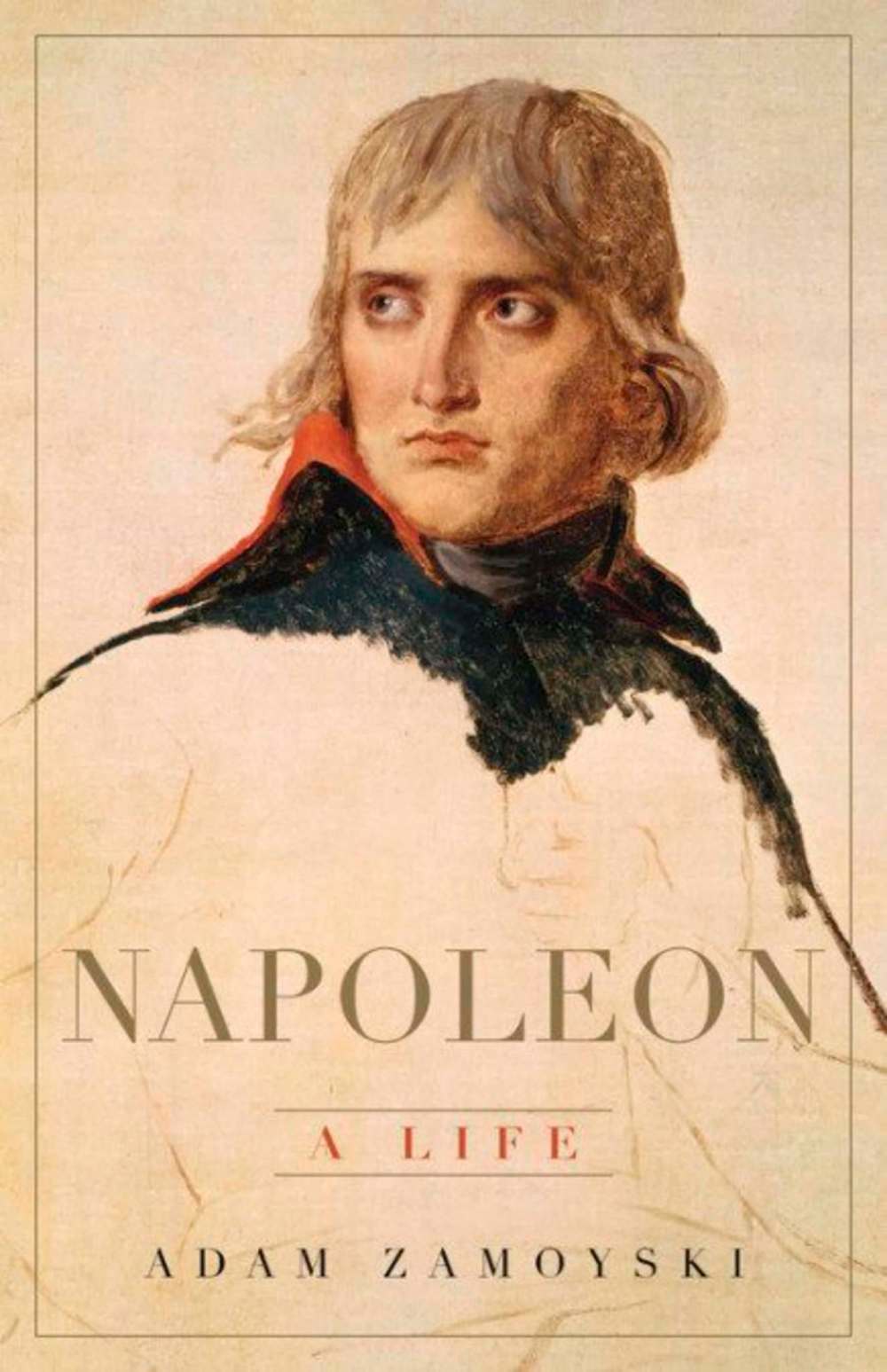
Napoleon Bonaparte was born in 1769 into an impoverished noble family on the island of Corsica, one of the poorest and most backward places in Europe. The family was ambitious and finagled a spot for Napoleon in a French military academy; in his early 20s, Napoleon became a lieutenant of artillery.
A determined and talented young officer could earn quick promotions, as most of the senior officers had been killed, imprisoned or executed during the French Revolution. Napoleon was swift to make his mark as a soldier and as an opportunistic political pamphleteer.
He was promoted to brigadier-general thanks to the vitally important part he played in the French victory at the Siege of Toulon (1793), and was then made general in the First Italian Campaign (1796) and commanded the disastrous campaign in Egypt (1798).
He was a brilliant tactician, but was even a better at self-promotion. He ensured any reports sent to the government in Paris were glowing in his praise, even in the face of defeat. He crafted his popular image as artfully as any cunning politician in history, as we still see today in the magnificent paintings of him by neoclassical painter Jacques-Louis David.

Politics was everything in revolutionary France. Napoleon knew that making the wrong choice ensured imprisonment, exile or the guillotine. As a professed believer in the republican goals of the French Enlightenment — science, rationality, liberty, equality, fraternity — he placed his fate with the moderate Republicans, opposed to the radical Jacobins and reactionary Bourbon royalists.
The Republican ascendancy, his personal popularity and universal dissatisfaction with 10 years of revolutionary chaos led to his becoming first consul of France in 1799, pledging to govern according to the republican principles of the Revolution, although he become a virtual dictator of France.
However, by crowning himself emperor of France in 1804, he began ruling more like a heredity Bourbon monarch than an enlightened despot. Napoleon once quipped, “Ambition is never content, even on the summit of greatness.” Zamoyski might, in part, agree with Lord Acton’s dictum: “Power tends to corrupt and absolute power corrupts absolutely. Great men are almost always bad men…”
Fortune had favoured Napoleon, but with his hubris, fate turned against him in the wars against a united Europe. His war in Spain (1808) was a disaster, the defeat in Russia (1812) was calamitous and the loss at the Battle of Waterloo (1815) led to his exile to St. Helena, where he died in 1821.
Ian Stewart is curator of the Royal Winnipeg Rifles Museum and Archives.