Prohibition-era murder story a dry read

Advertisement

Advertise with us

Canada’s recent legalization of cannabis has ended a long period of prohibition, for some of the same reasons that legal prohibition of alcohol did not work in North America almost a century ago.

Read this article for free:


or

Already have an account? Log in here »

To continue reading, please subscribe:

Subscribe and receive a limited-edition Free Press branded hat or tote.

Digital Subscription

One year of digital access for only $205*

  • Enjoy unlimited reading on winnipegfreepress.com
  • Read the E-Edition, our digital replica newspaper
  • Access News Break, our award-winning app
  • Play interactive puzzles

*First annual payment billed as $205.00 + GST for one year. This annual subscription will automatically renew at $233.00 + GST every 52 weeks (10% off the regular annual price of $259.35). Offer available to new and qualified returning subscribers only. Cancel any time.

To continue reading, please subscribe:

Add Free Press access to your Brandon Sun subscription for only an additional

$1 for the first 4 weeks*

  • Enjoy unlimited reading on winnipegfreepress.com
  • Read the E-Edition, our digital replica newspaper
  • Access News Break, our award-winning app
  • Play interactive puzzles
Start now

*Your next Brandon Sun subscription payment will increase by $1.00 and you will be charged $17.95 plus GST for four weeks. After four weeks, your payment will increase to $24.95 plus GST every four weeks.

Hey there, time traveller!
This article was published 08/12/2018 (2840 days ago), so information in it may no longer be current.

Canada’s recent legalization of cannabis has ended a long period of prohibition, for some of the same reasons that legal prohibition of alcohol did not work in North America almost a century ago.

The fascinating characters and events of the late 1910s and early ’20s in and around Windsor, Ont., should make for an engaging and exciting story, focused on one small part of the broader Prohibition picture.

Unfortunately, Windsor native Patrick Brode’s newest work of Canadian legal history presents intimate details about the Detroit-Windsor border 100 years ago with academic distance, which fails to engage the reader as fully as the material deserves.
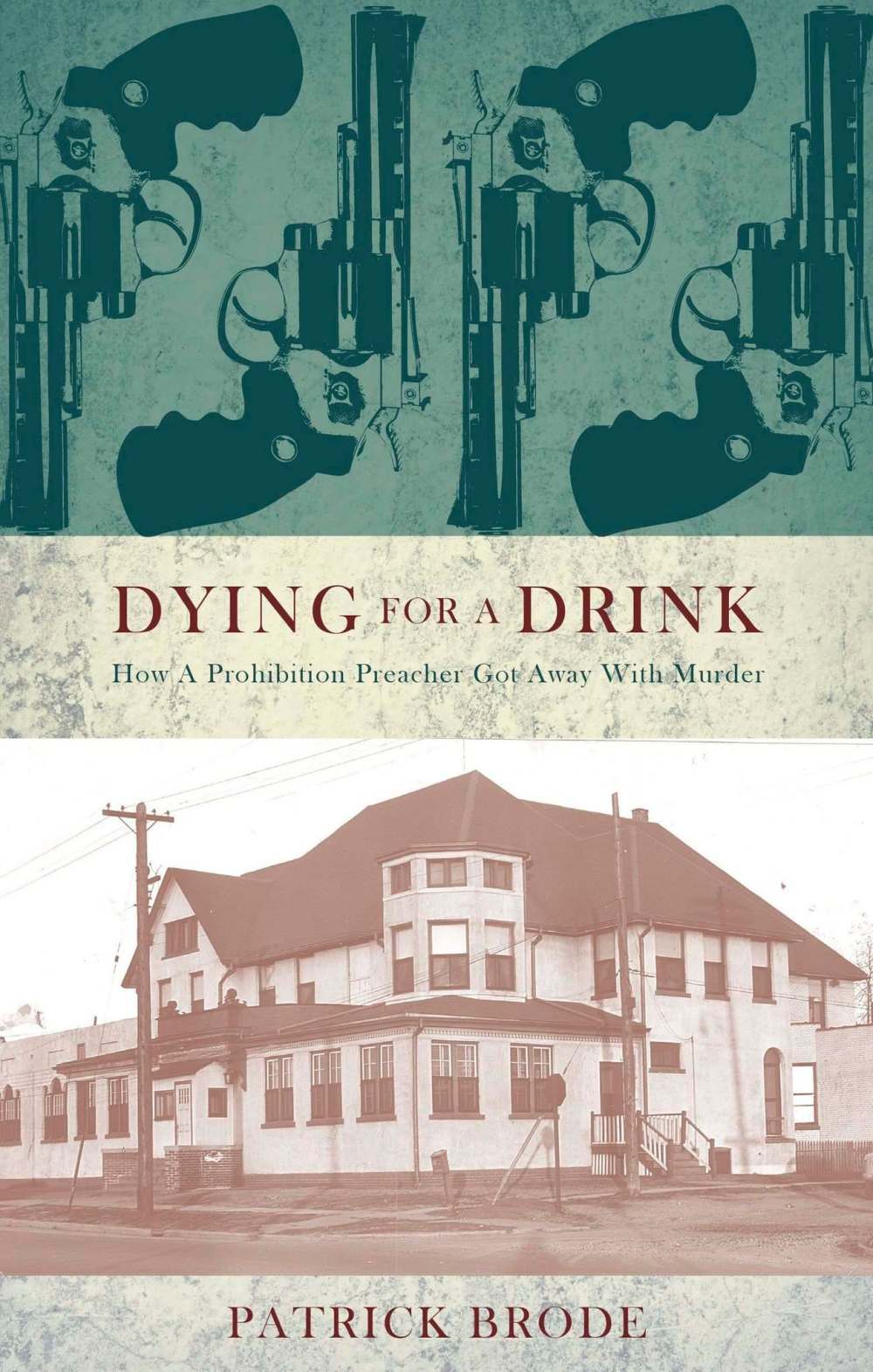
Brode is a lawyer who has written four other books, including 2009’s The Slasher Killings: A Canadian Sex-Crime Panic, 1945-1946. His most recent book was last year’s Border Cities Powerhouse: The Rise of Windsor 1900-1945.

The salaciously titled Dying for a Drink focuses on the problem of drinking in the 20th century. Its effects polarized opinions and actions after the First World War, culminating in the killing of a roadhouse proprietor by a preacher who was also a provincial licence inspector.

Brode’s command of the background and specific minutiae surrounding the episode show his extensive research and understanding of the law.

The Ontario Temperance Act (OTA), which Methodist minister Leslie Spracklin was enforcing, was a poorly written and contradictory law, which allowed too much leeway to enforcers and judges: “It was a bad act, which ‘leaves a magistrate free to presume a man’s guilt,’” according to one opponent.

He notes early connections between Spracklin and his eventual victim, Beverly (Babe) Trumble, whose death was mourned by Spracklin’s mother.

Complicating the situation in the “border cities” around Windsor was the freedom to transport liquor within Canada and the desperation for drink in nearby Detroit, which was under constitutional and Volstead Act prohibition at the time.

Partiers coming from the U.S. to drink in Windsor and its environs caused a lot of problems, and “rum-runners” smuggling legal Canadian Club and other alcohol illegally across the Detroit River overwhelmed inadequate Canadian border security.

Spracklin was able to employ a sketchy team of thugs and enforcers, who seemed completely open to corruption by the local sellers and smugglers. The purveyors of alcohol, like some black market drug providers today, considered graft and official confiscation part of the cost of doing business in a lucrative market.

Brode eventually details what happened in the early-morning shooting, and chronicles the trial and eventual fallout, which included the defeat of the startlingly acronymed United Farmers of Ontario (UFO!) provincial government, and some, well, temperance of the Prohibition excesses in Windsor.

Trumble’s wife Lulu Bell appeared as a dramatic participant at the inquest into his death. Whether Trumble was armed when Spracklin shot him was a crucial but disputed point.

In the hands of a documentarian such as director Ken Burns or a more literary-inclined author, Dying for a Drink could easily be edge-of-the-seat stuff. Readers who can provide the drama inherent in the story’s characters and plot will enjoy the historical details. Students of the history of Canada can also find lots to ponder in this short account.

Others may be left wanting a less, uh, dry presentation.

Bill Rambo teaches at the Laureate Academyin St. Norbert.

Report Error Submit a Tip

More Stories

Powerful personal drama provides both bark and bite

Ben Waldman 4 minute read Preview

Powerful personal drama provides both bark and bite

Ben Waldman 4 minute read 4:22 PM CDT

Well before playwright Rafaella Marcus’ words have the chance to entangle us in the stickiness of Sap, the performance space initiates the task in director Elio Zarrillo’s staging of this discomfiting and affecting story of restraint and liberation.

Shortly after the audience takes its seats in four segments surrounding a central channel — a shimmering tunnel containing cellist Grace Morningstar — it becomes clear as actors Hera Nalam and Liz Whitbread make their way around the tight corners of David Oro and Hazel Venzon’s set that certain actions will go unseen unless viewers keeps their heads on a swivel: in a production meant to uproot understanding, a fixed perspective will never do.

In this vulnerable and powerful production from Theatre by the River (105 minutes) the actors meet the excellence of Marcus’s twisty script, which calls for emotionally draining and jolting depictions of a relationship headed down a rocky road.

Nalam plays a young communications pro for a women’s aid charity whose dating life is a work in progress. She’s bright and optimistic, taking notice of elements of nature that nobody else seems to recognize. On her daily commute, she looks out from the bus window in awe of a home overflowing with branches and leaves.

Read
4:22 PM CDT

Manitoba mineral production set to triple, premier says

Carol Sanders 5 minute read Preview

Manitoba mineral production set to triple, premier says

Carol Sanders 5 minute read Updated: Yesterday at 5:19 PM CDT

Premier Wab Kinew said Tuesday Manitoba plans to triple mineral production in the next five years “to unlock a new era of wealth creation and growth.”

“We’re going to make sure that opportunity is spread throughout the province,” he told a news conference at the Canada investment summit in Toronto.

The province is working with industry and Indigenous governments to send a message to investors that “we’re going to do mining right in Manitoba,” the premier said.

For too long, Manitoba has lagged behind neighbouring provinces, Kinew said.

Read
Updated: Yesterday at 5:19 PM CDT

Transit safety drives first mayoral debate

Morgan Modjeski 4 minute read Preview

Transit safety drives first mayoral debate

Morgan Modjeski 4 minute read Yesterday at 2:01 AM CDT

The safety of Winnipeg Transit drivers was front and centre Monday as the first mayoral debate of the 2026 election focused on public transit.

Kevin Klein, the most experienced of the 10 candidates at the Amalgamated Transit Union 1505-hosted debate, said the time for partial safety shields has passed.

“The partial shields have failed drivers. That’s why we need change,” the former PC MLA and city councillor said, adding driver safety is not a staffing issue, but a “protection failure.”

If elected, Klein said he will bring in full-shield implementation across the city within two years and start a nine-bus pilot project immediately.

Read
Yesterday at 2:01 AM CDT

Gillingham pledges police, firefighter staffing increases to serve growing population

Joyanne Pursaga 5 minute read Preview

Gillingham pledges police, firefighter staffing increases to serve growing population

Joyanne Pursaga 5 minute read 6:39 PM CDT

Scott Gillingham is promising to set long-term staffing targets to raise the ratio of firefighters and police officers to Winnipeg’s population, if re-elected as mayor next month.

Read
6:39 PM CDT

U of M adds capacity to emergency medicine program for family doctors

Carol Sanders 5 minute read Preview

U of M adds capacity to emergency medicine program for family doctors

Carol Sanders 5 minute read 5:14 PM CDT

Manitoba is training more family doctors in emergency medicine to help strengthen the pipeline of emergency physicians for communities across the province.

Health Minister Uzoma Asagwara announced Wednesday that the University of Manitoba is increasing the number of annual training seats to 17 from 11. The family medicine enhanced skills program provides physicians with an additional year of specialized emergency medicine training after completing a family medicine residency.

“Emergency physicians do incredibly important work for Manitobans and we need more of them,” Asagwara said at a news conference at University of Manitoba’s Health Sciences Centre campus.

The province is investing in training more doctors, providing more physicians with the opportunity to build their careers in Manitoba and strengthening the workforce that emergency departments rely on, the minister said. The 17 residents began their training on July 1.

Read
5:14 PM CDT

Federal Court awards OCN $27M, 62 years after construction of hydro dam

Nicole Buffie 5 minute read Preview

Federal Court awards OCN $27M, 62 years after construction of hydro dam

Nicole Buffie 5 minute read Updated: 12:02 PM CDT

The Federal Court has ordered Ottawa pay Opaskwayak Cree Nation $27 million over damages suffered due to the construction of the Grand Rapids hydro dam in the 1960s.

In a decision dated Sept. 3, Federal Court Justice Sébastien Grammond says the federal government had a fiduciary duty to protect the community from the impacts of the dam.

“When the Crown exercises a discretionary power over an Indigenous interest, it has a fiduciary duty and it must exercise the discretion in the best interests of the Indigenous group,” the ruling said. “Canada breached its fiduciary duty to OCN because it approved the (project) without ensuring that the impacts of the Grand Rapids dam on OCN’s traditional way of life were mitigated or compensated.”

The First Nation took the federal government to court in February over impacts on the community after the dam, located about 145 kilometres southeast of Opaskwayak Cree Nation, was installed on the Saskatchewan River in 1964. The case was heard over 14 days in a judge-alone trial in Winnipeg.

Read
Updated: 12:02 PM CDT