Fleeting fortunes
Treasures rumoured to be hiding on Nova Scotia's Oak Island remain elusive
Advertisement
Read this article for free:
or
Already have an account? Log in here »
To continue reading, please subscribe:

Digital Subscription
One year of digital access for only $205*
- Enjoy unlimited reading on winnipegfreepress.com
- Read the E-Edition, our digital replica newspaper
- Access News Break, our award-winning app
- Play interactive puzzles
*First annual payment billed as $205.00 + GST for one year. This annual subscription will automatically renew at $233.00 + GST every 52 weeks (10% off the regular annual price of $259.35). Offer available to new and qualified returning subscribers only. Cancel any time.
To continue reading, please subscribe:
Add Free Press access to your Brandon Sun subscription for only an additional
$1 for the first 4 weeks*
- Enjoy unlimited reading on winnipegfreepress.com
- Read the E-Edition, our digital replica newspaper
- Access News Break, our award-winning app
- Play interactive puzzles
*Your next Brandon Sun subscription payment will increase by $1.00 and you will be charged $17.95 plus GST for four weeks. After four weeks, your payment will increase to $24.95 plus GST every four weeks.
Read unlimited articles for free today:
or
Already have an account? Log in here »
Hey there, time traveller!
This article was published 19/01/2019 (2771 days ago), so information in it may no longer be current.
The entirety of Oak Island should be called the Money Pit — not for the booty that may be on it, but for the fortunes spent trying to find it.
So far, numerous treasure hunts on, in and under the fabled island off the coast of Nova Scotia have led not to golden happiness, but only bewilderment and financial ruin. A paraplegic racehorse would be a better bet.
There have been numerous books and articles written about the little bottle-shaped island off the East Coast; whether or not you know the story, you are in for an enchanting, deliciously straightforward and well-written treat by veteran writer Randall Sullivan. The Oregon-based Sullivan has been a contributing editor to Rolling Stone for 20 years; this is his fifth book.
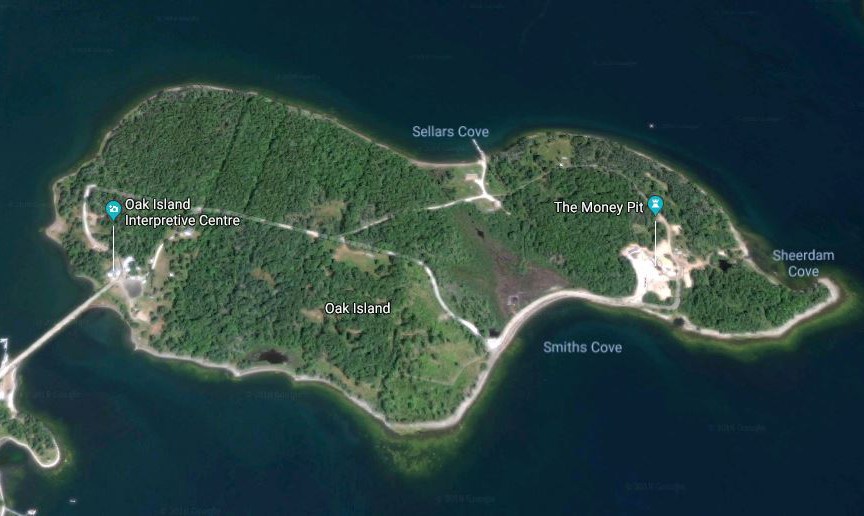
The searches, so many of them by hundreds of people, began 223 years ago, and will only end when treasure is found or when all the people trying to find it are exhausted. There is even a reality TV show, The Curse of Oak Island, that has aired on History since 2014. Six seasons and 68 episodes later, they have little to show for their efforts.
The impetus to keep looking where so many have failed is fuelled by the “bigger the armoured car, the bigger the treasure” syndrome: if somebody is going to all this trouble to protect something, it must be really worth finding.
And the Herculean effort that unknown people as early as 1640 undertook to guard whatever they did is astonishing. Solely through manual labour — and what must have been a huge workforce — they not only dug a vertical shaft 36 metres deep, but ensured that anyone who followed them would never be able to get to the bottom themselves because of a brilliant flooding system linked to the waters of nearby Mahone Bay.
As later treasure hunters would discover, the original builders dug out five tunnels on the bay like the open spread of a five-fingered hand. By putting a red dye in the bay, searchers determined that, no matter how often they pumped out the shaft, sea water always refilled the tunnels to 20 metres from the top. They had to find a way to shut off these tunnels from the sea or dig new shafts parallel to the original ones to somehow neutralize or bypass the flooding system. All kinds of new shafts have been built, without success.
The blame for this centuries-old quest rests on a 16-year-old boy, who in 1795 stumbled on a saucer-shaped depression on the island and, with dreams of pirate treasure — and with help from his buddies — quickly uncovered a shaft. They stopped digging once they hit six metres, for fear they would be buried alive.
There is a great deal of evidence that Mahone Bay was a haven for pirates in the 17th and 18th centuries; it was a prime location for them to spy on the shipping lanes along the coast.
In this adventure story, failure pops up more often than Kleenex. And the search for the treasure has involved some real notables as investors — Franklin Delano Roosevelt, who would later become U.S. president, and the notorious actor Errol Flynn, among others. Over the years of tunnelling, the treasure-seeking has also taken six lives in accidents.
Sullivan thinks the answer to the riddle of the treasure may well be a yet-unfound subterranean tunnel by which builders could get to their treasure on return without having to excavate. Nobody’s yet found that tunnel. Meanwhile, searchers did eventually penetrate the flood tunnel — or one of them, possibly — but still can’t figure out how or where to stop the flooding from the sea.
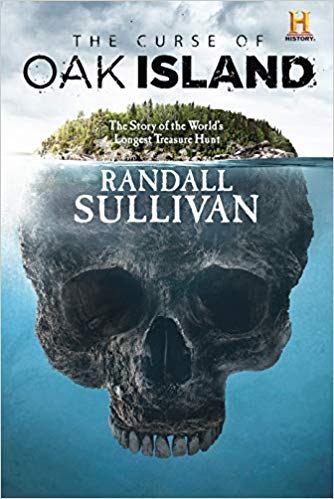
What’s hidden beneath Oak Island? The speculation varies: all sorts of pirate booty, Marie Antoinette’s lost jewels, the Holy Grail, proof that Sir Francis Bacon was the real author of Shakespeare’s plays and poems, the crown jewels of France, King Charles I’s personal collection of art (the finest the world has ever seen, totalling around 1,700 masterpieces), the Ark of the Covenant (put there by Christopher Columbus) and the priceless lost riches of King Solomon’s Temple.
You’ll have to read the book to find out what evidence searchers have found that makes them keep believing there’s treasure down there.
Not long ago, one of those searchers compared Oak Island to a slot machine. “You get just enough to keep you coming back,” he said. “You want to walk away but you’re afraid the next person’s going to hit the jackpot.”
Barry Craig is a retired journalist.
When you buy through links provided on this page, the Winnipeg Free Press may earn an affiliate commission.