Cold War space-race stanzas stunning

Advertisement

Advertise with us

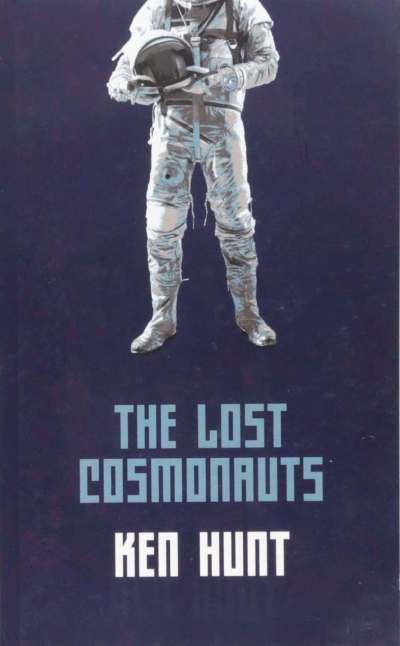
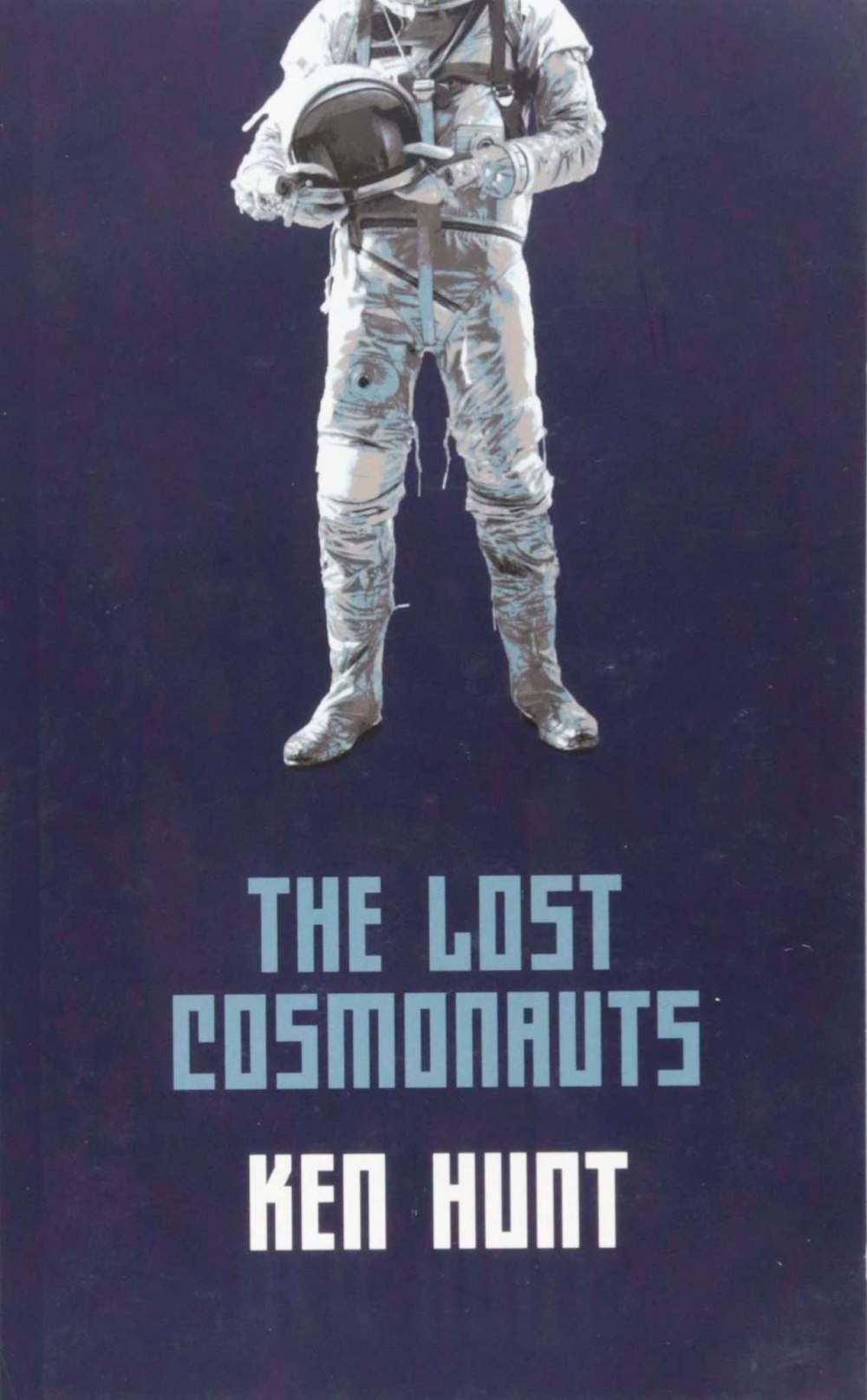
Ken Hunt’s The Lost Cosmonauts (Book*hug, 130 pages, $18) considers the space race between the U.S. and U.S.S.R. and mourns its dead.

Read this article for free:


or

Already have an account? Log in here »

To continue reading, please subscribe:

Subscribe and receive a limited-edition Free Press branded hat or tote.

Digital Subscription

One year of digital access for only $205*

  • Enjoy unlimited reading on winnipegfreepress.com
  • Read the E-Edition, our digital replica newspaper
  • Access News Break, our award-winning app
  • Play interactive puzzles

*First annual payment billed as $205.00 + GST for one year. This annual subscription will automatically renew at $233.00 + GST every 52 weeks (10% off the regular annual price of $259.35). Offer available to new and qualified returning subscribers only. Cancel any time.

To continue reading, please subscribe:

Add Free Press access to your Brandon Sun subscription for only an additional

$1 for the first 4 weeks*

  • Enjoy unlimited reading on winnipegfreepress.com
  • Read the E-Edition, our digital replica newspaper
  • Access News Break, our award-winning app
  • Play interactive puzzles
Start now

*Your next Brandon Sun subscription payment will increase by $1.00 and you will be charged $17.95 plus GST for four weeks. After four weeks, your payment will increase to $24.95 plus GST every four weeks.

Hey there, time traveller!
This article was published 23/02/2019 (2727 days ago), so information in it may no longer be current.

Ken Hunt’s The Lost Cosmonauts (Book*hug, 130 pages, $18) considers the space race between the U.S. and U.S.S.R. and mourns its dead.

Hunt meditates on how “humanity maintains its long-term plan: // to populate the Milky Way, taming its stars, / and huddle near these lights, in vaulting abbatoirs.”

In concept, ambition and technique, The Lost Cosmonauts is absolutely stunning in every way. Delivering beautiful and engrossing poems on a weighty subject with a light touch, Hunt’s lines “(shatter) our atmosphere in fugues of grinding fire.”
● ● ●

Dominique Bernier-Cormier’s Correspondent (Icehouse, 90 pages, $20) considers three historical events that the author’s father covered as a CBC foreign correspondent: “the sinking of the Kursk, the assassination of Ahmad Shah Massoud and the hostage crisis at the Dubrovka Theatre.”

Bernier-Cormier winds text taken from source voices (a Facebook post from Massoud’s son about the days following his father’s death, for example) through prose poems exploring the events themselves.

The resulting poetic sequences contain beautiful, affecting, stark prose threaded with sad, sharp voices.

Gripping and compelling, they develop with the depth and drive of a novel and a novelist’s eye for detail: “In the next valley, flaming apricots hang from branches at night. Little kicks in the dark, little sparks. A child learns by heart the lines a tank writes in the wet grass.”

● ● ●

Allison Chisholm’s On the Count of None (Anvil, 70 pages, $18) sloshes with strange imagery, filled to the brim: “This day is a string of jewellery-store robberies / and we stand motionless.”

In one poem, where we might expect a stanza to develop her themes, instead Chisholm offers us a “(Pee break)” — as if she had to get up and go to the washroom and so lost her train of thought. Or perhaps she’s offering us the opportunity to take a break from the book, before she hammers home “Our mutual decay?”

Minimalist but oddly fleshy, filled with surprising turns and sly imagery, On the Count of None has something for every reader, even their horoscopes: “If you are not yet moving at top speed, you very soon will be.”

● ● ●

Darrell Epp’s Sinners Dance (Mosaic, 86 pages, $18) imagines, among other oddities, “the sounds this piano could have made / if beethoven had had eleven fingers.”

Epp’s bizarre imagery delights and amazes, as we watch him twist poems into pretzels. Epp subverts standard poetic values, offering poems that parody poems: “saw the man in the moon in a macchiato latte. / dreamed of saying one true thing but couldn’t / quite pull it off.”

Here, Epp presents the dream of poetry (“saying one true thing”) as an impossible delusion, while in other poems he uses this same sarcastic tone to in fact say such true things: “i was selfish, now my / self is all i have.”

Always exciting and fun, Epp’s dense, snakelike poems will wrap and crush your heart.

Winnipeg English Prof. Jonathan Ball (@jonathanballcom) lives online at jonathanball.com, where he writes about writing the wrong way.
Report Error Submit a Tip

More Stories

RCMP investigating four-year-old girl’s death, two younger girls’ injuries in home on First Nation

Free Press staff 2 minute read Preview

RCMP investigating four-year-old girl’s death, two younger girls’ injuries in home on First Nation

Free Press staff 2 minute read Yesterday at 1:05 PM CDT

RCMP are investigating after a four-year-old girl died in suspicious circumstances at a home in Long Plain First Nation over the weekend.

Paramedics called Manitoba First Nations Police Service officers at about 7:45 a.m. on Sunday, asking for assistance at a home where the girl was reported as injured and in medical distress.

Officers helped paramedics with emergency treatment, but she was pronounced dead at the scene.

Two other girls — a one-year-old and a two-year-old — were also found injured at the home. Paramedics took both to hospital. One of the girls was in critical condition, while the other was stable. Both are now stable.

Read
Yesterday at 1:05 PM CDT

The circle of life — garden-sized

5 minute read Preview

The circle of life — garden-sized

5 minute read 2:00 AM CDT

“The lesson I have thoroughly learnt, and wish to pass on to others, is to know the enduring happiness that the love of a garden gives.” — Gertrude Jekyll (1843-1932), horticulturalist

It’s a chilly day for August — more like fall — but in the garden things are progressing as nicely as if every day this summer had been the perfect combination of sun and showers.

The peonies are spent, their heavy heads with a hangdog look. Soon the petals will fall, revealing the jester-hat seedpods within. The lilacs, too, their beautiful, fragrant blossoms now transformed into brown scruff.

But the day lilies are plumping up, ready for their big reveal. And the roses are still magnificent — dozens and dozens of fuchsia, red, white and coral blooms that turn our stone circle into a heavenly scented bower. It is here where we come after a hard day’s work in the garden, newly scrubbed and wearing fresh clothes, to sit at a little bistro table and have a glass of wine and enjoy the results of our labour.

Read
2:00 AM CDT

Ducks Unlimited makes province’s largest-ever conservation-land purchase

Zoe Pierce 3 minute read Preview

Ducks Unlimited makes province’s largest-ever conservation-land purchase

Zoe Pierce 3 minute read Yesterday at 12:11 PM CDT

A Manitoba landscape that helped save the Giant Canada goose from extinction has now been permanently protected in the province’s largest conservation land purchase in history.

Read
Yesterday at 12:11 PM CDT

Puzzles Palace

1 minute read Monday, Jul. 27, 2026

To solve our puzzles, please subscribe with this special offer: |

Gridlock by design: no excuses for bed backlog

Jason M. Sutherland 5 minute read 2:00 AM CDT

Imagine waking up in a hospital bed and being told by a doctor that you are well enough to leave, only to discover you cannot. Not because you want to stay, but because there is nowhere safe for you to go. No home-care support, no rehabilitation space, no long-term care bed.

This is unfortunately the daily reality for thousands of Canadians.

Being stuck in a hospital bed is a crisis from coast to coast. Our acute care hospitals are functioning as wildly expensive beds for vulnerable citizens awaiting a more suitable place to take them in.

A decade ago, policymakers fretted over this exact issue. Today, despite an aging population with increasingly complex needs and higher demand for hospital beds, the crisis has only deepened.

A mission to make hearing care easier to access

Aaron Epp 5 minute read Preview

A mission to make hearing care easier to access

Aaron Epp 5 minute read 2:00 AM CDT

Armando Di Lello was four years old when he was diagnosed with hearing loss in both ears and received his first hearing aids. He doesn’t remember that moment, but he recalls moments that followed.

“Going through elementary, middle school, high school — it was definitely something that was not a positive experience for me,” he said.

Di Lello’s hearing aids were big, bulky and noisy, and he chose not to wear them much of the time.

“I didn’t perceive the benefit as a kid,” he said. “No kid wants to appear different.”

Read
2:00 AM CDT