Author explores lingering effects of trauma
Advertisement
Read this article for free:
or
Already have an account? Log in here »
To continue reading, please subscribe:

Digital Subscription
One year of digital access for only $205*
- Enjoy unlimited reading on winnipegfreepress.com
- Read the E-Edition, our digital replica newspaper
- Access News Break, our award-winning app
- Play interactive puzzles
*First annual payment billed as $205.00 + GST for one year. This annual subscription will automatically renew at $233.00 + GST every 52 weeks (10% off the regular annual price of $259.35). Offer available to new and qualified returning subscribers only. Cancel any time.
To continue reading, please subscribe:
Add Free Press access to your Brandon Sun subscription for only an additional
$1 for the first 4 weeks*
- Enjoy unlimited reading on winnipegfreepress.com
- Read the E-Edition, our digital replica newspaper
- Access News Break, our award-winning app
- Play interactive puzzles
*Your next Brandon Sun subscription payment will increase by $1.00 and you will be charged $17.95 plus GST for four weeks. After four weeks, your payment will increase to $24.95 plus GST every four weeks.
Read unlimited articles for free today:
or
Already have an account? Log in here »
Hey there, time traveller!
This article was published 13/04/2019 (2682 days ago), so information in it may no longer be current.
“It is estimated that eight million people in the United States and more than three million Canadians have PTSD,” writes Garry Leech, a well-travelled independent journalist and author who currently teaches international politics at Cape Breton University.
Leech is the author of 2009’s Beyond Bogota: Diary of a Drug War Journalist in Colombia, which chronicled his experiences covering the decades-long rural war where ideological struggles intermixed with control over a lucrative drug trade, pitting left-wing guerrilla factions against right-wing paramilitary units.
Partly a sequel to his decade-old diary, Ghosts Within informs readers that paramilitary units “continue to be the country’s primary cocaine producers and traffickers,” but most pages are devoted to sensitive, albeit chronologically confusing narratives about witnessing or experiencing acts of brutality.
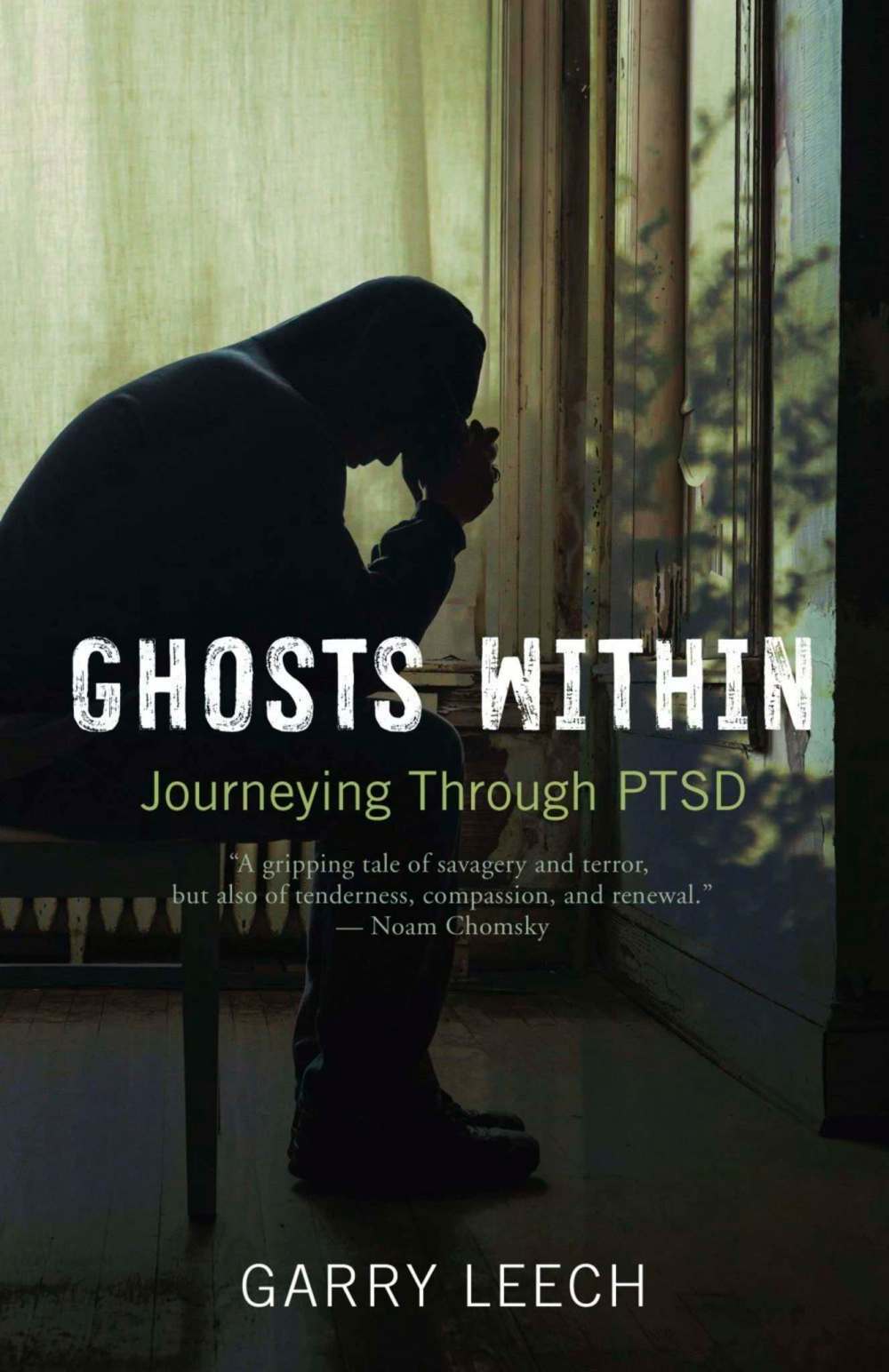
Disturbing war memories from his time in Colombia and traumatic incidents from his personal life combined to burden Leech with a mental illness previously known as “shellshock” and “battle fatigue” and long believed to afflict only war combatants.
During the two world wars, spit-and-polish officers were even inclined to view this condition as a shirker’s excuse to avoid combat. But, as Leech reminds us, trauma-related mental disorders are not imaginary, and are mentioned as far back as Homer’s The Iliad and The Odyssey, Shakespeare’s Henry IV and by noted psychiatrist Sigmund Freud, who first reported a link between sexual abuse and post-traumatic stress disorder (PTSD).
Readers who previously doubted PTSD’s existence amongst civilian populations should be moved by Leech’s graphic, soul-baring descriptions of its effects on him and on those who share his life.
During the dozen years reporting from conflict zones beginning in 2000, Leech witnessed horrible scenes of massacre victims and limbless survivors of landmines, which return as thoughts he now calls “intrusive memories.”
Leech was held captive at gunpoint, interrogated, threatened with death and is continuously burdened with one especially horrific image from a brief detention in a Salvadoran jail, where a woman was gang-raped by guards. These experiences contributed to his descent into mental illness, first characterized by angry outbursts over innocuous incidents resembling the sounds of war — like hearing his wife accidently drop some cutlery.
Leech recalls suffering from classic PTSD symptoms: anxiety in crowded places, social withdrawal, banging his head on walls in futile attempts to erase disturbing images and suicidal thoughts which, along with physical discomforts such as extreme fatigue, insomnia and diarrhea, all contributed to an emotional breakdown in 2016.
“PTSD is related to a change in the way the brain functions,” he writes, helping readers understand this disorder by deftly reducing a complex system into three parts: the rational brain that controls impulses and allows us to think rationally; the emotional brain that generates appropriate responses to potential threats; and the reptilian brain that triggers fight, flight or freeze responses to perceived threats.
His personal struggles demonstrate how traumatic experiences can disrupt normal functioning of these three parts, causing past events stored in the emotional brain to be misidentified as immediate dangers, which then cause inappropriate responses from the rational and reptilian brains.
Leech admits that prior to his diagnosis, “my behaviour had appeared to be that of an irrational, inconsiderate jerk.” Fortunately for him, forms of therapy approved by the World Health Organization and the American Psychiatric Association helped in “exorcizing the ghosts” that tormented him for years.
By referring to people most vulnerable to trauma, such as police officers, firefighters and other service providers, and then by recognizing identified sufferers — veterans of recent wars, victims of sexual assault and Indigenous people traumatized by residential schools — Leech suggests PTSD is more common than we think.
Unfortunately, his own compellingly sad story fails to shine more light upon reasons why other trauma participants remain immune to this particular mental illness.
Joseph Hnatiuk is a retired teacher.