Power to the people

Impact of Winnipeg General Strike still felt a century later

Advertisement

Advertise with us

A century ago, 35,000 Winnipeggers walked off the job in demand for a living wage, an eight-hour work day and the right to organize.

Read this article for free:


or

Already have an account? Log in here »

To continue reading, please subscribe:

Subscribe and receive a limited-edition Free Press branded hat or tote.

Digital Subscription

One year of digital access for only $205*

  • Enjoy unlimited reading on winnipegfreepress.com
  • Read the E-Edition, our digital replica newspaper
  • Access News Break, our award-winning app
  • Play interactive puzzles

*First annual payment billed as $205.00 + GST for one year. This annual subscription will automatically renew at $233.00 + GST every 52 weeks (10% off the regular annual price of $259.35). Offer available to new and qualified returning subscribers only. Cancel any time.

To continue reading, please subscribe:

Add Free Press access to your Brandon Sun subscription for only an additional

$1 for the first 4 weeks*

  • Enjoy unlimited reading on winnipegfreepress.com
  • Read the E-Edition, our digital replica newspaper
  • Access News Break, our award-winning app
  • Play interactive puzzles
Start now

*Your next Brandon Sun subscription payment will increase by $1.00 and you will be charged $17.95 plus GST for four weeks. After four weeks, your payment will increase to $24.95 plus GST every four weeks.

Hey there, time traveller!
This article was published 20/04/2019 (2678 days ago), so information in it may no longer be current.

A century ago, 35,000 Winnipeggers walked off the job in demand for a living wage, an eight-hour work day and the right to organize.

In May and June 1919, with deplorable living and working conditions, hyperinflation and an intense concentration of wealth south of the Canadian Pacific Railway line, union and non-union workers collectively used their voices to advocate for a more equitable and democratic society.

One hundred years later in Canada, union workers are being maligned on social media, collective bargaining is sneered at and many Canadians are struggling to find the means for a decent life. Authoritarian populism has once again reared its ugly head to scapegoat the vulnerable — Indigenous people, newcomers, the LGBTTQ* community and the working poor.
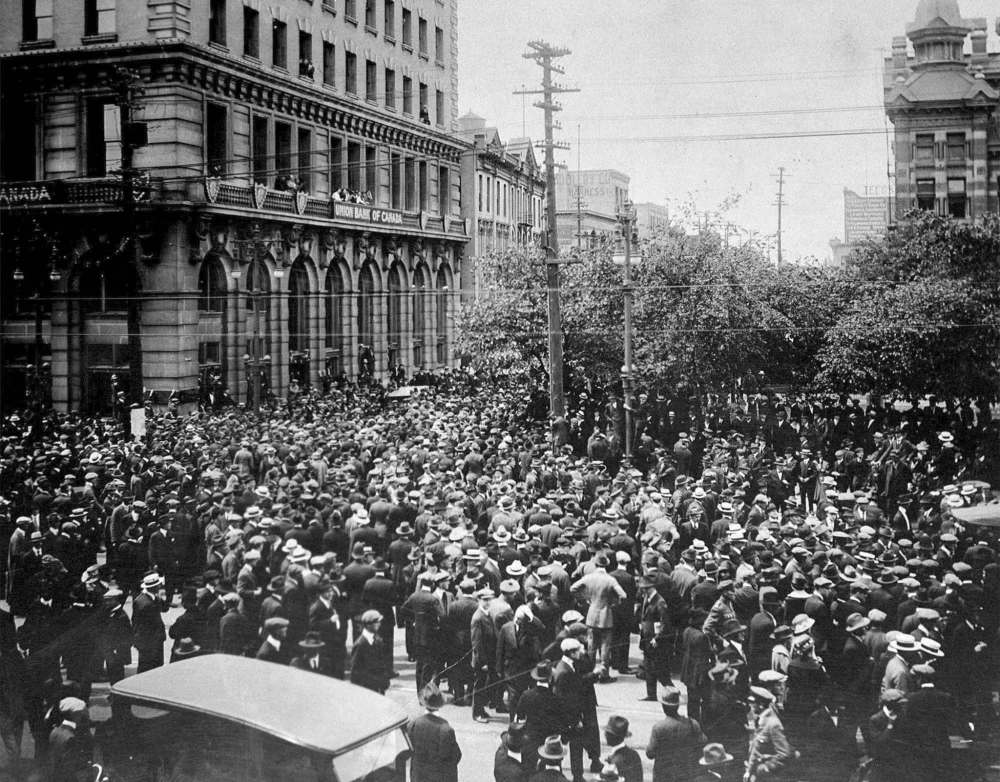
National Archives of Canada
A crowd of protesters gathers outside the Union Bank of Canada building on Main Street during the Winnipeg General Strike in 1919. Local social advocate and author Dennis Lewycky explores the strike’s significance a century later.
National Archives of Canada A crowd of protesters gathers outside the Union Bank of Canada building on Main Street during the Winnipeg General Strike in 1919. Local social advocate and author Dennis Lewycky explores the strike’s significance a century later.

And those rail lines still symbolize a critical divide in our city between those who have and those who have not.

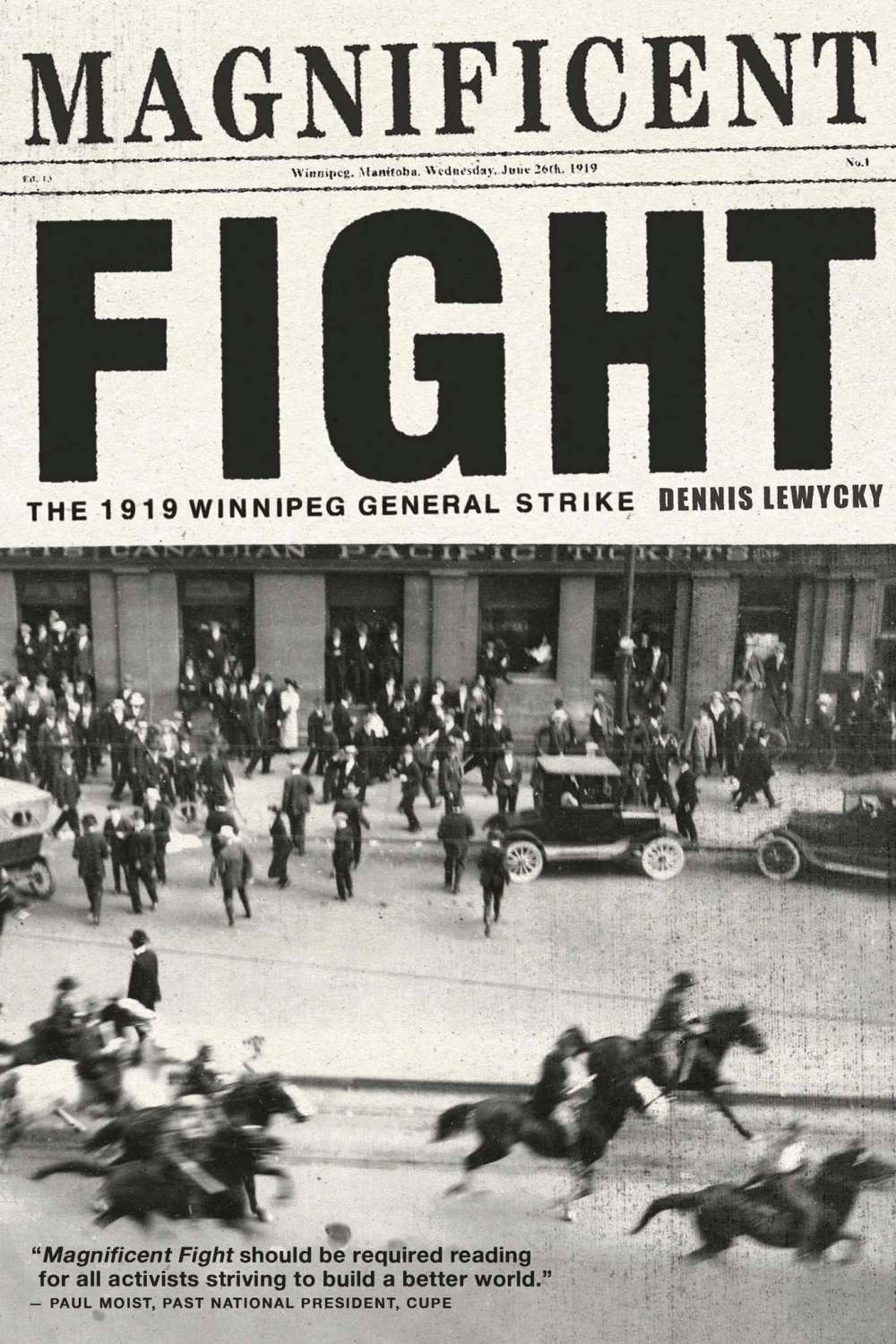
In Magnificent Fight: The 1919 Winnipeg General Strike, local social advocate and activist Dennis Lewycky makes a bold attempt to make sense of the strike, a century of historical analysis and the complex task of assessing its success. Structuring his narrative under the headings of “Before the Strike,” “After the Strike” and “Since the Strike,” Lewycky carefully surfaces the significance of a general and sympathetic strike. In this context, “general strikes were considered a relatively rare tactic,” he writes, and “sympathetic strikes were unheard-of.”

And in 1919, the stakes were incredibly high, which resulted in workers from all walks of life banding together to demand a more just society. As Lewycky notes, the strike was the catalyst for massive fissures in society: “The divide in the community was largely along class lines, according to those with or without property and those living south or north of the railway lines.” Progressive Winnipeggers were demanding to control their own destinies, both politically and economically, and they knew that “their labour was essential to the employers and the economy and that they had some power to negotiate.” And this struggle, Lewycky writes, “necessarily meant taking some control from the ruling classes.”

For those who held the means of production — namely the elite and what would be known as the Committee of 1,000 — their resistance to the strike was fuelled “by a fear that revolution would take their privilege and power.” Those who enjoyed wide and treed avenues in Crescentwood and lavish dinners at the Manitoba Club (which still enjoys its exclusiveness) were not eager to share and turned to sinister tactics and powerful friends to protect their way of life.

Through the hiring of thugs after the police walked off the job, to dubious arrests of strike leaders and raids of labour temples, to deportations and acts of violence, the Committee of 1,000 and the governments of Winnipeg, Manitoba and Canada were determined, as they saw it, to defend “the constitutional order” of the new dominion. In reality, Lewycky says, “the conflicting interests of fair wages versus unlimited profits drove a large part of the hope and fear embodied in the The Strike.”

In his book, Lewycky ponders how disempowered people can find empowerment.

And following Bloody Saturday, which saw the death of two strikers and the eventual bogus trials of strike leaders, the strike itself ended. And so what? Here, Lewycky argues that the strike was a critical moment in Canadian consciousness, whereby it birthed the election of labour politicians, the Co-operative Commonwealth Federation (CCF) and eventually the NDP — all voices for workers and the social conscious of Parliament. The strike marked the beginning of the development of the welfare state and “at least contributed to a major shift in working class understanding of the state and how to organize to advocate for their interests,” Lewycky writes.

And much of what we enjoy today is as a result of the emancipatory and hopeful struggle of Winnipeggers who walked the same streets 100 years ago. Perhaps we owe it to their memories to keep democracy, equity and hope alive in a time of malaise.

Lewycky’s work is a call to all of us to begin the conversation of “how people who are disempowered can be empowered.” This is the antithesis to fascism and oppression.

And as the spectre of fascism becomes ever more present, we see the resistance through protest and collective voice: #MeToo, #SchoolStrikeforClimate, #BlackLivesMatter.

Magnificent Fight is a reminder that we do have a collective voice that is intensely powerful.
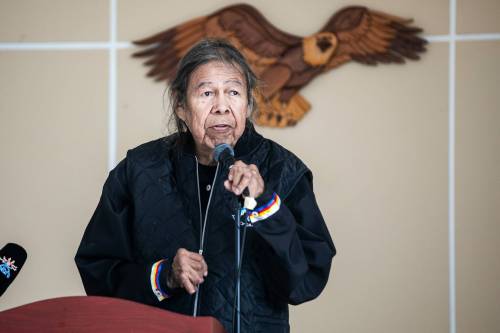
Matt Henderson is assistant superintendent of the Seven Oaks School Division.
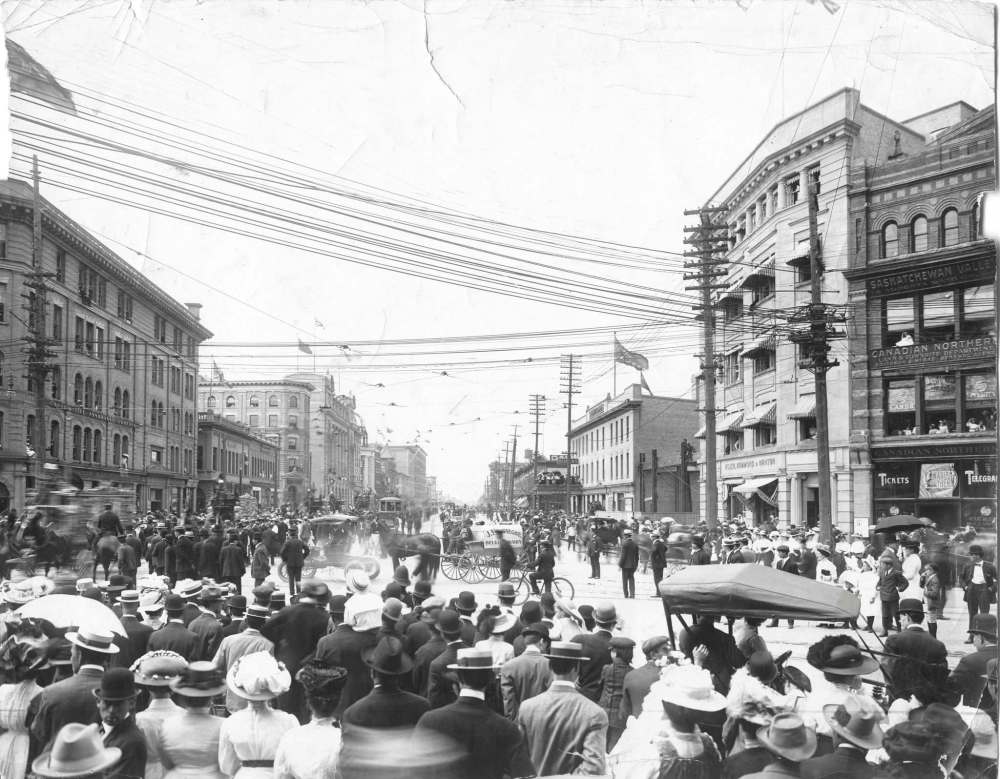
Winnipeg Free Press Archives
A view of goings-on at Portage Ave. at Main Street during the 1919 General Strike.
Winnipeg Free Press Archives A view of goings-on at Portage Ave. at Main Street during the 1919 General Strike.
Report Error Submit a Tip

More Stories

Manitoba’s liquor regulator has accused an Exchange District nightclub of exceeding its occupant capacity limit and hindering the work of inspectors.

Diablo, located at Main Street and Bannatyne Avenue, is scheduled to appeal two compliance orders, issued by the Liquor, Gaming and Cannabis Authority of Manitoba, at a Sept. 8 hearing.

An LGCA spokesperson said the compliance orders are part of an ongoing investigation.

The spokesperson said one of the orders was issued after the licensed club was over capacity April 26.

City rescinds Balmoral Street property owner’s order to clean up encampment

Scott Billeck 3 minute read Preview

City rescinds Balmoral Street property owner’s order to clean up encampment

Scott Billeck 3 minute read Yesterday at 5:35 PM CDT

A West Broadway landlord is off the hook for clearing a large riverbank encampment after the City of Winnipeg rescinded an order threatening to stick him with the cleanup bill.

Marvin Sharp, CEO of Astroid Management Ltd., which operates the Pen-Eve Apartments at 35 Balmoral St., said he received a call from the city Tuesday letting him know the order has been cancelled.

In a statement from the city, an official said the order was shelved due to an existing and active easement on the property.

“We have been communicating with the property owner throughout this process and they have been informed of this development,” a spokesperson said.

Read
Yesterday at 5:35 PM CDT

The common abuse of ‘common sense’

Alex Passey 5 minute read 2:00 AM CDT

If you spend any amount of time having deep conversations on sensitive subject matters, you will undoubtedly encounter patterns of thought and speech peppered into the discourse as if certain people were helpless but to utter them.

Perhaps you are trying to get to the heart of a complicated matter and the disagreement with your conversational partner starts to get a little heated. Often somebody will dust off the old diplomatic gem of “let’s agree to disagree” to extinguish further argument.

Or perhaps you are trying to console a grief-stricken person who has gone through a traumatic event. People in such a state will often rail against the state of the universe with powerful philosophical sentiments, demanding to know how such injustice could be permitted. You would not be the first person to misguidedly try to soothe them with something like “everything happens for a reason.” Or, less secularly, “God works in mysterious ways.”

These are known as thought-terminating clichés. Pithy little sayings that sound like folksy wisdom but serve mostly to sever a train of thinking, often because it is either uncomfortable or more complicated than the person is willing to engage. Admittedly, they often come from a good-natured place of keeping the peace, though it could easily be argued that they mostly serve to preserve to comfort or indulge the intellectual laziness of those who speak them.

An ambassador, a petition and 213,000 signatures

Editorial 4 minute read Preview

An ambassador, a petition and 213,000 signatures

Editorial 4 minute read Yesterday at 2:00 AM CDT

You have to admit, they have a point.

As of 7 a.m. on Monday, 209,909 Canadians had signed it. By 9:41 a.m., that number had reached 211,846. By 10:54 a.m., 213,124. And there are months left to sign.

It is an electronic petition to have the U.S. Ambassador to Canada, Pete Hoekstra, ousted and sent back to Trump’s America.

The reasons? Well, ambassadors are meant to represent the national positions of their governments and you could argue that Hoekstra is doing exactly that: his blunt pronouncements on things such as Canadian sovereignty sound very much like the words of one Donald Trump, President of the United States.

Read
Yesterday at 2:00 AM CDT

Brandon’s gas plant: a health decision

Riley De Blonde and Scott Blyth 5 minute read 2:00 AM CDT

Imagine a Manitoba in which our lives are powered by clean, affordable electricity that Manitobans own and which doesn’t pollute the air and water we depend on.

That future is within reach and, as doctors, we know it would protect people’s health now and for many generations.

Instead, Manitoba Hydro wants to spend $3 billion on three new gas-fired turbines in Brandon.The Public Utilities Board is now considering this proposal, before our provincial leaders make a final decision that could lock us into burning harmful fossil fuels for decades.

Every day doctors witness the toll of air pollution, hotter summers and smokier skies on our patients — the child struggling through an asthma attack in the emergency room, the senior dangerously overheating during a heat wave. These health crises are not inevitable. They are the consequence of decisions, by governments and corporations, to keep burning fossil fuels.

Everyone must play the long game

Editorial 4 minute read Preview

Everyone must play the long game

Editorial 4 minute read 2:00 AM CDT

Today’s decision is just one small point on a continuum that will go on until Trump is no longer president or, as a nation, we manage to disentangle our economy from our nearest neighbour to the greatest extent possible.

Read
2:00 AM CDT