Shades of reality in cyber-junk sci-fi story

Advertisement

Advertise with us

American writer Ken Liu is fast becoming the de facto translator for Chinese science fiction, perhaps to the detriment of his own writing output. Over the past few years, he has been working to pry open the floodgates of the People’s Republic of China, a country whose current fascination with all things science and science fiction mirrors American and Soviet culture during the space race.

Read this article for free:


or

Already have an account? Log in here »

To continue reading, please subscribe:

Subscribe and receive a limited-edition Free Press branded hat or tote.

Digital Subscription

One year of digital access for only $205*

  • Enjoy unlimited reading on winnipegfreepress.com
  • Read the E-Edition, our digital replica newspaper
  • Access News Break, our award-winning app
  • Play interactive puzzles

*First annual payment billed as $205.00 + GST for one year. This annual subscription will automatically renew at $233.00 + GST every 52 weeks (10% off the regular annual price of $259.35). Offer available to new and qualified returning subscribers only. Cancel any time.

To continue reading, please subscribe:

Add Free Press access to your Brandon Sun subscription for only an additional

$1 for the first 4 weeks*

  • Enjoy unlimited reading on winnipegfreepress.com
  • Read the E-Edition, our digital replica newspaper
  • Access News Break, our award-winning app
  • Play interactive puzzles
Start now

*Your next Brandon Sun subscription payment will increase by $1.00 and you will be charged $17.95 plus GST for four weeks. After four weeks, your payment will increase to $24.95 plus GST every four weeks.

Hey there, time traveller!
This article was published 15/06/2019 (2671 days ago), so information in it may no longer be current.

American writer Ken Liu is fast becoming the de facto translator for Chinese science fiction, perhaps to the detriment of his own writing output. Over the past few years, he has been working to pry open the floodgates of the People’s Republic of China, a country whose current fascination with all things science and science fiction mirrors American and Soviet culture during the space race.

Having introduced Cixin Liu — China’s equivalent of Arthur C. Clarke — to the English-speaking world, Ken Liu is now on to the next generation, starting with Chen Qiufan, China’s answer to William Gibson, the Canadian founder of the cyberpunk genre back in the 1980s.

Qiufan has been read in English before. The Year of the Rat is a dark novelette that combines millennial economic angst with technological nihilism. In it, unemployed college students entering a severely saturated job market have no choice but to sign up for the government’s rat-killing corps, attempting futilely to wipe out the roving bands of escaped, genetically modified rodents.
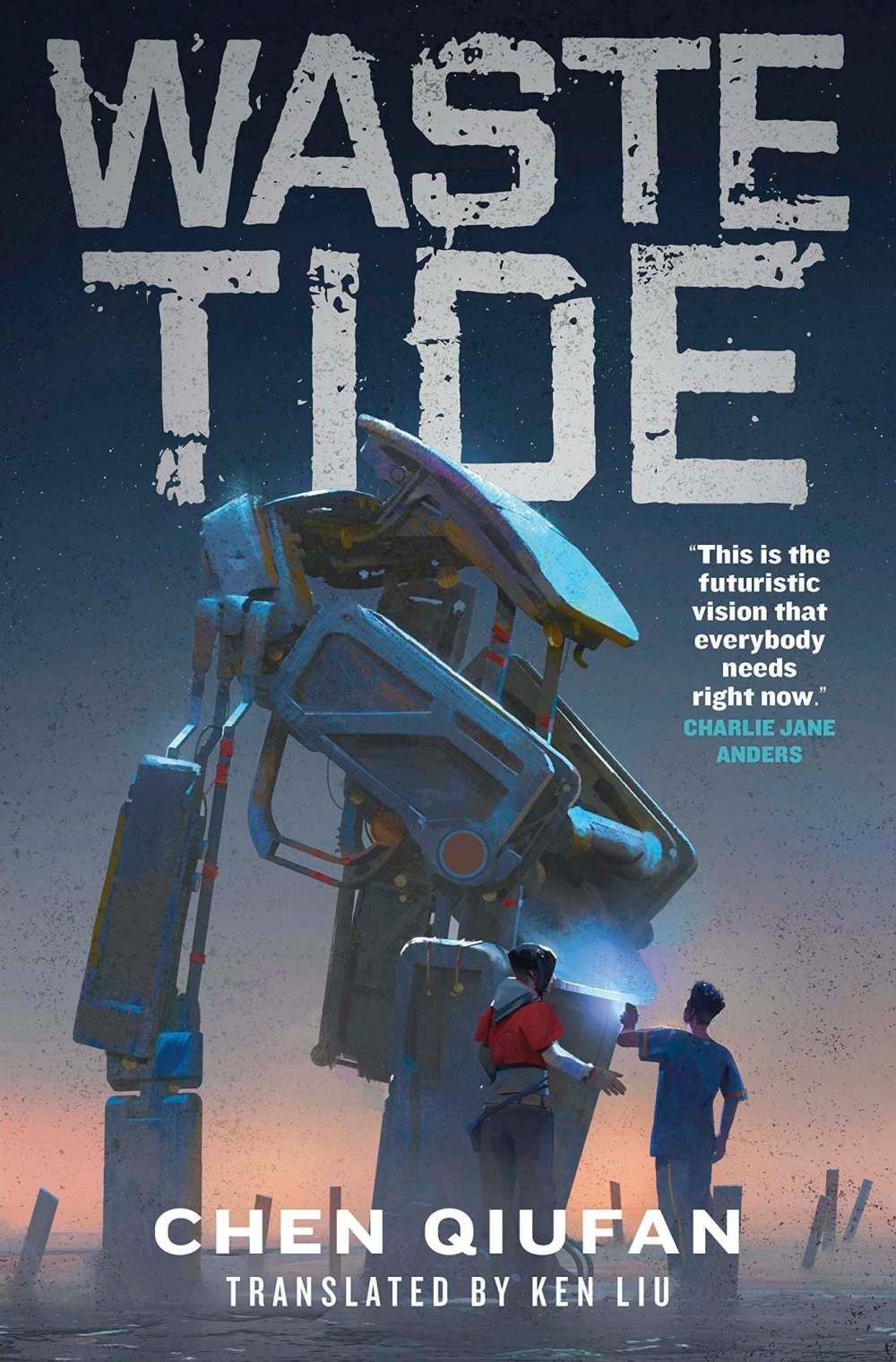
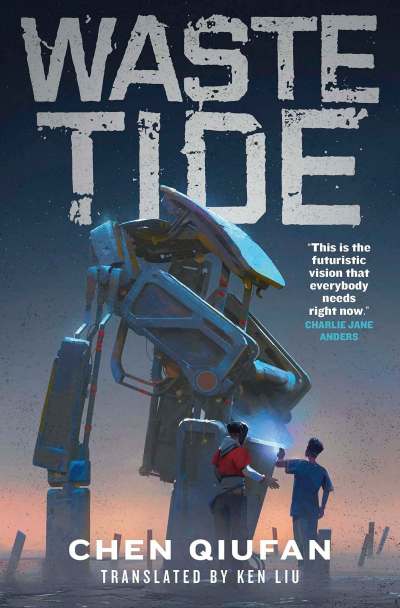
The cyberpunk label is apt, which is not to say the author is simply rehashing what came before. Works such as Gibson’s Neuromancer or the film Blade Runner were a dark and dirty Gen-X contrast to the idealism of Isaac Asimov’s novels or Gene Roddenberry’s Star Trek series in the 1950s and ’60s. Now another generation later, Qiufan suggests there is still precious little light on the horizon.

The entire story of Waste Tide takes place on the fictional Silicon Isle, a Chinese town whose economy is built not on tech innovation, but on the dirty and toxic job of electronic waste recycling. China is the recipient of about 70 per cent of the world’s e-waste, and it’s an army of extremely poor rural workers who make the entire enterprise economically viable.

Qiufan himself grew up near the world’s largest e-recycling centre, and quotes the United Nations’ assessment of the site — “an environmental calamity.” While this novel fast-forwards us a few decades into the future — a time when the waste in question includes discarded robot limbs and the junkyard dogs now come complete with programmable brain chips that put Pavlov to shame — it is still very much a contemporary story.

The relationship between the wealthy owners of Silicon Isle and the poor migrant workers, “waste people,” mirrors the relationship between the West and the developing world. The continued excess and waste of Western tech consumerism is made possible only by a downstream economy where health and safety standards are nominal at best, and life is cheap compared to the valuable yet toxic materials that might be harvested.

Qiufan makes the contrast only slightly starker with the perverse imagery of designer robot body parts for the wealthy elite — a bizarre melding of cosmetic surgery, sexual aids, and smart technology — to be used and then discarded. No one — not the vapid Western consumers, the corrupt Chinese officials, nor the multinational executives — comes off well here.

The story’s theme centres on the question of how long this situation can go on, with the narrative switching regularly between three major characters: an American vulture capitalist serving corporate masters, a young Silicon Isle native raised in America for the second half of his childhood and returning now to find he belongs to neither culture, and a waste girl whose unexpected encounter with a frightening technology may give her leverage over everyone.

As the environmental situation approaches a point of no return, likewise the ever-increasing social inequality seems to be approaching a breaking point of either cultural genocide, political revolution or international incident. Amidst all this, human decency, hope and even love still seem possible, but by no means certain. This, too, seems very contemporary.

Joel Boyce is a Winnipeg writer and educator.

Report Error Submit a Tip

More Stories

Man who exploited teen sentenced to 11 years in prison

Erik Pindera 4 minute read Preview

Man who exploited teen sentenced to 11 years in prison

Erik Pindera 4 minute read Yesterday at 2:00 AM CDT

A man who picked up a vulnerable 17-year-old child-welfare ward on the streets of Winnipeg and coerced her into providing sexual services for several months has been sent to prison for more than a decade.

After a trial, Hassan Kargbo, who’s in his early 30s, was found guilty of sexual exploitation, making child sexual abuse and exploitation material, receiving a material benefit from sexual services provided by a person under 18, procuring a person under 18 and advertising sexual services.

Provincial court Judge Julie Frederickson sentenced him to 11 years behind bars late last month.

“Mr. Kargbo picked up a young Indigenous girl walking over the Osborne Street bridge and quickly got her involved in drug use and escorting,” Frederickson said in a written decision.

Read
Yesterday at 2:00 AM CDT

Shades of reality in cyber-junk sci-fi story

Reviewed by Joel Boyce 4 minute read Preview

Shades of reality in cyber-junk sci-fi story

Reviewed by Joel Boyce 4 minute read Saturday, Jun. 15, 2019

American writer Ken Liu is fast becoming the de facto translator for Chinese science fiction, perhaps to the detriment of his own writing output. Over the past few years, he has been working to pry open the floodgates of the People’s Republic of China, a country whose current fascination with all things science and science fiction mirrors American and Soviet culture during the space race.

Having introduced Cixin Liu — China’s equivalent of Arthur C. Clarke — to the English-speaking world, Ken Liu is now on to the next generation, starting with Chen Qiufan, China’s answer to William Gibson, the Canadian founder of the cyberpunk genre back in the 1980s.

Qiufan has been read in English before. The Year of the Rat is a dark novelette that combines millennial economic angst with technological nihilism. In it, unemployed college students entering a severely saturated job market have no choice but to sign up for the government’s rat-killing corps, attempting futilely to wipe out the roving bands of escaped, genetically modified rodents.

The cyberpunk label is apt, which is not to say the author is simply rehashing what came before. Works such as Gibson’s Neuromancer or the film Blade Runner were a dark and dirty Gen-X contrast to the idealism of Isaac Asimov’s novels or Gene Roddenberry’s Star Trek series in the 1950s and ’60s. Now another generation later, Qiufan suggests there is still precious little light on the horizon.

Read
Saturday, Jun. 15, 2019

Police seize cocaine valued at $1.5M, about $750K in cash in raid on St. Vital house

Scott Billeck 5 minute read Preview

Police seize cocaine valued at $1.5M, about $750K in cash in raid on St. Vital house

Scott Billeck 5 minute read Yesterday at 3:30 PM CDT

A St. Vital homeowner and her husband were going about their business during an afternoon last month when police officers in tactical gear suddenly appeared, walking across their front lawn.

The target was a few doors down: a maroon bi-level home on a quiet stretch of Satinwood Place, within earshot of children playing outside at a nearby school.

The homeowner, who asked not to be named to protect their privacy, said the police presence caught the couple by surprise in the Southglen neighbourhood, where they weren’t accustomed to seeing that kind of activity.

“We never heard the (police) cars pull up, but there were cars blocking the entrance to the street from both sides,” said the neighbour. “They had a shield, a battering ram — everything. Just not used to seeing that.”

Read
Yesterday at 3:30 PM CDT

Infill development on minds of all three River Heights-Fort Garry candidates

Joyanne Pursaga 4 minute read Preview

Infill development on minds of all three River Heights-Fort Garry candidates

Joyanne Pursaga 4 minute read Yesterday at 1:07 PM CDT

A trio of candidates will compete to become the first new city councillor in River Heights-Fort Garry since 2009.

Coun. John Orlikow, who won the seat in a byelection, is not running for another term.

Georgina Sabesky, who served as Orlikow’s executive assistant for 17 years, is now one of the candidates vying for the council seat.

Sabesky said that job gave her ample knowledge of the ward.

Read
Yesterday at 1:07 PM CDT

Manitoba Federation of Labour calls for independent review of Workers Compensation Board

Gabrielle Piché 5 minute read Preview

Manitoba Federation of Labour calls for independent review of Workers Compensation Board

Gabrielle Piché 5 minute read Yesterday at 9:54 PM CDT

A major labour association is calling for an independent Workers Compensation Board review as Manitoba leads the country in workplace injury rates.

Last year, 2.5 employees in every 100 reported a workplace injury serious enough to take time off, WCB tracking shows. The number is higher than any other province — just as it has been for the past three years, according to the Manitoba Federation of Labour.

(In 2025, the next highest time loss injury rate was in British Columbia: 2.04 people for every 100.)

“Our prevention work in Manitoba is failing Manitobans,” said Kevin Rebeck, president of the Manitoba Federation of Labour. “We need an independent review to help shine a light on, ‘What is happening on the prevention front of WCB?’”

Read
Yesterday at 9:54 PM CDT

Mayoral candidates Klein, Vogiatzakis continue to snipe over inducement allegations

Chris Kitching and Joyanne Pursaga 6 minute read Preview

Mayoral candidates Klein, Vogiatzakis continue to snipe over inducement allegations

Chris Kitching and Joyanne Pursaga 6 minute read Monday, Oct. 5, 2026

Winnipeg mayoral candidate Mike Vogiatzakis told reporters Monday he will contact the city clerk to report his allegation that rival Kevin Klein offered him a job to drop out of the race.

Vogiatzakis and Klein both doubled down a day after accusing each other of offering the other a position at city hall, if they were victorious in the Oct. 28 election, in exchange for a withdrawal.

“Do I want to get him charged? Not really. I don’t want to destroy anybody’s life,” Vogiatzakis told reporters.

“Kevin’s a good guy. I thought he was a friend of mine, but he’s not. Kevin uses leverage to get ahead, and he tried to use me as leverage.”

Read
Monday, Oct. 5, 2026