Trickster tale makes for riveting debut

Advertisement

Advertise with us

Homecomings can be hard to deal with, especially when the past isn’t what you thought it was.

Read this article for free:


or

Already have an account? Log in here »

To continue reading, please subscribe:

Subscribe and receive a limited-edition Free Press branded hat or tote.

Digital Subscription

One year of digital access for only $205*

  • Enjoy unlimited reading on winnipegfreepress.com
  • Read the E-Edition, our digital replica newspaper
  • Access News Break, our award-winning app
  • Play interactive puzzles

*First annual payment billed as $205.00 + GST for one year. This annual subscription will automatically renew at $233.00 + GST every 52 weeks (10% off the regular annual price of $259.35). Offer available to new and qualified returning subscribers only. Cancel any time.

To continue reading, please subscribe:

Add Free Press access to your Brandon Sun subscription for only an additional

$1 for the first 4 weeks*

  • Enjoy unlimited reading on winnipegfreepress.com
  • Read the E-Edition, our digital replica newspaper
  • Access News Break, our award-winning app
  • Play interactive puzzles
Start now

*Your next Brandon Sun subscription payment will increase by $1.00 and you will be charged $17.95 plus GST for four weeks. After four weeks, your payment will increase to $24.95 plus GST every four weeks.

Hey there, time traveller!
This article was published 23/11/2019 (2519 days ago), so information in it may no longer be current.

Homecomings can be hard to deal with, especially when the past isn’t what you thought it was.

In Karen McBride’s debut novel Crow Winter, Hazel Ellis returns after finishing university to Spirit Bear Point First Nation in Quebec, where her Algonquin Anishinabe roots run deep. Aside from the culture shock after spending years in Ottawa studying English literature, Hazel is also grappling with the emptiness left by her father’s death two years earlier. Living once again with her mother and reconnecting with some of her childhood friends helps, but it’s hard.

There are added complications. First, her father left to Hazel and her brother Gus the title to an old quarry that has sat undeveloped for decades — land that some in Spirit Bear Point would like to profit from, and that at least one developer from the nearby francophone town of Ste-Marie des Oblats is pursuing the rights to.
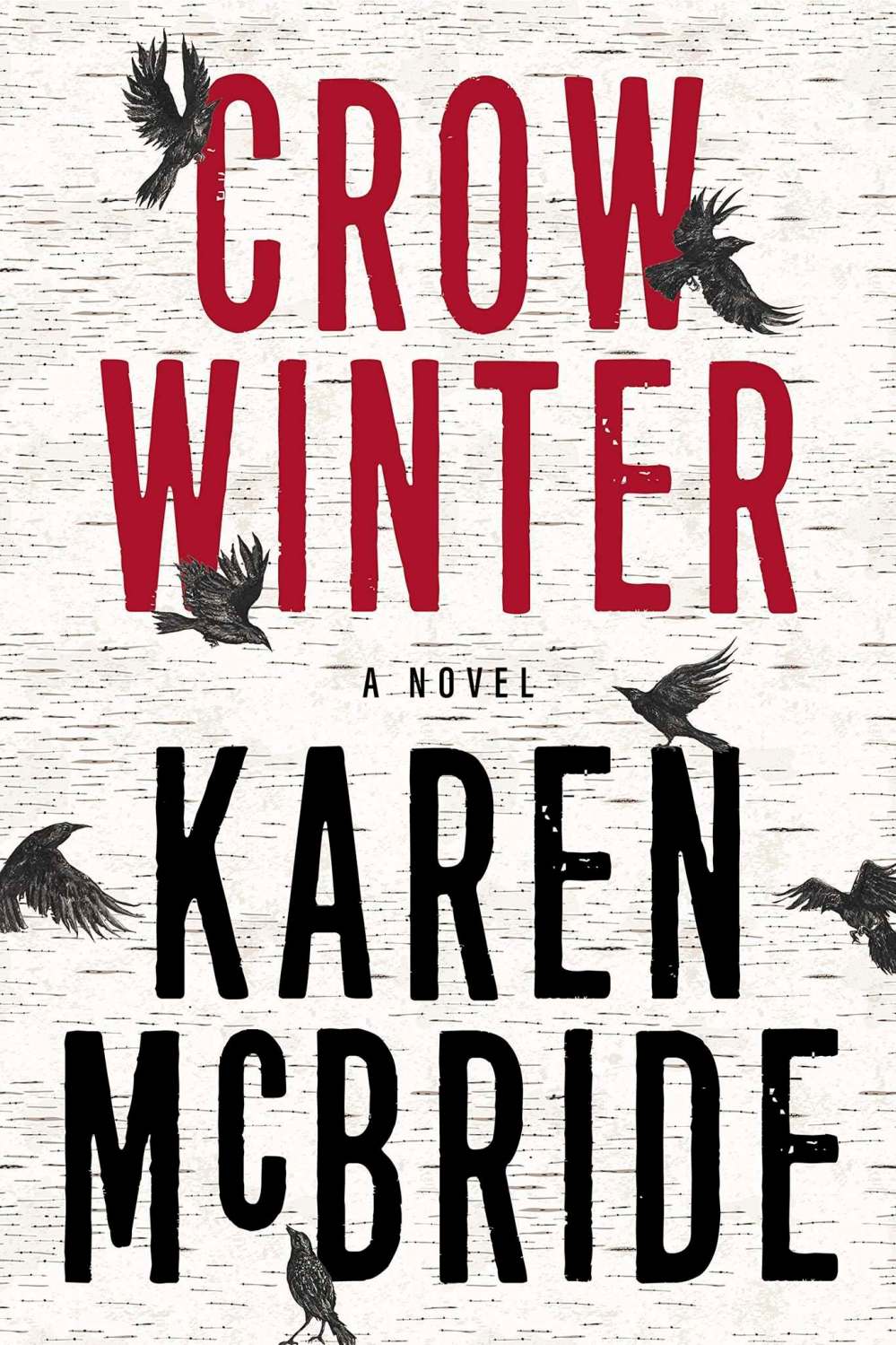
To make things worse, Hazel has been having vivid dreams of a crow who is much more than he seems. In her dreams he is Nanabush, the trickster; and when he starts showing up in Spirit Bear Point as well, Hazel isn’t sure whether to trust her eyes, or his promises to help her.

McBride herself is an Algonquin Anishinabe writer from Timiskaming First Nation in Quebec (which uses this alternate spelling of Anishinabe). She has studied music, English and education at the University of Ottawa, and earned a master of arts degree from the University of Toronto.

McBride weaves many threads into this engrossing tale: band politics, settler-Indigenous relations, colonialism, Anishinabe cosmology as well as a family history that reveals some uncomfortable truths.

At the centre is Hazel and her family, and Hazel’s sometimes-strained (but often funny) relationship with Nanabush.

“You need to relax if we’re going to make this partnership work,” the trickster chides her at one point.

Hazel shoots back: “I’m not convinced that I want to get along with you.”

“This. This is what I’m talking about,” Nanabush tells her. “Everything is so dark and depressing with you. It’s a wonder your people can still handle being around you.”

“You’re an a–hole, you know that?” Hazel says. “All the stories about you left that out. I’ll be sure to add it in when I pass this all on.”

As Hazel begins sifting through band records and learning the history of the quarry that belonged to her father, she also gains insight, through Nanabush, of what really transpired there over the years — and who really owns the land. McBride keeps the reader guessing, whether it’s via revelations from dusty government correspondence or directly from the Seven Grandfathers of Anishinabe tradition.

There’s also a very personal, moving journey of healing Hazel makes. At the insistence of her friend Mia, she takes part in a sweat lodge, to help come to terms with her father’s death. Hazel also helps her mother through the huge hole in their lives, helping her to finally choose a tombstone for her husband’s grave.

And, in her way, she also helps Nanabush, who needs her help as much as she needs his; the trickster, having run afoul of the Seven Grandfathers, is inadvertently freed by Hazel, and needs to fulfil a bargain, with her help, that will see him restored to his true form both in our world and the Spirit World.

The resonance between all the layers of story may be greater for Indigenous readers, particularly those in Quebec, but McBride has woven a tale that will keep readers of any background eager to find out what happens next.

David Jón Fuller is a Winnipeg writer and editor.

David Jón Fuller

David Jón Fuller
Copy editor

David Jón Fuller is a copy editor with a lifelong love of writing and working in newspapers.

Our newsroom depends on a growing audience of readers to power our journalism. If you are not a paid reader, please consider becoming a subscriber.

Our newsroom depends on its audience of readers to power our journalism. Thank you for your support.

Report Error Submit a Tip

More Stories

First Nations should not have to defend truth of residential schools

Kyra Wilson 5 minute read Preview

First Nations should not have to defend truth of residential schools

Kyra Wilson 5 minute read 2:00 AM CDT

The truth about residential schools should never have been this difficult for Canada to acknowledge. And it should never be this difficult to defend.

For generations, survivors have carried the memories of children taken from their families, the abuse they endured, the languages and cultures they were forbidden to practise, and the children who never came home. They have told their stories, often at tremendous personal cost, so Canada could no longer claim it did not know.

How many times must survivors tell their stories before the responsibility shifts from those who suffered to those who have a duty to listen and act?

On Oct. 9, Manitoba Premier Wab Kinew said residential school denialism should not be criminalized, arguing that continued education and efforts to combat misinformation are the answer.

Read
2:00 AM CDT

Get to know your Jet: Neal Pionk

Mike McIntyre 6 minute read Preview

Get to know your Jet: Neal Pionk

Mike McIntyre 6 minute read Yesterday at 5:41 PM CDT

“Give it 110 per cent.” “Get pucks in deep.” “One shift at a time.” “Play our game.” “Keep it simple.”

Hockey has a language all its own. Unfortunately, after hearing the same phrases repeated often enough, that language can start to sound a lot like white noise.

So we’re going to try something different.

The Free Press will occasionally sit down with a Winnipeg Jets player at his locker-room stall for a wide-ranging conversation about the stuff you don’t always hear in a media scrum.

Read
Yesterday at 5:41 PM CDT

Convicted harasser accused of targeting old, new victims, including judge

Dean Pritchard 6 minute read Preview

Convicted harasser accused of targeting old, new victims, including judge

Dean Pritchard 6 minute read Updated: Yesterday at 2:48 PM CDT

Agnieszka Ciochon-Newton, who was sentenced to six years in prison for mercilessly harassing two people she believed had wronged her, as well as other crimes, wasted no time when her sentence ended to launch fresh attacks on victims new and old, including the judge who convicted her, court documents allege.

The 58-year-old former nurse was arrested last month after Winnipeg police “became aware that (Ciochon-Newton) was engaging in aggressive and harassing behaviours again, starting almost immediately upon the expiry of her parole conditions” on May 13, Det. Sgt Kylie Case wrote in search warrant documents obtained by the Free Press.

Ciochon-Newton is charged with seven counts of criminal harassment, two counts of uttering threats and one count each of fraud, breaking and entering, attempting to obstruct justice, intimidation of a justice official, mischief and defamatory libel. She remains in custody.

Search warrant documents say provincial court Judge Keith Eyrikson learned in late August that Ciochon-Newton had emailed CBC Manitoba days earlier and threatened him.

Read
Updated: Yesterday at 2:48 PM CDT

Banana Ball is coming to Winnipeg

1 minute read Updated: Yesterday at 9:34 PM CDT

Winnipeg is on the docket for the Banana Ball Championship League in 2027.

The “Greatest Show in Sports” is a fast-paced, fans-first, entertainment-focused version of professional baseball founded by Jesse and Emily Cole. The Coles started the league with the goal of making baseball fun.

Banana Ball will hit Manitoba’s capital for two games — Aug. 26, 2027, at Blue Cross Park and Aug. 28, 2027, at Princess Auto Stadium. Both games will see a clash between the Texas Tailgaters and the Party Animals.

Winnipeg is the second and only other stop scheduled in the league’s Canada Series. The Indianapolis Clowns face the Savannah Bananas Aug. 14 and 15, 2027 at Rogers Centre in Toronto.

Reversing Manitoba’s moose decline

Hank Hristienko 4 minute read Preview

Reversing Manitoba’s moose decline

Hank Hristienko 4 minute read 2:00 AM CDT

As Manitoba’s retired provincial moose manager, I have watched our moose population plummet from historic highs to a state of systemic vulnerability. Reversing this decline, which has seen numbers drop from 45,000 during the 1960s to fewer than 20,000 today, will require balancing the conservation needs of moose, Section 35 constitutional treaty rights, licensed hunter expectations and economic development.

To avert further attrition, all stakeholders, including Manitoba Natural Resources, must accept responsibility for their part in this decline, with industrial and recreational development acting as the primary drivers.

This long-overdue discussion must not devolve into a debate over competing hunting rights; instead, it must focus entirely on building long-term population resilience. Wildlife management must evolve alongside the changing landscapes and dynamics that development brings. We can no longer practise the same methods and hope for a better result. Immediate action is required.

As long as moose are legally managed as a “natural resource,” they will inevitably be viewed through the lens of a commodity rather than a vulnerable species in need of protection. For any population to remain stable or grow, total mortality cannot exceed recruitment — the survival of calves to breeding age. If mortality outpaces recruitment, decline is inevitable.

Read
2:00 AM CDT

Letters, Oct. 16

6 minute read 2:00 AM CDT

Concern over closure

As advocates for seniors in Manitoba, CARP Manitoba (Canadian Association of Retired Persons) is deeply concerned about the closure of the Lions Club Charleswood Adult Day Club.

This closure will have a significant impact on seniors in the community who rely on the Adult Day Club for social connection, companionship, meaningful activities and stimulation. It will also place additional pressure on other Adult Day Clubs throughout the city, many of which are already experiencing increased demand and are now being required to establish waiting lists.

Families of affected seniors are understandably concerned that, without access to this important community-based support, their loved ones may eventually require admission to personal care homes. Adult Day Clubs play an important role in helping seniors remain independent, connected to their communities and living in their own homes for as long as possible.