A lasting legacy

Sasakamoose's memoir chronicles residential school trauma, racism and his stint in the NHL

Advertisement

Advertise with us

Call Me Indian is not only an excellent memoir about the first Indian hockey player with treaty status in the National Hockey League. Just as importantly, it is also the most moving and plain-spoken account to date, from the inside, of the Indigenous experience in the racist white world that constituted much of both the NHL and the Canada of Fred Sasakamoose’s day — which was not so very long ago.

Read this article for free:

or

Already have an account? Log in here »

To continue reading, please subscribe:

Subscribe and receive a limited-edition Free Press branded hat or tote.

Digital Subscription

One year of digital access for only $205*

  • Enjoy unlimited reading on winnipegfreepress.com
  • Read the E-Edition, our digital replica newspaper
  • Access News Break, our award-winning app
  • Play interactive puzzles

*First annual payment billed as $205.00 + GST for one year. This annual subscription will automatically renew at $233.00 + GST every 52 weeks (10% off the regular annual price of $259.35). Offer available to new and qualified returning subscribers only. Cancel any time.

To continue reading, please subscribe:

Add Free Press access to your Brandon Sun subscription for only an additional

$1 for the first 4 weeks*

  • Enjoy unlimited reading on winnipegfreepress.com
  • Read the E-Edition, our digital replica newspaper
  • Access News Break, our award-winning app
  • Play interactive puzzles
Start now

*Your next Brandon Sun subscription payment will increase by $1.00 and you will be charged $17.95 plus GST for four weeks. After four weeks, your payment will increase to $24.95 plus GST every four weeks.

Hey there, time traveller!
This article was published 29/05/2021 (1878 days ago), so information in it may no longer be current.

Call Me Indian is not only an excellent memoir about the first Indian hockey player with treaty status in the National Hockey League. Just as importantly, it is also the most moving and plain-spoken account to date, from the inside, of the Indigenous experience in the racist white world that constituted much of both the NHL and the Canada of Fred Sasakamoose’s day — which was not so very long ago.

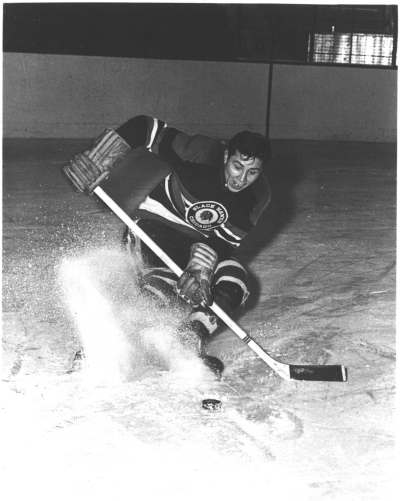
Sasakamoose was with the Chicago Blackhawks for 11 games in the 1953 season before being sent down to the minors, never to return to the bigs. Sasakamoose gives us a vivid, ice-level depiction of playing with Blackhawks such as Billy Moisienko, Pete Conacher and Ken Wharram, and against greats such as Rocket Richard and Gordie Howe.

That story, while well told and interesting, is secondary. The hot heart of this story begins and ends within the wider Indian experience.
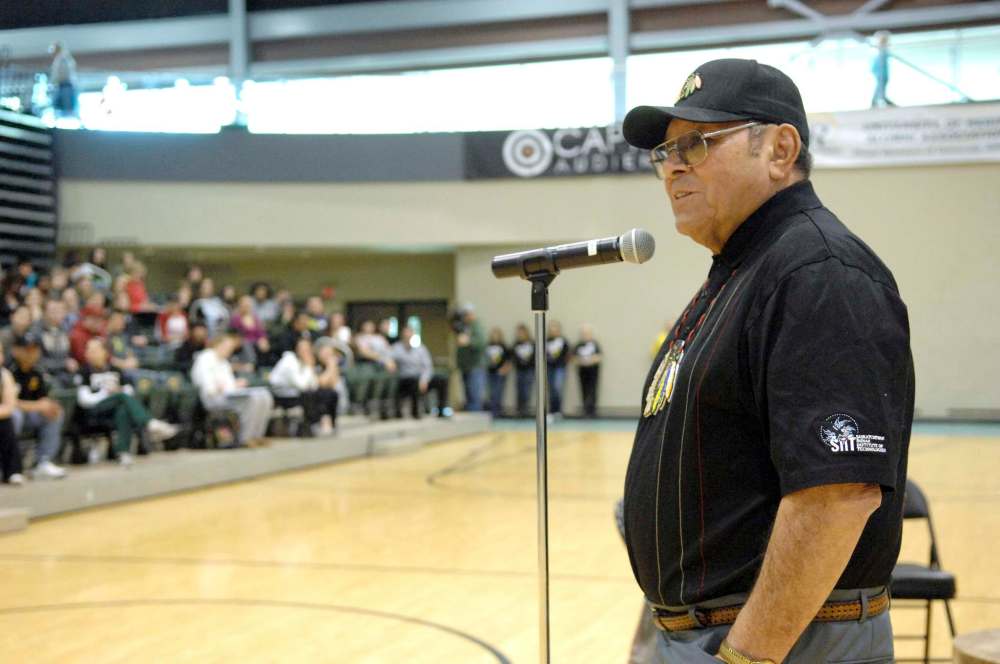
Don Healy / Leader Post files
Sasakamoose speaks at the 2011 Sports For Life youth conference in Regina.
Don Healy / Leader Post files Sasakamoose speaks at the 2011 Sports For Life youth conference in Regina.

Sasakamoose insists on the term “Indian” for a number of reasons, fully explained in his prefatory author’s note, and the narration keeps faith with his intention: to trace his roots and tell his story from the inside. Thus each chapter’s title is given first in Cree, then in English; similarly, dialogue with his immediate family is often written first in Cree and then in English translation.

In the two opening chapters, the warmest parts of the memoir, Sasakamoose takes us through a lovingly depicted childhood on the Sandy Lake reserve in Saskatchewan, tracing his family’s distinguished background and giving us his heritage, his Indigenous and English names and those of his parents, grandparents and great grandparents. From here to the end of his story he makes it pungently clear how, throughout his life, the vital nexus of family and place have formed his identity. Sasakamoose traces the profound and enduring influence of his origins, looking back to his deaf-mute grandfather — his moosum, Alexan — who teaches him how to hunt and fish, and who first ties skates to his feet.

That is why the horrific third and fourth chapters, about his deeply scarring experience at St. Michael’s residential school, inflect all of the subsequent chapters and, in sharp contrast to his childhood at Sandy Lake, frame a significant part of his adult experience of the wider white world. Sasakamoose’s graphic recollection of every imaginable form of abuse at St. Michael’s will stand for decades to come as one of the most damning indictments of the residential school system.
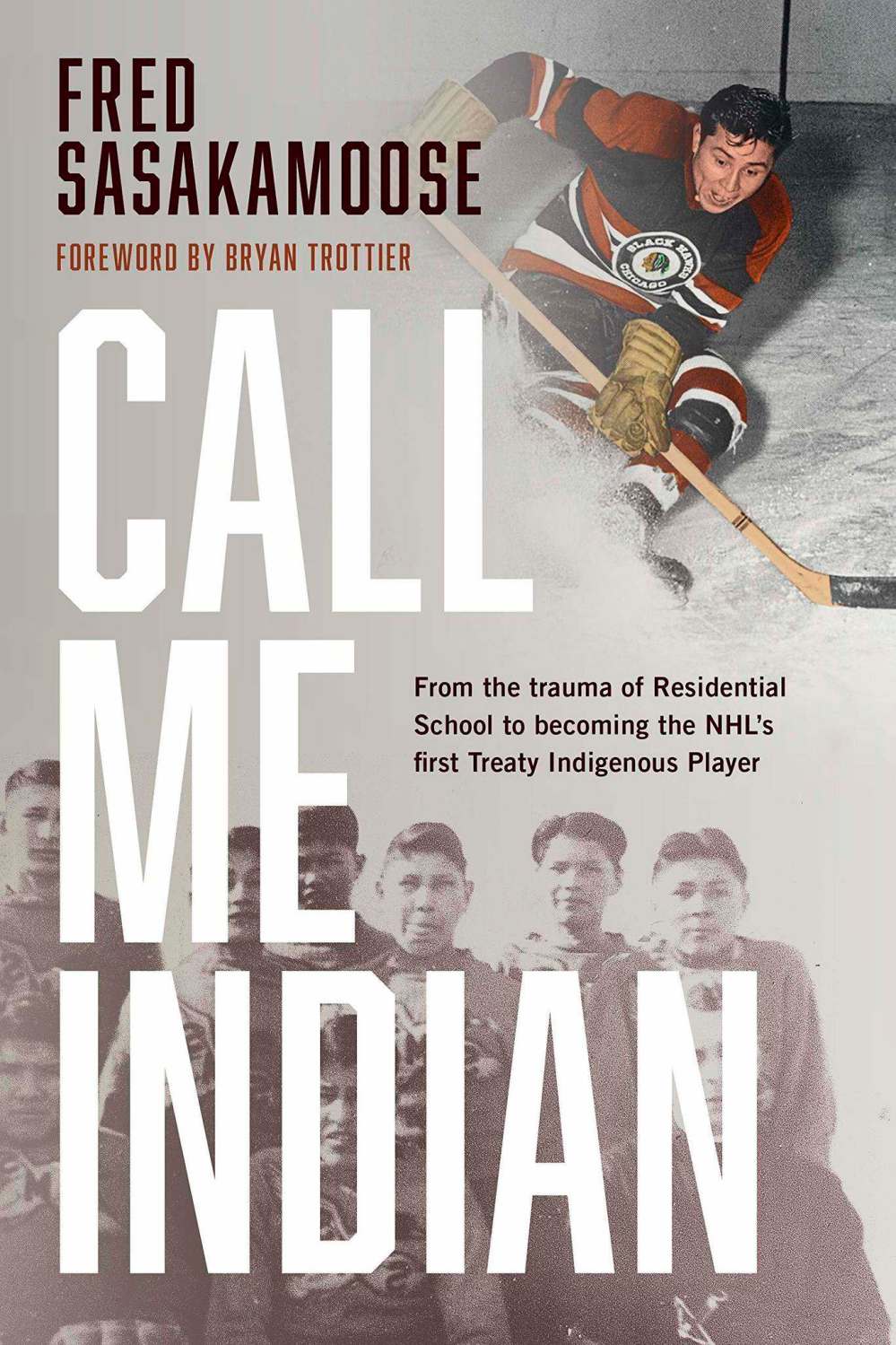
At the age of seven, Sasakamoose remembers a grain truck that suddenly pulls up outside of his cabin on the reserve. Three men get out: the reserve’s Indian agent, an RCMP officer and “a pale white man with a hard face… wearing a long black robe that billows slightly behind him as he walks” who says something to his family. Then his mother, father and grandfather are elbowed aside or pushed to the ground, and Sasakamoose and his brother Frank are thrown into the back of the truck, joining a group of crying children for an hours-long jolting ride to the residential school, where they would remain for two years without returning home.

The only redeeming feature of St. Michael’s for Sasakamoose saves his life — a priest who sees his talent as a hockey player and drives him to succeed in the sport at every level. The scars of his residential school experience persist, but Sasakamoose goes on to become an award-winning player and a celebrated storyteller, an inspiration to Indigenous communities across the country.

Fred Sasakamoose died in 2020 of COVID-related symptoms. His legacy is not ancient history; thanks to this memoir, his continuing presence will become all the more widely and deeply felt.

Neil Besner taught Canadian literature at the University of Winnipeg for 30 years, and has avidly watched hockey for twice as long.
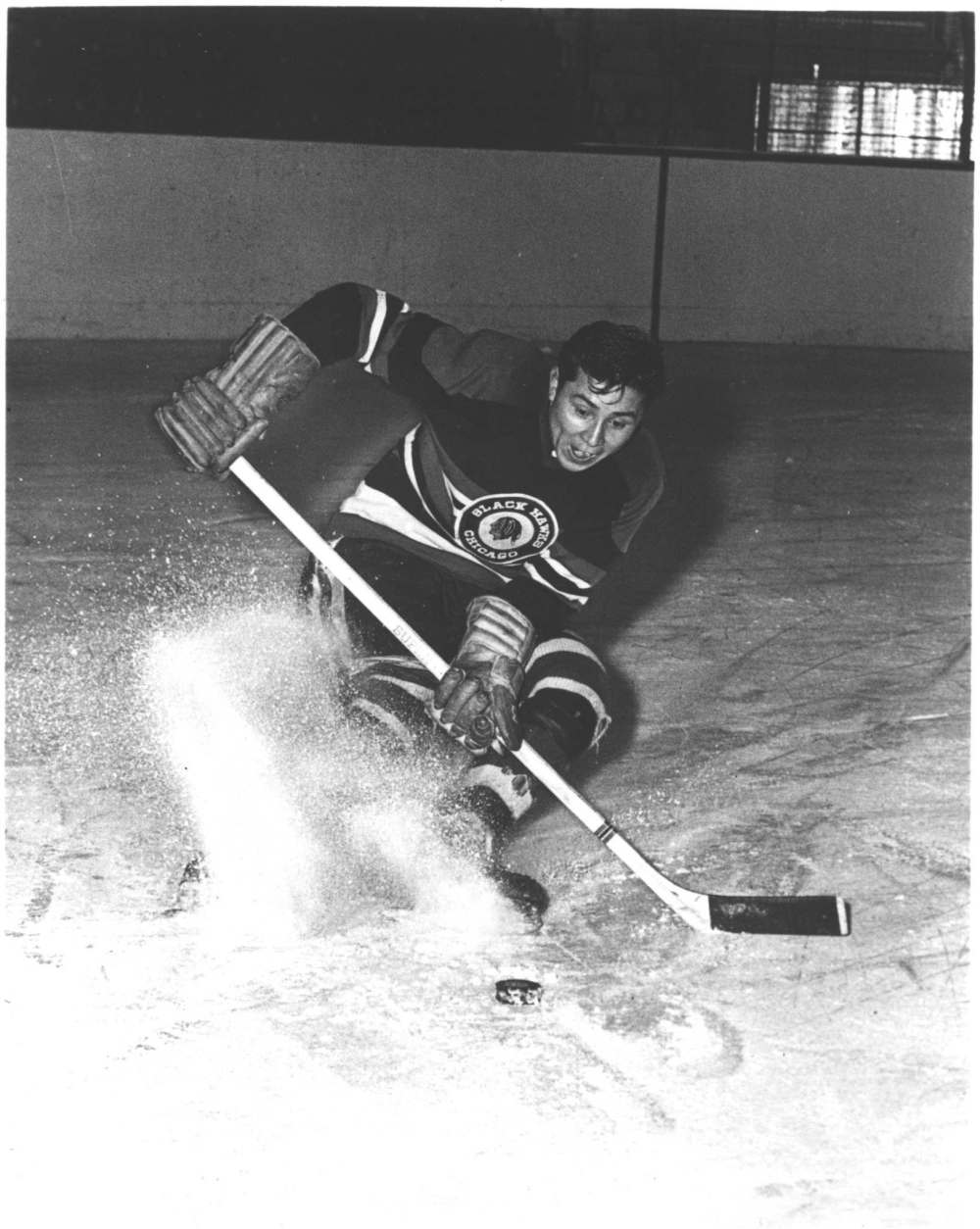
The Canadian Press files
Fred Sasakamoose... TK
The Canadian Press files Fred Sasakamoose... TK
History

Updated on Monday, May 31, 2021 1:47 PM CDT: Corrects number of games played, adds detail re: treaty status.
Report Error Submit a Tip

More Stories

Bishnoi Gang active in Manitoba

Erik Pindera 4 minute read Preview

Bishnoi Gang active in Manitoba

Erik Pindera 4 minute read 2:01 AM CDT

The Bishnoi Gang, which is run by a convicted gangster from his prison cell in India, appears to have gained a foothold in Manitoba. A civil forfeiture lawsuit filed in the Court of King’s Bench this month has revealed a 36-year-old man, who was arrested this year, had claimed he is a member of the Bishnoi Gang when he tried to extort cash from a Winnipeg resident.

Read
2:01 AM CDT

WestJet adding two new direct flights from Winnipeg to warm-weather destinations

Aaron Epp 2 minute read Preview

WestJet adding two new direct flights from Winnipeg to warm-weather destinations

Aaron Epp 2 minute read 9:28 AM CDT

WestJet will launch direct flights to two more warm destinations this winter.

On Monday, the Alberta-based airline announced a direct route between Winnipeg and Punta Cana, Dominican Republic, and a direct route between Winnipeg and Belize City, Belize.

Each will be offered once a week, starting on Nov. 28 and Dec. 14, respectively.

The additions support the growing demand for options to warm weather destinations, John Weatherill, executive vice-president and chief commercial officer of WestJet, said in a news release Monday.

Read
9:28 AM CDT

Search continues for two boys presumed drowned

1 minute read Yesterday at 2:02 PM CDT

Two boys are presumed drowned in Nutimik Lake in the Whiteshell.

RCMP and community search-and-rescue teams are still trying to locate the children, aged 10 and 13, who got caught in fast-moving rapids in Nutimik Lake near Sturgeon Falls Trail in Whiteshell Provincial Park on Saturday.

Lac du Bonnet RCMP received the report of possible drowning at 12:40 p.m. July 18. Police immediately went to the scene, along with local fire personnel and emergency responders, but didn't find the boys despite extensive patrols on the water and on the shoreline, police stated in a news release Sunday.

Manitoba RCMP Underwater Recovery Team  and the Hutterian Emergency Aquatic Response Team were deployed to assist in the search. Drones were also used.

Bombers battle back to beat Redblacks in OT

Taylor Allen 6 minute read Preview

Bombers battle back to beat Redblacks in OT

Taylor Allen 6 minute read Updated: 9:44 AM CDT

OTTAWA — For three and a half quarters, it looked like it was going to be a night Dru Brown would want to forget.

And in some ways, he still might want to erase Sunday from his memory because it wasn’t overly pretty.

But in the end, Brown got his revenge and the Winnipeg Blue Bombers recovered from a sloppy start to escape the nation’s capital with a 36-34 overtime victory over the Ottawa Redblacks.

The game literally went down to the wire as it remained tied after two overtime mini-games and had to be decided by alternating two-point conversion attempts from the 3-yard line — a first in CFL history as the new overtime format was introduced this season.

Read
Updated: 9:44 AM CDT

Sasakamoose's memoir chronicles residential school experience, stint in NHL

Reviewed by Neil Besner 4 minute read Preview

Sasakamoose's memoir chronicles residential school experience, stint in NHL

Reviewed by Neil Besner 4 minute read Monday, May. 31, 2021

Call Me Indian is not only an excellent memoir about the first Indian hockey player with treaty status in the National Hockey League. Just as importantly, it is also the most moving and plain-spoken account to date, from the inside, of the Indigenous experience in the racist white world that constituted much of both the NHL and the Canada of Fred Sasakamoose’s day — which was not so very long ago.

Sasakamoose was with the Chicago Blackhawks for 11 games in the 1953 season before being sent down to the minors, never to return to the bigs. Sasakamoose gives us a vivid, ice-level depiction of playing with Blackhawks such as Billy Moisienko, Pete Conacher and Ken Wharram, and against greats such as Rocket Richard and Gordie Howe.

That story, while well told and interesting, is secondary. The hot heart of this story begins and ends within the wider Indian experience.

Sasakamoose insists on the term “Indian” for a number of reasons, fully explained in his prefatory author’s note, and the narration keeps faith with his intention: to trace his roots and tell his story from the inside. Thus each chapter’s title is given first in Cree, then in English; similarly, dialogue with his immediate family is often written first in Cree and then in English translation.

Read
Monday, May. 31, 2021

Fringe reviews #14: You’ve earned extra lives

Free Press review team 9 minute read Preview

Fringe reviews #14: You’ve earned extra lives

Free Press review team 9 minute read Yesterday at 2:43 PM CDT

World Peace Through Humour, Emil Amok, Erika MacDonald, Evie & Alfie, The Late, Great Mormon Drag Queen, Mennonite Metamorphosis, Panic A Live Radio Musical, Qualia, Solovela, Your Boring Story

Read
Yesterday at 2:43 PM CDT