Townspeople perplexed by mysterious train trip

Advertisement

Advertise with us

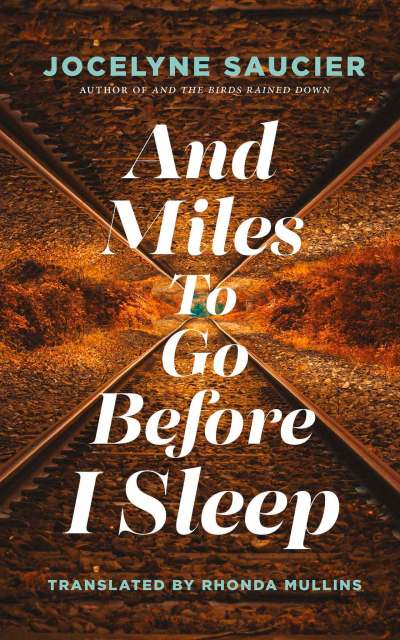
Three-time Governor General’s Literary Award finalist Jocelyne Saucier’s latest novel, And Miles to Go Before I Sleep, is a compelling philosophical novel, attentive to death, the nature and power of storytelling and what we can really know about each other.

Read this article for free:


or

Already have an account? Log in here »

To continue reading, please subscribe:

Subscribe and receive a limited-edition Free Press branded hat or tote.

Digital Subscription

One year of digital access for only $205*

  • Enjoy unlimited reading on winnipegfreepress.com
  • Read the E-Edition, our digital replica newspaper
  • Access News Break, our award-winning app
  • Play interactive puzzles

*First annual payment billed as $205.00 + GST for one year. This annual subscription will automatically renew at $233.00 + GST every 52 weeks (10% off the regular annual price of $259.35). Offer available to new and qualified returning subscribers only. Cancel any time.

To continue reading, please subscribe:

Add Free Press access to your Brandon Sun subscription for only an additional

$1 for the first 4 weeks*

  • Enjoy unlimited reading on winnipegfreepress.com
  • Read the E-Edition, our digital replica newspaper
  • Access News Break, our award-winning app
  • Play interactive puzzles
Start now

*Your next Brandon Sun subscription payment will increase by $1.00 and you will be charged $17.95 plus GST for four weeks. After four weeks, your payment will increase to $24.95 plus GST every four weeks.

Hey there, time traveller!
This article was published 31/07/2021 (1860 days ago), so information in it may no longer be current.

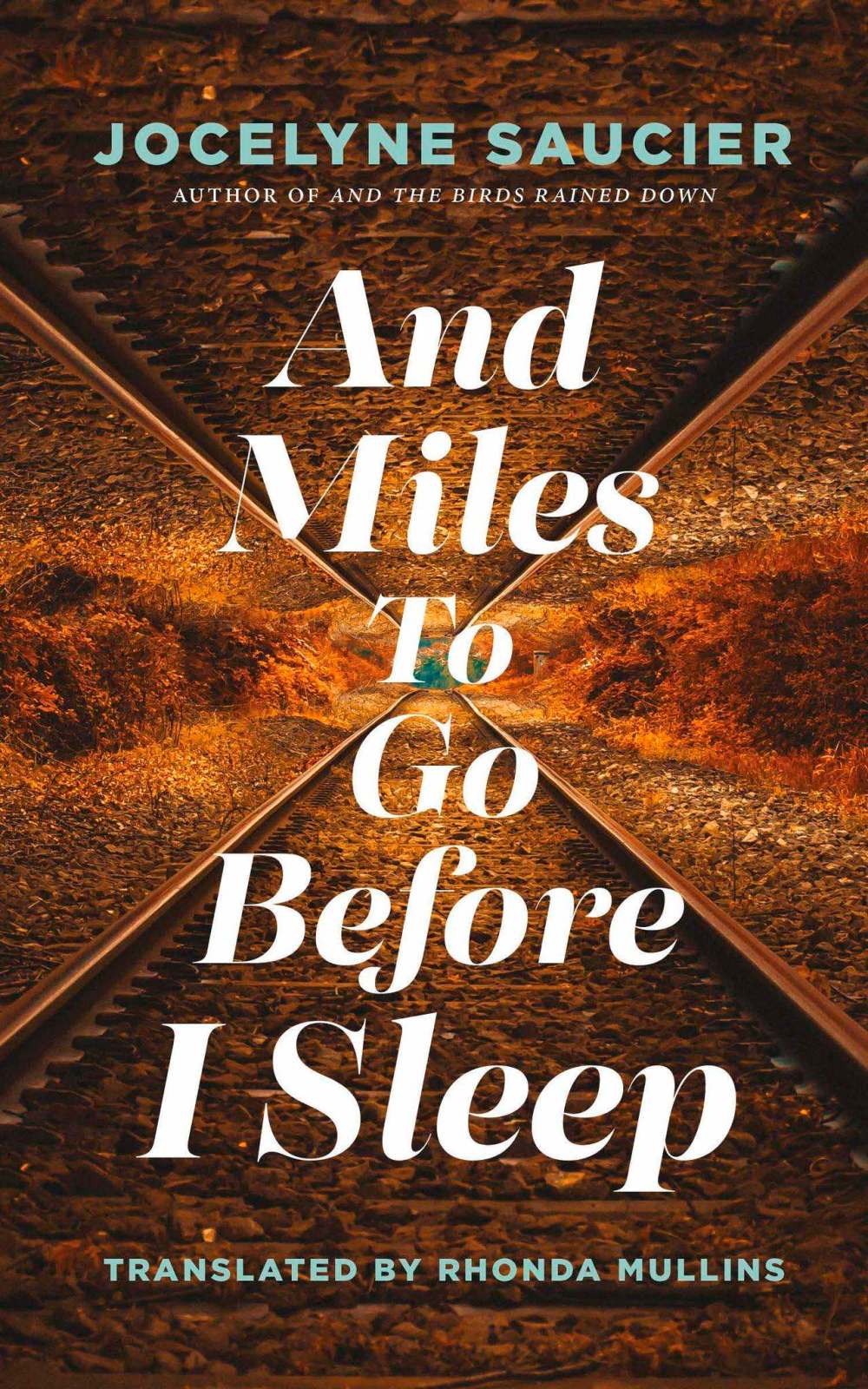
Three-time Governor General’s Literary Award finalist Jocelyne Saucier’s latest novel, And Miles to Go Before I Sleep, is a compelling philosophical novel, attentive to death, the nature and power of storytelling and what we can really know about each other.

While there are many compelling aspects to the novel — the narrator’s persona and voice, the varied secondary and tertiary characters, and Saucier’s detailed attention to languages — the novel’s first acts are mired by a conflict that has no satisfying resolution.

For the first two-thirds of the novel, the action centres on Gladys Comeau, the way her community tries to make meaning of her nostalgia-driven train journey, and what she leaves behind in Swastika (“To hell with Hitler; it was our name first”), a small town in northern Ontario.
Gladys’s neighbours, her friends and even those who know her far more distantly all describe her as optimistic, gregarious and popular. For all that her silent departure contradicts their way of knowing her, Gladys’s neighbours and friends maintain the fiction that they have a special knowledge of her and that they have a right to “repatriate” her.

Swastika is, as the the narrator comments, “not an easy place to leave,” which is one of the reasons Gladys’s unexplained departure draws such such attention. The other reason her departure draws the community’s attention and ire is that she leaves behind her daughter Lisana, who has been afflicted with major depression since she was a young woman.

Though now a woman in her 50s, Lisana is framed by the community as a constant burden — first on Gladys, then on themselves. “What was most incomprehensible, most inconceivable, is that Gladys had dumped Lisana on them,” Saucier writes. These attitudes toward Lisana are repeated in order to provide a plausible impetus to the conflict between the townspeople’s desire to have Gladys back, both to relieve them of this unwanted caregiving burden and to reassure themselves that the shape of their lives will remain stable.

The narrator, himself a train enthusiast as Gladys is, fits into this situation because he has been commissioned to write a report about the detrimental effects of decommissioning the Northern trains in Ontario and Quebec.

The first three-quarters of the novel takes the form of a mystery with no solution: Gladys’s friends and neighbours follow her journey from afar, improbably late to every possible connection, the narrator organizing the threads of his retelling to shadow her stops. There is, however, no satisfying resolution to the conundrum Gladys presents.

Because the first acts of the plot are so focused on Gladys — who knows her and how, her life story, why she is taking this journey now, where she intends to go — her death three-quarters of the way through the novel would seem to leave nothing to say. To all appearances, Gladys has tied up all of her life’s loose threads in the way of her choosing.

However, the way Gladys’s story outlives itself in the last act is a revelation of writerly skill. This is truly an ending — so open and insightful to the remaining characters’ lives and the way they tell story that remains to them — that makes the novel livelier the more one thinks about it.

Melanie Brannagan Frederiksen is a Winnipeg writer and critic.

Report Error Submit a Tip

More Stories

Designer building following making models of everyone from celebs to ordinary Winnipeggers

Aileen Goos 5 minute read Preview

Designer building following making models of everyone from celebs to ordinary Winnipeggers

Aileen Goos 5 minute read Yesterday at 5:04 PM CDT

Kevin Takatch was getting groceries in Los Angeles when he stumbled into an art sale celebrating 25 years of Jackass.

The Winnipeg designer behind BeLove suddenly found himself surrounded by famous faces, carrying one of his own jackets and wondering who he could get to wear it.

Then he spotted comedian Eric André, who appears as himself in the reality stunt/prank franchise, and asked him to model the jacket.

“I knew I couldn’t (wimp) out, like I did with the first celebrity I saw,” says Takatch, who declined to give his age.

Read
Yesterday at 5:04 PM CDT

Puzzles Palace

1 minute read Monday, Jul. 27, 2026

To solve our puzzles, please subscribe with this special offer: |

Red River Polytechnic looks to expand after MITT takeover

Maggie Macintosh and Morgan Modjeski 4 minute read Preview

Red River Polytechnic looks to expand after MITT takeover

Maggie Macintosh and Morgan Modjeski 4 minute read Tuesday, Sep. 1, 2026

Red River College Polytechnic is celebrating an enrolment bump and eyeing new high school partnerships as part of its merger with a longtime competitor.

For the first time, nearly 400 students attended their first day of RRC Polytech in Winnipeg’s south end on Tuesday.

The new campus is outfitted with two school logos — a new red one and a blue design belonging to the Manitoba Institute of Trades and Technology.

“It feels great to be a part of history,” said Dom McLaren, an 18-year-old who is enrolled in RRC Polytech’s network and systems administration program. “I’m definitely going to enjoy my time.”

Read
Tuesday, Sep. 1, 2026

Blue Bombers already excited about putting a dent in Rider Pride come Labour Day Classic

Ken Wiebe 6 minute read Preview

Blue Bombers already excited about putting a dent in Rider Pride come Labour Day Classic

Ken Wiebe 6 minute read Yesterday at 6:19 PM CDT

Jordan Younger was in the midst of breaking down the play of his defence when a question about how many times he’s participated in a Labour Day matchup was fired his way.

The Winnipeg Blue Bombers defensive co-ordinator started doing the math out loud and landed somewhere in the neighbourhood of 40 or slightly higher, counting his time as a player and a coach.

As the Bombers prepare for a pivotal home-and-home series with the Saskatchewan Roughriders — beginning Sunday in Regina — Younger is more than happy to discuss what makes the matchup special, even after all of these years.

“If you had to show somebody what a regular season game could be like in the CFL that never have any idea, you would want to show them the Labour Day Classic out in Saskatchewan and the Banjo Bowl rematch back here,” said Younger. “It would give (observers) a great idea of how impactful the CFL game can be. They’re definitely fun games to be a part of.”

Read
Yesterday at 6:19 PM CDT

Pedestrian, 39, dies after being hit by ATV

1 minute read Yesterday at 10:21 AM CDT

A 39-year-old woman was killed and a 34-year-old man was injured when they were hit by an all-terrain vehicle in Wuskwi Sipihk First Nation in western Manitoba.

RCMP said the pedestrians were hit from behind on Porcupine Bay shortly before 10 p.m. Monday.

The woman died at the scene. The man was taken to hospital with non-life-threatening injuries.

RCMP said the suspected driver, a 21-year-old man, was arrested outside his home nearby while standing next to the four-wheel ATV, which was seized.

Climate groups urge mayoral candidates to go green

Joyanne Pursaga 5 minute read Preview

Climate groups urge mayoral candidates to go green

Joyanne Pursaga 5 minute read Yesterday at 6:51 PM CDT

Winnipeg city council candidates are being urged to commit to several green initiatives, such as exploring a maximum heat bylaw for rental units.

A 10-point People’s Climate Mandate, created by the Climate Reality Project Canada, Green Action Centre, Manitoba Eco-Network and others, urges candidates in Winnipeg’s Oct. 28 election to take action to combat climate change.

“We know that climate action often fights for attention in election discourse, especially given the many other urgent immediate issues facing our city,” said Hannah Muhajarine, campaigns manager for Climate Reality Project Canada.

A call to better protect Winnipeggers from extreme heat was highlighted as among the most urgent requests. The group wants the city to explore a maximum heat bylaw, enhance funding for cooling centres and expand hours at libraries, public pools and spray pads.

Read
Yesterday at 6:51 PM CDT