The big picture

Past societies’ adaptations to changing climate offer valuable lessons today

Advertisement

Advertise with us

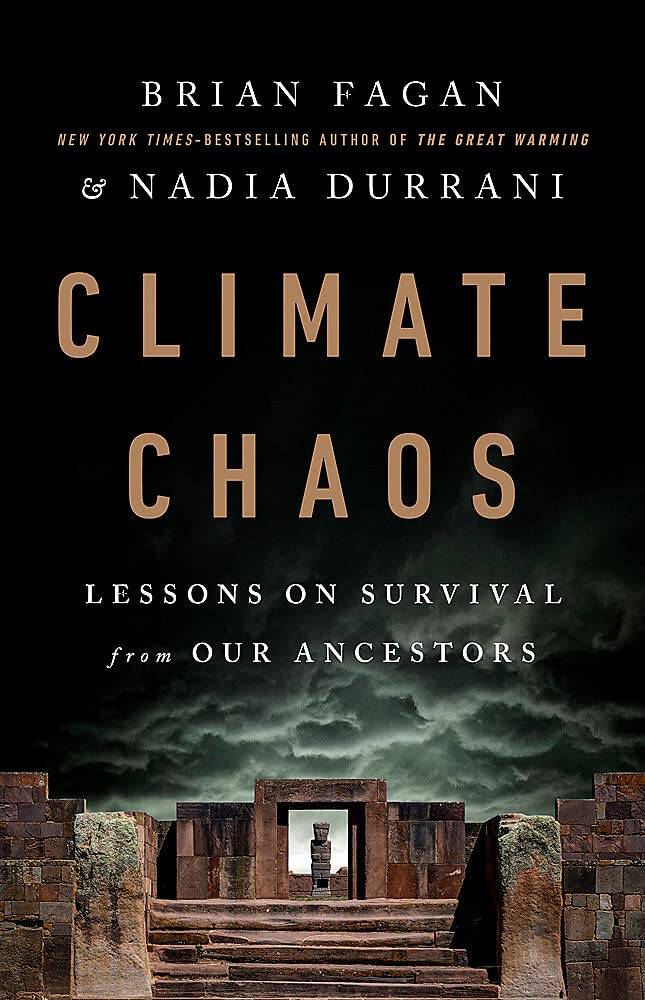
Brian Fagan and Nadia Durrani’s new book Climate Chaos sets out to do something incredibly interesting given the current state of our world — however, the task is also sensitive.

Read this article for free:


or

Already have an account? Log in here »

To continue reading, please subscribe:

Subscribe and receive a limited-edition Free Press branded hat or tote.

Digital Subscription

One year of digital access for only $205*

  • Enjoy unlimited reading on winnipegfreepress.com
  • Read the E-Edition, our digital replica newspaper
  • Access News Break, our award-winning app
  • Play interactive puzzles

*First annual payment billed as $205.00 + GST for one year. This annual subscription will automatically renew at $233.00 + GST every 52 weeks (10% off the regular annual price of $259.35). Offer available to new and qualified returning subscribers only. Cancel any time.

To continue reading, please subscribe:

Add Free Press access to your Brandon Sun subscription for only an additional

$1 for the first 4 weeks*

  • Enjoy unlimited reading on winnipegfreepress.com
  • Read the E-Edition, our digital replica newspaper
  • Access News Break, our award-winning app
  • Play interactive puzzles
Start now

*Your next Brandon Sun subscription payment will increase by $1.00 and you will be charged $17.95 plus GST for four weeks. After four weeks, your payment will increase to $24.95 plus GST every four weeks.

Hey there, time traveller!
This article was published 13/11/2021 (1737 days ago), so information in it may no longer be current.

Brian Fagan and Nadia Durrani’s new book Climate Chaos sets out to do something incredibly interesting given the current state of our world — however, the task is also sensitive.

Fagan and Durrani, both archaeologists and professors who have written many books together, set out to examine the last 30,000 years of the Earth’s climatic history and consider what can be learned from the civilizations, empires and communities that came before us as the climate warms.

The obvious danger for the authors here is that their hard work and research could be co-opted by climate change deniers who refuse to recognize that though the Earth has undergone historical climatic shifts that occurred naturally, the current climatic shifts are scientifically proven to be a direct result of humans burning fossil fuels, and is occurring at a faster pace than nearly all climate shifts of the past.
Whereas most changes in the last 30,000 years took place over hundreds or thousands of years, today’s human-caused climate change is playing out over decades, which is having, and will continue to have, a substantial human cost.

Co-authors Fagan and Durrani recognize this danger right out of the gate. But they move forward in good faith as they set about weaving together the narratives of historical changes in the Earth’s climate with the corresponding shifts in governance structures, how humans organized amongst each other and how new ways of feeding people evolved over the millenia.

Natural shifts in climate shaped how societies past lived, worked and played — and these changes offer many instructional opportunities for how to adapt to the wholly unnatural climate changes and challenges we face now as a species.

The book really digs into the significance of different food systems, and how the benefits each offered to different segments of society. It also considers how socio-economic inequality was magnified in times of crisis.

“Long- or short-term climatic shifts never ‘caused’ an ancient civilization to collapse,” the authors say in the introduction. “Rather, they were a major player in fostering dangerous levels of ecological, economic, political, and social vulnerability in societies with authoritarian leadership blinkered by rigid ideologies.”

Fagan and Durrani succeed in highlighting the importance of including archeological research in the conversation as the world comes to terms with the current climate crisis, as some solutions and lessons have been learned by humans many times before. The work is also accessible and easily understood, however the information is still dense; Climate Chaos is far from a page turner.

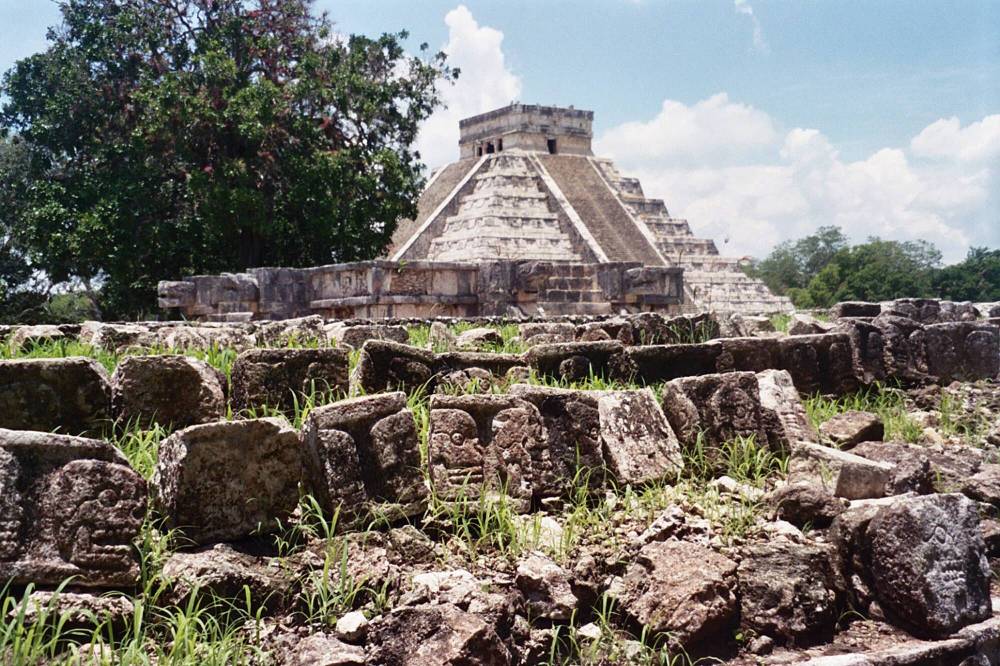
Readers can learn from from the successes and failures of pharaohs and Roman emperors to rise to the challenge of community adaptation, from the rise and fall of the Maya civilization, to how severe flooding and drought devastated Cambodia’s Angkor in the 14th century.
Fagan and Durrani explain how the Earth’s main climate systems and patterns have been altered over time and where today’s climate fits into the historical picture. The research demonstrates how humans have been forced to migrate all around the world to less harsh environments, and how adaptation has nearly always been driven by grassroots, local responses both to monitor and adapt to changes.

“We argue that there are important lessons to learn from traditional societies, ancient and still thriving,” the authors write.

Climate Chaos contributes a great deal of information to the climate change discourse that has been neglected from the mainstream, and is a welcome addition to bookshelves of those who are interested in the intricacies of how society can move forward against a monumental threat.

Sarah Lawrynuik is a freelance climate change reporter based in Winnipeg.
Report Error Submit a Tip

More Stories

Puzzles Palace

1 minute read Monday, Jul. 27, 2026

To solve our puzzles, please subscribe with this special offer: |

Development turning long-vacant gas station in Selkirk into commercial hub

By Tiago Resko 2 minute read Preview

Development turning long-vacant gas station in Selkirk into commercial hub

By Tiago Resko 2 minute read Thursday, Aug. 13, 2026

A plot of land that has sat vacant in Selkirk for 30 years is being redeveloped to host new businesses in the heart of the city.

The former gas station site on Main Street — between Rosser and Pacific avenues — will be turned into a commercial hub that will be home to six local businesses, and will be a big stepping stone for economic growth in Selkirk, Mayor Larry Johannson said Thursday.

“For decades this site has been a reminder of what once was. Today, it represents what is possible when investors see the potential of our community and choose to be a part of its future,” he said in a news release announcing the project and Thursday’s groundbreaking.

“This development reflects confidence in Selkirk, our economy and the direction we are heading.”

Read
Thursday, Aug. 13, 2026

Rise of social media reflects rise of self-promotion — to the detriment of genuine storytelling

Reviewed by Matt Henderson 5 minute read Preview

Rise of social media reflects rise of self-promotion — to the detriment of genuine storytelling

Reviewed by Matt Henderson 5 minute read Yesterday at 3:00 AM CDT

A conversation is overheard between two people; one congratulates the other on their success, evident through countless posts on LinkedIn, but the other confesses the prolific aggrandizement is due to slumping success.

A young man on an airplane spends three hours poring over selfies taken on a vacation, zooming in on his biceps and using AI to retouch photos before posting on Instagram.

Anonymous and cowardly trolls on Reddit attempt to end another person’s career.

All this “storytelling” was observed in one day by this reviewer.

Read
Yesterday at 3:00 AM CDT

Foster mom pleads guilty to assault that left six-year-old-girl paralyzed

Dean Pritchard 4 minute read Preview

Foster mom pleads guilty to assault that left six-year-old-girl paralyzed

Dean Pritchard 4 minute read Friday, Aug. 14, 2026

A Winnipeg foster mother has admitted to violently assaulting her ill foster daughter and leaving her paralyzed after the girl resisted the woman’s efforts to provide her with medication, a court has heard.

Marilyn Keno, 26, pleaded guilty Friday to one count of aggravated assault.

Keno remains in custody and will be sentenced at a later date following the completion of a court-ordered pre-sentence report.

The maximum sentence for aggravated assault is 14 years in prison. Crown attorney Alanna Littman and defence lawyer Jeremy Kostiuk did not disclose what sentences they will be recommending.

Read
Friday, Aug. 14, 2026

Sea Bears finish on top

Joshua Frey-Sam 6 minute read Preview

Sea Bears finish on top

Joshua Frey-Sam 6 minute read Yesterday at 8:27 PM CDT

Beauty. Bliss. Ecstasy.

That is how Aug. 15, 2026 will be remembered in Winnipeg.

What was once a pipe dream in the city’s hoops community became an epic reality on Saturday, when Simon Hildebrandt, who grew up playing on the courts of this very town, made good on a three-pointer from the wing to crown the Winnipeg Sea Bears Canadian Elite Basketball League champions.

A storybook ending to a 98-84 victory over the Brampton Honey Badgers sent a CEBL attendance record of 12,519 fans into pandemonium at Canada Life Centre and capped a Finals run for the ages — one that was fraught with injury, impromptu player exits and unprecedented circumstances.

Read
Yesterday at 8:27 PM CDT

Proposed Transcona development — which could add 20,000 people — gets thumbs down from residents

Joyanne Pursaga 5 minute read Preview

Proposed Transcona development — which could add 20,000 people — gets thumbs down from residents

Joyanne Pursaga 5 minute read Friday, Aug. 14, 2026

Dozens of Winnipeggers fear plans to make way for up to 20,000 more people to live in south Transcona would dramatically alter their neighbourhood and tie hefty fees for new services to their property titles.

If city council adopts the proposed South Transcona secondary plan, all future development applications would need to conform to its goals. The affected area is located south of Dugald Road, north of St. Boniface Road, east of Plessis Road and west of Murdock Road.

Homeowner Virginia Page Jähne fears the plan could add a massive tab to the title of her 4.3-acre property to cover services required for the development.

“My main concern is that they are wanting to put $1.4 million onto my title to pay for this. Now, they say that I will not have to pay it unless I subdivide. But if a person comes by and wants to buy from me … and they see that $1.4 million … what’s the first thing (they’re) going to do?” said Page Jähne, in an interview.

Read
Friday, Aug. 14, 2026