Cold hard truths

Self-imposed Arctic retreat yields surprising connections in fictional memoir

Advertisement

Advertise with us

If you think the lack of human company during the COVID-19 lockdowns took its toll on your ability to make conversations, imagine the effect years of isolation in the Arctic wilderness would have on your psyche and social skills.

Read this article for free:


or

Already have an account? Log in here »

To continue reading, please subscribe:

Subscribe and receive a limited-edition Free Press branded hat or tote.

Digital Subscription

One year of digital access for only $205*

  • Enjoy unlimited reading on winnipegfreepress.com
  • Read the E-Edition, our digital replica newspaper
  • Access News Break, our award-winning app
  • Play interactive puzzles

*First annual payment billed as $205.00 + GST for one year. This annual subscription will automatically renew at $233.00 + GST every 52 weeks (10% off the regular annual price of $259.35). Offer available to new and qualified returning subscribers only. Cancel any time.

To continue reading, please subscribe:

Add Free Press access to your Brandon Sun subscription for only an additional

$1 for the first 4 weeks*

  • Enjoy unlimited reading on winnipegfreepress.com
  • Read the E-Edition, our digital replica newspaper
  • Access News Break, our award-winning app
  • Play interactive puzzles
Start now

*Your next Brandon Sun subscription payment will increase by $1.00 and you will be charged $17.95 plus GST for four weeks. After four weeks, your payment will increase to $24.95 plus GST every four weeks.

Hey there, time traveller!
This article was published 31/12/2021 (1717 days ago), so information in it may no longer be current.

If you think the lack of human company during the COVID-19 lockdowns took its toll on your ability to make conversations, imagine the effect years of isolation in the Arctic wilderness would have on your psyche and social skills.

The difference is that in The Memoirs of Stockholm Sven, a brilliantly written novel that sweeps through time and two world wars, Sven Omson’s isolation is self-imposed.

This is the debut novel for American Nathaniel Ian Miller. A prolific contributor to journals and newspapers, he’s also a beef farmer in central Vermont. He got a firsthand look at the Arctic in 2012 as a participant in The Arctic Circle, an expeditionary program that brings together artists and scientists to collaborate aboard a Barquentine sailing vessel in Norway’s high-Arctic Svalbard Archipelago.
Dr. Mark A. Kessler / The New York Times
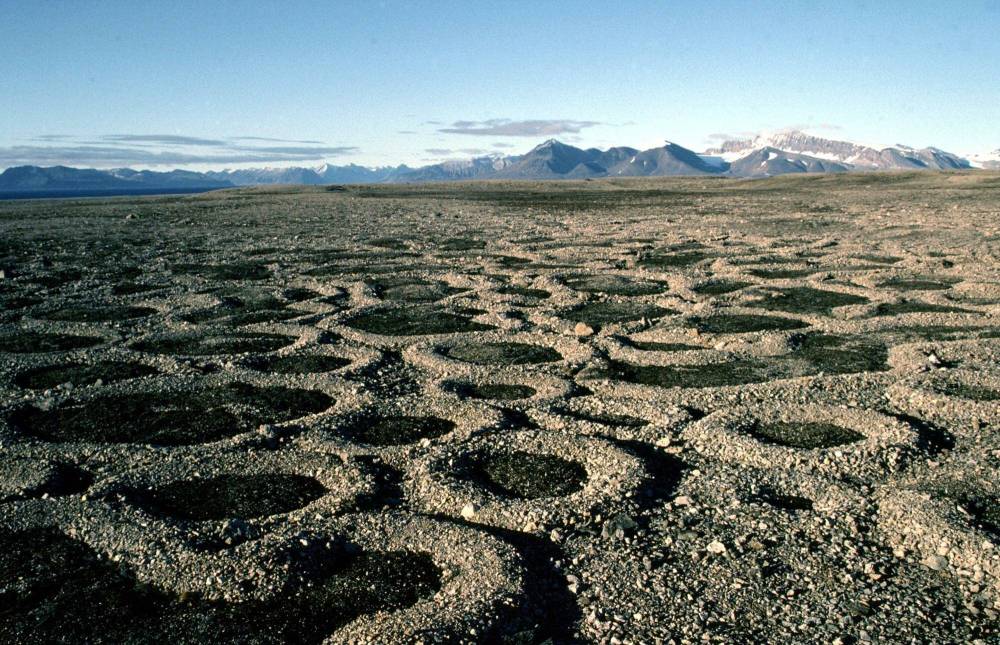
The island of Spitsbergen in the Arctic is the setting for Nathaniel Ian Miller’s debut, a fictional memoir.
Dr. Mark A. Kessler / The New York Times The island of Spitsbergen in the Arctic is the setting for Nathaniel Ian Miller’s debut, a fictional memoir.

Basing his story on a hermit about whom little is known and using the political and social situation in the region known then as Spitsbergen, Miller invents Sven Ormson, a misanthrope from Stockholm who had fantasized as a child about life in the North. When his face is crushed in a coal mining collapse in 1917, he exiles himself there to avoid the inevitable stares and mocking.

His fate seems sealed when the first thing he encounters on the tundra is the mummified skull of a whaler. It doesn’t augur well for a man whose greatest talent to that point has been reading.

Fortunately for Sven, people won’t leave him alone. A Scottish geologist and a Finnish socialist, wanderers themselves, intrude on Sven at critical moments over the years to ensure he doesn’t starve, either physically and psychologically, although he comes close. They teach him hunting and survival skills, but their best contribution comes in the form of personal advice.

After settling into a predictable rhythm, his world is blown apart with the arrival of a surprise guest, changing his life in ways he couldn’t have predicted.

Sven narrates the story, admitting his amazement at the landscape — “[I] sucked great gasps, both from the chill air and wonder at the vastness of the land and sky,” and the sun’s “stripes of turquoise and orange.” The description of the long, dark winter as “more a slow poison than a knife” evokes the image of a dishevelled Sven, huddled beside his stove in his tiny wooden shack, his one good eye leaking incessantly.

Miller’s succinct writing captures scenes of Sven’s life in short, crisp chapters. Sven has a grim attitude about his abilities. He makes serious missteps over the years as isolation wears on him. Yet he muddles on and learns to survive in the unforgiving land of ice and polar bears, realizing also that he is more than just a tortured countenance and a failure. All this takes place behind the backdrop of international politics and conflict. Even an island in the Arctic Circle becomes vulnerable to the uncertainty and violence of contending powers.

The Memoirs of Stockholm Sven

Sven’s self-deprecating humour also makes his suffering embarrassingly funny reading. When a bout of scurvy makes several teeth fall out, he adapts, proclaiming his smile is now “perforated”; the world before him is now a “literal haze” thanks to his constantly blurry eye. Eberhard, his canine companion, provides joy, unbridled optimism and the occasional conversation when Sven is beleaguered.

COVID-19 forced The Arctic Circle residency program to cancel their 2020 sailing, but this year artists, scientists, architects and others were together again, exploring the rugged, thrilling, beauty of the Arctic. Although the climate crisis has altered the environment Sven inhabited, Miller envisions what it looked like and, for Sven, what true friendship and loyalty mean in this delightful fictional memoir.

Harriet Zaidman is a children’s and freelance writer in Winnipeg. Her latest young adult novel, Second Chances (Red Deer Press) is set in the polio epidemics of the 1950s.

Report Error Submit a Tip

More Stories

Canadians loving Carney’s decision to stand tall against floundering U.S. bully

Tom Brodbeck 5 minute read Preview

Canadians loving Carney’s decision to stand tall against floundering U.S. bully

Tom Brodbeck 5 minute read Friday, Sep. 11, 2026

It’s hard to imagine a more dramatic political contrast than the one unfolding on opposite sides of the Canada-U.S. border.

Mark Carney is fighting a trade war with Donald Trump, taking the occasional verbal punch from the American president and imposing retaliatory tariffs on U.S. products.

And the prime minister is being rewarded for it politically.

Trump, meanwhile, is fighting pretty much everyone he can find — including some of America’s closest allies — and his own voters are increasingly giving him the political equivalent of a raised middle finger. That’s quite a tale of two leaders.

Read
Friday, Sep. 11, 2026

Retired sportscaster Scott Oake determined as fundraising for women's addictions treatment facility enters home stretch

Melissa Martin 5 minute read Preview

Retired sportscaster Scott Oake determined as fundraising for women's addictions treatment facility enters home stretch

Melissa Martin 5 minute read Thursday, Sep. 10, 2026

For now, the patch of land just east of the Victoria Hospital doesn’t look like much: just a field of rocks, mounded dirt, and concrete piles driven into the earth. Yet when Scott Oake looks over the site, he can already imagine how it will look in just over a year’s time, when the new Anne Oake Family Recovery Centre is expected to open.

It’s easier to picture this time around. In 2020, when the recently-retired CBC sportscaster and his late wife, Anne, were building their first labour of intermingled grief and love, the Bruce Oake Recovery Centre for men, it was hard for him to wrap his mind around how a raw construction site could transform into a welcoming addictions treatment facility.

When that centre opened in 2021, Oake found it looked “almost identical” to the architect’s renderings. So it’s easy to hope the Anne Oake Centre will be the same. It will be the first facility of its kind, its founders believe, not only in Canada but in North America: a place where 50 to 70 women can pursue sobriety while staying with their children.

“At Bruce Oake there’s a culture of love, and most of all a culture of hope,” Oake said, speaking at the site Thursday after a media conference to announce the final push of the centre’s fundraising campaign. “I can feel it every time I walk into that building. And I know it will be the same here.”

Read
Thursday, Sep. 10, 2026

Pokemon thieves clear out collectibles shop

Scott Billeck 5 minute read Preview

Pokemon thieves clear out collectibles shop

Scott Billeck 5 minute read Friday, Sep. 11, 2026

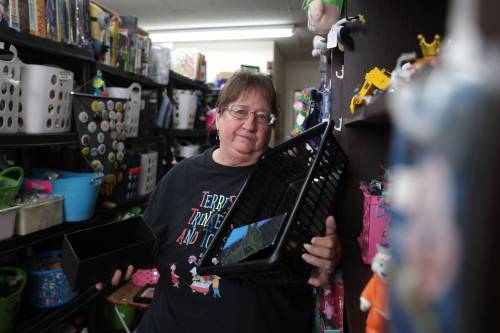
Terri Settle loved watching children walk into her collectibles shop to hunt for their favourite Pokemon cards.

After the latest break in stripped her shelves of much of the inventory, she’s not sure she’ll get to see it again.

Thieves broke into Terri’s Trinkets and Toys on Tuesday evening, punching through a grate and then the store’s bathroom wall to reach the storefront.

They made off with about $6,000 worth of merchandise, including all of the store’s Pokemon cards — about 7,000 of them — along with toys, Lego, jewelry, video games, a debit machine and personal laptop. They even took her vacuum cleaner.

Read
Friday, Sep. 11, 2026

Downtown no place to be after dark, huge majority of Winnipeggers say in survey

Joyanne Pursaga 8 minute read Preview

Downtown no place to be after dark, huge majority of Winnipeggers say in survey

Joyanne Pursaga 8 minute read Friday, Sep. 11, 2026

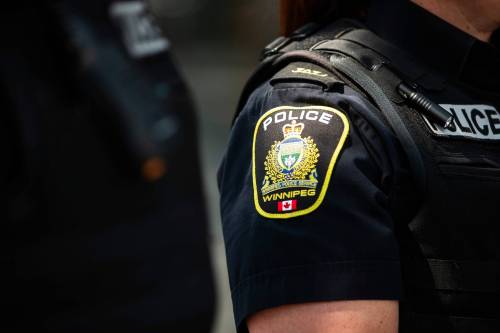
Most Winnipeggers are afraid to walk alone downtown and believe the city needs more police officers, a new survey finds.

Winnipeg Police Service released its 2026 citizen survey Friday.

Downtown safety appears to remain a major concern, with just 44 per cent saying they feel very or reasonably safe walking alone in the area during the day. The number plummets to eight per cent overall at night, down from nine per cent in 2024, the last time the survey was conducted.

This year, 14 per cent of men felt very or reasonably safe walking alone downtown at night, compared to just three per cent of women.

Read
Friday, Sep. 11, 2026

Is Trump about to poke Quebec’s political beehive?

Peter McKenna 6 minute read Preview

Is Trump about to poke Quebec’s political beehive?

Peter McKenna 6 minute read Yesterday at 2:00 AM CDT

When was the last time that a U.S. president seriously stirred the hornet’s nest of Quebec politics?

My best recollection is former U.S. president Bill Clinton. During the 1994 Quebec referendum campaign, Clinton made clear that the U.S. wholly endorsed a united and strong federal Canada — as opposed to a dismembered one. He went on to add that an independent Quebec would have no guarantee of joining the North American Free Trade Agreement as a full-fledged member.

Today, we see U.S. President Donald Trump inserting himself — unwittingly or wittingly — into the electoral and sovereignty politics of Quebec. It’s pretty clear that the resurgent Coalition Avenir Québec government is trying to make the Oct. 5 provincial election about anything other than its own governmental record and more about Trump’s economic coercion against Canada. Of course, the Parti Québécois, the odds-on-favourite, wants to make the electoral contest a referendum on the CAQ and its party leader, Christine Fréchette.

But what if Trump really wanted to make his presence felt in Quebec’s political life? How much influence could he have on shaping political outcomes in Quebec? How much of an “X factor” could he be?

Read
Yesterday at 2:00 AM CDT

The port of Churchill — but done right

Editorial 4 minute read Preview

The port of Churchill — but done right

Editorial 4 minute read Yesterday at 2:00 AM CDT

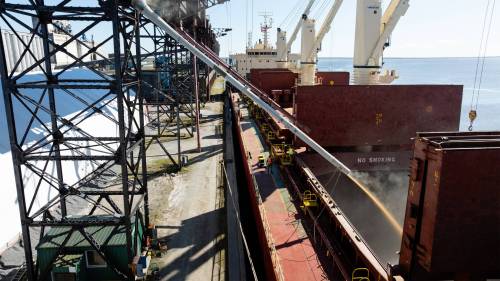
The seagoing grain carrier wasn’t christened with a champagne bottle. There was no confetti or streamers. Nevertheless, the Aug. 31 event marking the first shipment of grain to be loaded at the Port of Churchill since 2020 was celebrated like the launch of a brand new vessel.

The presence of the federal minister of northern and arctic affairs, provincial cabinet ministers and leaders and elders from several northern First Nations signalled that the fast-tracked process of refurbishing and buffing up Manitoba’s deep-water seaport gem is gaining momentum.

For OneNorth, the partnership of 29 First Nations and 12 northern communities which owns the Port of Churchill and the Hudson Bay Railway (both operated by the Arctic Gateway Group) the event heralded a new beginning. It’s been eight years since OneNorth purchased the port and railroad, and six years since grain was moved by rail through Manitoba and then by ship to European markets. Two more grain shipments, plus shipments of potash and critical minerals, will continue through the fall.

When Prime Minister Mark Carney solicited the premiers to suggest “nation-building” projects following his election in 2025, Premier Wab Kinew pitched a Manitoba trade corridor that would move wheat, critical minerals, potash and energy (oil or liquid natural gas) through the Port of Churchill.

Read
Yesterday at 2:00 AM CDT