Political killings skilfully chronicled
Advertisement
Read this article for free:
or
Already have an account? Log in here »
To continue reading, please subscribe:

Digital Subscription
One year of digital access for only $205*
- Enjoy unlimited reading on winnipegfreepress.com
- Read the E-Edition, our digital replica newspaper
- Access News Break, our award-winning app
- Play interactive puzzles
*First annual payment billed as $205.00 + GST for one year. This annual subscription will automatically renew at $233.00 + GST every 52 weeks (10% off the regular annual price of $259.35). Offer available to new and qualified returning subscribers only. Cancel any time.
To continue reading, please subscribe:
Add Free Press access to your Brandon Sun subscription for only an additional
$1 for the first 4 weeks*
- Enjoy unlimited reading on winnipegfreepress.com
- Read the E-Edition, our digital replica newspaper
- Access News Break, our award-winning app
- Play interactive puzzles
*Your next Brandon Sun subscription payment will increase by $1.00 and you will be charged $17.95 plus GST for four weeks. After four weeks, your payment will increase to $24.95 plus GST every four weeks.
Read unlimited articles for free today:
or
Already have an account? Log in here »
Hey there, time traveller!
This article was published 05/02/2022 (1677 days ago), so information in it may no longer be current.
William Shakespeare got it wrong. One of his shortest and most frequently quoted lines really was a fiction.
The Bard wrote that when Julius Caesar saw his friend pull out a knife to kill him, he called out in Latin “Et tu Brute,” (You, too, Brutus).
What Caesar’s actual last words were that March afternoon in 44 BC were “Kai su, teknons,” (“You, too, child,” in Greek), which makes sense given that Marcus Brutus was the son of Caesar’s mistress.
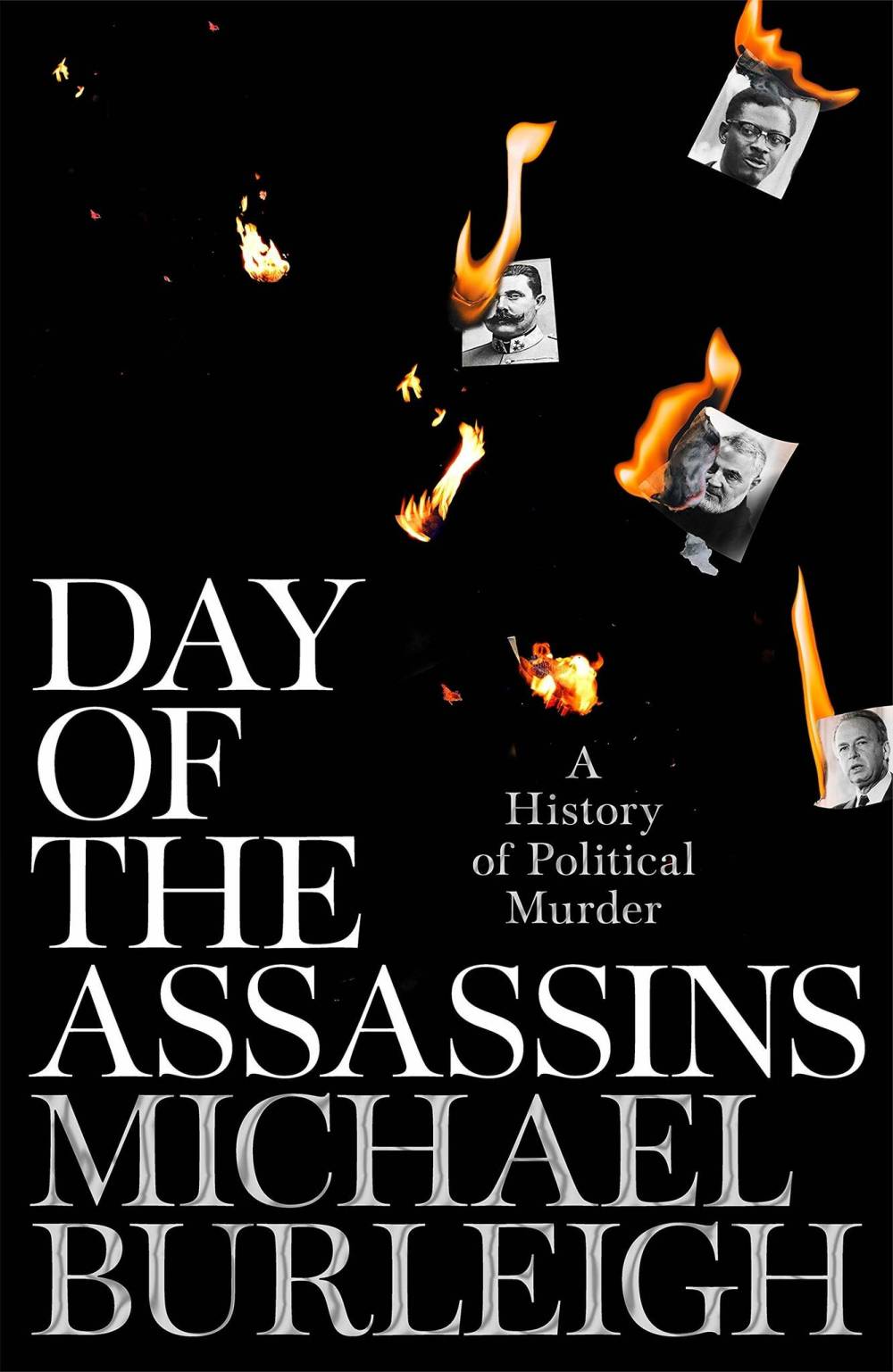
We know Shakespeare got it wrong, award-winning British historian Michael Burleigh tells us in Day of The Assassins, because Caesar’s murder was a public spectacle.
In addition to Brutus, there were 20 more knife-wielding hackers and slashers present that day in the Senate. They managed to stab Caesar about 30 times, but also stabbed each other in the hands and legs during the mêlée. Cheering them on were about 60 unarmed co-conspirators and hundreds of senators there to hear Caesar speak, but who instead watched him die.
Well, Burleigh found, they all had a helluva story to tell, which they did in “astonishing detail.”
Those words perfectly capture what Burleigh delivers in this macabre page-turner — it is, front to back, a compendium of “astonishing detail,” told with verve and droll asides.
Shakespeare’s rewrite is but a tiny part of Burleigh’s brief but authoritative account of Rome at the time of Caesar’s death, the motives for murder and fates of the murderers. But it’s a detail you can’t forget and it acts as a kind of mnemonic for remembering the bigger picture.
The archduke Franz Ferdinand, for example, was a repellent anti-Semite who would have been happily forgotten had his murder in Sarajevo in 1914 not become the pretext for the start of the First World War, “one of the greatest cataclysms of modern times.” He had no redeeming qualities beyond a love for his wife and children. His “main passion was game shooting, with 274,889 meticulously recorded kills.” So obsessive was his urge to kill that hours before being shot dead, he stopped his limousine, stepped out and shot a house cat he spotted in a field.
Hard to forget that.
Also hard to forget are so many other grim details, like the bloody aftermaths of the more recent assassinations of Lebanese prime minister Rafik Hariri in 2005 and Iranian Gen. Qassem Soleimani in 2020. Hariri was killed to stop him from trying to kick Syria out of Lebanon. Solemani was killed in part because then-U.S. president Donald Trump was “riled” about insults Iranian leaders had posted on Twitter.
Hariri was vaporized by 540 kilograms of TNT packed into a roadside car bomb. Soleimani was blown to bits in Baghdad by a U.S. Hellfire missile fired from an unmanned drone, the latest and in many ways most troubling development in the evolution of assassination.
Hariri was confirmed dead on the strength of manicured fingernails found in the gore and a bit of a tie an aide had given him earlier that day. Solemani was identified by the large garnet in a silver ring that he habitually wore on his left hand.
And so it goes for each of the assassination accounts here, divided into trends like religious wars or Vladimir Putin’s Russia. Burleigh sets out the political, social and historical forces at play for each, but does it with great flair and storytelling, pure and simple.
Former Free Press comment editor Gerald Flood wanted to write that Day of The Assassins is Burleigh’s 12th book but couldn’t find a way to work it into the review.