Threading the needle

German-based couple’s integrity, intelligence and innovation led to pioneering COVID-19 vaccine

Advertisement

Advertise with us

It’s difficult to comprehend that COVID-19 has been with us for just over two years. In December 2019 and early January 2020, we began to feel tremors of a new virus that was causing significant concern in a Chinese city of which many had never heard. Most of us went on with our lives, thinking that this virus would behave like the swine flu of 2009 or the 2002-2004 SARS outbreak — minor blips that would fizzle out before a vaccine could ever come close to production.

Read this article for free:


or

Already have an account? Log in here »

To continue reading, please subscribe:

Subscribe and receive a limited-edition Free Press branded hat or tote.

Digital Subscription

One year of digital access for only $205*

  • Enjoy unlimited reading on winnipegfreepress.com
  • Read the E-Edition, our digital replica newspaper
  • Access News Break, our award-winning app
  • Play interactive puzzles

*First annual payment billed as $205.00 + GST for one year. This annual subscription will automatically renew at $233.00 + GST every 52 weeks (10% off the regular annual price of $259.35). Offer available to new and qualified returning subscribers only. Cancel any time.

To continue reading, please subscribe:

Add Free Press access to your Brandon Sun subscription for only an additional

$1 for the first 4 weeks*

  • Enjoy unlimited reading on winnipegfreepress.com
  • Read the E-Edition, our digital replica newspaper
  • Access News Break, our award-winning app
  • Play interactive puzzles
Start now

*Your next Brandon Sun subscription payment will increase by $1.00 and you will be charged $17.95 plus GST for four weeks. After four weeks, your payment will increase to $24.95 plus GST every four weeks.

Hey there, time traveller!
This article was published 12/03/2022 (1661 days ago), so information in it may no longer be current.

It’s difficult to comprehend that COVID-19 has been with us for just over two years. In December 2019 and early January 2020, we began to feel tremors of a new virus that was causing significant concern in a Chinese city of which many had never heard. Most of us went on with our lives, thinking that this virus would behave like the swine flu of 2009 or the 2002-2004 SARS outbreak — minor blips that would fizzle out before a vaccine could ever come close to production.

But due to ingenuity, hyper-intelligence and luck, two German scientists knew that this new virus was different. Doctors Ozlem Tureci and Ugur Sahin, married Turkish immigrants who would develop a leading edge biotech company called BioNTech, were the right people at the right time to ensure that millions of lives would be saved.

In The Vaccine: Inside the Race to Conquer the COVID-19 Pandemic, author Joe Miller, the Financial Times correspondent in Frankfurt, captures the unfathomable miracle in real time that would eventually create the BioNTech-Pfizer vaccine in less than a year. Tracing the scientists’ roots back to childhood and then to a courtship on a cancer ward in Germany, Miller creates a timeline of why and how BioNTech, and Tureci and Sahin, were the “secret sauce” for the development of a vaccine that has protected billions of people.
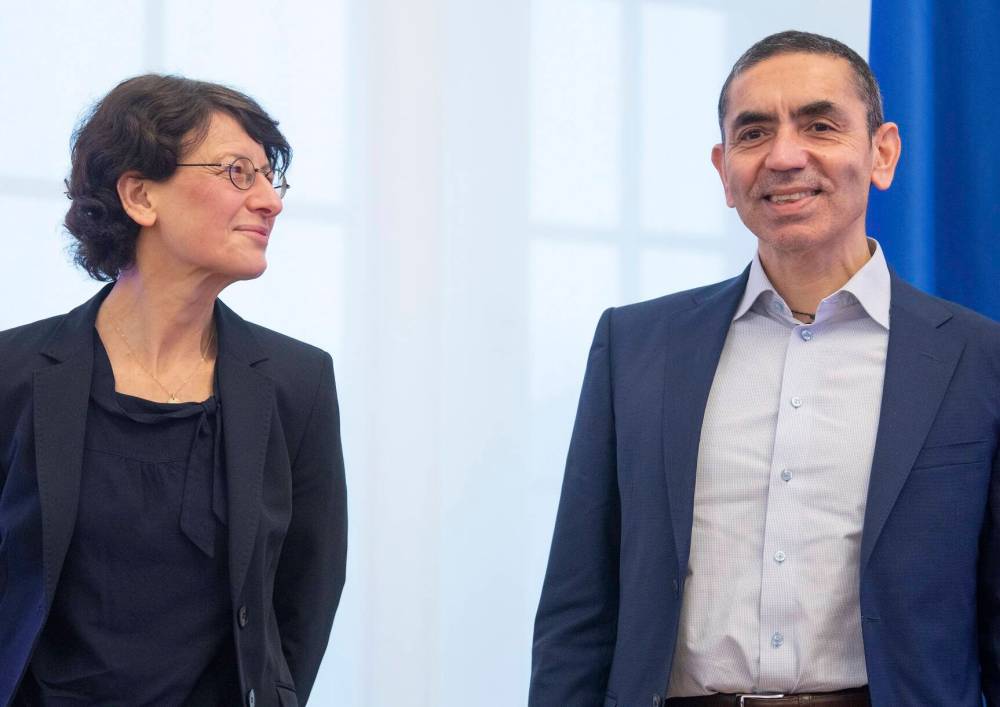
Boris Roessler / The Associated Press files
BioNTech co-founders Ozlem Tureci (left) and Ugur Sahin.
Boris Roessler / The Associated Press files BioNTech co-founders Ozlem Tureci (left) and Ugur Sahin.

Originally a small pharmaceutical company devoted to finding cancer treatments based on mRNA technology, Tureci and Sahin were highly confident BioNTech’s genetic toolbox could be used to help create a desperately needed vaccine. In January 2020, Sahin did the math from their small apartment as he began to see reports out of Wuhan.

To his dismay, he knew we were in trouble. “I understood instantly that we were going to face two potential scenarios: either a very fast pandemic which kills millions within a couple of months, or a prolonged epidemic situation which will last for the next sixteen to eighteen months,” he says. As it has turned out, it was the latter; worse so, the virus was being transmitted by people who showed no symptoms. A perfect storm.

BioNTech set out immediately in January 2020 to begin to create a series of vaccines that might latch on to the now-famous crown-like protein of the coronavirus. Through existing but unproven mRNA technology and the backing of the billionaire oligarchy — a theme not critically analyzed by Miller to much extent — Tureci and Sahin assembled teams that worked around the clock to develop a lipid wrapper that would prevent the disintegration of the vaccine as it is exposed to the atmosphere. “For mRNA drugs to be viable, they needed to be shielded as they traveled through the body to find a cell,” they write.

Project Lightspeed, which was the name for the quest to find a vaccine, simultaneously had to ensure that it had the funding to keep the relatively small pharma afloat. Through last-minute deals with backers who scour medical journals for the next big thing — and an eventual deal with pharma giant Pfizer — BioNTech was able to create a viable product by March 27, 2020.

The problem, however, was that it needed to be tested. Due to the advanced technology that mRNA presented, Phase 1 and toxicology tests could be shortened. Furthermore, the BioNTech team was able to convince regulators in both Europe and the U.S. to speed up the process given the evidence produced through testing on rodents. By April 23, the first human volunteer received a jab from a BioNTech-Pfizer vaccine, and by the end of May 2020 the vaccine was ready — a seemingly inconceivable task and one of the most significant scientific feats in human history.
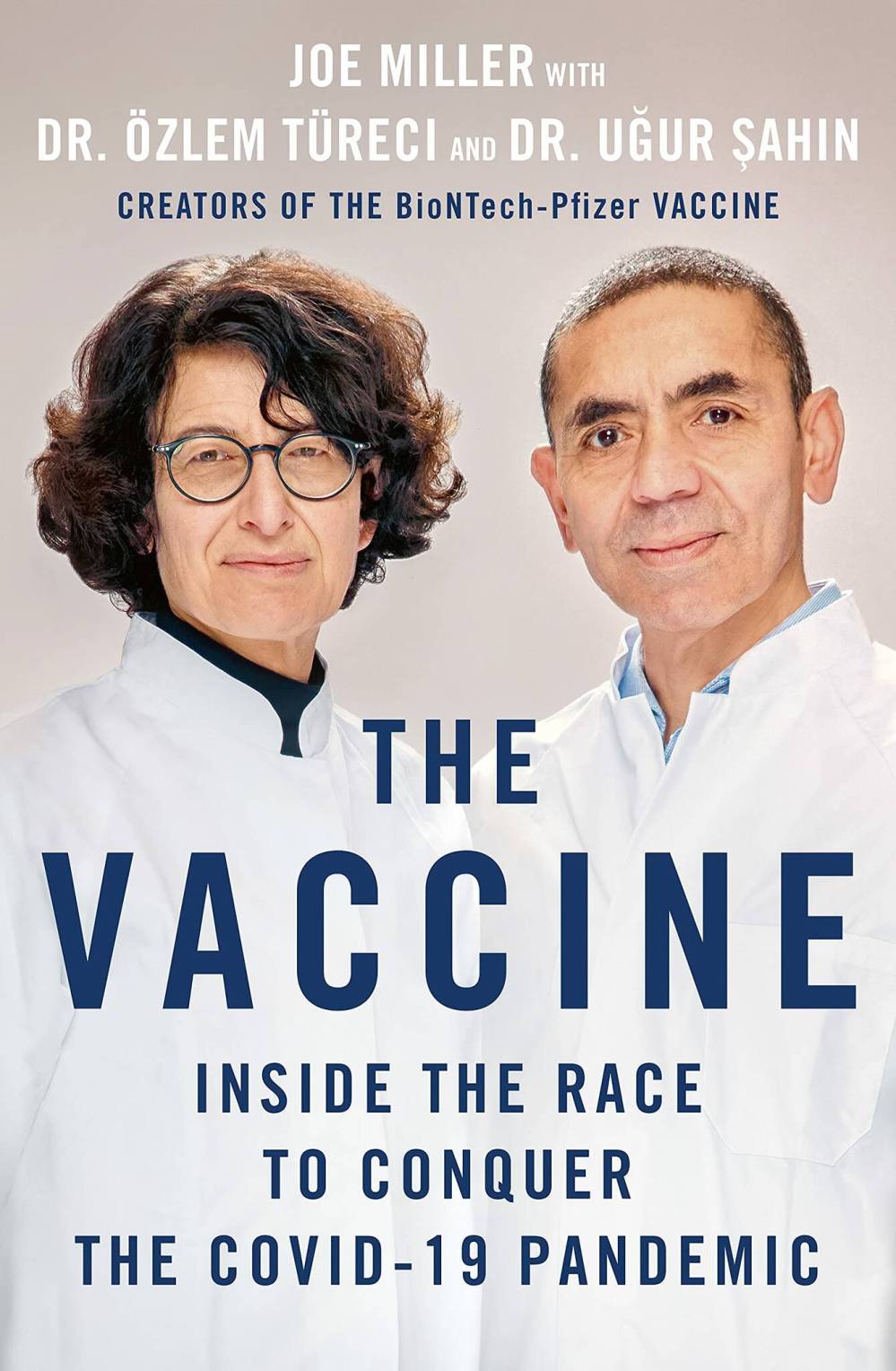
The Vaccine
The Vaccine

And, famously, on December 8, 91-year-old Maggie Keenan of Great Britain was the first person to receive the vaccination. “Less than ten months after he and Ozlem discussed the possibility of developing an mRNA vaccine against an unnamed pathogen in China, their lead candidate had been found to be more than 90 percent effective at preventing disease,” Miller writes.

Since then, most Canadians who seek an end to the pandemic have had their jabs, have anxiously anticipated getting their kids to supersites and have encouraged their reluctant neighbours to get theirs. Vaccines are our way out of this pandemic, there is no doubt.

For Miller, whether overtly or not, the underlying story to the development of species-saving vaccines and cancer treatments is dependent on a billionaire class whose focus is to expand its fortunes. This tension is evident at every corner, as Tureci and Sahin, now billionaires themselves, had to navigate bloodthirsty capital at every step to avoid compromising the goal of Project Lightspeed — to save lives.

In the end, however, it was their relationship, integrity, intellect and unwavering dedication to humanity that propelled Project Lightspeed to success. According to Miller, and much like many of history’s turning points, it was “the character of Ugur and Ozlem” that changed the course of time. As he writes, “It is people, not papers, that really make the difference.”

Matt Henderson is assistant superintendent of Seven Oaks School Division.
Frederic Sierakowski / The Associated Press files
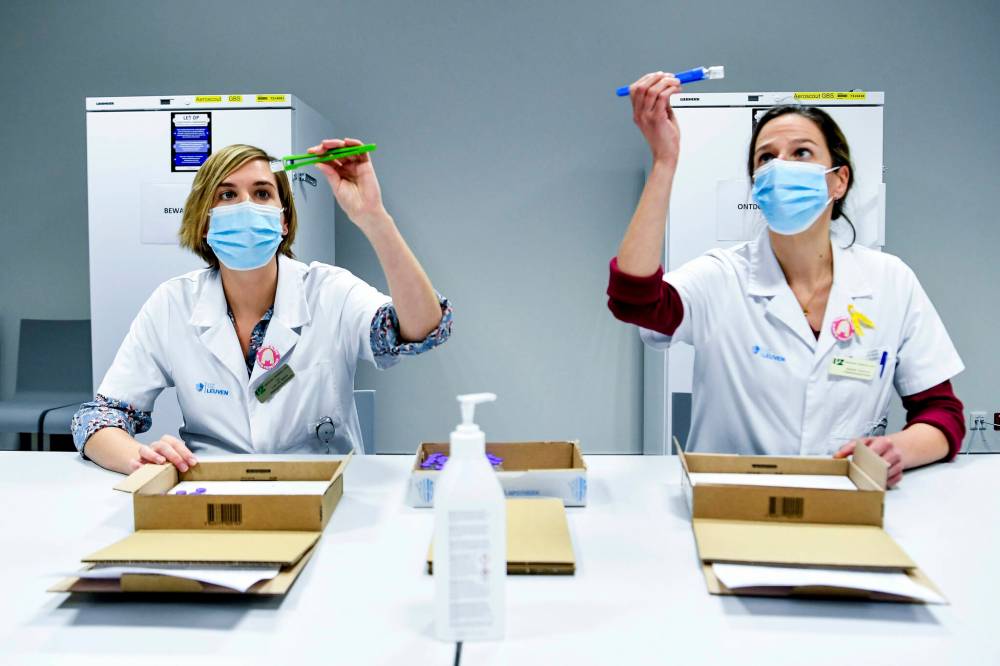
In this 2020 photo, health workers inspect vials of the Pfizer-BioNTech COVID-19 vaccine as they are thawed in a lab at the UZ Leuven hospital in Leuven, Belgium. The first human recipient of the mRNA vaccine got their jab on April 23, 2020.
Frederic Sierakowski / The Associated Press files In this 2020 photo, health workers inspect vials of the Pfizer-BioNTech COVID-19 vaccine as they are thawed in a lab at the UZ Leuven hospital in Leuven, Belgium. The first human recipient of the mRNA vaccine got their jab on April 23, 2020.
History

Updated on Saturday, March 12, 2022 9:34 AM CST: Corrects typo.
Report Error Submit a Tip

More Stories

Positive anticipation is growing about major housing developments underway in Winnipeg’s downtown

Gabrielle Piché 10 minute read Preview

Positive anticipation is growing about major housing developments underway in Winnipeg’s downtown

Gabrielle Piché 10 minute read Friday, Sep. 25, 2026

If traffic is light and the wind is down, Somia Sadiq is able to hear the roar of Winnipeg Jets fans twice: first through her window, then on TV.

From her apartment view high above downtown, she can look out at Graham Avenue’s painted pedestrian landscape, see construction cranes and hear the heavy equipment at work as massive housing projects take shape at The Forks, at what used to be Portage Place shopping centre and at the former Hudson’s Bay building.

Sadiq has lived at 300 Main for 2 1/2 years, a few steps from the city’s famous, windy and reopened-to-pedestrians Portage Avenue intersection. At 42 storeys, it’s the tallest building in Winnipeg.

She is among 18,000 downtown residents who will soon be joined by thousands of others attracted to the city’s core by the new wave of major construction projects.

Read
Friday, Sep. 25, 2026

Bombers let another one slip away and face pivotal issue

Taylor Allen 7 minute read Preview

Bombers let another one slip away and face pivotal issue

Taylor Allen 7 minute read Saturday, Sep. 26, 2026

Mike O’Shea summed it up best.

“That one doesn’t feel very good.”

Nor should it.

The Winnipeg Blue Bombers started out hot Friday night, only to run out of gas down the stretch and allow the visiting Toronto Argonauts to steal a 30-28 victory.

Read
Saturday, Sep. 26, 2026

Unhappy Dynacare staff refuse OT shifts; doors could be closed at clinics with Saturday hours

Carol Sanders 4 minute read Preview

Unhappy Dynacare staff refuse OT shifts; doors could be closed at clinics with Saturday hours

Carol Sanders 4 minute read Friday, Sep. 25, 2026

Some Winnipeg Dynacare sites normally open on Saturday were closed last week, and may continue to be because staff are refusing to pick up overtime shifts after they were forced back to work amid a labour dispute with the company.

Read
Friday, Sep. 25, 2026

Today’s horoscope

Georgia Nicols 4 minute read Preview

Today’s horoscope

Georgia Nicols 4 minute read Yesterday at 2:00 AM CDT

MOON ALERT: There are no restrictions to shopping or important decisions. The moon is in Aries.

ARIES (March 21-April 19)

This is a wonderful, energetic day. The moon in your sign is dancing with lucky Jupiter promoting domestic peace and happiness. It’s a great day for business. But your top choice will be to socialize, enjoy fun activities with kids, check out sporting events or slip away on a vacation. .

TAURUS (April 20-May 20)

Read
Yesterday at 2:00 AM CDT

Signs of local neo-Nazi recruiting efforts spark concern

Conrad Sweatman 7 minute read Preview

Signs of local neo-Nazi recruiting efforts spark concern

Conrad Sweatman 7 minute read Saturday, Sep. 26, 2026

A far-right canvassing push in Manitoba this month is raising concerns among Winnipeg residents.

Stickers promoting Nationalist-13, a men’s-only neo-Nazi group also known as NS-13 based primarily in Hamilton, Ont., have appeared in Winnipeg and parts of southern Manitoba. The stickers bear national socialist branding and messages such as “White Man, Fight Back” and “White Community, Political Action, Training and Fitness.”

Winnipeg writer Jess Woolford recently encountered an NS-13 poster on Pembina Highway.

“It was appalling,” Woolford said. “It has the Nazi death heads covering people’s faces. It was pretty disturbing to come across this … I just didn’t expect to see it so blatantly displayed in my neighbourhood.”

Read
Saturday, Sep. 26, 2026

German-based couple’s quick work led to pioneering COVID-19 vaccine

Reviewed by Matt Henderson 5 minute read Preview

German-based couple’s quick work led to pioneering COVID-19 vaccine

Reviewed by Matt Henderson 5 minute read Saturday, Mar. 12, 2022

It’s difficult to comprehend that COVID-19 has been with us for just over two years. In December 2019 and early January 2020, we began to feel tremors of a new virus that was causing significant concern in a Chinese city of which many had never heard. Most of us went on with our lives, thinking that this virus would behave like the swine flu of 2009 or the 2002-2004 SARS outbreak — minor blips that would fizzle out before a vaccine could ever come close to production.

But due to ingenuity, hyper-intelligence and luck, two German scientists knew that this new virus was different. Doctors Ozlem Tureci and Ugur Sahin, married Turkish immigrants who would develop a leading edge biotech company called BioNTech, were the right people at the right time to ensure that millions of lives would be saved.

In The Vaccine: Inside the Race to Conquer the COVID-19 Pandemic, author Joe Miller, the Financial Times correspondent in Frankfurt, captures the unfathomable miracle in real time that would eventually create the BioNTech-Pfizer vaccine in less than a year. Tracing the scientists’ roots back to childhood and then to a courtship on a cancer ward in Germany, Miller creates a timeline of why and how BioNTech, and Tureci and Sahin, were the “secret sauce” for the development of a vaccine that has protected billions of people.

Originally a small pharmaceutical company devoted to finding cancer treatments based on mRNA technology, Tureci and Sahin were highly confident BioNTech’s genetic toolbox could be used to help create a desperately needed vaccine. In January 2020, Sahin did the math from their small apartment as he began to see reports out of Wuhan.

Read
Saturday, Mar. 12, 2022