Likable librarian tackles literary mystery
Advertisement
Read this article for free:
or
Already have an account? Log in here »
To continue reading, please subscribe:

Digital Subscription
One year of digital access for only $205*
- Enjoy unlimited reading on winnipegfreepress.com
- Read the E-Edition, our digital replica newspaper
- Access News Break, our award-winning app
- Play interactive puzzles
*First annual payment billed as $205.00 + GST for one year. This annual subscription will automatically renew at $233.00 + GST every 52 weeks (10% off the regular annual price of $259.35). Offer available to new and qualified returning subscribers only. Cancel any time.
To continue reading, please subscribe:
Add Free Press access to your Brandon Sun subscription for only an additional
$1 for the first 4 weeks*
- Enjoy unlimited reading on winnipegfreepress.com
- Read the E-Edition, our digital replica newspaper
- Access News Break, our award-winning app
- Play interactive puzzles
*Your next Brandon Sun subscription payment will increase by $1.00 and you will be charged $17.95 plus GST for four weeks. After four weeks, your payment will increase to $24.95 plus GST every four weeks.
Read unlimited articles for free today:
or
Already have an account? Log in here »
Hey there, time traveller!
This article was published 02/04/2022 (1640 days ago), so information in it may no longer be current.
There’s something irresistible about a literary mystery: for the passionate reader already fascinated by books, there’s an extra thrill in learning about the arcane history and surprising financial value of rare volumes. Whether in the realm of non-fiction (for example, Andrea Mays’ 2016 The Millionaire and the Bard, about Henry Folger’s quest for every copy of Shakespeare’s First Folio), or whodunits such as John Dunning’s Cliff Janeway series (Booked to Die, etc.), rare books provide rich fodder for mystery and intrigue.
Eva Jurczyk’s debut novel The Department of Rare Books and Special Collections aspires to both of these traditions: set at an unnamed university library’s rare book department, its plot revolves around actual rare volumes and what scholars hope to learn from them.
A librarian herself at the University of Toronto, Jurczyk makes great use of her own expertise as well as her observations of human behaviour and relationships. Her novel is filled not only with behind-the-scenes details but well-drawn characters revealed through engaging dialogue.
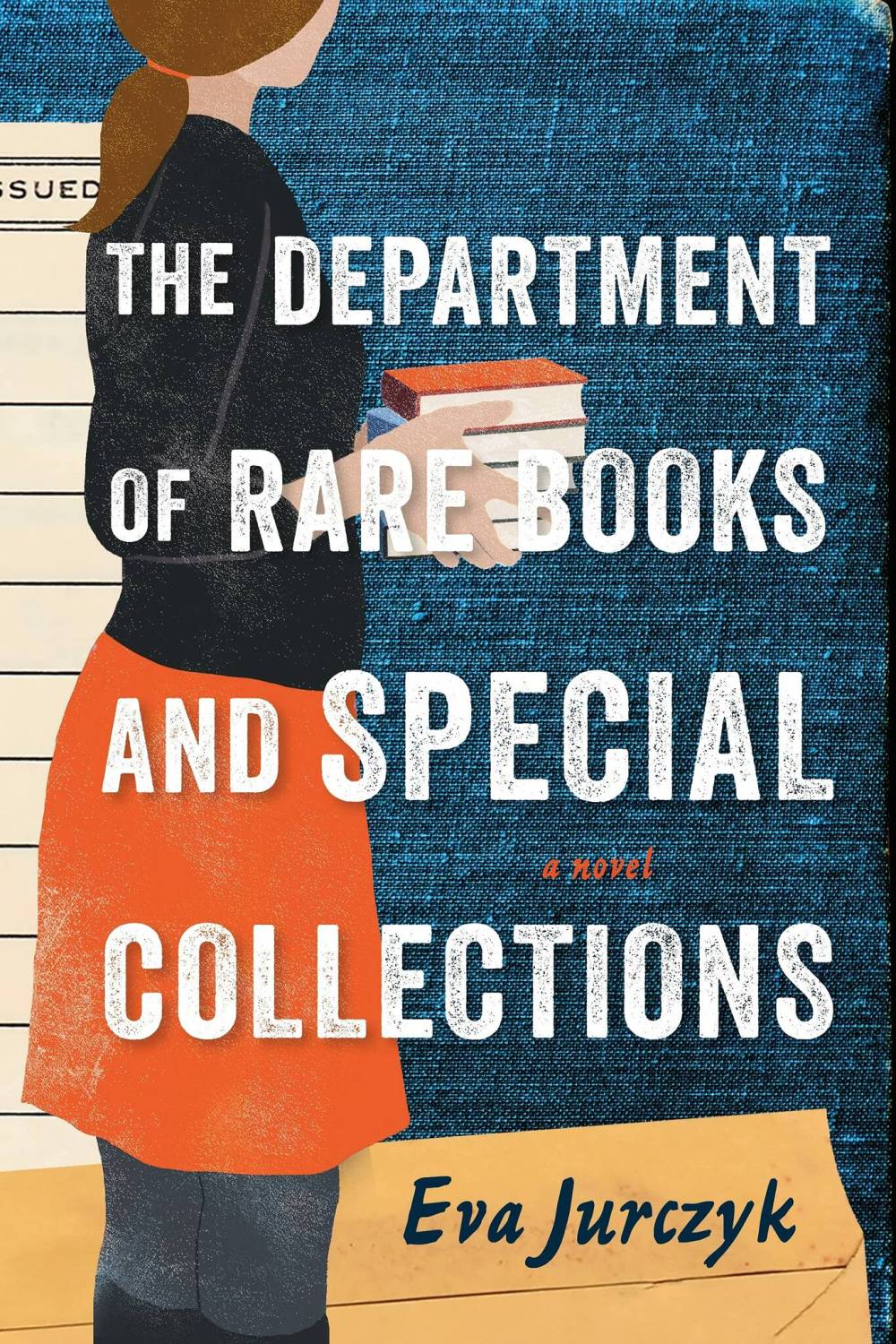
Anticipating a well-deserved sabbatical at home with her husband, librarian Liesl Weiss is called back to work to take charge of the eponymous Department when the veteran director suffers a stroke. Immediately she is faced with a crisis when it is discovered that a rare and expensive multi-volume 16th-century Plantin Polyglot Bible, purchased with donations to the university, has gone missing from the director’s safe. When one of her staff repeatedly fails to return to work, Liesl must try to find the volumes and discover the whereabouts of her colleague while carefully navigating university politics and avoiding scandal.
Liesl’s search for the Plantin is complicated by a compelling subplot concerning a completely different ancient manuscript, known as the Peshawar, which includes the first known reference to the number zero, and which a visiting scholar is seeking to carbon date. This will require damaging it, permission for which Liesl is hesitant to grant. (In real life, the Peshawar — or Bakshali — manuscript was carbon dated at the University of Oxford in 2017).
At the same time, Liesl — who is in her 60s — must also contend with campus administration and men who underestimate her, despite being more competent than they are. Having an older female protagonist dealing with both institutional politics and the complexities of middle age (including the legacy of an old flame) is both refreshing and interesting.
However, where Dunning’s series features intricate murder plots that are integrally connected to the pursuit of rare books, here there is no murder involved. Two characters do pass away, but one of natural causes and another in a way unrelated to the missing volumes. As a result, the stakes revolve more around interpersonal conflict, the university not disappointing wealthy donors and the impacts of mental illness.
As well, the missing Plantin Polyglot Bible itself makes for a somewhat unsatisfying MacGuffin because it is never adequately described. Characters refer to it but never really talk about it, so one keeps waiting for Liesl to learn its background to really understand its significance and what might motivate someone to steal it. The requisite climax where all is revealed could also have been strengthened had Liesl actually delivered her conclusions to the other characters in her own voice, rather than being summarized by the omniscient narrator.
The observant reader may in addition be bemused by dialogue and flashbacks that seem to suggest that the action is set in 2009, yet references are made to books published only in the past few years.
While The Department of Rare Books and Special Collections is enjoyable as a novel and will be popular with bibliophiles, its deviations from the conventions of the whodunit may prevent it from fully matching the charms of previous literary mysteries.
Michael Dudley is a librarian at the University of Winnipeg.