Argentine activist’s disappearance detailed

Advertisement

Advertise with us

It’s estimated that more than 22,000 activists were killed or “disappeared” by police and military in Argentina between 1975 and 1978. In Looking for Alicia: The Unfinished Life of an Argentinian Rebel, Canadian author Marc Raboy writes of his search to uncover the story of his distant cousin Alicia Cora Raboy, who was last seen on June 17, 1976 when she, her husband Francisco (Paco) Urondo and infant daughter Angela were caught in a police ambush.

Read this article for free:


or

Already have an account? Log in here »

To continue reading, please subscribe:

Subscribe and receive a limited-edition Free Press branded hat or tote.

Digital Subscription

One year of digital access for only $205*

  • Enjoy unlimited reading on winnipegfreepress.com
  • Read the E-Edition, our digital replica newspaper
  • Access News Break, our award-winning app
  • Play interactive puzzles

*First annual payment billed as $205.00 + GST for one year. This annual subscription will automatically renew at $233.00 + GST every 52 weeks (10% off the regular annual price of $259.35). Offer available to new and qualified returning subscribers only. Cancel any time.

To continue reading, please subscribe:

Add Free Press access to your Brandon Sun subscription for only an additional

$1 for the first 4 weeks*

  • Enjoy unlimited reading on winnipegfreepress.com
  • Read the E-Edition, our digital replica newspaper
  • Access News Break, our award-winning app
  • Play interactive puzzles
Start now

*Your next Brandon Sun subscription payment will increase by $1.00 and you will be charged $17.95 plus GST for four weeks. After four weeks, your payment will increase to $24.95 plus GST every four weeks.

Hey there, time traveller!
This article was published 23/04/2022 (1613 days ago), so information in it may no longer be current.

It’s estimated that more than 22,000 activists were killed or “disappeared” by police and military in Argentina between 1975 and 1978. In Looking for Alicia: The Unfinished Life of an Argentinian Rebel, Canadian author Marc Raboy writes of his search to uncover the story of his distant cousin Alicia Cora Raboy, who was last seen on June 17, 1976 when she, her husband Francisco (Paco) Urondo and infant daughter Angela were caught in a police ambush.

Urondo, a poet, author and one of the leaders of the Montoneros, a left-wing guerrilla group, was killed by a blow to the head. Angela was taken by police to an orphanage and later rescued by her grandmother, while Alicia was captured but vanished. Like many other Argentinian activists, Alicia’s ultimate fate was death, but no specific details have ever emerged.

It took until 2011 for the couple’s relatives to get any justice for their deaths. Four former police officers were convicted and sentenced to life imprisonment for Urondo’s premeditated homicide and the “illegal deprivation of liberty” of Alicia. A month before this judgment was made, a plaque was placed outside a high school in Buenos Aires commemorating the disappearance under dictatorship of 20 former students, including Alicia.
Supplied photo
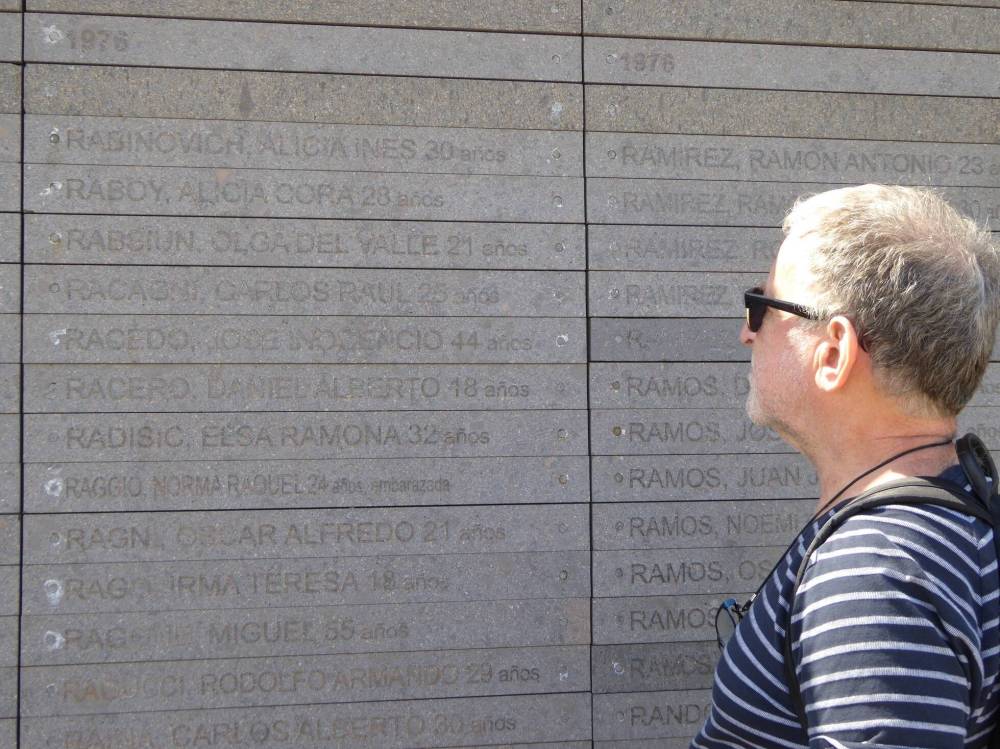
Author Marc Raboy peruses a wall of ‘disappeared’ Argentinian political activists, including his distant cousin Alicia Cora Raboy.
Supplied photo Author Marc Raboy peruses a wall of ‘disappeared’ Argentinian political activists, including his distant cousin Alicia Cora Raboy.

Raboy, Beaverbrook professor emeritus in art history and communication studies at McGill University, is the author of 20 books and a finalist for the Governor General’s Literary Award for Non-Fiction. A former journalist, he thoroughly details the political turmoil that existed in Argentina for much of the 20th century, including six military coups that took place between 1930 and 1976. It was in this environment that Alicia, born in 1948 — the same year as the author — became active in politics beginning at age 14, when she joined the youth wing of the Communist Party of Argentina.

Alicia and Raboy both grew up in immigrant Jewish families with ancestral roots in the province of Podolia in southwestern Ukraine. Alicia’s father was orphaned at a young age and adopted by an aunt and uncle in Argentina, arriving in Buenos Aires in 1925 at the age of 12. Raboy’s grandfather emigrated to Canada in 1914 and his wife and children, including Raboy’s father Sam, joined him in 1920.

Raboy is helped in his research into Alicia’s life by her daughter, Angela, and Alicia’s older brother Gabriel. Raboy realizes that he and Alicia also shared a passion for student activism, but in his case the political environment in Canada wasn’t as dangerous for young rebels.

“In Canada, one could imagine changing the system without putting one’s life on the line. In Argentina, trying to change the system was life-threatening. Alicia and I were separated by circumstances. She ended up in Argentina and I did in Canada, and that made all the difference.”

While over 45 years have passed since Alicia and Urondo were ambushed — two among thousands of other victims of government-sanctioned violence — Raboy witnesses the Madres de Plaza de Mayo’s weekly march in Buenos Aires’ main square. These now-elderly women, wearing white kerchiefs and holding signs, have walked every Thursday since 1977 in a public action meant to draw attention to their continuing demand find out the truth behind their relatives’ disappearances. In 2004, then-president Nestor Kirchner issued a formal apology in the name of the Argentine state for its failure to adequately address the crimes of dictatorship, and trials for human rights abuses under the label of genocide started in 2005.
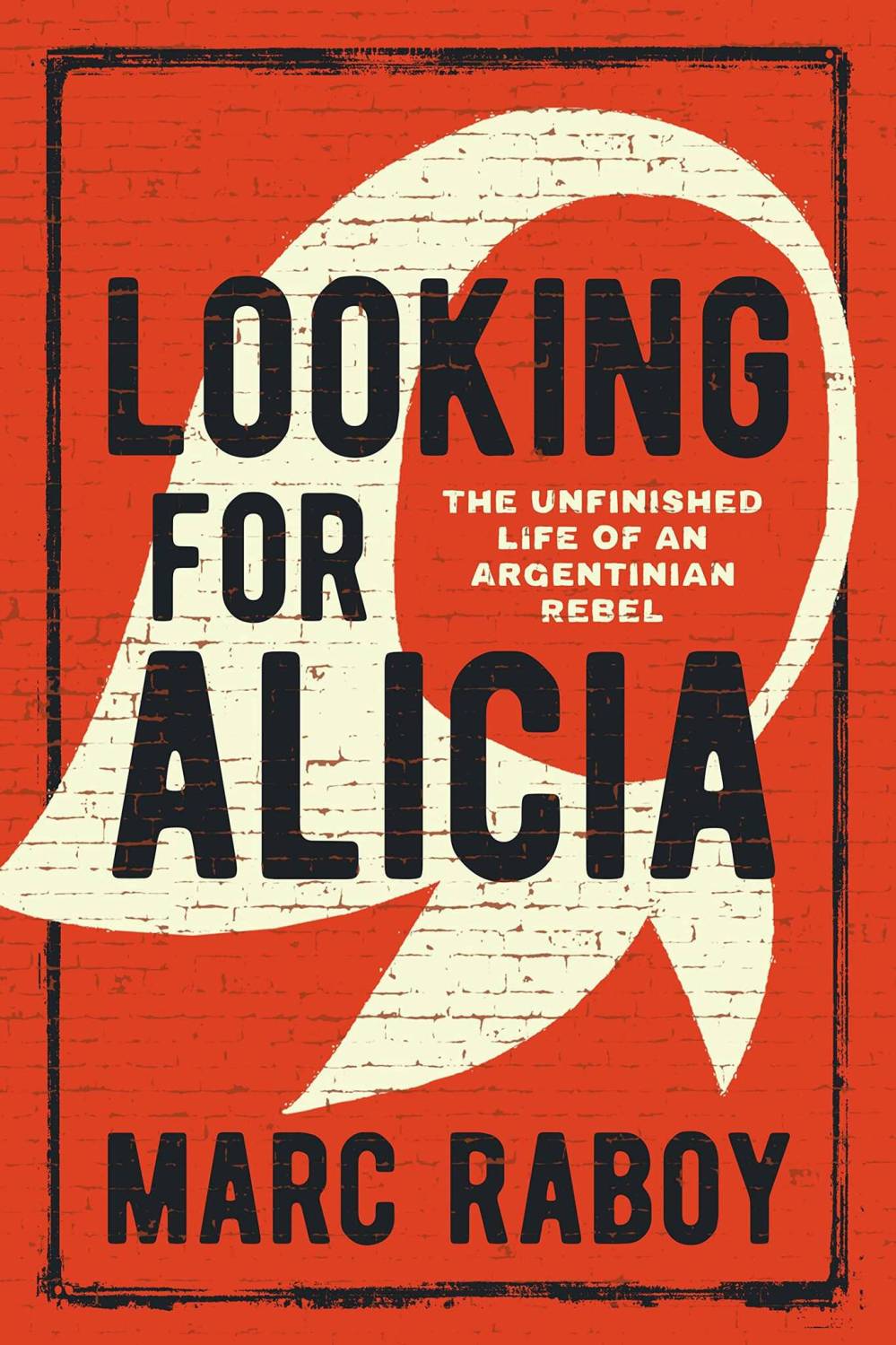
Looking for Alicia
Looking for Alicia

Looking for Alicia is most interesting when Raboy links Argentina’s bloody history to the real lives of Alicia, Urondo and their families, but the book also contains detailed information on the country’s political history. It’s difficult to keep track of whether the left, right or middle is in power and also the roles of a multitude of activist groups. A useful chronology listing the key dates of Argentina’s history is placed at the end of the book.

Andrea Geary is a freelance writer in Winnipeg.

Report Error Submit a Tip

More Stories

Steinbach Credit Union member warns others after scammer steals $10K

Scott Billeck 5 minute read Preview

Steinbach Credit Union member warns others after scammer steals $10K

Scott Billeck 5 minute read Friday, Sep. 18, 2026

A Winnipeg single mother whose bank account was drained of nearly $10,000 says Steinbach Credit Union needs to warn its members about what she believes is a broader security problem.

The woman, who is not being named to protect her identity, said a scammer gained access to her account earlier this week after calling SCU’s contact centre, claiming to be her and successfully completing the credit union’s authentication process.

She said she knows of at least six others who have experienced similar incidents in which callers impersonate SCU account holders and pass the authentication checks.

The woman discovered something was wrong when her minor son asked why money had been transferred out of an account they jointly hold.

Read
Friday, Sep. 18, 2026

Gillingham pledges growth office to speed up projects

Joyanne Pursaga 4 minute read Preview

Gillingham pledges growth office to speed up projects

Joyanne Pursaga 4 minute read 5:13 PM CDT

Scott Gillingham says a new Winnipeg growth office would maintain a “shovel-ready” list of projects with the greatest potential to boost the city’s economy, if he’s re-elected as mayor.

A new chief growth officer would be hired to lead the office, with a goal to ensure the most promising projects have up-to-date cost estimates and designs, so they can quickly move ahead when funding becomes available.

“We need to be ready … so that when levels of government come forward and want to invest, we can say yes immediately and get to work in building the infrastructure that is required to grow our city,” said Gillingham.

The growth office, which he referred to as Winnipeg GO, would consolidate key staff who support economic growth in one group. That would include up to six new full-time staff positions. An unspecified number of existing employees would also be redeployed to support its work.

Read
5:13 PM CDT

Former Bombers linebacker Gauthier enjoying career as electrician

Taylor Allen 6 minute read Preview

Former Bombers linebacker Gauthier enjoying career as electrician

Taylor Allen 6 minute read Friday, Sep. 18, 2026

Most professional football players don’t ride off into the sunset on their own terms.

Shayne Gauthier was well aware of that, but it didn’t make it sting any less when the Winnipeg Blue Bombers informed the veteran linebacker that they weren’t bringing him back for 2026.

“I was really hoping to play one more (season) because it would have been my 10th season, so, I’d say it didn’t really end the way I wanted,” Gauthier recently told the Free Press.

“It left a little sour taste in my mouth, but that’s part of pro sports. If everybody got the ending that they wanted, then it wouldn’t really work.”

Read
Friday, Sep. 18, 2026

Westman businesses race to clean up from deluge

Nicole Buffie 5 minute read Preview

Westman businesses race to clean up from deluge

Nicole Buffie 5 minute read 6:40 PM CDT

Months after devastating flooding, businesses in western Manitoba are still rebuilding, with some racing against the clock to prepare for winter.

The Westman region was deluged by flash flooding in June and July, with several areas receiving between 100 and 150 millimetres of rain over a short period of time, causing chaos and forced evacuations. The recovery has been long — and costly.

Business owner Dan Grazier is tens of thousands of dollars in the hole for repairs to his shop in Swan River that flooded twice this summer.

His business, Grazier Custom Manufacturing Ltd., was inundated with floodwater in early June. He cleaned up the mess in the store’s front office and completed some renovations before a second deluge hit the community on Canada Day.

Read
6:40 PM CDT

Break spell before it hexes your marriage

Maureen Scurfield 4 minute read 2:00 AM CDT

DEAR MISS LONELYHEARTS: I have an itch that needs to be scratched every couple of days. I sneak home with a new young woman from my workplace, who is a witch, and spend an hour or more with her, learning some things my wife doesn’t know anything about. It’s not really sexual with this new person yet, but I’m feeling intrigued by her witchy-ness — and more.

I’m fascinated and want to learn whatever she’s willing to teach me as we go along. This is especially cool now my “magic woman” has told me she’s interested by the darkness in me. Whatever that means. Nobody’s ever noticed that before.

I feel my wife really doesn’t need to know I’m into this stuff. It would only hurt her, and it may lead to nothing. But how do you keep a secret from your partner for any length of time when they know your every mood and can almost smell your secrets?

— Feeling Insecure, West End

Argentine activist’s disappearance detailed

Reviewed by Andrea Geary 4 minute read Preview

Argentine activist’s disappearance detailed

Reviewed by Andrea Geary 4 minute read Saturday, Apr. 23, 2022

It’s estimated that more than 22,000 activists were killed or “disappeared” by police and military in Argentina between 1975 and 1978. In Looking for Alicia: The Unfinished Life of an Argentinian Rebel, Canadian author Marc Raboy writes of his search to uncover the story of his distant cousin Alicia Cora Raboy, who was last seen on June 17, 1976 when she, her husband Francisco (Paco) Urondo and infant daughter Angela were caught in a police ambush.

Urondo, a poet, author and one of the leaders of the Montoneros, a left-wing guerrilla group, was killed by a blow to the head. Angela was taken by police to an orphanage and later rescued by her grandmother, while Alicia was captured but vanished. Like many other Argentinian activists, Alicia’s ultimate fate was death, but no specific details have ever emerged.

It took until 2011 for the couple’s relatives to get any justice for their deaths. Four former police officers were convicted and sentenced to life imprisonment for Urondo’s premeditated homicide and the “illegal deprivation of liberty” of Alicia. A month before this judgment was made, a plaque was placed outside a high school in Buenos Aires commemorating the disappearance under dictatorship of 20 former students, including Alicia.

Raboy, Beaverbrook professor emeritus in art history and communication studies at McGill University, is the author of 20 books and a finalist for the Governor General’s Literary Award for Non-Fiction. A former journalist, he thoroughly details the political turmoil that existed in Argentina for much of the 20th century, including six military coups that took place between 1930 and 1976. It was in this environment that Alicia, born in 1948 — the same year as the author — became active in politics beginning at age 14, when she joined the youth wing of the Communist Party of Argentina.

Read
Saturday, Apr. 23, 2022