Author Joshua Whitehead is not Jonny Appleseed, he explains in new book ‘Making Love With the Land’
Advertisement
Read this article for free:
or
Already have an account? Log in here »
To continue reading, please subscribe:

Digital Subscription
One year of digital access for only $205*
- Enjoy unlimited reading on winnipegfreepress.com
- Read the E-Edition, our digital replica newspaper
- Access News Break, our award-winning app
- Play interactive puzzles
*First annual payment billed as $205.00 + GST for one year. This annual subscription will automatically renew at $233.00 + GST every 52 weeks (10% off the regular annual price of $259.35). Offer available to new and qualified returning subscribers only. Cancel any time.
To continue reading, please subscribe:
Add Free Press access to your Brandon Sun subscription for only an additional
$1 for the first 4 weeks*
- Enjoy unlimited reading on winnipegfreepress.com
- Read the E-Edition, our digital replica newspaper
- Access News Break, our award-winning app
- Play interactive puzzles
*Your next Brandon Sun subscription payment will increase by $1.00 and you will be charged $17.95 plus GST for four weeks. After four weeks, your payment will increase to $24.95 plus GST every four weeks.
Read unlimited articles for free today:
or
Already have an account? Log in here »
Hey there, time traveller!
This article was published 26/08/2022 (1496 days ago), so information in it may no longer be current.
TORONTO – After the critical success of his2018 novel “Jonny Appleseed,” writer Joshua Whitehead found himself fielding questions that mistook him for his protagonist.
Readers and journalists alike tripped over his identity, in some cases calling him Jonny instead of Josh, Whitehead writes in his new book, “Making Love With the Land.” They assumed the character’s biographical details were true of the author, too.
With the collection of 10 essays published this week, Whitehead said he sought to clarify the difference between the two, offering insight about himself and the Jonny character whose unapologetic queerness resonated with thousands of readers after his novel won “Canada Reads” last year.
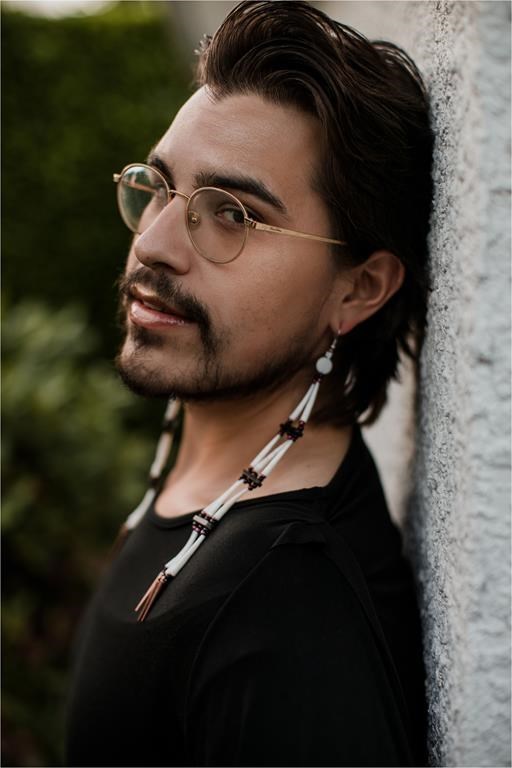
“If you kind of pull the curtain back, you get to see the magician that is Oz. I kind of feel like ‘Making Love With the Land’ is that with Jonny,” said Whitehead, who is an Oji-Cree member of Peguis First Nation.
“I really tried hard to address all of the questions that I got from audiences and interviews and in the Q-and-A’s.”
The essays explore Whitehead’s queerness and indigeneity, the trauma of colonialism and the interplay between body, land and text.
Like Jonny, Whitehead is two-spirit, an identity that “means much more than simply my sexual preference within Western ways of knowing,” he writes in the essay On Ekphrasis and Emphasis. “I am queer, femme/iskwewayi, male/nâpew, and situated this way in relation to my homelands and communities.”
Whitehead and Jonnyboth have powerful, meaningful dreams, and deep relationships with the women in their lives.
Some of Jonny’s origin story comes from poems Whitehead wrote that were eventually cut from his first book, “Full Metal Indigiqueer,” which he writes was, in some ways, more autobiographical than “Jonny Appleseed.”
Whitehead describes his books as part of an extended literary universethat defy traditional categorization, though publishers categorize them in different genres “for the sake of sales and promotion,” he said.
Even so, they all relate to and build upon one another.
“I just really don’t understand or abide by the expectations or the boundaries of genre,” Whitehead said. “Because I think of ‘Jonny Appleseed’ as a photo album, and I think of ‘Making Love With the Land’ in a similar sense.”
And while he offers up details of himself, Whitehead said he’s cautious about sharing too much after journalists opened old wounds with “extractive” questions while he was promoting “Jonny Appleseed.”
“How does this very manuscript I am writing now also position me upon the metaphorical medical table, primed for inspection and autopsy?” he says in the essay titled Writing as Rupture.

As he promotes this new book, he said he’s added a new defence to his arsenal — telling people “no.”
“I’m kind of moving into this space and preparing myself armed with rejection,” Whitehead said.
“I really believe now that there’s quite a bit of creative and political agency in rejection.”
“Making Love With the Land” hit shelves on Tuesday.
This report by The Canadian Press was first published Aug. 26, 2022.