Thomas Cahill, popular history writer, dead at 82

Advertisement

Advertise with us

NEW YORK (AP) — Thomas Cahill, a scholar of ancient languages and belief systems with a knack for popular storytelling who engaged history readers with such bestsellers as “How the Irish Saved Civilization” and “Desire of the Everlasting Hills,” has died at age 82.

Read this article for free:


or

Already have an account? Log in here »

To continue reading, please subscribe:

Subscribe and receive a limited-edition Free Press branded hat or tote.

Digital Subscription

One year of digital access for only $205*

  • Enjoy unlimited reading on winnipegfreepress.com
  • Read the E-Edition, our digital replica newspaper
  • Access News Break, our award-winning app
  • Play interactive puzzles

*First annual payment billed as $205.00 + GST for one year. This annual subscription will automatically renew at $233.00 + GST every 52 weeks (10% off the regular annual price of $259.35). Offer available to new and qualified returning subscribers only. Cancel any time.

To continue reading, please subscribe:

Add Free Press access to your Brandon Sun subscription for only an additional

$1 for the first 4 weeks*

  • Enjoy unlimited reading on winnipegfreepress.com
  • Read the E-Edition, our digital replica newspaper
  • Access News Break, our award-winning app
  • Play interactive puzzles
Start now

*Your next Brandon Sun subscription payment will increase by $1.00 and you will be charged $17.95 plus GST for four weeks. After four weeks, your payment will increase to $24.95 plus GST every four weeks.

Hey there, time traveller!
This article was published 26/10/2022 (1440 days ago), so information in it may no longer be current.

NEW YORK (AP) — Thomas Cahill, a scholar of ancient languages and belief systems with a knack for popular storytelling who engaged history readers with such bestsellers as “How the Irish Saved Civilization” and “Desire of the Everlasting Hills,” has died at age 82.

Travis Loller, a family friend and Associated Press writer, says that Cahill died in his sleep Oct. 18 at his apartment in Manhattan. The cause of death was not immediately known.

A native of New York City, Cahill attended Jesuit school in his early years and became a dedicated student of Latin and ancient Greek, along with the Bible, philosophy and classical literature. He wrote two books with his wife, Susan Cahill, in the early 1970s. But he gained a wide audience in the mid-1990s with the million-selling “How the Irish Saved Civilization,” in which he cited Ireland’s crucial — and unappreciated — preservation of classical texts after the fall of the Roman Empire.
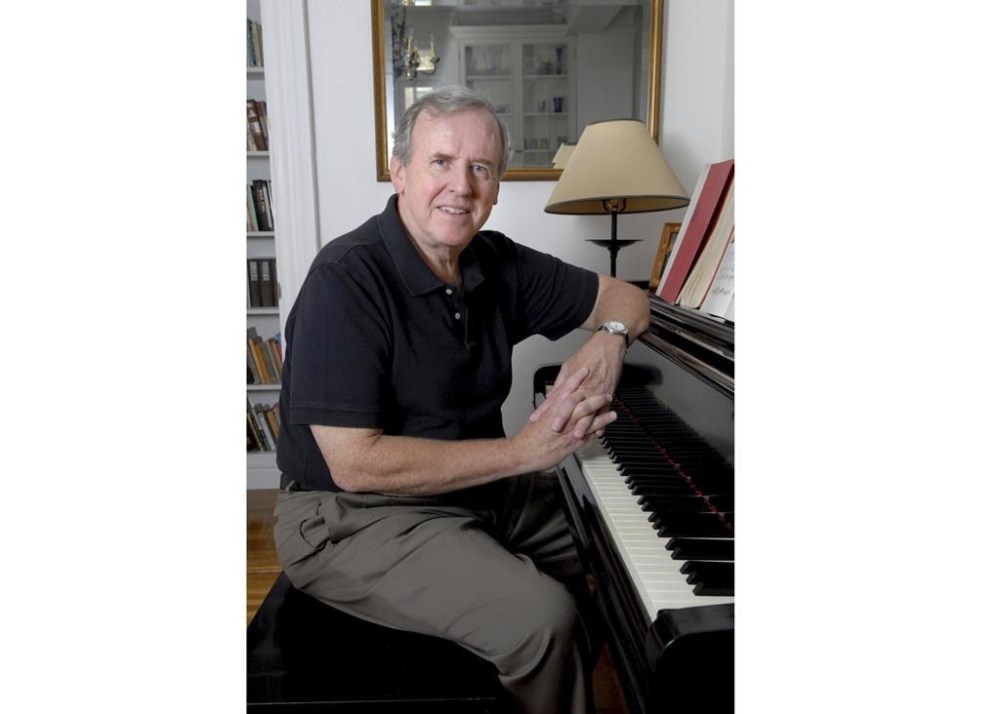
FILE - Historian and author Thomas Cahill poses in his New York apartment on Sept. 29, 2006. (AP Photo/Paul Hawthorne, File)

“Mr. Cahill is a man of learning himself, and his writing is in the great Irish tradition he describes: lyrical, playful, penetrating and serious, but never too serious,” New York Times critic Richard Bernstein wrote in 1995. “And even when his conclusions are not entirely persuasive — they do in places hang on rather slender reeds of evidence — they are always plausible and certainly interesting.”

His book on Ireland formed part of what he called his “Hinges of History” series, a broad and idiosyncratic review of Western civilization and moments he believed were turning points, “a narration of how we became the people that we are,” as he told the AP in a 2006 interview. “Desire of the Everlasting Hills” focused on the New Testament and the life of Jesus, and “Sailing the Wine Dark Sea” celebrated the ancient Greeks. In “Mysteries of the Middle Ages,” he countered popular beliefs that the Middle Ages was merely a time of superstition.

“Of course, there was plenty of ignorance, as there is in every age,” he told the AP in 2006. “But the advances we associate with the Renaissance in the arts, sciences, education, scholarship, linguistics and even political experimentation all got under way in the Middle Ages.”

Besides writing history, Cahill was an education correspondent for the Times of London and a contributor to the Los Angeles Times Book Review. He taught at Queens College, Fordham University, and Seton Hall University, and served for several years as director of religious publishing at Doubleday, which released much of his work, most recently the 2013 book “Heretics and Heroes.”

Cahill majored in classical literature and medieval philosophy at Fordham University, and received a master’s degree in film and dramatic literature from Columbia University. But his approach to his books was shaped in part by his Jesuit background, by the depth of his learning and the dullness of how he learned it. He would later resolve to combined scholarly discipline and a conversational tone.

“What academic writers forget is that everyone on Earth buys books for diversion, or entertainment,” he said in 2006. “Yes, they want to learn things, but they also don’t want to be bored to death while they learn those things.”

Report Error Submit a Tip

The Free Press acknowledges the financial support it receives from members of the city’s faith community, which makes our coverage of religion possible.


More Stories

Puzzles Palace

1 minute read Monday, Jul. 27, 2026

To solve our puzzles, please subscribe with this special offer: |

Hydro Québec faces issue we should avoid

Editorial 4 minute read Preview

Hydro Québec faces issue we should avoid

Editorial 4 minute read 2:01 AM CDT

You might be tempted to call it a canary in an electric power generation coal mine.

But instead, it’s just another heads-up into the already-obvious problem with the proliferation of data centres.

This week, Hydro-Québec went before the Régie de l’énergie, Québec’s public utilities board, to change the rules for new and existing large data centres.

Now, it was not that long ago that Hydro Québec was actively wooing data centres — offering bulk power rates to be used to lure labour-intensive, power-hungry heavy industry (think aluminum smelters) with rates substantially lower than they offer Québec’s own residential customers. It was a way to use surplus power to create jobs and drive economic activity.

Read
2:01 AM CDT

Connor powers Jets past Red Wings for first win of season

Ken Wiebe 8 minute read Preview

Connor powers Jets past Red Wings for first win of season

Ken Wiebe 8 minute read Yesterday at 6:26 PM CDT

DETROIT — Kyle Connor is on a mission.

Whether it’s the baby bump from the birth of his second child or his constant mission to elevate his game and find new ways to score, the Winnipeg Jets left-winger is flying out of the gate and seemingly notching goals at will.

After scoring in the season opener for an NHL record ninth consecutive time, Connor delivered a pair of goals and added an assist in his home state to lead the Jets to a 3-2 victory over the Detroit Red Wings on Sunday afternoon at Little Caesars Arena.

“The sheer amount of volume that he gets and how he gets himself in a good spot, he’s able to get that release off from anywhere,” said Jets forward Cole Perfetti. “His first one was just all skill. What a finish that was and then his second one, just reading the play so well. (Coming) off the pads like that, kind of in front of him and he put it in a small little window top shelf that no goalie could ever save. He doesn’t panic when he gets into those spots, obviously.

Read
Yesterday at 6:26 PM CDT

Province looks to seize notorious drug den

Erik Pindera 5 minute read Preview

Province looks to seize notorious drug den

Erik Pindera 5 minute read Saturday, Oct. 3, 2026

Provincial justice officials are trying to seize a Dominion Street drug den that has been the source of trouble in the West End for years.

The owner of 982 Dominion St., 45-year-old Robert Edward Johnson, was most recently arrested in June along with several others after a lengthy Winnipeg Police investigation into thefts and illicit drug sales connected to the house.

“The residence has a reputation within the neighbourhood as being a location where individuals habitually attend for the purpose of purchasing and/or consuming controlled substances,” reads a statement of claim filed by the province’s director of civil forfeiture in the Court of King’s Bench last week.

“For several years, the residence has been associated with criminal activity, violence, and disorder, resulting in numerous police attendances and complaints from members of the surrounding community.”

Read
Saturday, Oct. 3, 2026

Fentanyl, crack seized in traffic stop

1 minute read Yesterday at 12:13 PM CDT

Winnipeg police seized fentanyl and arrested three people after pulling over a vehicle with a smashed windshield in the city's north end Friday.

The incident happened at about 8:30 a.m. Oct. 2 on Powers Street near Flora Avenue. While they were speaking with the vehicle's occupants, police officers saw a weapon "in plain view," the Winnipeg Police Service stated in a news release Sunday.

Officers searched the vehicle, finding a machete, plastic brass knuckles with a functioning Taser, 73 grams of fentanyl worth about $3,725 nine grams of cocaine worth about $720, 13 grams of crack cocaine worth about $1,000, prescription pills, cell phones, scales and packaging materials, and $790 in cash.

Anthony Courchene, 41, is charged with seven weapons, drug trafficking and proceeds of crime-related offences. He was also arrested on two Powerview RCMP warrants related to assault and release order compliance charges.

Broadening prediction-market gambling a bad idea

Editorial 4 minute read Preview

Broadening prediction-market gambling a bad idea

Editorial 4 minute read Saturday, Oct. 3, 2026

Let’s make a prediction: sooner or later, when Canadian governments find a way to take their own cut of the action, prediction-contract gambling on everything from sports to entertainment to political decisions is going to come to Canada.

And that’s a horrible, dangerous, pernicious idea.

Unless you have particular access to information — either inside information or strategic information based on skills or education — you’re not likely to make money at it. In fact, structurally, you’re likely to lose. In prediction markets, you basically pay an amount, plus fees from the company involved, to bet on whether something will or will not happen within a certain time frame. The amount you pay for your contract depends on how other people are also betting.

As Wealthsimple describes it, “You buy whichever side you think is right. Prices move with demand, so if the market leans towards one outcome, the more that side costs. If a lot of people are backing the TSX to finish above 38,000, yes gets more expensive and no gets cheaper.”

Read
Saturday, Oct. 3, 2026