A quiet charm

Urquhart reflects on life’s milestones in thoughtful essay collection

Advertisement

Advertise with us

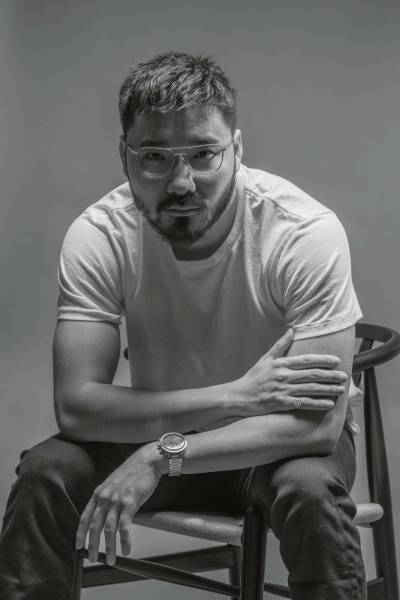
Emily Urquhart is a Kitchener-based journalist and folklorist, which is to say, she is more than unusually interested in stories and how stories are told. Not only that, but she is the daughter of novelist Jane Urquhart and painter Tony Urquhart, so she grew up watching artists tell stories for a living.

Read this article for free:


or

Already have an account? Log in here »

To continue reading, please subscribe:

Subscribe and receive a limited-edition Free Press branded hat or tote.

Digital Subscription

One year of digital access for only $205*

  • Enjoy unlimited reading on winnipegfreepress.com
  • Read the E-Edition, our digital replica newspaper
  • Access News Break, our award-winning app
  • Play interactive puzzles

*First annual payment billed as $205.00 + GST for one year. This annual subscription will automatically renew at $233.00 + GST every 52 weeks (10% off the regular annual price of $259.35). Offer available to new and qualified returning subscribers only. Cancel any time.

To continue reading, please subscribe:

Add Free Press access to your Brandon Sun subscription for only an additional

$1 for the first 4 weeks*

  • Enjoy unlimited reading on winnipegfreepress.com
  • Read the E-Edition, our digital replica newspaper
  • Access News Break, our award-winning app
  • Play interactive puzzles
Start now

*Your next Brandon Sun subscription payment will increase by $1.00 and you will be charged $17.95 plus GST for four weeks. After four weeks, your payment will increase to $24.95 plus GST every four weeks.

Hey there, time traveller!
This article was published 03/12/2022 (1387 days ago), so information in it may no longer be current.

Emily Urquhart is a Kitchener-based journalist and folklorist, which is to say, she is more than unusually interested in stories and how stories are told. Not only that, but she is the daughter of novelist Jane Urquhart and painter Tony Urquhart, so she grew up watching artists tell stories for a living.

Ordinary Wonder Tales, Urquhart’s third book of non-fiction, takes readers through the milestones in her life, from childhood to middle-age, while also introducing the legends and folk tales we’ve elaborated to help understand those milestones.

This book brings to mind Robin Wall Kimmerer’s work, which explores episodes in the Potawatomi scientist’s life where her Indigenous heritage and her botanist training intersect and where they diverge. The result is fascinating. Similarly, Urquhart’s combination of personal essays and folk tales allows her to recount the specifics of her life in quiet but moving prose but also to note how and why her experiences are universal, a part of a heritage of stories.

Andrew Trant photo
                                Author Emily Urquhart’s combination of personal essays and folk tales allows her to recount the specifics of her life in quiet but moving prose.

Andrew Trant photo

Author Emily Urquhart’s combination of personal essays and folk tales allows her to recount the specifics of her life in quiet but moving prose.

The book opens with Urquhart recounting the family story of the apparition — an “inky fluid mass” — that sometimes appeared in her borrowed bedroom in the village of Flavigny-sur-Ozergain in the Burgundy region of France when she was three. Urquhart was staying there because her father Tony was on sabbatical from teaching fine art and had borrowed the house from a colleague, as had other colleagues and friends. In the essay, Urquhart interviews the other children who stayed in that haunted bedroom, but also talks about the studies on the ability of young children to believe in almost anything and the key differences between a ghost story (or “personal haunting narrative”) and a fairy tale.

As the narrator of Ordinary Wonder Tales ages, so do her stories. The next essay recounts Urquhart’s experiences with sexual violence, comparing them not only with old European ballads but also the TV show Law and Order: Special Victims Unit. The ballads constitute a kind of horrible warning for women about abuse, rape and murder whereas SVU posited a world where women reporting sexual violence were treated with respect and dignity.

Next come the stories of a woman of child-bearing age: losing a child, having dubious encounters with the medical profession, having a child with a genetic condition and then deciding to have another child. These are bloody essays, but Urquhart’s way of thinking/feeling her way through the things that happened to herself and her loved ones, her way of turning them into stories, protects the reader.

The last part of the book focuses on the coronavirus pandemic and the history of plague tales, but also her father’s descent into dementia and the nature of memory.

Urquhart has treated the diagnosis of her daughter’s albinism in her first book, Beyond the Pale: Folklore, Family, and the Mystery of our Hidden Genes (2015), and her father’s Alzheimer’s disease in The Age of Creativity: Art, Memory, My Father and Me (2020), but these essays add to that material instead of re-treading it.

Beyond telling stories about stories, Urquhart does something else interesting in Ordinary Wonder Tales: she sets the fairy tales she is recounting in places she knows intimately. So that house in France reappears when she needs a starting place for a hero. Later, a maiden finds sanctuary on the banks of the Skeena River in British Columbia where Urquhart camped when she was pregnant with her second child. Urquhart notes that this interior decorating is completely involuntary: “What flickers to life in my mind’s eye as I read or listen to a story comes unbidden. I could no more conjure them on purpose than I could stop them from appearing.” Still, it’s a neat trick.

Ordinary Wonder Tales

Ordinary Wonder Tales

Ordinary Wonder Tales is a quietly charming book about all the ordinary tragedies in a life. Urquhart’s essays help us understand the stories we tell ourselves, while also being satisfying as stories themselves.

Ariel Gordon is the author of Treed: Walking in Canada’s Urban Forests, which attempts to combine the personal essay and science writing.

Report Error Submit a Tip

More Stories

‘She was looking to destroy me’: convicted harasser faces new charges

Dean Pritchard 6 minute read Preview

‘She was looking to destroy me’: convicted harasser faces new charges

Dean Pritchard 6 minute read Thursday, Sep. 17, 2026

When Agnieszka Ciochon-Newton moved into the 55-plus apartment building on Stradbrook Avenue last year, she came across as “timid, soft-spoken and sensitive,” said building manager Tanya Owen.

Little did Owen know the meek-looking 58-year-old woman would soon turn her life and the lives of many of her tenants upside down and threaten her career and family.

“She was looking to destroy me for a simple tenant disagreement,” Owen said Thursday.

Court records show Ciochon-Newton was arrested earlier this month and charged with seven counts of criminal harassment, two counts of uttering threats and one count each of fraud, breaking and entering, attempting to obstruct justice, intimidation of a justice official, mischief and defamatory libel.

Read
Thursday, Sep. 17, 2026

Near-future U.S. the setting for surreal dual-world storyline

Reviewed by Morley Walker 4 minute read Preview

Near-future U.S. the setting for surreal dual-world storyline

Reviewed by Morley Walker 4 minute read Yesterday at 2:01 AM CDT

It’s not every day you encounter a seriously intended literary novel that attempts to dramatize a mind-bending physics theory like quantum entanglement.

But then the B.C.-born-and-raised Emily St. John Mandel is not your everyday Canadian literary writer.

In her late 40s, she has lived in the U.S. for her entire writing career. She is best known for her 2014 dystopian novel Station Eleven, about a Shakespearean acting troupe navigating a pandemic-ravaged America.

Her new outing, her seventh, Exit Party, shares DNA with detective and sci-fi genres more than with conventional literary fiction.

Read
Yesterday at 2:01 AM CDT

Cabernet Sauvignon star of wine festival

Ben Sigurdson 5 minute read Preview

Cabernet Sauvignon star of wine festival

Ben Sigurdson 5 minute read Yesterday at 3:00 AM CDT

The Winnipeg Wine Festival will celebrate the king of red wine grapes next weekend — the theme of this year’s festival, which takes place Sept. 25 and 26 at the RBC Convention Centre, is Cabernet Sauvignon.

Cab Sauv, as it’s also known, is the world’s most widely planted wine grape of any colour, first coming to prominence in the 1800s in France’s Bordeaux region, where the grape is still popular. Rather than single-variety wines, Bordeaux reds tend to be blends, with those coming from the left bank of the Gironde estuary being Cabernet-dominant, while right-bank wines are Merlot-dominant, with Cabernet Sauvignon playing a supporting role. Cabernet and Merlot work well together and many other countries have followed suit in blending the two.

A team at University of California Davis put Cabernet Sauvignon through a DNA test in 1996 and discovered its parent grapes are Cabernet Franc and Sauvignon Blanc — it’s likely that at some point the two varieties, planted next to each other in some vineyard, crossed and mutated and became the grape we know today. (Someone growing grapes in the 19th century must have had an inkling of what was up, as the grape has been called Cabernet Sauvignon since long before the DNA test.)

Flavour-wise, most Cabernet Sauvignon wines are big and bold, with a core of deep dark berry flavours, some graphite and spice notes and relatively bright acidity. It’s a grape that is well-suited to barrel aging, with most examples seeing at least some time in wood.

Read
Yesterday at 3:00 AM CDT

Family account spiced with magic realism, geopolitical intrigue and a ghost story

Reviewed by Zilla Jones 4 minute read Preview

Family account spiced with magic realism, geopolitical intrigue and a ghost story

Reviewed by Zilla Jones 4 minute read Yesterday at 2:01 AM CDT

Tom Lin’s second novel Babylon, South Dakota moves beyond a historical account of an immigrant family’s struggle, delightfully blending and bending genres.

Lin is a Chinese-born novelist whose family emigrated to the U.S. when he was four years old. His debut novel, The Thousand Crimes of Ming Tsu, won the 2022 Andrew Carnegie Medal for Excellence in Fiction, making him the youngest ever recipient of that award. He earned a PhD in English from the University of California Davis and is currently an assistant professor of English and creative writing at the University of Iowa.

Babylon, South Dakota takes place in an unspecified time period that can be understood to be during the Mao era — likely the 1950s or ’60s. A young Chinese couple, the Hsuis, immigrate to the rural community that gives the book its title. They take the names Saul and Mei and settle on a 160-acre homestead left to them by a distant relative.

Saul’s dream is to breed and sell chrysanthemums from seeds he brought from China, while Mei wants to raise livestock. They speak no English, know nothing of life in the United States, are unprepared for the harshness of winter and the isolation of the farm and bring nothing with them except some gold, which Mei hides around the house for emergencies. Their only link to the outside world is a discarded and marginally functioning TV set, which Saul rescues and rigs up.

Read
Yesterday at 2:01 AM CDT

Grieving child builds backyard rocket ship

Harriet Zaidman 4 minute read Yesterday at 2:01 AM CDT

I Built a Rocket Ship (Kids Can Press, 32 pages, hardcover, $22) by Winnipegger Anna Lazowski is a tender story for children ages 4-8 about a little girl trying to make sense of her mother’s death. The child engages in conversation with her late mom, agreeing and disagreeing about things said as she carries objects (and of course, the cat) to the backyard. There, she is building a rocket ship she will pilot into the skies to find her mom again.

Jennica Lounsbury’s varied perspectives show the range of emotions the little girl experiences.

● ● ●

Northwoods Lullaby by Mary Casanova (University of Minnesota Press, 32 pages, hardover, $25) is a bedtime book for readers up to age eight, perfect to bring a busy, happy day to a close. Just like children who are listening to adults reading the book, all the animal babies are being tucked into their nests and burrows by loving parents: “Thump and scamper,/nimble clover./ Soon it’s time to rest. Baby loon/ nestles in/as Papa floats along.”

Not falling back means time loop remains unclosed

Jen Zoratti 4 minute read Yesterday at 2:01 AM CDT

I demand restitution. Where’s my hour?

In the traditional fall-back, spring-forward time change set up — you know, ol’ trusty that’s been effect for lo these 63 years — we lost an hour in the spring that we got back in the fall.

That was the social contract: you commit to feeling like you’re on cold medication for a week in March because you know a glorious extra hour of sleep will be returned to you in November. (Unless, of course, you have little kids, but look: we all make our choices.)

Well, that transaction, flawed as it was, isn’t happening this year. That hour you sacrificed to the sun gods in the spring? Gone. Not coming back. We’ve sprung forward and we shan’t be falling back — not in November, and (possibly) not ever. The scale shall remain unbalanced and the loop shall remain unclosed as Manitoba has adopted permanent daylight time.