Clocking out
Ruminations on time, nature, money, evolution and change offer plenty to ponder
Advertisement
Read this article for free:
or
Already have an account? Log in here »
To continue reading, please subscribe:

Digital Subscription
One year of digital access for only $205*
- Enjoy unlimited reading on winnipegfreepress.com
- Read the E-Edition, our digital replica newspaper
- Access News Break, our award-winning app
- Play interactive puzzles
*First annual payment billed as $205.00 + GST for one year. This annual subscription will automatically renew at $233.00 + GST every 52 weeks (10% off the regular annual price of $259.35). Offer available to new and qualified returning subscribers only. Cancel any time.
To continue reading, please subscribe:
Add Free Press access to your Brandon Sun subscription for only an additional
$1 for the first 4 weeks*
- Enjoy unlimited reading on winnipegfreepress.com
- Read the E-Edition, our digital replica newspaper
- Access News Break, our award-winning app
- Play interactive puzzles
*Your next Brandon Sun subscription payment will increase by $1.00 and you will be charged $17.95 plus GST for four weeks. After four weeks, your payment will increase to $24.95 plus GST every four weeks.
Read unlimited articles for free today:
or
Already have an account? Log in here »
Hey there, time traveller!
This article was published 01/04/2023 (1262 days ago), so information in it may no longer be current.
Time is a funny thing. It is elastic, elusive and easily lost track of, yet it is relentless and unstoppable.
And time got really weird in 2020 when the COVID-19 pandemic hit. Suddenly, the “Monday-to-Friday 9-to-5 in the cubicle farm” framework that had seemed so immutable disintegrated around us. In the span of a short few months that seemed to stretch on forever, the world settled into a different way of experiencing time. There was so much of it, at least for those who were not front-line workers and had high-speed internet so they could work from home.
The Fourth Industrial Revolution — the Internet of Things — had become a full-blown reality, yet it seemed we had returned to an earlier time that echoed elements of the British weaver culture predating the First Industrial Revolution in the 1760s. Back then, weavers produced cloth by working their looms at home, amid family and community, with travelling pedlars bringing goods to the door. However, with the invention of the steam engine and the development of textile mills in cities, many rural people were forced to leave their looms behind and migrate into cities (and slum life) for employment in the mills, selling their time for wages.
Ryan Meyer photo
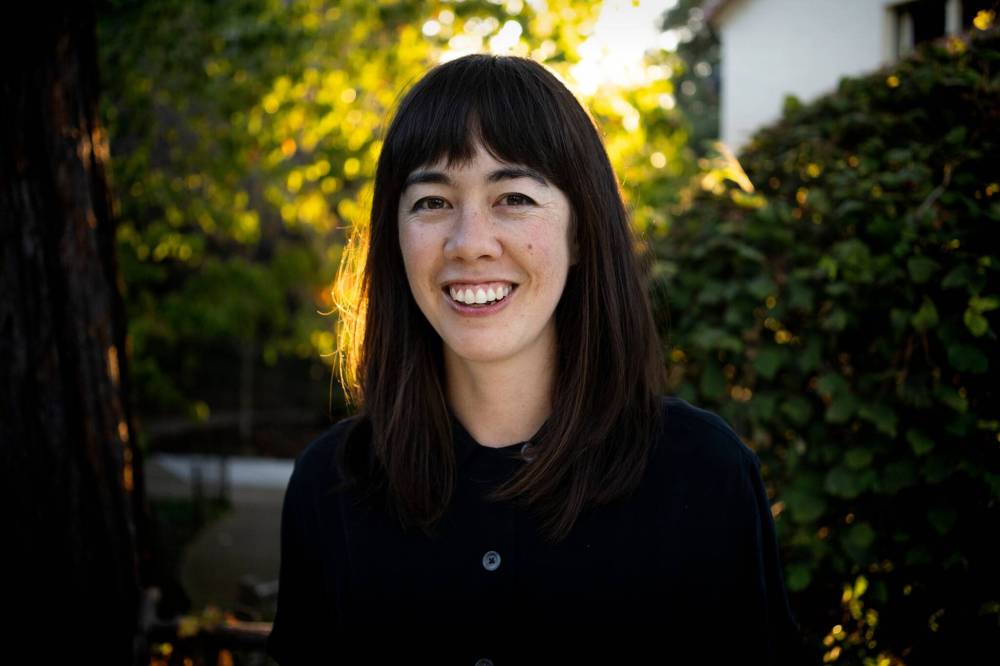
Written during the COVID-19 pandemic, Jenny Odell’s latest chronicles her quest to understand ‘the restless, unstoppable, constantly overturning thing that makes it all go.’
In 2020, the pandemic meant a great many workers returned to working remotely from home, amid family and community, with the travelling pedlars of the earlier era replaced by Wayfair and Amazon.
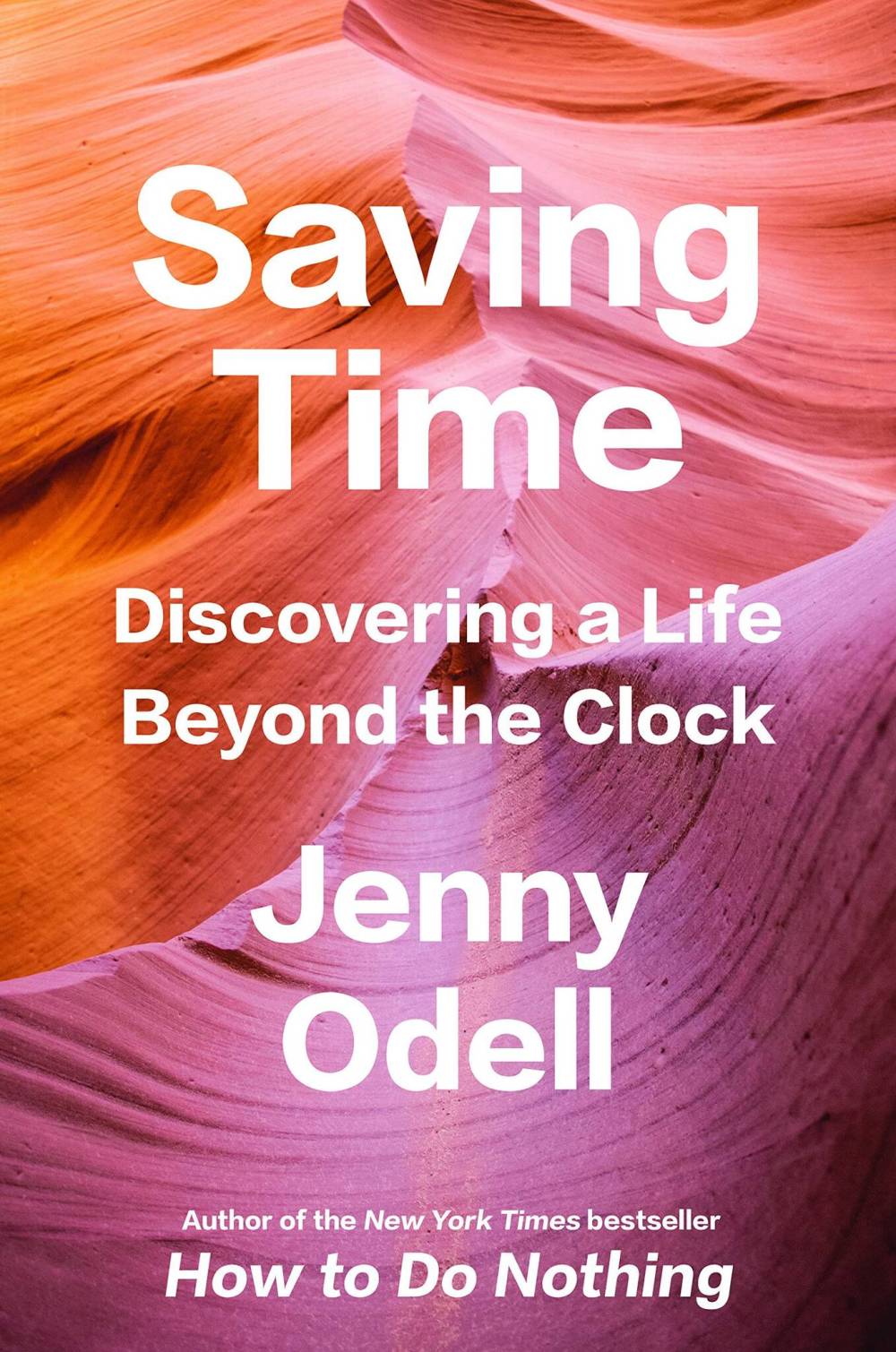
It was during this disorienting time that Jenny Odell, a California artist, culture writer and birdwatcher, sat down to write Saving Time: Discovering a Life Beyond the Clock. She had, pre-pandemic, been struggling to find a conception of time that wasn’t painful, that was “something other than time is money, climate dread, or fear of dying.”
In Saving Time, as with her 2020 New York Times bestseller, How to Do Nothing: Resisting the Attention Economy, Odell turns to the natural world for insight and understanding. The clocks may keep neat, measured time, but it is the natural world beyond the clock where time flows at its own rhythms to mark change and evolution, and where the meaning of time is saved.
The pandemic gave her time to observe, and being a birdwatcher, she knew how to sit and watch and listen. In late 2020, she chose a branch on a buckeye tree in a nearby park as her patch to watch. Over the next year, she watched that branch grow a bud, bloom and fruit. The buckeye, evolved and adapted millions of years ago for California’s dry summers, was, she said, a tree literally encoding time and change.
“What is a clock? If it’s something that ‘tells the time,’ then my branch was a clock… it was a physical witness and record of overlapping events, some of which happened a long time ago and some of which are still occurring as I write this.”
Saving Time is the author’s journey in her quest to understand “the restless, unstoppable, constantly overturning thing that makes it all go.” It takes her into the history of industrialization, when rise of mass production in the Second Industrial Revolution in the late 1800s and early 1900s required ever-greater efficiencies to increase production capacity. “Time is money,” said the industrialists, as they sought to micromanage every second of workers’ time. We have the same today, whether it is Amazon warehouse workers carrying GPS trackers to track their movements and tell them how many seconds they have left to perform a task, or UPS using telematics to report when the driver buckles his seatbelt, puts his foot on the brake and so on.
“When the relationship of time to literal money is expressed as a natural fact,” writes Odell, “it obscures the political relationship between the seller of time and its buyer… For the worker, time is a certain amount of money — the wage. But the buyer, or employer, hires a worker to create surplus value; this excess is what defines productivity under capitalism. From the employer’s point of view, purchased time could always yield more money.”
Saving Time
The “time is money” mantra, says Odell, has morphed into the need for frenetic activity in a society where we are “always on” and we have to be doing something productive all the time, whether on vacation or at the mall.
Odell’s writing style is a somewhat meandering blend of sociology, philosophy and personal diary. She doesn’t provide any definitive answers, but she certainly raises points to ponder.
Sheilla Jones writes on cosmology, Indigenous politics, and transformational leadership — issues both timely and timeless.