Economic whistleblower zeroes in on China
Advertisement
Read this article for free:
or
Already have an account? Log in here »
To continue reading, please subscribe:

Digital Subscription
One year of digital access for only $205*
- Enjoy unlimited reading on winnipegfreepress.com
- Read the E-Edition, our digital replica newspaper
- Access News Break, our award-winning app
- Play interactive puzzles
*First annual payment billed as $205.00 + GST for one year. This annual subscription will automatically renew at $233.00 + GST every 52 weeks (10% off the regular annual price of $259.35). Offer available to new and qualified returning subscribers only. Cancel any time.
To continue reading, please subscribe:
Add Free Press access to your Brandon Sun subscription for only an additional
$1 for the first 4 weeks*
- Enjoy unlimited reading on winnipegfreepress.com
- Read the E-Edition, our digital replica newspaper
- Access News Break, our award-winning app
- Play interactive puzzles
*Your next Brandon Sun subscription payment will increase by $1.00 and you will be charged $17.95 plus GST for four weeks. After four weeks, your payment will increase to $24.95 plus GST every four weeks.
Read unlimited articles for free today:
or
Already have an account? Log in here »
Hey there, time traveller!
This article was published 27/05/2023 (1232 days ago), so information in it may no longer be current.
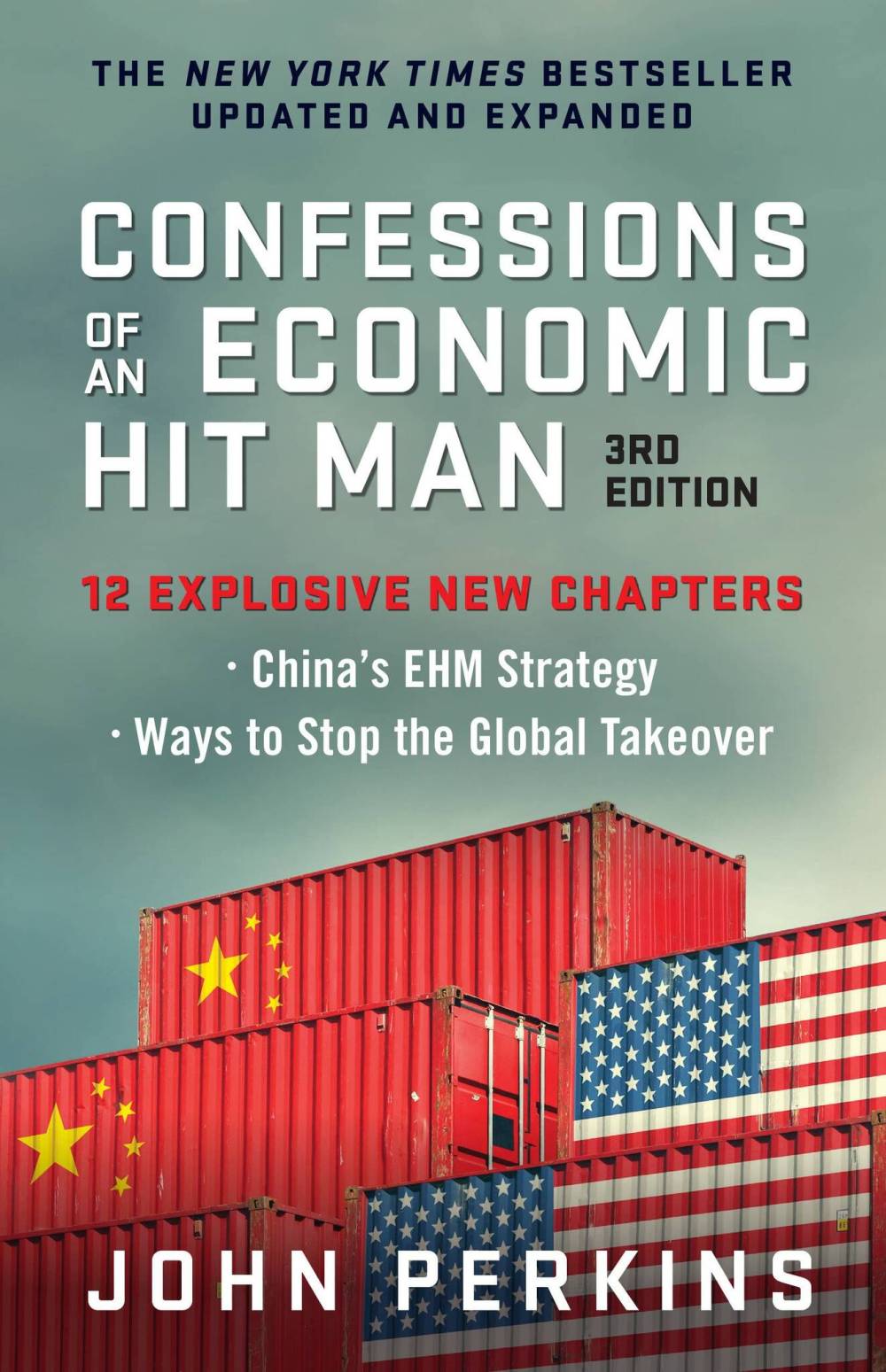
This is the third edition of confessions written by American economist John Perkins, which began in 2004 with the publication of Confessions of an Economic Hitman and was revised in 2016 as The New Confessions of an Economic Hit Man. It’s now clear to about two million readers in dozens of languages that when it comes to demystifying money and politics, nobody does it better. What Albert Einstein is to physics, what Lennon and McCartney are to music and what Steven Spielberg is to movies, John Perkins is to the mysteries of economics, the master of exposing the dark side of development.
Perkins was a wholesome New England kid who was raised and educated to believe that as an American, his first duty was to be “the Good Guy.” He believed that; he was a star in the Peace Corps in the late 1960s, then landed a plum job as a “strategic consultant” for a leading engineering development firm.
There he was shocked to learn that his real job was to colonize developing countries whose resources — oil, minerals, perhaps — were needed by American corporations. He was trained to visit and convince these countries to accept huge development loans they probably could not repay, and ultimately demand cheap access to their actual resources and political support instead of payment. In the meantime, jobs and profits from these projects went to Americans, and poverty levels remained the same in countries targeted for “development.”
Perkins was not alone — there were many such men and women in the 1970s known privately in the trade as EHM, or economic hit men. Behind them were another level of persuaders known as “the jackals,” hired assets mandated to use bribery, blackmail or even assassination to inspire co-operation and get results. Perkins failed to persuade at least two South American leaders — Omar Torrijos of Panama and Jaime Roldós Aguilera of Ecuador — to play the debt game, both of whom died in private plane crashes within weeks of each other.
Perkins ultimately buckled under the burden of guilt and disillusion, published his experience and now ranks as one of the world’s foremost whistleblowers, living with both intense respect and hostility — not unlike Julian Assange or Edward Snowden.
All of this is included in the latest, updated edition of Confessions, which focuses on the race between the U.S. and China for global hegemony, which Perkins sees as a corrupt race for possession of a dying planet. He argues that Chinese operatives have noted both the empire-building successes and failures of the U.S., and appear, especially under the leadership of Xi Jinping, to have dramatically improved on them.
In the spirit that a crisis is also an opportunity, the Chinese have contrasted their economic rise to America’s dramatic decline. Perkins points out that their success story is appealing and compelling to the hungry of Africa, Latin America and Asia, given that China has somehow raised 700 million people out of poverty and is now the world’s leader in international trade and investment.
Perkins adds that America’s dramatic failures as the world’s only superpower since 1991 have been on documented display much like a museum exhibit. The blood on American hands is there for all to see. China’s failures in global development, and their human cost, remain fiercely guarded, although some have been too spectacular to hide, notably the $2-billion Coca Codo Sinclair dam, a giant, failing hydroelectric power plant in Ecuador.
While Chinese strategists also use suffocating debt to expand their empire, they claim to offer the underdeveloped countries they recruit inclusion in a global network of partnerships, and to refrain from imposing political demands on their leaders: a new, improved Silk Road.
Perkins remains a committed but cautious optimist, believing the crisis of environmental destruction unfolding before us may force two greedy global powers to recognize a dead planet is not a prize worth pursuing.
His goal in the Confessions books is to motivate readers to demand an end to the dark side of international development, especially the chase of short-term profits at any cost. His passionate, humanitarian and easily understood style may well move previously bewildered readers into the activism on which he says the world’s future depends.
Lesley Hughes is a Winnipeg writer.