Reading between the lines
MI6-trained Halifax spy found coded Holocaust plans in Hitler’s book
Advertisement
Read this article for free:
or
Already have an account? Log in here »
To continue reading, please subscribe:
Digital Subscription
One year of digital access for only $1.44 a week*
- Enjoy unlimited reading on winnipegfreepress.com
- Read the E-Edition, our digital replica newspaper
- Access News Break, our award-winning app
- Play interactive puzzles
*Billed as $5.77 plus GST every four weeks. After 52 weeks, price increases to the regular rate of $19.95 plus GST every four weeks. Offer available to new and qualified returning subscribers only. Cancel any time.
To continue reading, please subscribe:
Add Free Press access to your Brandon Sun subscription for only an additional
$1 for the first 4 weeks*
- Enjoy unlimited reading on winnipegfreepress.com
- Read the E-Edition, our digital replica newspaper
- Access News Break, our award-winning app
- Play interactive puzzles
*Your next Brandon Sun subscription payment will increase by $1.00 and you will be charged $17.95 plus GST for four weeks. After four weeks, your payment will increase to $24.95 plus GST every four weeks.
Read unlimited articles for free today:
or
Already have an account? Log in here »
Hey there, time traveller!
This article was published 30/09/2023 (1116 days ago), so information in it may no longer be current.
A magic mind named Winthrop Bell thought, not fought, the Second World War.
The spy from Halifax was the first person in the world to determine, long before it happened, that the Nazis were planning the war.
An uncanny visionary — an academic turned spy — Bell realized in the early 1920s, not that long after Germany surrendered in the First World War, that the thugs led by Adolf Hitler wanted a second world war. Later, he was also the first to realize why.
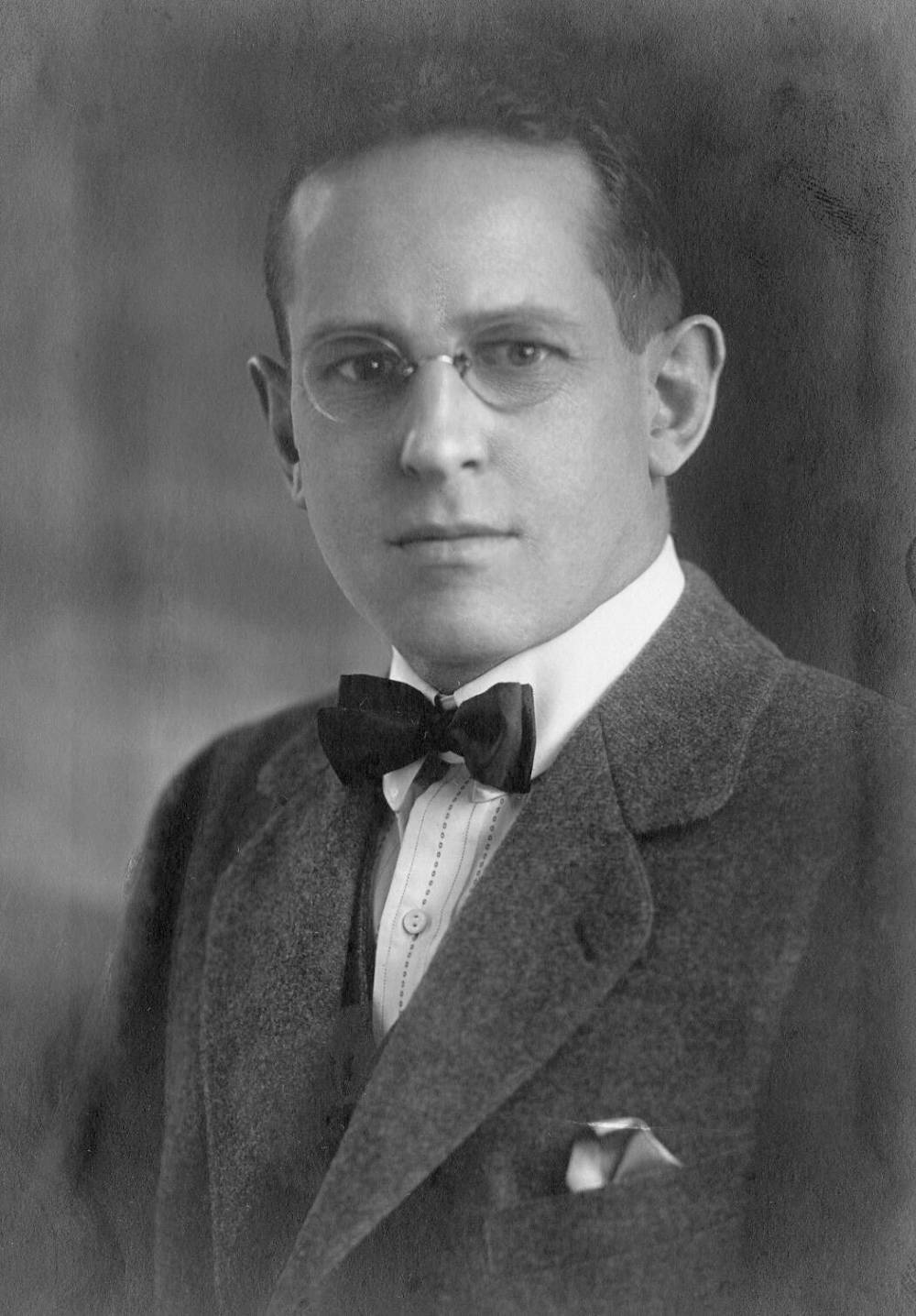
Mount Allison University archives
Bell’s portrait from his time teaching at Harvard University.
Cracking the Nazi Code by Jason Bell (no relation) is the fascinating book that explains all of this. It is the result of many years of research, a magnetic and magisterial recounting of Winthrop Bell’s heroic life. It is worth every word, although sometimes it takes one’s undivided attention to follow.
Author Bell was honoured to be the first scholar granted access to Winthrop’s spy files. They were declassified in 2012.
Winthrop never said so himself, but his extraordinary ability to observe and analyze as a British spy helped to ensure Hitler lost. He brought reason to the god of war.
Winthrop’s spying on and in Germany was very much assisted by academic colleagues, some also spies, in Germany and adjoining countries.
Bell taught philosophy at the universities of Toronto and Harvard. Jason Bell, the author, teaches philosophy at the University of New Brunswick.

Mount Allison University archives - 6501/10/6/35
After being trained by Britain’s MI6, Winthrop Bell was sent to Berlin in 1919. His press credentials (above) got him access to the German National Assembly.
Winthrop had a natural talent for spying. Britain’s powerful spy agency MI6 recruited him, named him A12 and sent him to Berlin in 1919. His reports from Germany and Eastern Europe were so insightful the Brits, when training new spies, began using Bell’s reports as quality examples.
Meanwhile, in 1925 Adolf Hitler authored a book — his autobiography Mein Kampf (My Struggle). Bell, no longer a spy in 1939, got around to reading it and discovered something in it hidden in the text — the Holocaust. The identity and details of this plan for mass murder was not stated in words, but in a code Hitler and his like-thinking allies understood. Bell broke that so-called code and uncovered the Holocaust — not the one most people still imagine today, the genocide of the Jews, but rather the systemic murder of all non-Aryans on the planet, the execution of hundreds of millions of people.
Writes author Bell: “This was in Hitler’s depraved imagination the only way to protect German blood from racial poisoning.”
Two months after the German Army crossed into Poland and war broke out, a very influential news magazine in Canada, Saturday Night, ran Bell’s story, revealing Hitler’s monstrous plan.
Throughout the 1920s and 1930s, American visitors to Germany hadn’t seen Hitler’s ultimate purpose. To them, said Winthrop Bell, “he was not some abstract embodiment of evil but a real-life politician.”

Mount Allison University archives
This photo, taken during the First World War, shows Bell (left) and two other Canadian Ruhleben Internment Camp.
But as Bell the writer explains, “Hitler planned to murder non-Aryans in North America just as surely as he meant to destroy them in Europe.”
Bell risked his life to identify the political evils emerging in Germany after the First World War, the rampant killing of Jews commonplace for so long and the ugly war of competing political philosophies to take control of the country.
As he was on the job spying in Europe, assassins tried to kill him, he dodged bullets and avoided ambushes. It was James Bond with real bodies and real blood. He gathered intelligence on Germany not only in Berlin but also in Poland, Ukraine and Russia. All his democratic sources, some of them top academics, were eventually murdered, exiled or went underground.
After defeat in the First World War, Germany was in chaos — onerous reparations on the country by the victors, a food blockage in its sixth month and ever-higher inflation were driving the population to despair, and a great many German families were starving to death. Typically, the Jews were the scapegoat. Bell saw it all and confirmed it for MI6. His information and assessments led to the Allies lifting the blockade. As a result, Bell saved many thousands of lives and untold misery.

Bell had gone to Germany as a student before the First World War, and when war broke out was interred in a German prison as an enemy alien. He soaked up the habits, the history and the politics of that Germany first-hand for four years before his release when that war ended.

Cracking the Nazi Code
Not to minimize Winthrop Bell’s contributions, but calling him “Canada’s greatest spy” is debatable. The activities of fellow spy William Stephenson (code-named Intrepid) from Point Douglas in Winnipeg are legendary. Many would call him the greatest. Bell mentions him, but sticks to his belief that Winthrop was the absolute best.
Besides the two spies from Canada, there was a faction in Winnipeg that was providing vital information to government on the killings of Jews without leaving home. As explained by Bell, it was the North End’s volunteer Jewish intel community that alerted then-Canadian prime minister Robert Borden (1911-1920) of a doctrine that had originated in Germany and was also being applied in eastern Europe stating that the persecution of Jews was worthwhile and the legitimate business of governments.
Bell says the Jewish community in the North End knew the real situation overseas because so many of its residents were recent immigrants.
Barry Craig is a retired journalist.
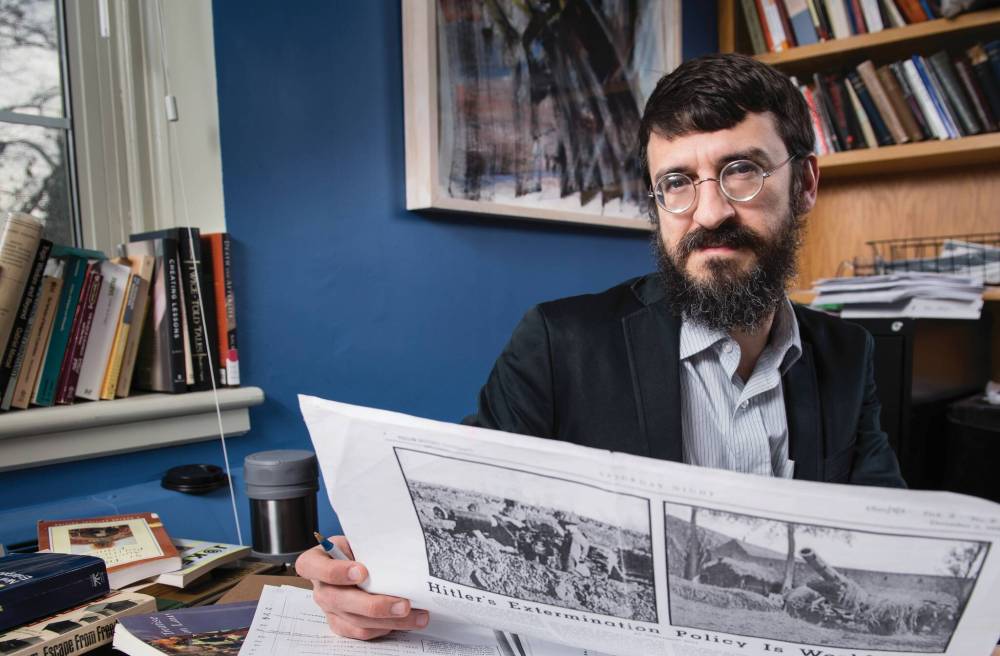
Rob Blanchard photo
Author Jason Bell was the first scholar granted access to Halifax spy Winthrop Bell’s files, which were declassified in 2012.