Artists chronicled in pre-war vignettes
Advertisement
Read this article for free:
or
Already have an account? Log in here »
To continue reading, please subscribe:

Digital Subscription
One year of digital access for only $205*
- Enjoy unlimited reading on winnipegfreepress.com
- Read the E-Edition, our digital replica newspaper
- Access News Break, our award-winning app
- Play interactive puzzles
*First annual payment billed as $205.00 + GST for one year. This annual subscription will automatically renew at $233.00 + GST every 52 weeks (10% off the regular annual price of $259.35). Offer available to new and qualified returning subscribers only. Cancel any time.
To continue reading, please subscribe:
Add Free Press access to your Brandon Sun subscription for only an additional
$1 for the first 4 weeks*
- Enjoy unlimited reading on winnipegfreepress.com
- Read the E-Edition, our digital replica newspaper
- Access News Break, our award-winning app
- Play interactive puzzles
*Your next Brandon Sun subscription payment will increase by $1.00 and you will be charged $17.95 plus GST for four weeks. After four weeks, your payment will increase to $24.95 plus GST every four weeks.
Read unlimited articles for free today:
or
Already have an account? Log in here »
Hey there, time traveller!
This article was published 14/10/2023 (1069 days ago), so information in it may no longer be current.
Florian Illies’ take on the lives and loves of European artists during the run-up to the Second World War is dazzling — sometimes.
Many of the artists, actors and writers he considers were famous in the 1920s and ‘30s and remain famous — Jean Paul Sartre, Simone de Beauvoir, Bertolt Brecht, Walter Benjamin, Marlene Dietrich, Josephine Baker, Lotte Lenya, Thomas Mann, F. Scott and Zelda Fitzgerald and Pablo Picasso. Others are unknown or obscure today, their fame lost in the annals of time.
Illies is a German writer and art historian and the author of five previous books, including 1913: The Year Before the Storm (2012).
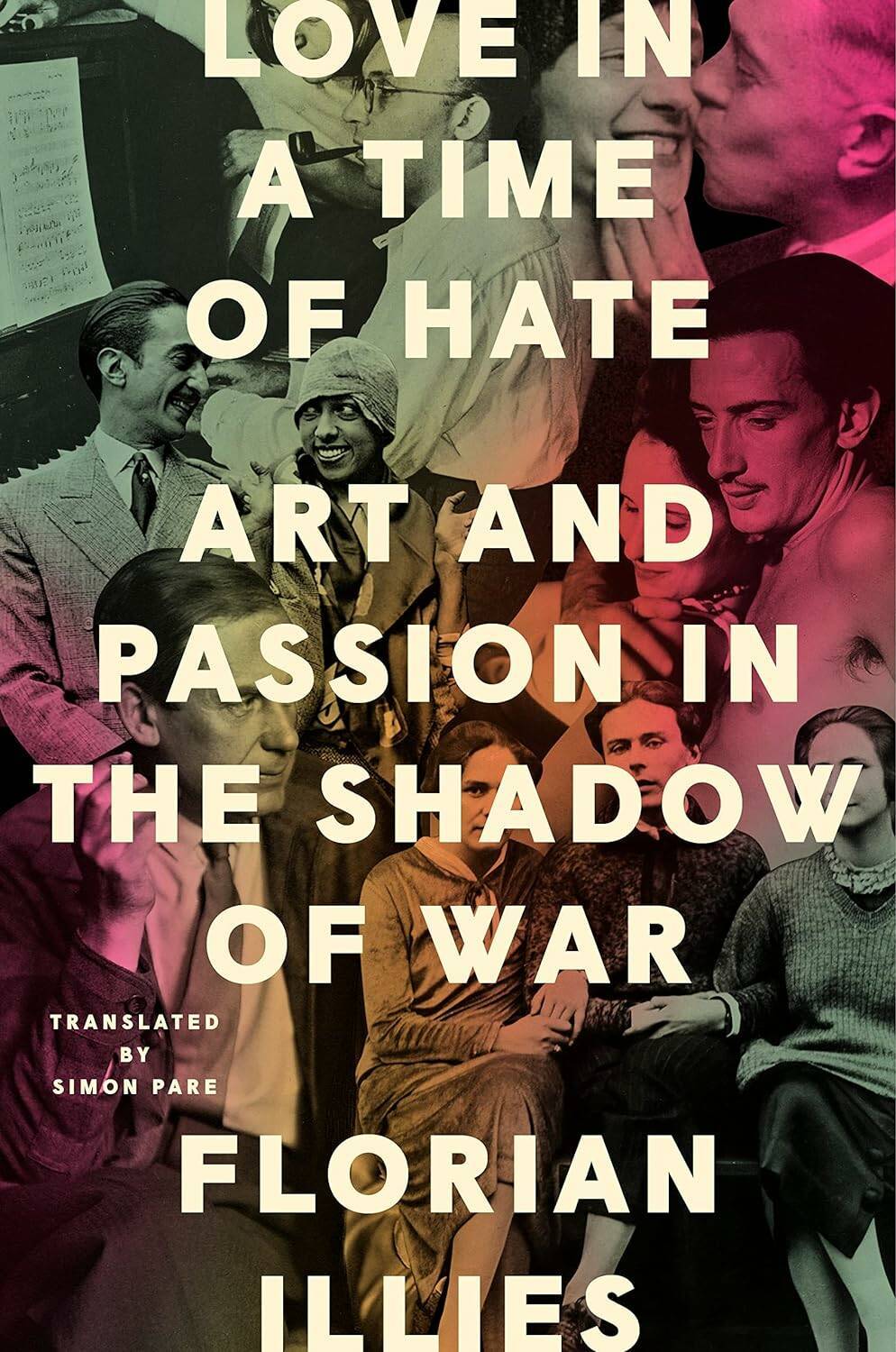
Love in a Time of Hate
His book is divided into three sections: “Before,” “1933,” and “After.” The Before is the 1920s and early ‘30s, 1933 is the seminal year in which Adolf Hitler ascended to power as chancellor of Germany and After is the inevitable spiral downward thereafter into war.
It’s formatted as a series of one-to-three page factual vignettes of the artsy and famous (and not so famous) of pre-Second World War Europe.
While the portrayals are interesting, there’s no overarching narrative cohesion or linkage of among them, giving the book a disjointed, jumpy feel.
Artists of Germany’s pre-Second World War Weimar Republic (1918-1933) figure heavily in Illies’ historical snapshots, many of whom are now just footnotes to history. His focus on Germany is presumably due to art and culture being an early casualty of a failed democracy’s slide into fascism.
Weimar Germany was a culturally bejeweled time and place, destined to descend into Nazi horror and barbarism. Berlin was an almost ludicrously glamorous and creative urban scene that saw its end coming, but couldn’t believe what it saw.
The economic collapse of 1929 and ensuing Great Depression of the 1930s fuelled the allure of fascism in Germany. By 1932 two-fifths of the German workforce was unemployed. Oddly Illies doesn’t, even in a summary way, consider economic factors in Hitler’s ascension to power.

The subtitle’s promise isn’t much fulfilled in early goings. There’s a lot more description and dissection of passion (read: sexual trysts, peccadilloes, preferences and infidelity) than art. You need a flow chart to keep who’s sleeping with whom straight and ultimately it’s not that interesting. More about the art — its genesis, substance, public reception — would have been welcome.
As the book progresses chronologically and fascism and the likelihood of war loom ever closer, not surprisingly the comings, goings and doings of artists start to evidence less self-indulgence and more gravitas and, eventually, desperation. And once their stories take off, Illies’ writing, likewise, becomes increasingly compelling.
There are riveting passages about the casual and ritual Nazi barbarism and anti-intellectualism that created a wave of émigré writers and artists. Those who didn’t emigrate died in Nazi jails or concentration camps. The cumulative effect of all the emigrations and murders renders the last two sections palpably sad.
Ultimately, this is a fine but odd hybrid of a book. It chronicles the often silly loves, foibles and infidelities of the cultural elite, even as it charts a path to the worst horrors of the 20th century.
Douglas J. Johnston is a Winnipeg lawyer and writer.