A dangerous path
Climate scientist rings alarm bells on the state of our planet — and the political obstacles preventing action
Advertisement
Read this article for free:
or
Already have an account? Log in here »
To continue reading, please subscribe:

Digital Subscription
One year of digital access for only $205*
- Enjoy unlimited reading on winnipegfreepress.com
- Read the E-Edition, our digital replica newspaper
- Access News Break, our award-winning app
- Play interactive puzzles
*First annual payment billed as $205.00 + GST for one year. This annual subscription will automatically renew at $233.00 + GST every 52 weeks (10% off the regular annual price of $259.35). Offer available to new and qualified returning subscribers only. Cancel any time.
To continue reading, please subscribe:
Add Free Press access to your Brandon Sun subscription for only an additional
$1 for the first 4 weeks*
- Enjoy unlimited reading on winnipegfreepress.com
- Read the E-Edition, our digital replica newspaper
- Access News Break, our award-winning app
- Play interactive puzzles
*Your next Brandon Sun subscription payment will increase by $1.00 and you will be charged $17.95 plus GST for four weeks. After four weeks, your payment will increase to $24.95 plus GST every four weeks.
Read unlimited articles for free today:
or
Already have an account? Log in here »
Hey there, time traveller!
This article was published 21/10/2023 (1048 days ago), so information in it may no longer be current.
First, the good news: the significant increase in our planet’s temperature caused by global warming will not make the human race go extinct.
The bad news: according to renowned American climate scientist Michael Mann, “there is cause for concern and a strong reason to act.”
Written partially in response to public statements by climate deniers that climate change is either a hoax or that the current warming trend is just part of a natural cycle, Mann’s latest work Our Fragile Moment is a detailed examination of how changes in Earth’s climate have altered flora, fauna and civilization itself. Furthermore, we should learn from historical and prehistorical changes in climate in order to prevent current threats to our existence.
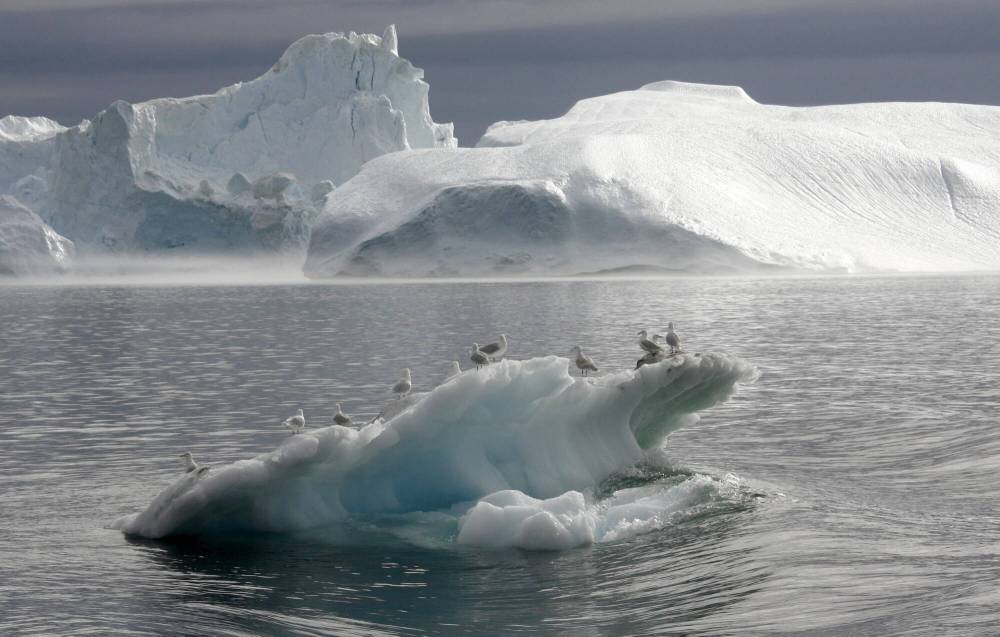
Michael Kappeler / The Associated Press files
Greenland’s glaciers are melting at an alarming rate, while the Antarctic ice cap is disappearing rapidly.
Mann presents study after study by researchers in various fields whose work dovetails in documenting changes in temperature, sea level, atmospheric gases and their combined effects on life on our planet during the last 100 million years (or so).
Most of us are familiar with the documented demise of dinosaurs (66 million years ago) as a result of an asteroid hitting the Earth, but 10 million years after that event there was a sudden warming of the planet known as the Paloecene-Eocene Thermal Maximum (PETM). Mann shows how the PETM was responsible for the rise of small mammals such as primates that eventually became our ancestors.
During the PETM, mangroves and rainforests grew in the Arctic, while hippopotami and palm trees lived in northern Canada, including on Ellesmere Island. In fact, the oceans in other parts of the globe became so hot that many organisms died off. Notably, Mann cautions that some aquatic species today are already unable to cope with the warmer ocean waters that have developed because of climate change. (In news breaking just weeks ago, more than 120 dolphins in the Amazon River were reported to have perished from the water being too hot for survival.)
Mann meticulously details the consequences of climate change from early geologic eras to the present. He cites studies using core samples from deep within the Earth’s crust as well as tree rings, each of which preserve records of changes in our world. During some periods, the shells of oceanic organisms literally dissolved from increases in acidity of their watery habitat. Today, changes in oxygen content in the Black Sea have caused such a severe reduction in fish that some fishing fleets have resorted to catching mollusks instead.
The PETM was a naturally occurring change in climate — unlike what is occurring on Earth now. With derision, Mann says: “If the rash of devastating Atlantic hurricanes that we’ve witnessed in recent years is just part of some long-term cycle, then why worry? We can just wait it out, right? It’s a seemingly compelling claim, but it’s not actually supported by evidence. At all.”
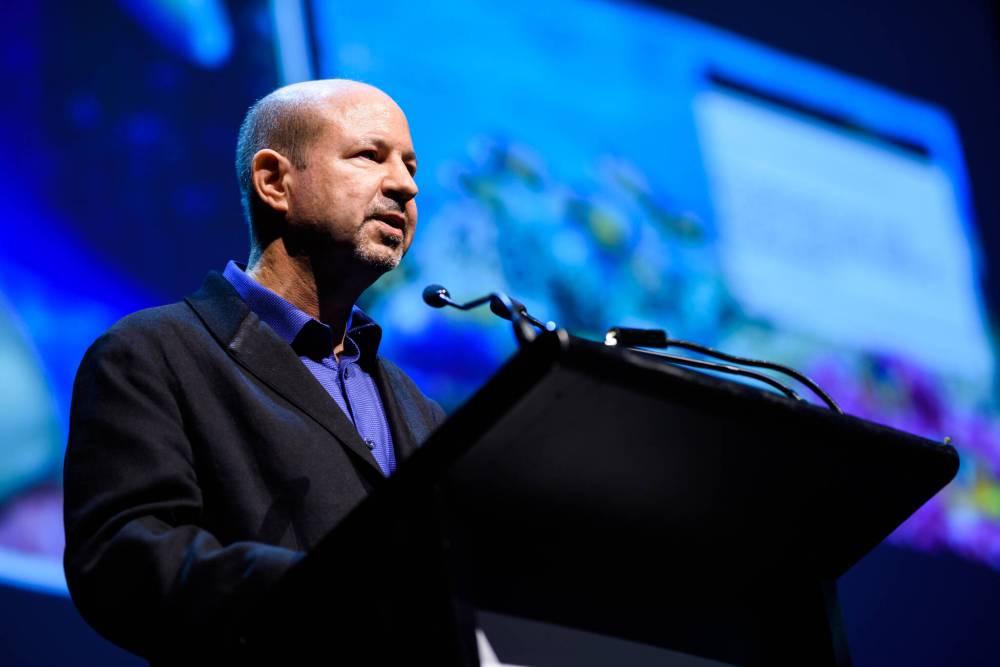
Julian Meehan photo
In 2020, Michael Mann spoke at the National Climate Emergency Summit in Melbourne, Australia.
Mann’s best-known contribution to the climate change debate is his “hockey stick” graph of global warming, named for its long, relatively stable “handle” with a sudden, abrupt upturn. Essentially, it shows that while our planet has been warmer many times in the past, the rate of warming today caused by human civilization is unprecedented. Mann’s study has been so influential, it was even featured in the iconic “doomsday” film An Inconvenient Truth.
Our Fragile Moment painstakingly documents the way in which key climate events across Earth’s history presage the current climate crisis. Cases in point: Greenland’s glaciers are melting at an alarming rate and the Antarctic ice cap is rapidly disappearing. Those two issues alone may create a rise of several metres of ocean along coastlines, including here in Canada.
“There is no need to exaggerate the threat,” Mann explains. “The facts alone justify immediate and dramatic action. An objective review of the paleoclimate record tells us that it’s not too late to prevent a truly catastrophic climate future.”
While climate contrarians insist humans can simply “adapt” to climate change, Mann notes that “our species can likely survive 9° F warming. [But] hundreds of millions of our fellow human beings will likely perish from it.”
Indeed, Mann points out that the “heat dome” in North America during the summer of 2017 created such high surface ozone levels that people were hospitalized because they had trouble breathing.
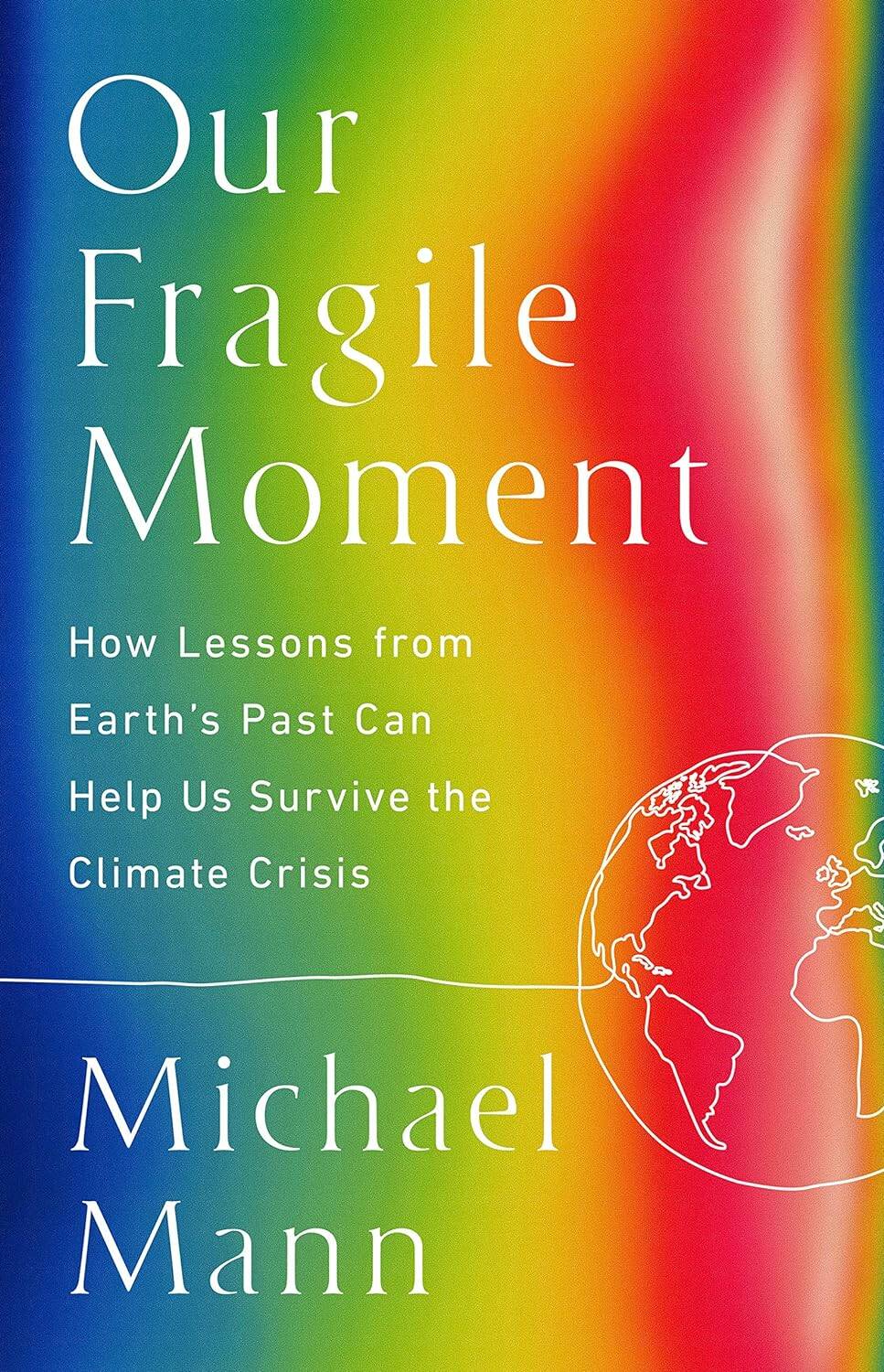
Our Fragile Moment
His recommendation: “The obstacles to action aren’t physical or even technological… they remain entirely political.”
This latter comment is revisited several times in Our Fragile Moment, including the “nuclear winter” scenario promulgated by Carl Sagan decades ago concerning the consequence of a nuclear war. However, Mann also notes both Russia’s blocking of climate action and the American Republican Party’s support for continued mining and production of fossil fuels.
Mann concludes: “The impacts of climate change, no doubt, constitute an existential threat if we fail to act.”
Despite this, he adds, hopefully: “Our fragile moment can still be preserved.”
Chris Rutkowski is a science writer in an increasingly warmer Winnipeg.
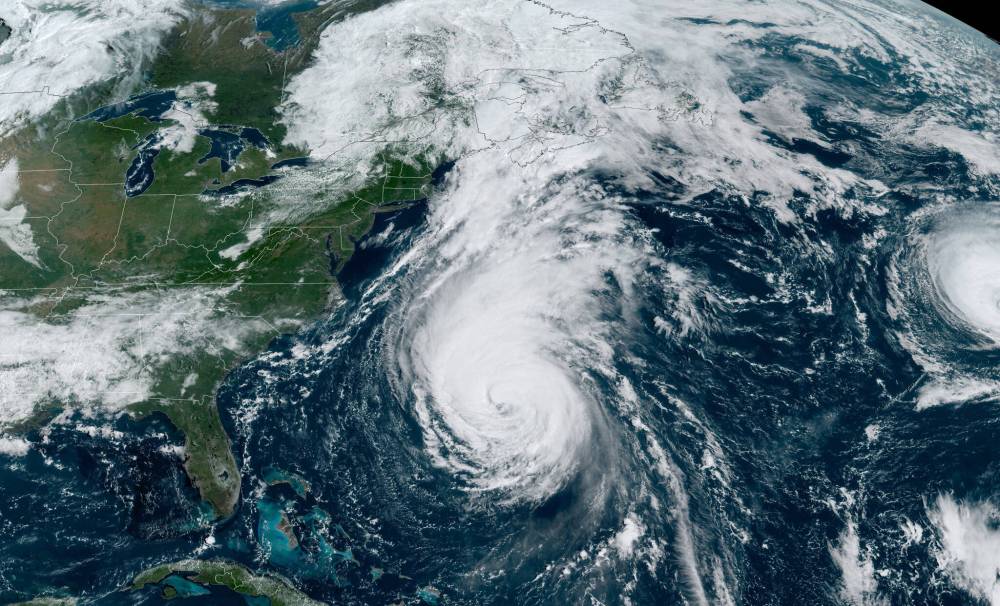
The Canadian Press / HO-CSU/CIRA-NOAA
In this September 2023 satellite image of the Atlantic Ocean, hurricane Lee is seen moving toward land. The rash of devastating hurricanes in the Atlantic is one of many climate-related red flags, says author Michael Mann.