Playwright grapples with loss, mental health
Advertisement
Read this article for free:
or
Already have an account? Log in here »
To continue reading, please subscribe:

Digital Subscription
One year of digital access for only $205*
- Enjoy unlimited reading on winnipegfreepress.com
- Read the E-Edition, our digital replica newspaper
- Access News Break, our award-winning app
- Play interactive puzzles
*First annual payment billed as $205.00 + GST for one year. This annual subscription will automatically renew at $233.00 + GST every 52 weeks (10% off the regular annual price of $259.35). Offer available to new and qualified returning subscribers only. Cancel any time.
To continue reading, please subscribe:
Add Free Press access to your Brandon Sun subscription for only an additional
$1 for the first 4 weeks*
- Enjoy unlimited reading on winnipegfreepress.com
- Read the E-Edition, our digital replica newspaper
- Access News Break, our award-winning app
- Play interactive puzzles
*Your next Brandon Sun subscription payment will increase by $1.00 and you will be charged $17.95 plus GST for four weeks. After four weeks, your payment will increase to $24.95 plus GST every four weeks.
Read unlimited articles for free today:
or
Already have an account? Log in here »
Hey there, time traveller!
This article was published 21/10/2023 (1040 days ago), so information in it may no longer be current.
In her most recent novel Daughter, Claudia Dey tackles difficult themes of mental health, sexual assault, infant loss and suicide as she tells the story of a developing playwright, Mona Dean.
Dey, a playwright herself, organizes the novel into five parts in what one can only assume is a nod to Shakespeare (she even includes a wedding near the end).
Mona finds herself caught in the crossfire of her father Paul’s affairs. Paul, a famous author of his one and only published novel (also titled Daughter), is a complicated man who is constantly self-destructing and dragging the women in his life down with him.
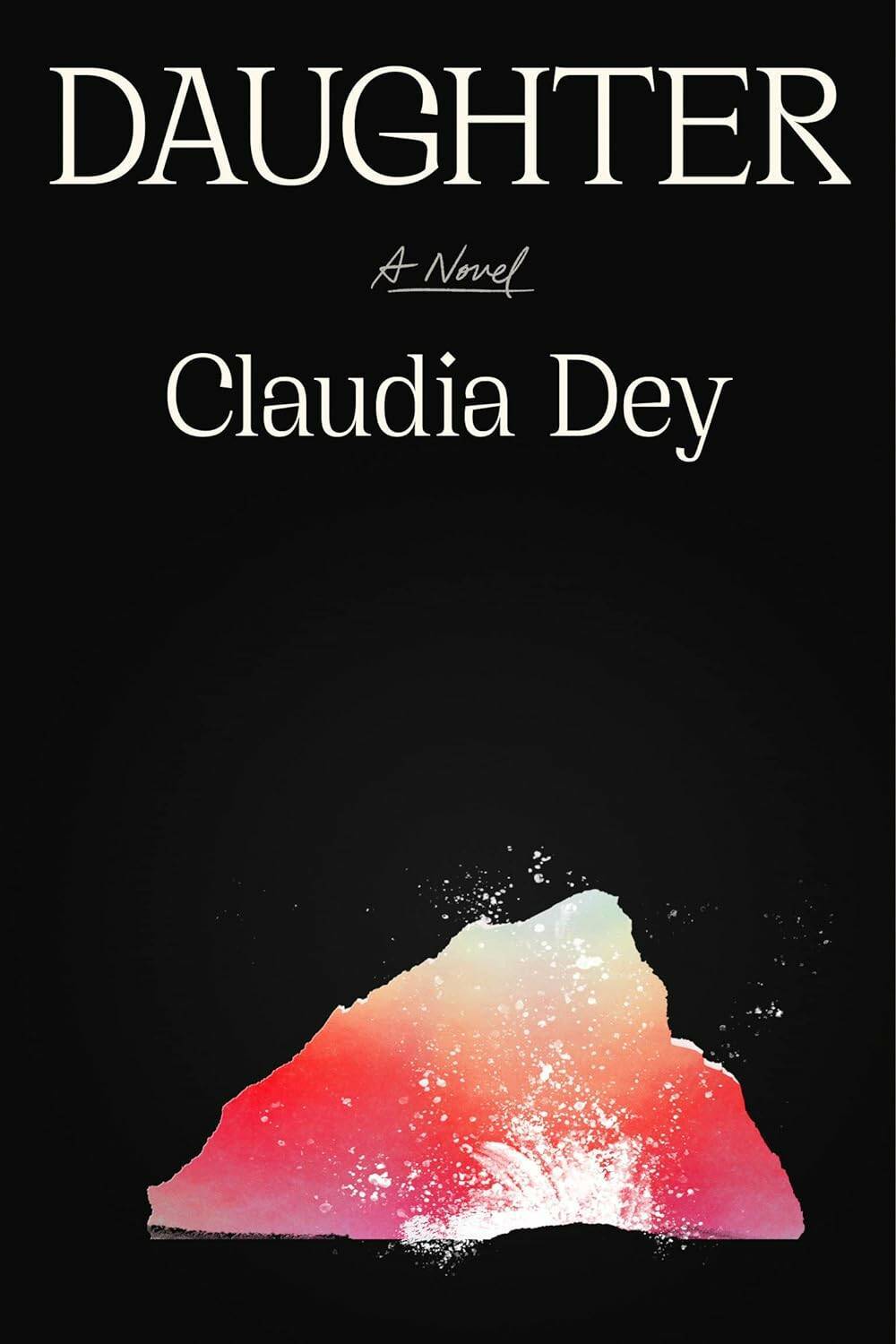
Daughter
Despite this, Mona’s self-image seems to revolve around his affection and attention, as Dey writes from Mona’s point of view “Without Paul’s love, I was powerless. I had no gravitational pull.”
Mona’s half-sister Eva seems equally affected by Paul’s perception of her. She confides in Mona that “when you’re born your parents start to describe you back to yourself and you become that person.”
As the story unfolds, Mona struggles to reconcile her relationships with her father and Eva, which has a deep effect on her mental health: “all I could hear was the shallow rumble of my breath inside the dumb shell of my body. I could not compose my body. I could not compose my thoughts.” Amidst the chaos, Mona wonders, “Why had Shakespeare not called the play King Lear’s Daughters?”
While her relationship with Eva becomes more tumultuous, Mona leans on her older sister Juliet, who helps her to navigate her relationship with their father and teaches her about motherhood and about her own desires for the future: “I saw the change in Juliet when she went from daughter to mother. The mortal tendon between her and her son. I wanted that. I wanted to be a mother.”
However, Mona’s own path to motherhood is full of heartache, causing her mental health and self-image to further decline: “I was separate from my body, I hated my body, I wanted my body to die. I went into the bathroom, I cried, I looked out the window, I cried […] grief was immovable and it had no dimension, it was just there, and it lived in my throat and in my chest and in my organs.”

Mona processes this loss with Juliet who, in perhaps another nod to Shakespeare and his use of parallel storylines, tells Mona that on the day Mona lost her baby, she’d also had a miscarriage. They reflect on their relationship to their parents together: “We knew too little about our mother and too much about our father. She did not know where this left us.”
A running theme throughout the novel is a discussion of what it means to be a writer and artist. Paul, for instance, talks about writing as being in conversation with God.
Dey is clearly a skilled writer herself, as the combination of the narrative point of view that seems to jump between characters, short train-of-thought-like sentences and interesting descriptors create a story that is engaging and easy to breeze through in just a few afternoons.
Readers of Daughter are sure to find themselves reflecting on their own familial relationships, loss and the desire to create oneself. They might also find themselves smearing the ink with a tear or two. But don’t worry, books are good secret-keepers.
Jessie Taylor is a poet and editor with a BA from the University of Manitoba.