Swine details
Longtime connection between humans and pigs pondered in wide-ranging study
Advertisement
Read this article for free:
or
Already have an account? Log in here »
To continue reading, please subscribe:

Digital Subscription
One year of digital access for only $205*
- Enjoy unlimited reading on winnipegfreepress.com
- Read the E-Edition, our digital replica newspaper
- Access News Break, our award-winning app
- Play interactive puzzles
*First annual payment billed as $205.00 + GST for one year. This annual subscription will automatically renew at $233.00 + GST every 52 weeks (10% off the regular annual price of $259.35). Offer available to new and qualified returning subscribers only. Cancel any time.
To continue reading, please subscribe:
Add Free Press access to your Brandon Sun subscription for only an additional
$1 for the first 4 weeks*
- Enjoy unlimited reading on winnipegfreepress.com
- Read the E-Edition, our digital replica newspaper
- Access News Break, our award-winning app
- Play interactive puzzles
*Your next Brandon Sun subscription payment will increase by $1.00 and you will be charged $17.95 plus GST for four weeks. After four weeks, your payment will increase to $24.95 plus GST every four weeks.
Read unlimited articles for free today:
or
Already have an account? Log in here »
Hey there, time traveller!
This article was published 28/10/2023 (1028 days ago), so information in it may no longer be current.
There’s an almost universal craving for bacon, arguably the most popular protein food derived from pigs. And even though sacred texts prohibit Jews and Muslims from eating pork, many humans display an almost insatiable demand for pork chops, pork loins and pork bellies.
While activists continue to release documented examples of animal abuse — especially by pork producers — an ever-increasing demand for protein-rich food tends to silence their concerns.
Our complicated relationship with one of the planet’s major sources of protein is now clearly revealed in a wide-ranging study showing how pigs aren’t only an important food source, but have also become contributors to humanity’s cache of reusable body parts such as heart valves, prolonging the lives of countless hospitalized patients.
Jeff Roberson / The Associated Press files
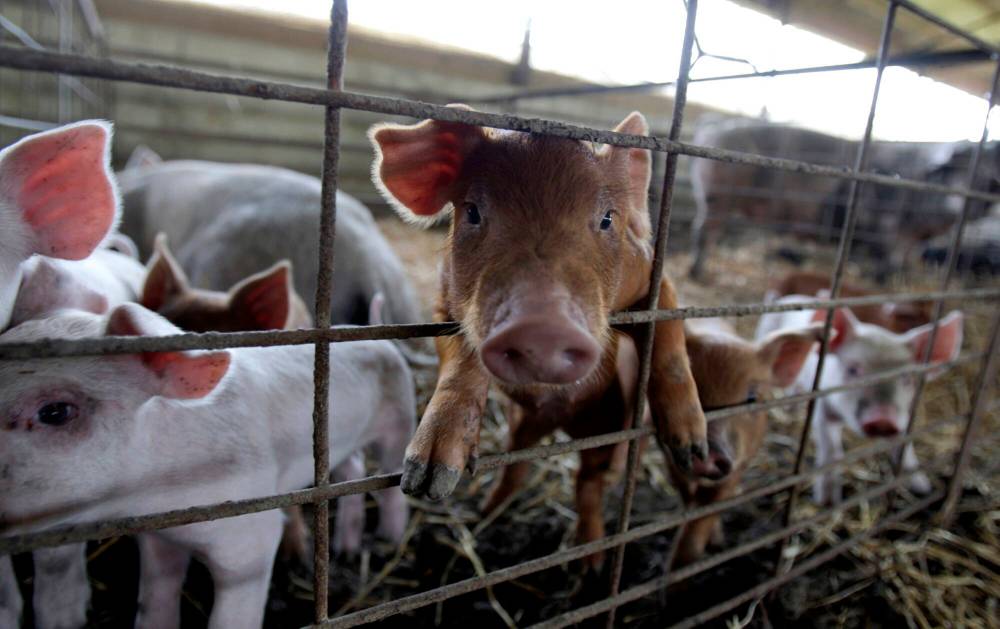
Bucolic farms of yesteryear have largely been replaced by sprawling ‘pig farms’ that resemble highly industrialized facilities, with nearly two billion pigs slaughtered globally every year.
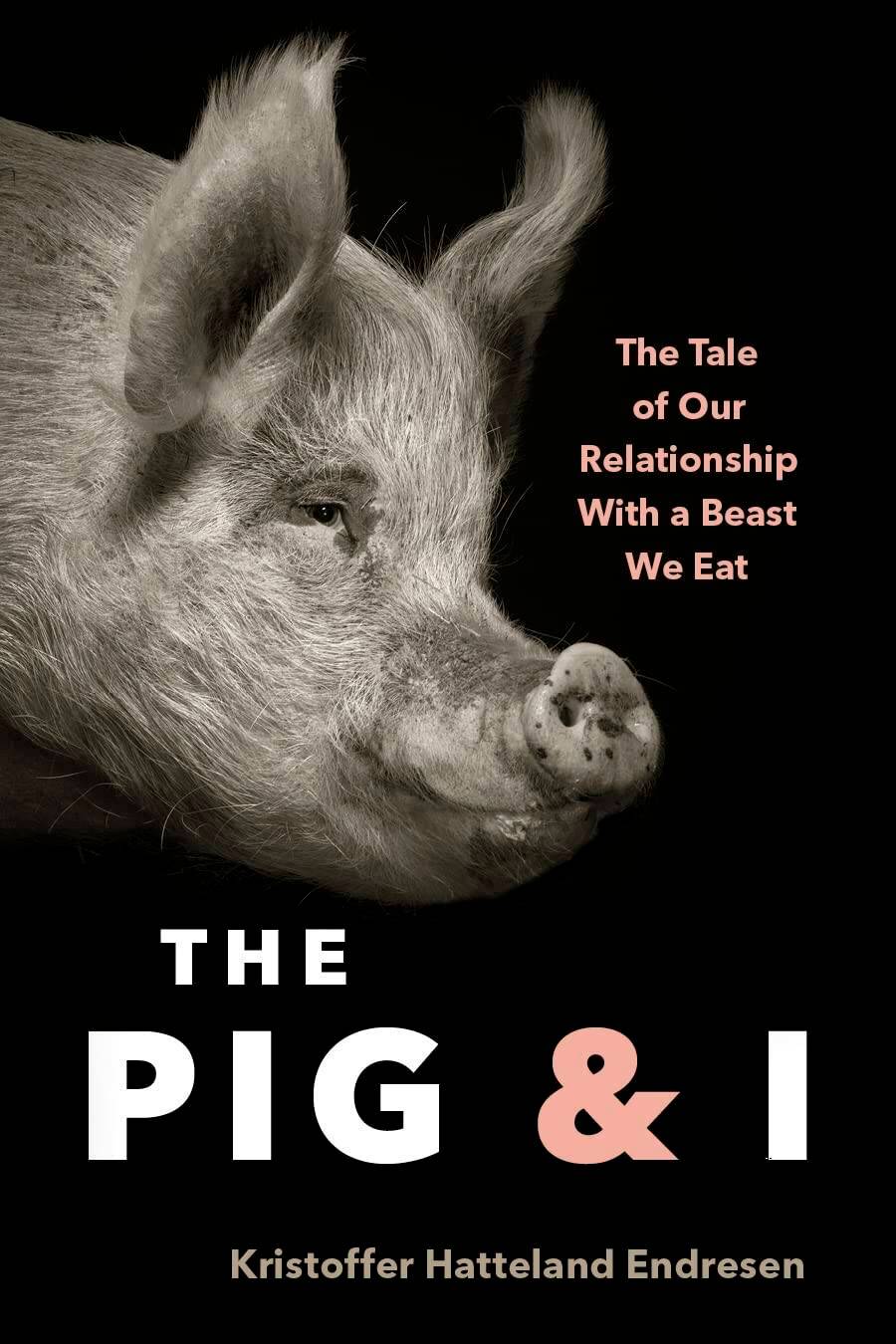
The complex, millennia-long connection between human and porcine species is clearly revealed in an enlightening study titled The Pig & I, first published in Norway in 2020. This first book by Norwegian journalist and historian Kristoffer Hatteland Endresen is now available in bookstores as an English translation by London-born award-winning translator Lucy Moffatt.
The Pig & I chronicles Endresen’s six-month tenure at a pig farm in Norway, where some astute observations as a farm labourer who mucked the crowded stalls and helped to artificially inseminate sows combines with his extensive research into the long association between humans and pigs, tracing a historical love-hate relationship replete with graphic depictions that could sour the taste for bacon.
It confirms how the bucolic farms of yesteryear have been replaced by sprawling “pig farms” resembling highly industrialized facilities, supplying equally industrialized slaughterhouses with almost two billion pigs per year.
Although Norway’s pig farms are shown to be more humane than the several-stories-high pig farms in China, embodying all that is distasteful about the treatment of domesticated animals, large pork production facilities throughout the world are shown to be similarly highly industrialized, where concern for “animal comfort” is trumped by a “production line process” and where six-month-old pigs await the inevitable slaughter truck coming to fetch them.
Tapping into a trove of resources listed in the well-stocked notes and bibliography sections accompanying his pig-oriented study, Endresen interweaves his own personal observations and experiences with those found in mythology, archeological records and ancient Greek and Roman history.
They all reveal a dependence upon pigs that has always been paradoxically accompanied by revulsion towards a species described as “a living metaphor for all that is vulgar, tasteless, shameful and sinful.”
The Pig & I
Pigs, like humans, are omnivorous — and in order to be able to eat virtually everything, they have similar sets of tearing and grinding teeth. As Endresen reminds us, “once the enamel on a pig’s tooth is gone, there is, practically speaking, nothing to distinguish it from that of a human,” one of several troublesome truths for disbelievers of Darwin’s evolutionary theories.
Plumbing literary works such as George Orwell’s satirical Animal Farm and William Golding’s Lord of the Flies, Endresen shows how the lives of pigs and humans have become so entwined that even the literary and artistic worlds often portray these separate species as interchangeable, enlivening otherwise drab television shows with characters such as Miss Piggy.

Unfortunately, this captivating study reveals neither an irrefutable proof, nor a complete denial, of a special bond or undiscovered link between pigs and humans, in spite of a heavy reliance on the published works of well-known Australian moral philosopher Peter Singer (Animal Liberation).
Instead, there is only Endresen’s expressed satisfaction in accepting that humans are inextricably tied to other beings, including pigs, while also recognizing that in spite of similarities between pigs and humans, they remain two distinct species.
Reaching this conclusion conveniently justifies the production of other protein food sources from chickens, cattle, goats and sheep, making the domestication of all birds and animals a natural human endeavour at providing food.

Ingrid Aukland photo
Kristopher Hatteland Endresen
Nevertheless, it offers a voice and echoes a genuine concern for the treatment of animals.
Joseph Hnatiuk is a retired teacher.