Family’s struggles sharply observed
Advertisement
Read this article for free:
or
Already have an account? Log in here »
To continue reading, please subscribe:

Digital Subscription
One year of digital access for only $205*
- Enjoy unlimited reading on winnipegfreepress.com
- Read the E-Edition, our digital replica newspaper
- Access News Break, our award-winning app
- Play interactive puzzles
*First annual payment billed as $205.00 + GST for one year. This annual subscription will automatically renew at $233.00 + GST every 52 weeks (10% off the regular annual price of $259.35). Offer available to new and qualified returning subscribers only. Cancel any time.
To continue reading, please subscribe:
Add Free Press access to your Brandon Sun subscription for only an additional
$1 for the first 4 weeks*
- Enjoy unlimited reading on winnipegfreepress.com
- Read the E-Edition, our digital replica newspaper
- Access News Break, our award-winning app
- Play interactive puzzles
*Your next Brandon Sun subscription payment will increase by $1.00 and you will be charged $17.95 plus GST for four weeks. After four weeks, your payment will increase to $24.95 plus GST every four weeks.
Read unlimited articles for free today:
or
Already have an account? Log in here »
Hey there, time traveller!
This article was published 09/12/2023 (1025 days ago), so information in it may no longer be current.
April 5 — the date referenced in the title of American author Michael Cunningham’s new novel, Day — is a significant day in the lives of Dan Byrne and Isabel Walker.
In 2019, April 5 is the day the married couple reluctantly acknowledge that Isabel’s brother, Robbie — equally beloved by his sister, brother-in-law, niece and nephew — must finally move out of their crowded Brooklyn apartment and find a place of his own.
In 2020, April 5 is the day that it becomes painstakingly clear to Dan and Isabel just how much the COVID lockdown and the world’s uncertain future have exacerbated their already fragile relationship.
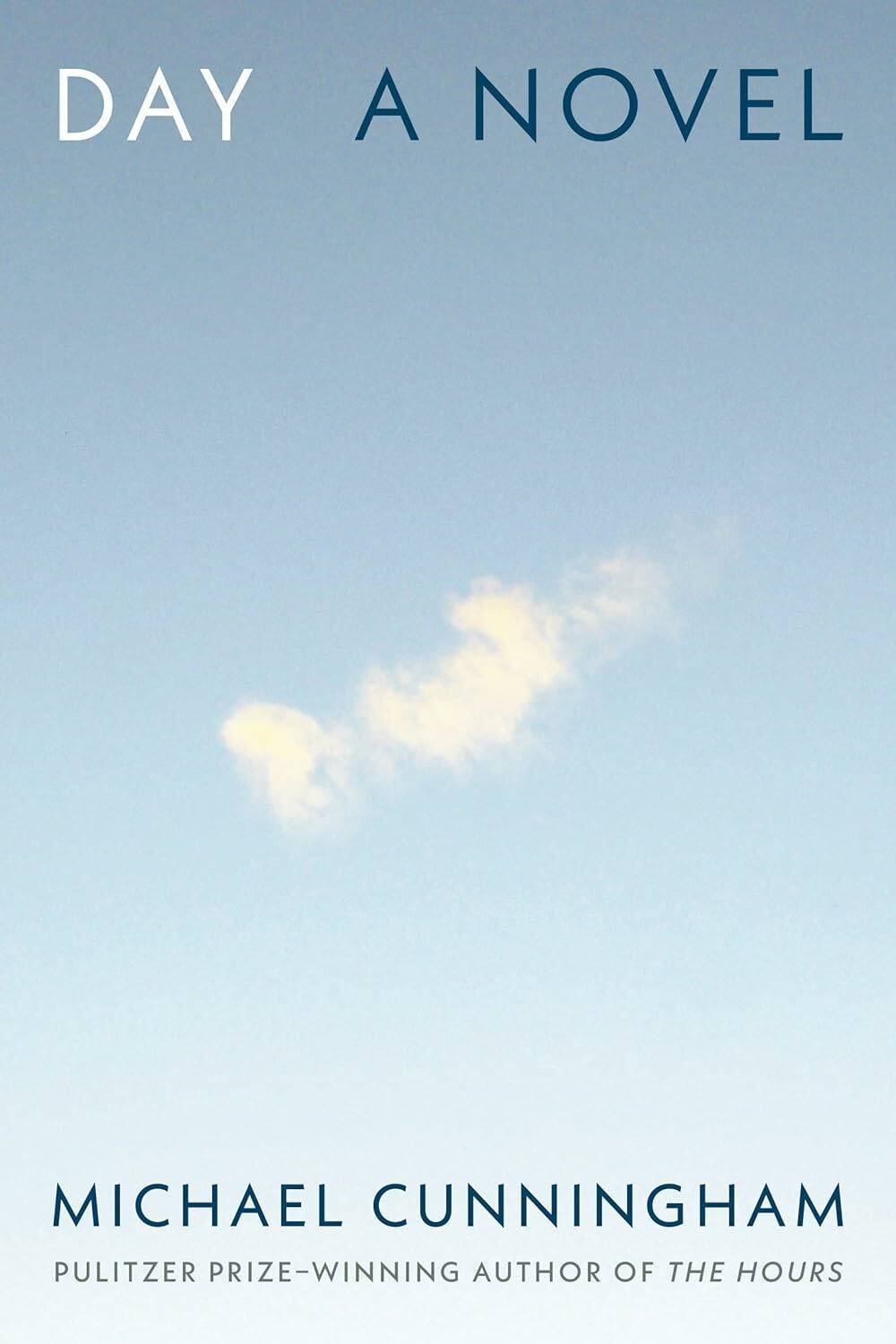
Day
And in 2021, April 5 is the day on which they gather with other family members outside their home to mourn who and what has been lost, and consider how to move forward.
Those other family members include Dan and Isabel’s seven-year-old daughter, Violet, and 12-year-old son, Nathan, as well as Dan’s brother Garth, his baby Odin as well as Odin’s mother, Chess.
Like Dan, Isabel and Robbie, none of these other characters, with the exception of baby Odin, are particularly happy. As imagined by Cunningham — who has written nine other novels, including the 1999 Pulitzer Prize-winning The Hours — they are dissatisfied with their lives and alternately angry, unkind, confused, wary, self-absorbed and obsessed with their discontent. Unsurprisingly, they are all unlikable as well.
Yet because Cunningham’s observations are so sharp and his prose so meticulous, so honest and so attuned to the idiosyncrasies of each of these main characters, he manages to make them just relatable enough to keep readers engaged.

When Isabel’s only escape during the lockdown is to cower quietly on the apartment staircase, Cunningham observes, in a way that will be recognizable to any mother, that “Even here, though, she’s never quite safe from interruptions, from her family’s need for her to listen with patient interest to the fears and grievances, the victories or the songs, along with their need to be in the vicinity of a person who knows more than anyone else about what to do and not do in order to be safe, who knows with unwavering assurance that everything will be all right.”
The pandemic lockdown, in fiction as in real life, affected families in different ways. Some, like Dan and Isabel’s, couldn’t bear all of the togetherness, while others, like Lara’s family in Ann Patchett’s post-covid novel Tom Lake, learn to relish in the togetherness and the opportunities it provided. Unlike Patchett, Cunningham does not delve deep into his characters, nor provide an abundance of detail about their past lives beyond broad strokes.
In fact, Day reads, and is formatted, more like a play in three acts than a novel. But because it is not a play, it is likely to leave readers expecting more — characters that are fleshed out a little more, greater backstory and exposition to better understand the family members’ pervasive disillusionment and, most importantly, parents that parent more lovingly and attentively and children that behave and talk more like children.
There is no question Cunningham’s prose is poignant, eloquent and elegant. But in the case of Day — a novel about love, longing and regret — that doesn’t seem to be quite enough.
Sharon Chisvin is a Winnipeg writer who spent the COVID lockdown with her husband, two daughters, two sons-in-law, two grandchildren and three dogs.