Geographer’s probe of divisions delights
Advertisement
Read this article for free:
or
Already have an account? Log in here »
To continue reading, please subscribe:

Digital Subscription
One year of digital access for only $205*
- Enjoy unlimited reading on winnipegfreepress.com
- Read the E-Edition, our digital replica newspaper
- Access News Break, our award-winning app
- Play interactive puzzles
*First annual payment billed as $205.00 + GST for one year. This annual subscription will automatically renew at $233.00 + GST every 52 weeks (10% off the regular annual price of $259.35). Offer available to new and qualified returning subscribers only. Cancel any time.
To continue reading, please subscribe:
Add Free Press access to your Brandon Sun subscription for only an additional
$1 for the first 4 weeks*
- Enjoy unlimited reading on winnipegfreepress.com
- Read the E-Edition, our digital replica newspaper
- Access News Break, our award-winning app
- Play interactive puzzles
*Your next Brandon Sun subscription payment will increase by $1.00 and you will be charged $17.95 plus GST for four weeks. After four weeks, your payment will increase to $24.95 plus GST every four weeks.
Read unlimited articles for free today:
or
Already have an account? Log in here »
Hey there, time traveller!
This article was published 24/02/2024 (948 days ago), so information in it may no longer be current.
How did the invisible boundaries of the malaria belt influence the creation of the gin and tonic? What do changes to the invisible boundary of the treeline mean for Earth’s climatic future? And why do Egypt and Sudan both actively reject the territory of Bir Tawil?
People use boundaries to help distinguish one place from another. Everything from longitude and latitude and continental divides to watersheds and climate zones help us better understand the planet and how it works.
In Invisible Lines: Boundaries and Belts that Define the World, first-time author and geographer Maxim Samson fascinates with a detailed look at the intricacies and intersections of power, transformation and interaction and the limits we place on the planet and each other.
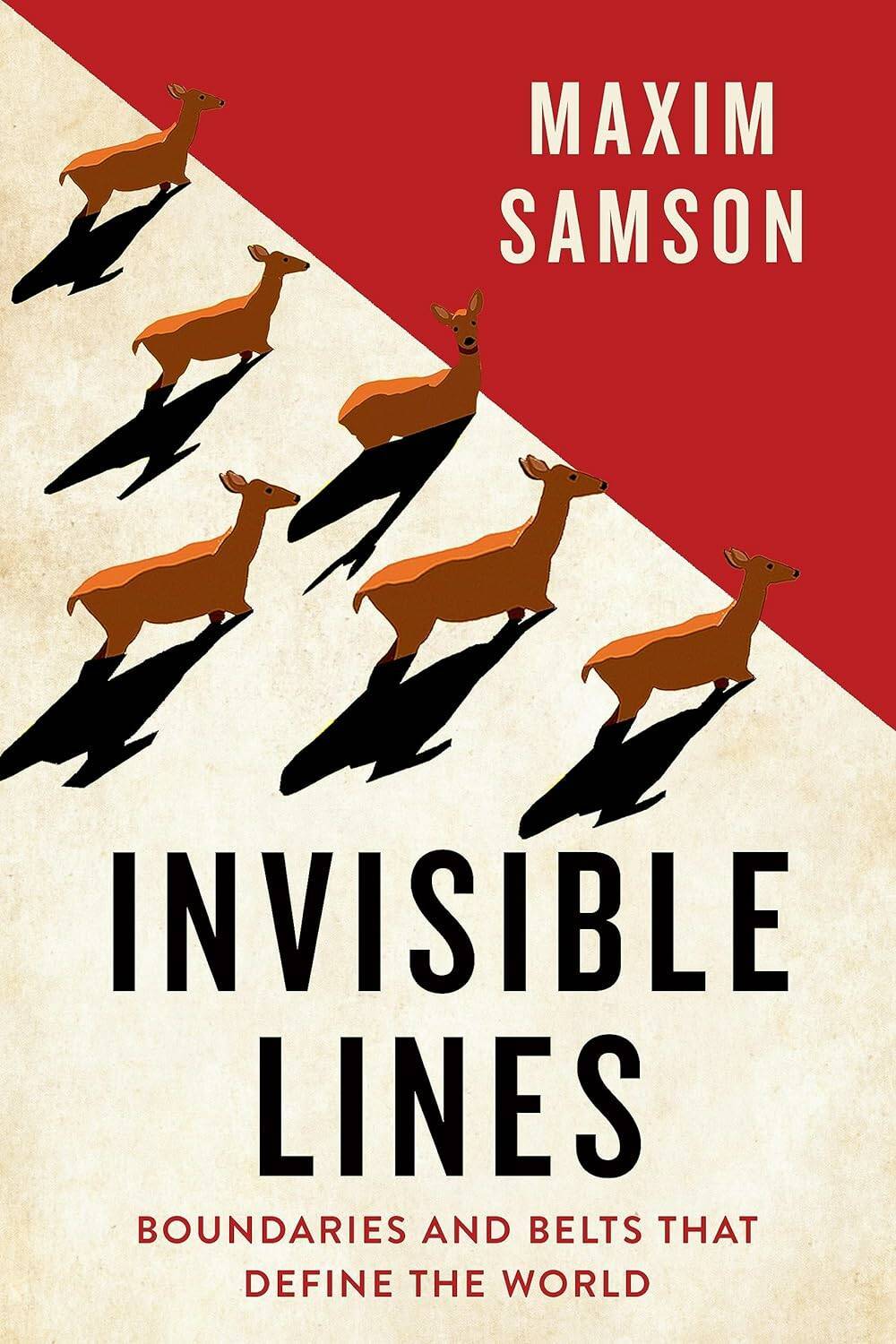
Invisible Lines
Most people are familiar with the more commonly discussed physical geography, having memorized facts about climate or maps of Europe in our school days. In human geography, geographers study how we impose ourselves on the world and shape the landscapes round us.
“[C]onsciously or not we draw lines to simplify and adapt our complex planet to our needs and desires,” Samson writes. “Drawing lines helps us distinguish one place from another, and thereby assume some level of control over our surroundings. By simplifying our world in this way, it doesn’t seem quite so complex anymore.”
Given the multitude of boundaries and borders we create, Samson focuses on five key ways invisible lines operate and how they affect us: how they improve our understanding, how they help us transform things, how they provoke competition or conflict, how they create division and how they can be used to preserve cultural distinctiveness.
He also notes the setting of a power-based boundary can also have profound effects, affecting the way we interact and engage with places and with others. This includes everything from Russia’s war in Ukraine to building a fence that defines our property from our neighbours. Other boundaries are created to protect us. Some are more formal and created by law, while others are more informal and perceived rather than seen.
Samson’s straightforward and engaging style make his concepts easy to follow and understand. Information is presented in bite-sized chunks via short sub-chapters, making it easy for a reader to pick up where they left off. And the examples he uses and the locations he highlights are diverse, spanning the globe and challenging one’s perceptions of place and history.
As one might expect from a geographer, he highlights many expected topics related to weather and climate. But he also highlights invisible boundaries and the issues surrounding them related to many different social factors, including class, gender, wealth/poverty and even politics.
He also addresses the effects of colonialism head on in chapters about the colonial aspirations of Portugal and Spain and the Australian outback. His analyses about the about the economic, social and territorial constructs of football teams in Buenos Aires and gangs in Los Angeles are particularly interesting.
Samson’s clear and concise writing, his engaging style and the wide range of topics he covers makes Invisible Lines an absorbing study of the boundaries we set to divide and demarcate the physical and cultural worlds and how this affects us in our day-to-day lives.
Julie Kentner is a Winnipeg writer.