Opera star’s high-profile affair fictionalized
Advertisement
Read this article for free:
or
Already have an account? Log in here »
To continue reading, please subscribe:

Digital Subscription
One year of digital access for only $205*
- Enjoy unlimited reading on winnipegfreepress.com
- Read the E-Edition, our digital replica newspaper
- Access News Break, our award-winning app
- Play interactive puzzles
*First annual payment billed as $205.00 + GST for one year. This annual subscription will automatically renew at $233.00 + GST every 52 weeks (10% off the regular annual price of $259.35). Offer available to new and qualified returning subscribers only. Cancel any time.
To continue reading, please subscribe:
Add Free Press access to your Brandon Sun subscription for only an additional
$1 for the first 4 weeks*
- Enjoy unlimited reading on winnipegfreepress.com
- Read the E-Edition, our digital replica newspaper
- Access News Break, our award-winning app
- Play interactive puzzles
*Your next Brandon Sun subscription payment will increase by $1.00 and you will be charged $17.95 plus GST for four weeks. After four weeks, your payment will increase to $24.95 plus GST every four weeks.
Read unlimited articles for free today:
or
Already have an account? Log in here »
Hey there, time traveller!
This article was published 24/02/2024 (911 days ago), so information in it may no longer be current.
Like a good opera, this work of historical fiction brings you passion, betrayal and unrequited love.
English author Daisy Goodwin’s third novel explores the tumultuous romance between opera singer Maria Callas and Greek shipping magnate Aristotle Onassis.
While the novel doesn’t quite hit the high notes, it spotlights an interesting dynamic between two fascinating real-life characters.
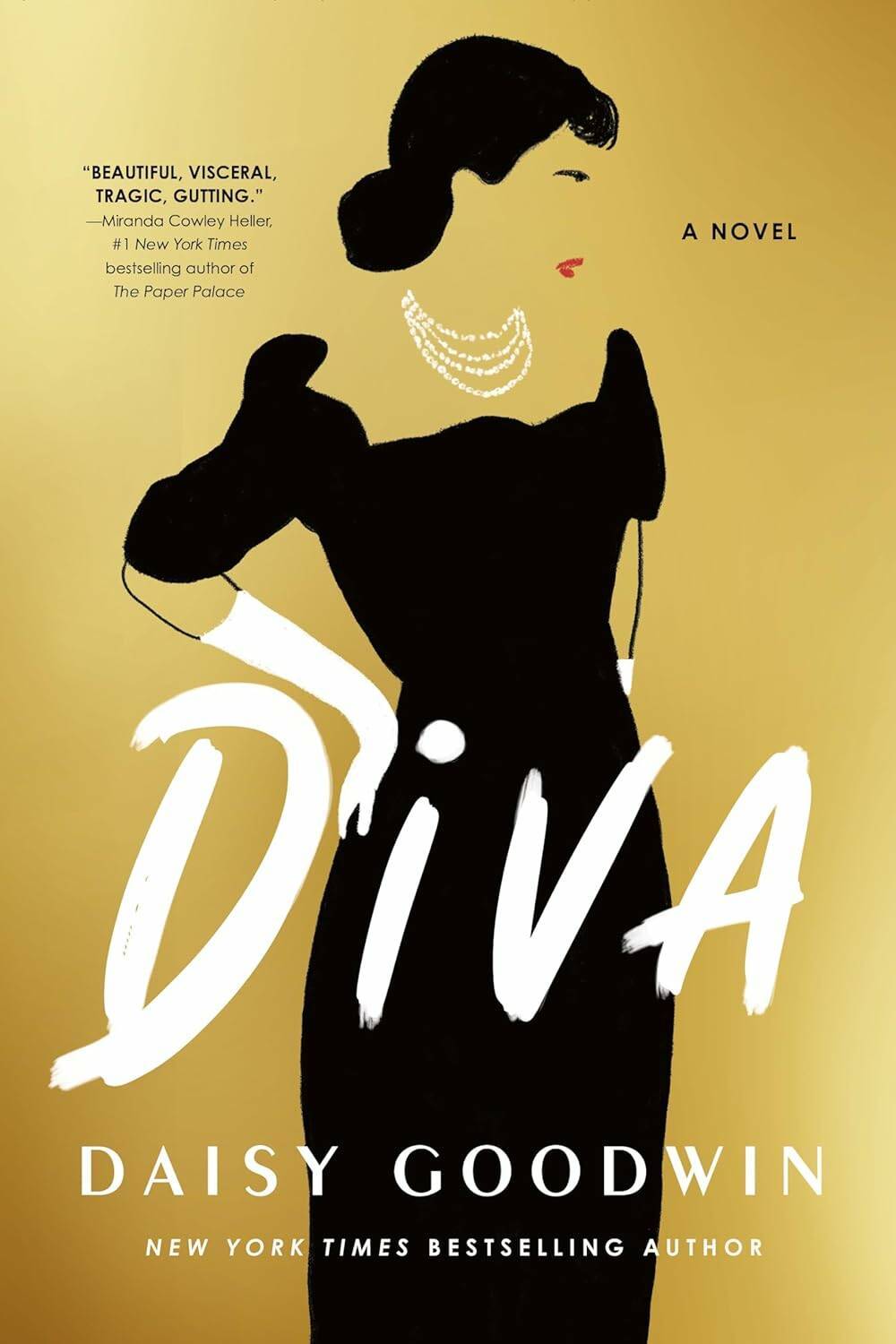
Diva
Author Goodwin’s background includes television production and poetry collections.
However, she’s best-known in North America as a historical novelist, debuting in 2011 with The American Heiress (titled My Last Duchess in Europe) which was inspired by great American heiresses in the late 19th century who used their money as leverage to catch titled husbands in Europe.
Diva is her third novel.
Fittingly for a story starring the famously temperamental Callas, Goodwin opens on a dramatic note.
It’s October 20, 1968, and Maria is preparing for a night out in Paris.
Ever the performer, Maria wants to show the world that she isn’t heartbroken that Aristotle Onassis, the world’s richest man and Maria’s lover of nine years, has just abandoned her to marry the widowed Jacqueline Kennedy.
Like all great performances, this is just an illusion: Maria is devastated.
“Only one man had seen her as a woman, not simply a vessel for a God-given voice, and now that man was the husband of another woman, a woman whose only talent appears to be the annexing of rich and powerful men,” Maria mourns to herself.
Goodwin swings back in time to cover Maria’s comfortable but dull marriage to Giovanni Battista Meneghini, her meeting with Aristotle at a star-studded party, his long courtship of the great diva while both were married to other people and the couple’s rocky but long-lived affair.
Through flashbacks, Goodwin also explores Maria’s difficult relationship with her greedy and domineering mother and Maria’s marriage to Meneghini, a controlling older man.
Her portrayal of the great Maria Callas is perfectly balanced between a woman ferociously dedicated to her art and one who simply longs for a loving husband and family.
“Perhaps there was room for passion in her repertoire, that the feeling that fulfilled her as a person could enrich her as an artist,” Maria muses at one point. “Did she really have to choose between art and life?”
In contrast, Aristotle appears as a greedy, manipulative man who charms others to get what he needs and undermines them to suit his own purposes.
Maria sees this clearly when Aristotle misses one of her performances then apologetically tells her he was scared that she would fail in front of him.
“I didn’t want to see you humiliated,” he tells her, moments before she realizes Aristotle was actually seducing another woman while she was onstage.
The novel is populated with plenty of other historical characters, including Elizabeth Taylor, gossip columnist Elsa Maxwell, Princess Grace of Monaco, Jackie Kennedy’s sister Lee Radziwell and, of course, Jackie Kennedy herself.
Even though it’s set in another era, Goodwin’s blunt portrayal of the excesses and greed of the ultra-rich may remind readers of the HBO series The Gilded Age.
Goodwin’s writing is formulaic and bland at times, unexpected in a writer who is also a published poet.
However, the story is still satisfying and readers will enjoy learning about one of history’s great love affairs.
Kathryne Cardwell is a writer and settler in Treaty One territory.