Eyes to the skies
America’s fascination with UFOs chronicled in detailed, engaging new account
Advertisement
Read this article for free:
or
Already have an account? Log in here »
To continue reading, please subscribe:

Digital Subscription
One year of digital access for only $205*
- Enjoy unlimited reading on winnipegfreepress.com
- Read the E-Edition, our digital replica newspaper
- Access News Break, our award-winning app
- Play interactive puzzles
*First annual payment billed as $205.00 + GST for one year. This annual subscription will automatically renew at $233.00 + GST every 52 weeks (10% off the regular annual price of $259.35). Offer available to new and qualified returning subscribers only. Cancel any time.
To continue reading, please subscribe:
Add Free Press access to your Brandon Sun subscription for only an additional
$1 for the first 4 weeks*
- Enjoy unlimited reading on winnipegfreepress.com
- Read the E-Edition, our digital replica newspaper
- Access News Break, our award-winning app
- Play interactive puzzles
*Your next Brandon Sun subscription payment will increase by $1.00 and you will be charged $17.95 plus GST for four weeks. After four weeks, your payment will increase to $24.95 plus GST every four weeks.
Read unlimited articles for free today:
or
Already have an account? Log in here »
Hey there, time traveller!
This article was published 09/03/2024 (927 days ago), so information in it may no longer be current.
In July 2023, explosive Congressional testimony provided by whistleblower and former Air Force intelligence officer David Grusch made international headlines with his claims that the U.S. government had been engaged in a decades-long “black-budget” funded program to reverse-engineer captured crafts created by “non-human intelligences” and was, in fact, in possession of “non-human biologics” — in other words, alien bodies.
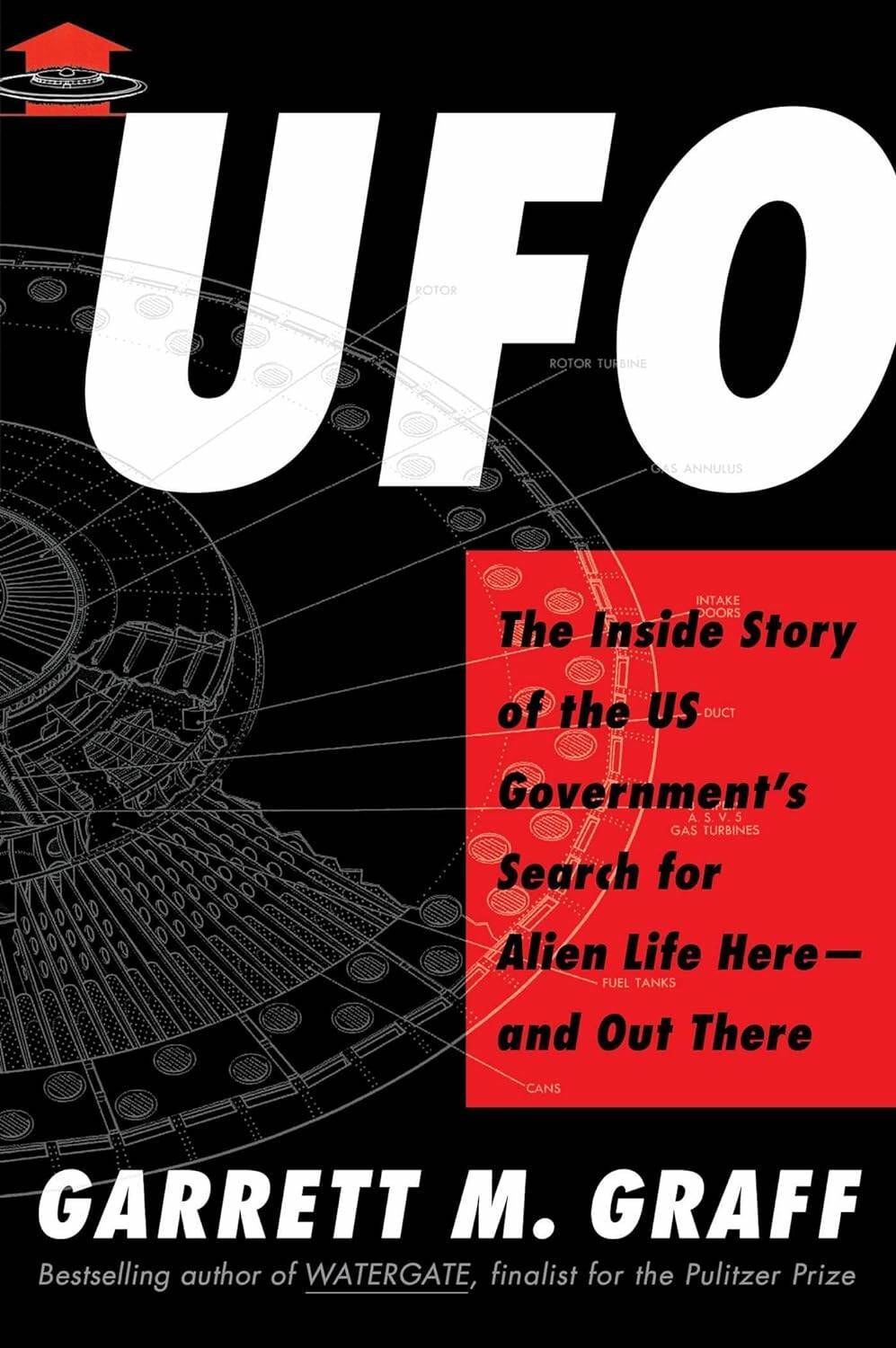
While Grusch’s testimony was perhaps the most detailed account yet given of unidentified flying objects (UFOs — now often referred to as unidentified anomalous phenomenon or UAPs) in such an official setting, this was far from being the first time the subject of alien spacecraft had been heard in the halls of Congress. As Garrett M. Graff recounts in his richly detailed and engaging new book UFO, the U.S. government has for nearly 80 years — in varying degrees and capacities — been looking to the skies and wondering what, if anything, should be done about the phenomenon.
Graff is a journalist and prolific historian of U.S. politics, whose previously published books have concerned the assassination of President John F. Kennedy (Angel is Airborne, 2003), contingency plans for the continuation of the federal government in case of national catastrophe (Raven Rock, 2017), the 9/11 attacks (The Only Plane in the Sky, 2019) and Watergate (2022). That many of these titles concern some of the more clandestine aspects of government provided Graff with a solid foundation for his new book.
It should be noted that the book’s title is perhaps a tad misleading: it’s not so much about the history of alleged UFO sightings and encounters (although it is filled with plenty of both) as it is with the response of the U.S. government to these allegations, which took the form of official investigations such as Project Sign (1948) and the much better-known Project Blue Book (1952-1969). In this regard, UFO serves as an American counterpart to Matthew Hayes’ 2022 book Search for the Unknown: Canada’s UFO Files and the Rise of Conspiracy Theory, which considered Ottawa’s response to such sightings over the decades.
Yet UFO is also the history of government-funded science exploring the possibility of extraterrestrial life, including the evolving science of astrobiology (which theorizes about the likelihood of life evolving elsewhere in the cosmos), the development of radio telescopes capable of detecting possible signals from other civilizations and the still-ongoing collective efforts known as the Search for Extraterrestrial Intelligence (SETI).
This twin narrative is seamlessly woven together in 51 tight and compellingly written chapters (the correspondence of number of chapters to a certain U.S. Air Force base may be just be a coincidence. Or is it?). The many alleged encounters are reported respectfully and Graff’s narrative is especially entertaining when capturing just how significant a cultural force UFOs have been, especially in the early postwar decades, with an avalanche of books, celebrity “contactees” claiming repeated encounters and the formation of citizen groups dedicated to proving alien visitations, to say nothing of inspiring such global cultural touchstones as The X-Files.
For the most part, Graff capably describes for the non-expert the complex science and mathematics involved in the search for extraterrestrial life. At the same time, he does make a few notable errors along the way, such as repeatedly mixing up “galaxy” with “solar system.”
To Graff’s credit, however, he is quite even-handed in his assessment of the evidence and the testimony of witnesses, ultimately taking no particular stand himself as to the nature of the objects people have claimed to see, only that something significant appears to be going on — something warranting investigation.
UFO

It is a pity that UFO went to press before Grusch’s July 2023 testimony to Congress, as it would have been valuable to hear Graff’s perspective on that event. Still, this is a fascinating and highly enjoyable book and should hopefully contribute to a sober reconsideration of what’s actually going on in the skies above us.
Michael Dudley is a librarian at the University of Winnipeg.

Elman Studio
Garrett M. Graff

Ed Araquel / Fox
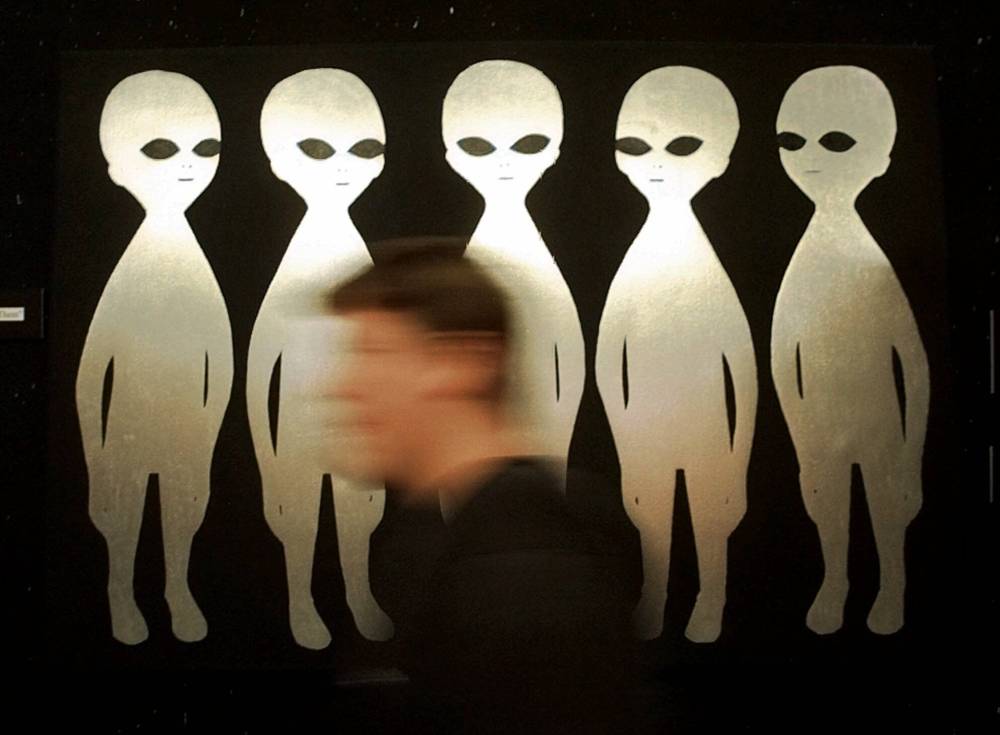
UFOs have been a cultural force in the U.S., inspiring books, the formation of citizen groups dedicated to proving alien visitations and programs such as The X-Files.