Banking on the system
Giving capitalism a climate-centric focus the best way forward, author argues
Advertisement
Read this article for free:
or
Already have an account? Log in here »
To continue reading, please subscribe:

Digital Subscription
One year of digital access for only $205*
- Enjoy unlimited reading on winnipegfreepress.com
- Read the E-Edition, our digital replica newspaper
- Access News Break, our award-winning app
- Play interactive puzzles
*First annual payment billed as $205.00 + GST for one year. This annual subscription will automatically renew at $233.00 + GST every 52 weeks (10% off the regular annual price of $259.35). Offer available to new and qualified returning subscribers only. Cancel any time.
To continue reading, please subscribe:
Add Free Press access to your Brandon Sun subscription for only an additional
$1 for the first 4 weeks*
- Enjoy unlimited reading on winnipegfreepress.com
- Read the E-Edition, our digital replica newspaper
- Access News Break, our award-winning app
- Play interactive puzzles
*Your next Brandon Sun subscription payment will increase by $1.00 and you will be charged $17.95 plus GST for four weeks. After four weeks, your payment will increase to $24.95 plus GST every four weeks.
Read unlimited articles for free today:
or
Already have an account? Log in here »
Hey there, time traveller!
This article was published 16/03/2024 (925 days ago), so information in it may no longer be current.
Murray Sinclair’s hope and optimism for truth and reconciliation manifests itself in his famous line: “Education got us into this mess. Education will get us out.” The horror and evil that was the residential school system and the systemic racism that lingers and often festers can be made right through teaching and learning.
There is dissonance within this reasoning, thinking that the problems with education can be ameliorated through education — but perhaps reform in the form of a decolonized education presents a path to a more just and equitable education system and society.
In a similar vein, scientist and journalist Akshat Rathi argues that the way to curb carbon emissions and avoid a catastrophic end to our species is through the very system that has created this existential runaway train: capitalism.
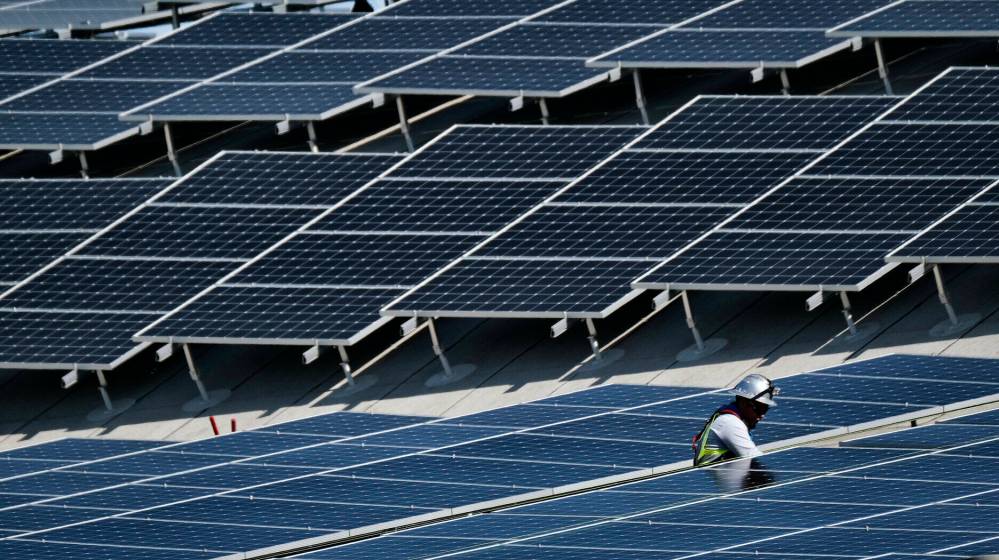
Richard Vogel / The Associated Press files
Rathi says a climate-centred capitalism where significant targets are set, prices on carbon cemented and some profits scrubbed to care for the environment might give us a chance.
In Climate Capitalism: Winning the Race to Zero Emissions and Solving the Crisis of Our Age, the Oxford graduate posits that a newly reformed climate capitalism will help us get to net zero through innovation, government policy and a responsiveness to stakeholders who are making more demands for corporate responsibility.
Is your solar-powered BS radar on?
Unfettered capitalism in its most basic form is founded on exploitation of people, natural resources and political systems. In order for some people to be really rich, many need to be poor and they need to be removed from the land.
Rathi suggests, however, that “Even if you think the best option is to overthrow capitalism, there doesn’t seem to be any way that a new system could be put in place within the few decades left to avert catastrophic climate change. What may be possible within that tight frame, however, is reforming capitalism. But how?”
Each chapter in Climate Capitalism focuses on rich tech, oil or multinational giants who are attempting to curb carbon emissions through the development of better solar, wind, carbon capture and sustainable practices. From Volkswagen to Bill Gates (who offers a blurb on the front cover — cringe) to the CEO of Occidental Petroleum, Rathi describes how innovation, competition and overall benevolence from billionaires will right the ship.
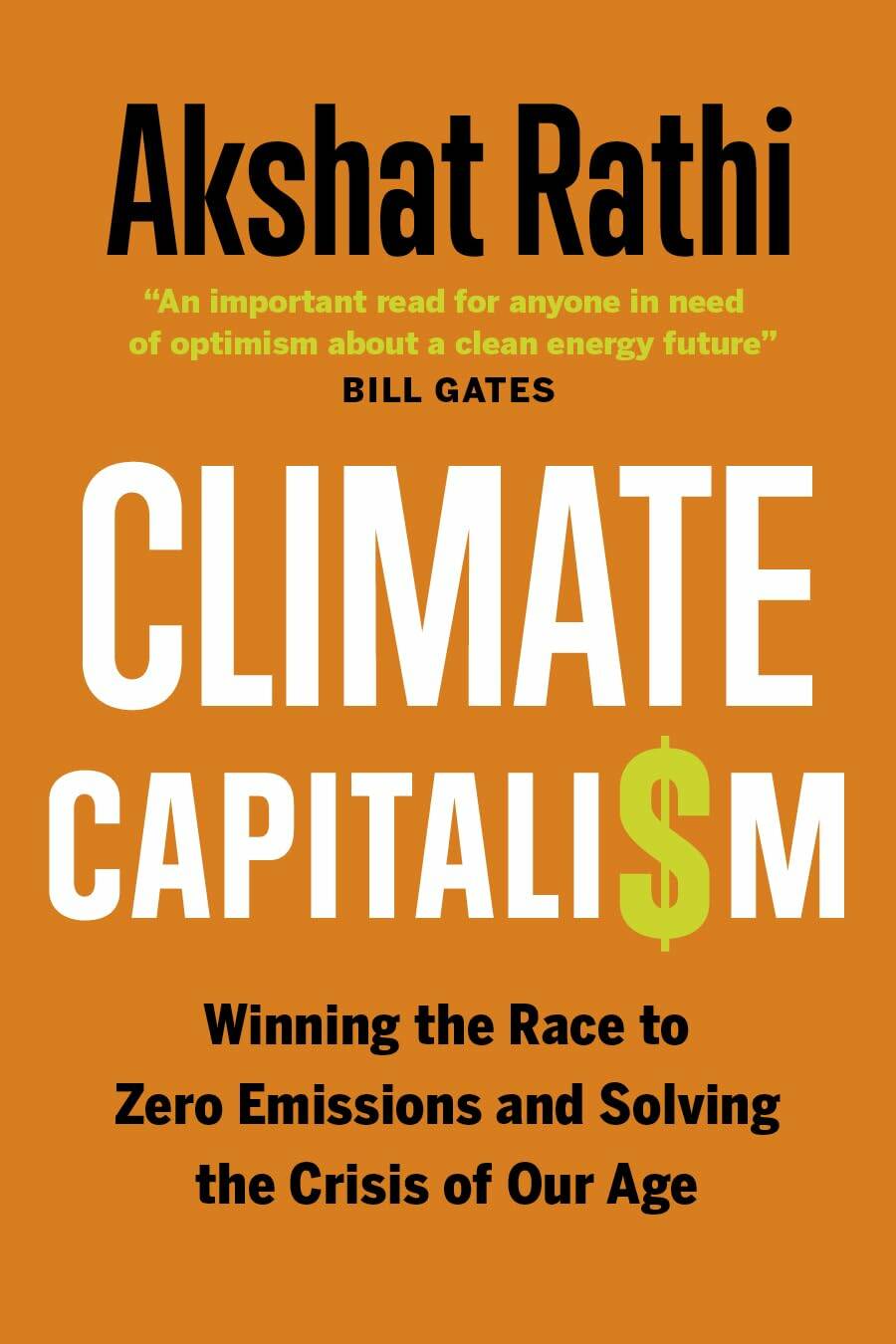
Climate Capitalism
Vignette after vignette suggests that the goodwill of billionaires will change the current trajectory of doom. In the case of Gates, Rathi surfaces his genius: “The steps that followed show what the world’s richest and most famous can do when they are obsessed with solving a problem.”
It’s difficult to stomach the idea that the likes of Gates, Elon Musk, Jeff Bezos and the lot are our only hope of getting to net zero. But Rathi does provide some logical reasoning as he tries to align innovation and government policy together. Using Denmark and the U.K. as examples, a new capitalism is one whereby significant targets are set, prices on carbon are cemented, and “sacrificing some profit today and caring for the environment” might give us a chance.
Perhaps unbeknownst to Rathi, he seems to dance around the viability of social democracy — political ideology that is highly democratic and seeks to ensure that everyone has the means to a decent life, where wealth is distributed equitably and there are social goods such as healthcare and public education as well as stringent environmental policies. This is perhaps why the aforementioned countries have had significant success — unlike Canada, the U.S. and Australia, where resource exploitation and land removal have been government and corporate policy for centuries.
Interestingly, Rathi does admit that “getting to zero emissions on a deadline will mean changing everything.” While suggesting that the ultra rich can still remain ultra rich and Bill Gates can still travel in his emission-spewing private jet, everything must be turned on its head. It is this logic that makes Climate Capitalism somewhat of a lukewarm idea.
Even as Rathi, who is most vehemently passionate about reducing emissions, laments the libertarian current created by Morgan Friedman, Climate Capitalism fails to acknowledge the deep political and social change required to hold corporations to account, take back governments from the abyss of cronyism and lobbying and ensure the most marginalized are not exploited or removed from their land. Simply pumping CO2 into the depth of the North Sea isn’t going to cut it.
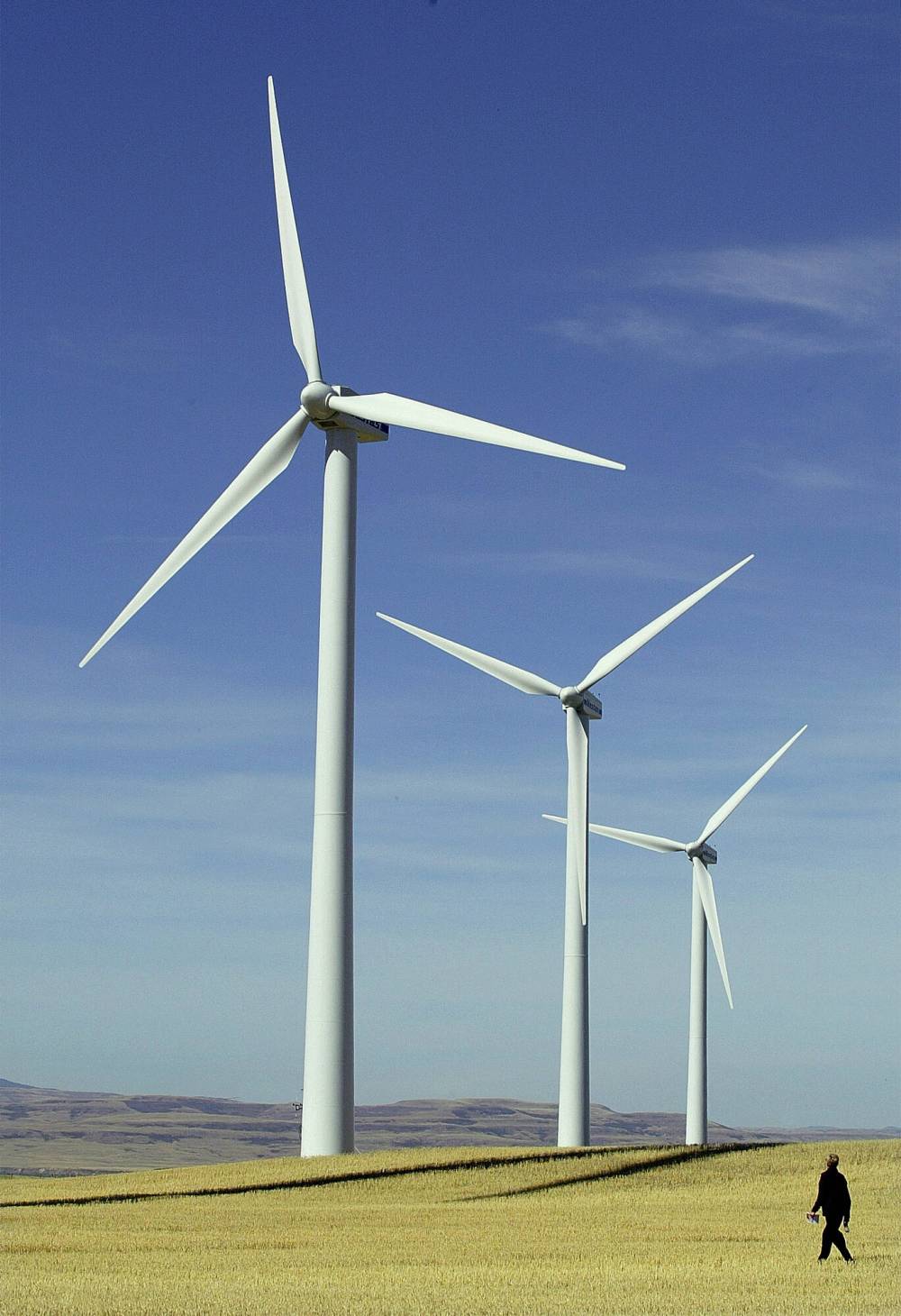
David Rossiter / Lethbridge Herald Files
Chapters in author Akshat Rathi’s book focus on rich tech, oil or multinational giants attempting to curb carbon emissions through the development of better solar, wind, carbon capture and sustainable practices.
Entrepreneurship, business and innovation are wonderful things when guided by a just and sustainable society that is founded on generosity, empathy and inclusion — virtues antithetical to those held by the billionaire class.
Matt Henderson is superintendent of the Winnipeg School Division.

EMPICS Entertainment / Abaca Press Files
Bill Gates