A bloody good read
Alaskan vampyr murder mystery a raw, creepy police procedural

Advertisement
Read this article for free:
or
Already have an account? Log in here »
To continue reading, please subscribe:

Digital Subscription
One year of digital access for only $205*
- Enjoy unlimited reading on winnipegfreepress.com
- Read the E-Edition, our digital replica newspaper
- Access News Break, our award-winning app
- Play interactive puzzles
*First annual payment billed as $205.00 + GST for one year. This annual subscription will automatically renew at $233.00 + GST every 52 weeks (10% off the regular annual price of $259.35). Offer available to new and qualified returning subscribers only. Cancel any time.
To continue reading, please subscribe:
Add Free Press access to your Brandon Sun subscription for only an additional
$1 for the first 4 weeks*
- Enjoy unlimited reading on winnipegfreepress.com
- Read the E-Edition, our digital replica newspaper
- Access News Break, our award-winning app
- Play interactive puzzles
*Your next Brandon Sun subscription payment will increase by $1.00 and you will be charged $17.95 plus GST for four weeks. After four weeks, your payment will increase to $24.95 plus GST every four weeks.
Read unlimited articles for free today:
or
Already have an account? Log in here »
Hey there, time traveller!
This article was published 13/04/2024 (861 days ago), so information in it may no longer be current.
The murder of a 15-year-old boy whose throat was ripped out and body drained of blood is so obvious that it hardly seems worth the while to bring police detective Barbara Atkins all the way to the remote town of Deadhart in Alaska — the murderer is vampyr.
Obvious, perhaps, but Atkins is a meticulous cop.
And as Dr. Barbara Atkins, from the Forensic Vampyr Anthropology Department — The Fang Doc — only she can order a cull of the vampyr colony occupying an old mining site deep in the woods in northern Alaska, where nights are long and daylight is short.
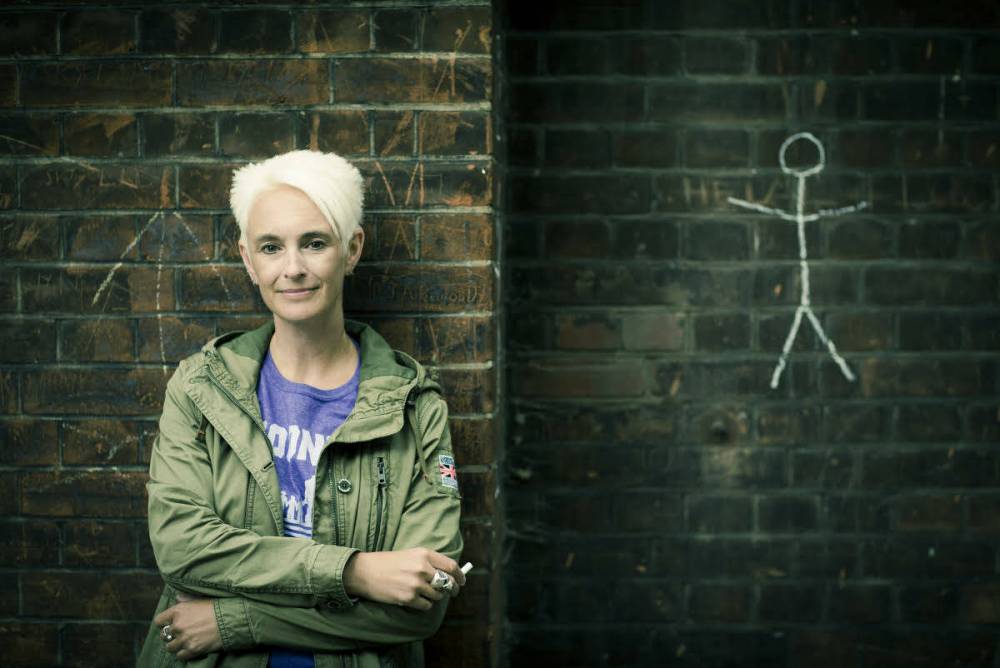
Bill Waters photo
C.J. Tudor’s latest doesn’t have any of the sullen hunky teens or elegant nobles in capes you might have read about in other vampire novels.
C. J. Tudor’sseventh novel, The Gathering, is yet another in almost limitless variations on novels about vampires, but it’s most definitely a police procedural, and a darned good one.
A cull, meanwhile, is just what the word suggests — every vampyr in the colony is deemed a threat to human life and is annihilated.
But as long as they stay away from human settlement and do not harm humans, vampyrs have been protected by federal law in the U.S. since 1983 — one suspects Ronald Reagan was not president in this parallel universe.
Vampyrs have adjusted to keeping pigs and goats to supply their blood needs. They can and do reproduce, but they’re not immortal, they just age over centuries.
They speak English, wear clothes, can be educated, could live among us if allowed — one or two may even (who could have seen this coming?) be passing for human.
They’re hated by many, considered animals, feared as blood-sucking predators — hunters around Deadhart aren’t beyond mounting vampyr heads on their cabin walls.
When Barbara learns there’d been a similar murder of a boy 25 years before, resulting in three vampyrs being killed and the colony fleeing, she suspects the murders may be connected.
Golly — when does that ever happen in a murder mystery?
Now the colony has returned, and it’s determined never again to be driven away.
Early on we learn the colony’s leader is Athelinda, more than 400 years old but forever in the body of the child she was when she became a vampyr. Athelinda is exceptionally powerful, and she’s got centuries of human atrocities to avenge.
Barbara has only one local cop to help her. She faces a lot of negative attitude from the people of Deadhart; it doesn’t matter which one did the killing, slaughter them all. Sign off on the cull and send in the military, or we’ll grab our wooden stakes and ultraviolet guns and do it ourselves.
Barbara is in her 50s, unhappy, no family. Just how did she get so interested in vampyrs? And become so careful about culls? Could it all be rooted in tragedy?
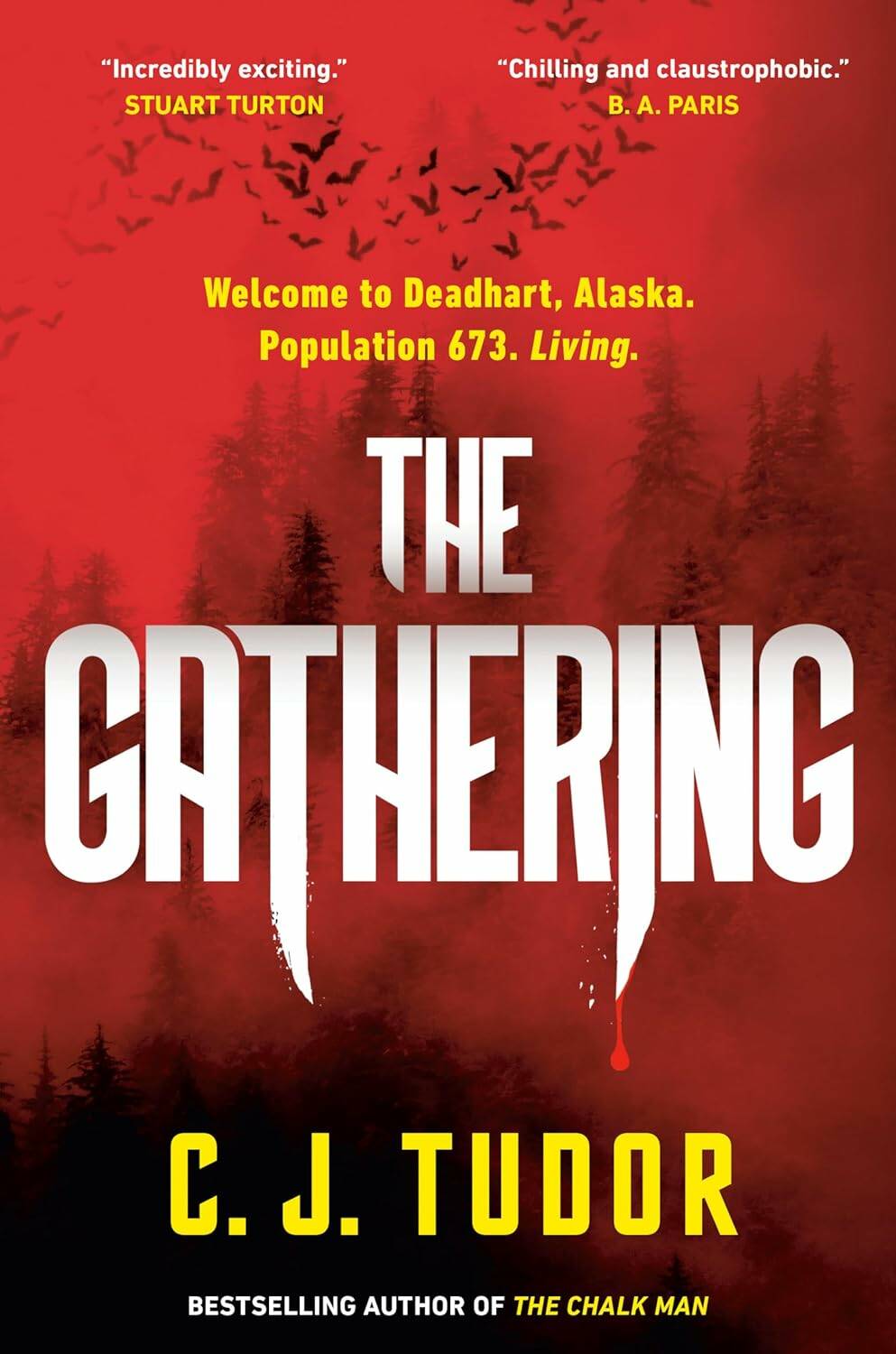
The Gathering
As she investigates, too many things don’t add up. There is a trade in vampyr artifacts: some people will pay big bucks for vampyr incisors and select body parts. Could there be vampyrs craving the real thing who are willing to pay for purloined human blood supplies?
Barbara sleuths that the murder 25 years ago may have involved a romantic inter-species teen relationship and a desire for a voluntary turning by a human minor. While frowned upon, a human’s choosing to be turned into a vampyr is legal, but only for adults — and it can go horribly wrong.
Well, of course it’s all an allegory. The vampyrs can represent any number of persecuted minorities, though people who could benefit from realizing what the author is saying will probably find the story far too subtle.
Meanwhile, Barbara also sleuths that there was once a brothel at the mine where human men and vampyr women, shall we say, interacted. The brothel had a horribly darker side: men craving sex with vampyrs hundreds of years old whose bodies had been turned when they were prepubescent children.
Vampyr memories are very long. Very long indeed.
Don’t expect elegant nobles in capes or sullen hunky teens — The Gathering is raw, and it is brutal, and it is a very good police procedural.
Last time out Tudor wrote The Drift, a bleak plague apocalypse tale, after five murder mysteries of utter weirdness set in England and Wales.
It’s very scary inside C.J. Tudor’s skull, but she’s good. Really good.
Retired Free Press reporter Nick Martin takes guilty pleasure in the Count Yorga flicks, but considers the best vampire film in many decades to be Sweden’s Let the Right One In. That swimming pool scene, oh man…
Nick Martin
Former Free Press reporter Nick Martin, who wrote the monthly suspense column in the books section and was prolific in his standalone reviews of mystery/thriller novels, died Oct. 15 at age 77 while on holiday in Edinburgh, Scotland.
Our newsroom depends on a growing audience of readers to power our journalism. If you are not a paid reader, please consider becoming a subscriber.
Our newsroom depends on its audience of readers to power our journalism. Thank you for your support.
Nick Martin
Former Free Press reporter Nick Martin, who wrote the monthly suspense column in the books section and was prolific in his standalone reviews of mystery/thriller novels, died Oct. 15 at age 77 while on holiday in Edinburgh, Scotland.
Our newsroom depends on a growing audience of readers to power our journalism. If you are not a paid reader, please consider becoming a subscriber.
Our newsroom depends on its audience of readers to power our journalism. Thank you for your support.
Advertisement Advertise With Us
Advertisement Advertise With Us