A sinking feeling

Marine biologist outlines the various ways our oceans are under threat

Advertisement

Advertise with us

For most of us, especially here on the Prairies, the oceans aren’t much more than merely a concept. Even if we fly over them, cruise through them, swim/snorkel near their shores or eat their bounty, we know very little about them. They’re wide, deep, blue, beautiful at the edges and perhaps intimidating. Out of sight, out of mind.

Read this article for free:


or

Already have an account? Log in here »

To continue reading, please subscribe:

Subscribe and receive a limited-edition Free Press branded hat or tote.

Digital Subscription

One year of digital access for only $205*

  • Enjoy unlimited reading on winnipegfreepress.com
  • Read the E-Edition, our digital replica newspaper
  • Access News Break, our award-winning app
  • Play interactive puzzles

*First annual payment billed as $205.00 + GST for one year. This annual subscription will automatically renew at $233.00 + GST every 52 weeks (10% off the regular annual price of $259.35). Offer available to new and qualified returning subscribers only. Cancel any time.

To continue reading, please subscribe:

Add Free Press access to your Brandon Sun subscription for only an additional

$1 for the first 4 weeks*

  • Enjoy unlimited reading on winnipegfreepress.com
  • Read the E-Edition, our digital replica newspaper
  • Access News Break, our award-winning app
  • Play interactive puzzles
Start now

*Your next Brandon Sun subscription payment will increase by $1.00 and you will be charged $17.95 plus GST for four weeks. After four weeks, your payment will increase to $24.95 plus GST every four weeks.

Hey there, time traveller!
This article was published 08/06/2024 (822 days ago), so information in it may no longer be current.

For most of us, especially here on the Prairies, the oceans aren’t much more than merely a concept. Even if we fly over them, cruise through them, swim/snorkel near their shores or eat their bounty, we know very little about them. They’re wide, deep, blue, beautiful at the edges and perhaps intimidating. Out of sight, out of mind.

For people like us, Olive Heffernan has written a very special book.

The High Seas: Greed, Power and the Battle for the Unclaimed Ocean is a startling, important revelation, especially for anyone concerned about the environment. We humans are not only wreaking havoc on the land, we’ve now turned our rapacious attention to the oceans.

Matt Robart / Oregon State University
                                In this 2006 photo, a researcher drops a device into the Pacific Ocean near Oregon to measure how much oxygen is in the water in search 
of dead zones, areas of an ocean devoid of marine life. Over 700 such dead zones exist.

Matt Robart / Oregon State University

In this 2006 photo, a researcher drops a device into the Pacific Ocean near Oregon to measure how much oxygen is in the water in search of dead zones, areas of an ocean devoid of marine life. Over 700 such dead zones exist.

Heffernan was trained and worked as a marine biologist before becoming a science journalist. Among her many publications are essays on oceans and climate change for Nature, Wired, Scientific American, National Geographic and others. She was the editor-in-chief of the Marine Science Magazine as well as the founding editor-in-chief of Nature Climate Change. She knows full well what she’s talking about, and she travels far and wide to get the facts.

In each of the 10 chapters that make up the book, Heffernan details a different way that our oceans are under threat. Many of us can guess at a couple of causes: overfishing and pollution, for example. But the details, the extent, the culprits and the scary looming problems are what give this book its importance.

Fortunately, Heffernan is a gifted storyteller and stylist. The High Seas is never intimidatingly unreadable, dry or boring.

She begins Chapter Nine, for instance, with an account of the splash-down of Mir, the Soviet Space Station into the South Pacific Ocean. Interesting details are provided: on March 22, 2001 at 17:58 local time, the 165-ton spacecraft broke up on re-entry into 1,500 pieces, some the size of a car. It was viewed by spectators in two planes who paid $1.8 million to watch the event. And it occurred at Point Nemo, the “Oceanic Pole of Inaccessibility,” the place that is farthest from land — 4,800 kilometres east of New Zealand.

Currently, there are between 4,500 and 6,500 satellites circling us in space, Heffernan notes, 36 per cent of them the products of SpaceX, the company owned by Elon Musk. That company plans on launching as many as 1,000 new satellites each year in the coming future. When they are no longer useful, they are likely destined for similar controlled or uncontrolled re-entry into this remote space-debris dump. They will join Mir and the 2,400 satellites that have met the same fate there since 1957.

In other words, even the farthest reaches of the ocean are being massively, uncaringly polluted. The chemical consequences of their deterioration are incalculable. Out of sight, out of mind.

The High Seas

The High Seas

Add to them the discarded plastics, farm waste, sewage, garbage, fishing debris and industrial chemicals that are excreted into the oceans every day. We have created 700 dead zones in the oceans.

Each chapter begins and proceeds as such: Heffernan relays an interesting story gleaned by travelling extensively and interviewing the principles personally, followed by research into the strange schemes that some have devised for future exploitation.

The top layers of the oceans have been depleted, so plans are underway to fish the more inaccessible mid-layers and below; to mine for ores and possible medically useful resources; to salt the oceans with iron sulphate to lessen climate change; to tow icebergs to arid countries, and so on — all with sketchy regard for their scary consequences.

There are agencies (especially the UN) trying to regulate the high seas. But the scofflaws are many — sneaky and determined. Laws are undermined; protections are compromised.

Heffernan offers some hope in her final chapter but, as she says, international interventions and individual, personal actions are required.

Adrian Heffernan photo
                                Olive Heffernan trained as a marine biologist before becoming a science writer.

Adrian Heffernan photo

Olive Heffernan trained as a marine biologist before becoming a science writer.

The High Seas is a marvelous book, timely and vital.

Gene Walz is a Winnipeg writer deeply concerned about what we’ve done to our world.

Report Error Submit a Tip

More Stories

Dynacare labs quickly reach capacity ahead of strike

Nicole Buffie 5 minute read Preview

Dynacare labs quickly reach capacity ahead of strike

Nicole Buffie 5 minute read Saturday, Sep. 5, 2026

Patients were being turned away from several Dynacare locations Saturday morning as people packed the labs in hopes of getting their blood collection done before workers strike.

By 10:30 a.m. the lobby at the Dynacare at 1581 Regent Ave. was standing-room only and walk-up patients were being turned away as the wait time for those lucky enough to get in creeped past two hours.

One woman got in right before workers cut off walk-ins at 10 a.m. after travelling to two other locations.

“I was driving by at 7:15 this morning and there was already a line-up to the road, so I was like ‘nope, not going there’ so I went to the one on Sterling Lyon (Parkway) and it was closed, and then I went to the one at St. Vital Mall and there had a line zig-zagging all the way through the corridors so I gave up and came back,” said Joanna, who declined to give her last name.

Read
Saturday, Sep. 5, 2026

NDP minister needs lesson in political civility

Dan Lett 5 minute read Preview

NDP minister needs lesson in political civility

Dan Lett 5 minute read Friday, Sep. 4, 2026

Families Minister Nahanni Fontaine’s decision to intercede in Winnipeg’s mayoral election may be surprising to some political observers. To others, however, it is entirely on brand.

On Tuesday, Fontaine posted a video on social media in which she expressed concern that former city councillor and Progressive Conservative cabinet minister Kevin Klein was entering the race to challenge incumbent Mayor Scott Gillingham.

The caption on the video was blunt: “I mean, really, who chooses to work for Count Dracula?”

“Kevin Klein once worked for Peter Nygard. Peter Nygard is Canada’s equivalent to (American sex offender) Jeffrey Epstein — had his own little island, did unspeakable, disgusting things to women and girls … anyways, I just thought that Winnipeggers would want to know that Kevin Klein, at one point, worked for Peter Nygard,” she says in the video.

Read
Friday, Sep. 4, 2026

Slow start but gritty play not enough in Bombers OT loss to Roughriders in Labour Day Classic

Ken Wiebe 8 minute read Preview

Slow start but gritty play not enough in Bombers OT loss to Roughriders in Labour Day Classic

Ken Wiebe 8 minute read Sunday, Sep. 6, 2026

REGINA – Leave it to Brady Oliveira to succinctly describe that fine line between jubilation and the alternate.

In the aftermath of another Labour Day Classic that went down to the wire, Oliveira went through the joy of tying the game with no time left on the clock to the empty feeling that came moments later when the Saskatchewan Roughriders finished off a 32-26 victory on Sunday night before a raucous crowd of 34,352 at Mosaic Stadium.

“It’s terrible,” said Oliveira. “You just kind of feel all of the emotions. I’m pretty pissed right now. We were close, we were right there. We didn’t play our best football and we still gave ourselves a chance, which could be a silver lining.

“I don’t like to look at silver linings because the fact of the matter is we play this game to get positive results. We want to win the game and we didn’t win the game. So, I’m pissed.”

Read
Sunday, Sep. 6, 2026

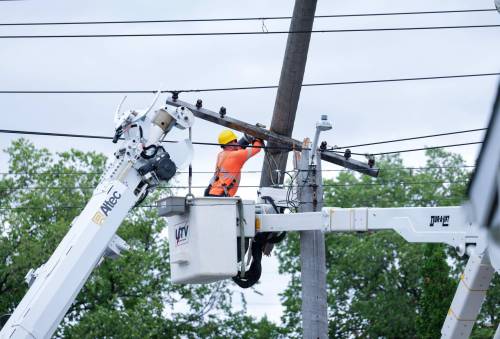
Hydro crews working to restore service to last of the powerless people in River Heights after ferocious Sunday storm

Malak Abas 6 minute read Preview

Hydro crews working to restore service to last of the powerless people in River Heights after ferocious Sunday storm

Malak Abas 6 minute read Updated: 6:34 AM CDT

When Sheila Fenby’s basement began filling with water Sunday night, it felt like déjà vu.

Read
Updated: 6:34 AM CDT

Shtetl story: Rainbow Stage, WJT stage classic Yiddish tale

Ben Waldman 7 minute read Preview

Shtetl story: Rainbow Stage, WJT stage classic Yiddish tale

Ben Waldman 7 minute read 5:25 PM CDT

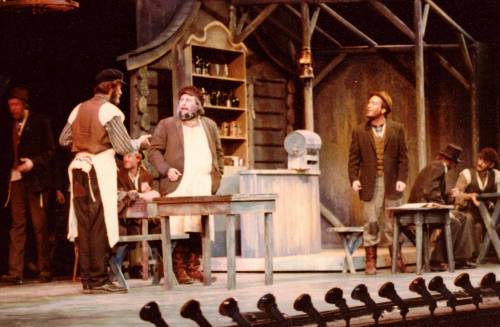
Reb Lazar Wolf (Dov Mickelson) marched down Selkirk Avenue last Friday afternoon to collect sustenance for his Fiddler on the Roof castmates, who’ve spent the past two weeks rehearsing at the Ukrainian National Federation Hall.

“Rugelach?” Mickelson offered after making a quick stop for a bag of sweet pastries at the 89-year-old Gunn’s Bakery, following in the footsteps of his parents’ and grandparents’ generations, those Jews who sought refuge in this neighbourhood after the world they once knew in Eastern Europe was obliterated by continental campaigns of anti-semitism which ultimately led to the Holocaust.

The pre- and post-war focal point of Winnipeg’s Jewish community, the North End became for thousands of refugees and immigrants a stand-in for shtetls — the small, yet sprawling communities that existed under tenuous and ever-threatened autonomy as satellite communities across the Pale of Settlement, the region within the Russian Empire where Jewish people were allowed to reside.

Under the rule of the Tsar — pheh — opportunity was scarce and any expression of Jewish joy or celebration — a bar mitzvah morning, a wedding night or a bris for a newborn boy — could occasion brutal suppression by either the ruling class or by the villagers at the gate.

Read
5:25 PM CDT

Parts of River Heights hammered by storm

Melissa Martin 5 minute read Preview

Parts of River Heights hammered by storm

Melissa Martin 5 minute read Yesterday at 5:54 PM CDT

A powerful storm cut a swath of destruction through River Heights on Sunday, leaving much of the area without power.

Nobody was hurt in the storm.

By the time it subsided, parts of the quiet neighbourhood, especially Borebank and Lindsay streets between Grant and Taylor, had been ravaged: power lines downed, Manitoba Hydro poles toppled, trees splintered and crashed down on vehicles and homes.

In one case, a vehicle was flipped into a yard and sat under a partially downed tree. Shingles were stripped from roofs. Some residents described looking out during the storm and seeing power lines ablaze and the blue glow of electricity arcing over their backyards.

Read
Yesterday at 5:54 PM CDT