‘A new kind of fire’
Dafoe prize-winning book delves into frightening and highly flammable new normal in Western Canada
Advertisement
Read this article for free:
or
Already have an account? Log in here »
To continue reading, please subscribe:

Digital Subscription
One year of digital access for only $205*
- Enjoy unlimited reading on winnipegfreepress.com
- Read the E-Edition, our digital replica newspaper
- Access News Break, our award-winning app
- Play interactive puzzles
*First annual payment billed as $205.00 + GST for one year. This annual subscription will automatically renew at $233.00 + GST every 52 weeks (10% off the regular annual price of $259.35). Offer available to new and qualified returning subscribers only. Cancel any time.
To continue reading, please subscribe:
Add Free Press access to your Brandon Sun subscription for only an additional
$1 for the first 4 weeks*
- Enjoy unlimited reading on winnipegfreepress.com
- Read the E-Edition, our digital replica newspaper
- Access News Break, our award-winning app
- Play interactive puzzles
*Your next Brandon Sun subscription payment will increase by $1.00 and you will be charged $17.95 plus GST for four weeks. After four weeks, your payment will increase to $24.95 plus GST every four weeks.
Read unlimited articles for free today:
or
Already have an account? Log in here »
Hey there, time traveller!
This article was published 14/06/2024 (837 days ago), so information in it may no longer be current.
John Vaillant’s Fire Weather: The Making of a Beast is the winner of the 2024 J.W. Dafoe Book Prize.
Fire Weather: The Making of a Beast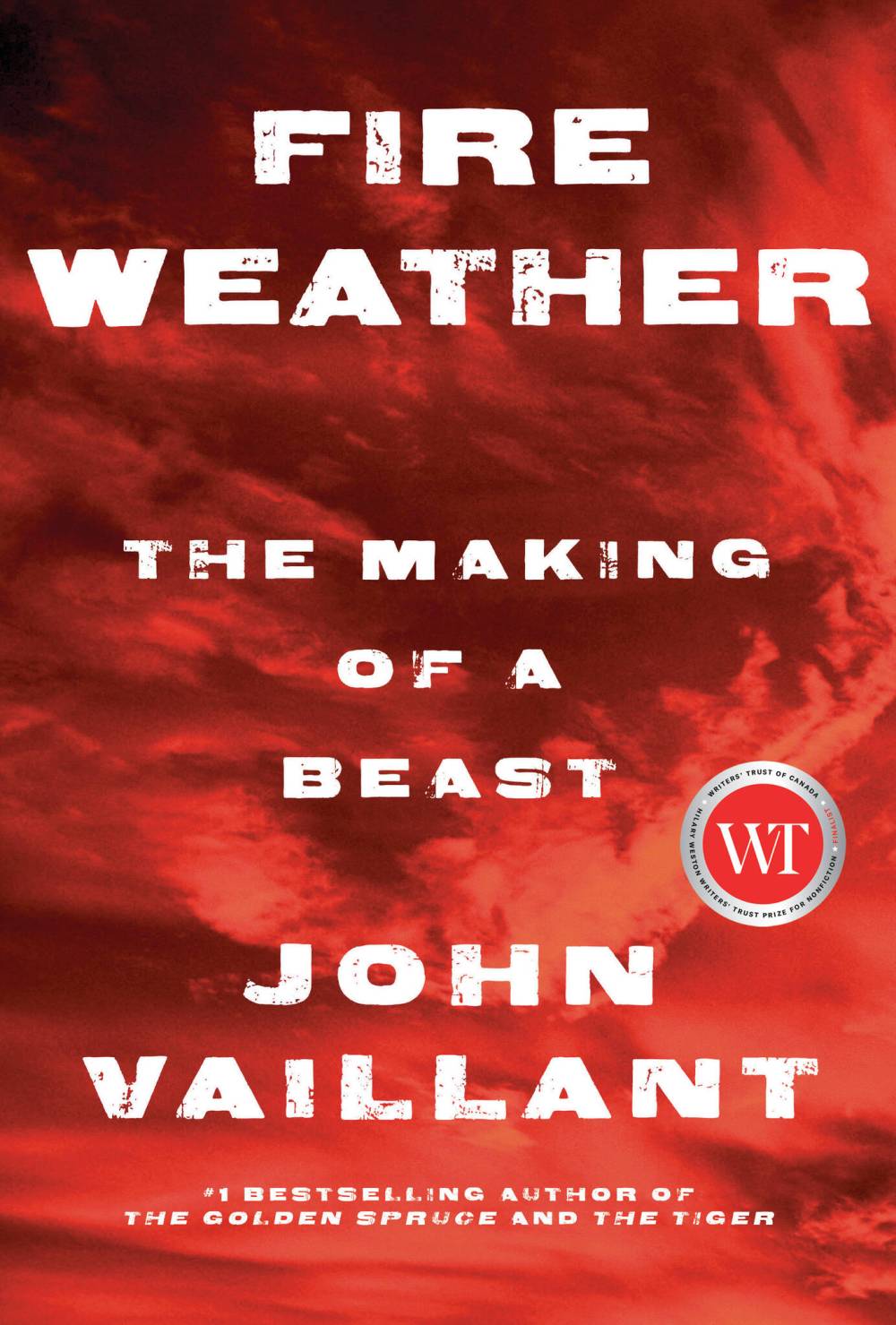
The J.W. Dafoe Prize, worth $12,000, will be formally awarded at the J.W. Dafoe Foundation’s Book Prize Event this fall in Winnipeg. The prize is one of the richest book awards in Canada for excellence in non-fiction, with a focus on major subjects involving Canada, the West and Canadians, as well as the Canadian nation in international affairs.
It memorializes John Wesley Dafoe, one of the most significant Canadian newspaper editors of the 20th century. During his tenure at the Manitoba Free Press, later renamed the Winnipeg Free Press, from 1901-44, Dafoe was known for his advocacy of western development, free trade, national independence and the British Commonwealth.
The following is an excerpt.
In May 2016, Fort McMurray, the hub of Canada’s petroleum industry and America’s biggest foreign supplier, was overrun by wildfire. The multi-billion-dollar disaster melted vehicles, turned entire neighbourhoods into firebombs, and drove 88,000 people from their homes in a single afternoon. Through the lens of this apocalyptic conflagration — the wildfire equivalent of Hurricane Katrina — John Vaillant warns that this was not a unique event but a shocking preview of what we must prepare for in a hotter, more flammable world.
JASON FRANSON / THE CANADIAN PRESS FILES A helicopter battles a wildfire in Fort McMurray Alta, on Wednesday May 4, 2016. The wildfire had put all of Fort McMurray under a mandatory evacuation order which meant that about 70,000 people who lived in Fort McMurray were being told to flee the city.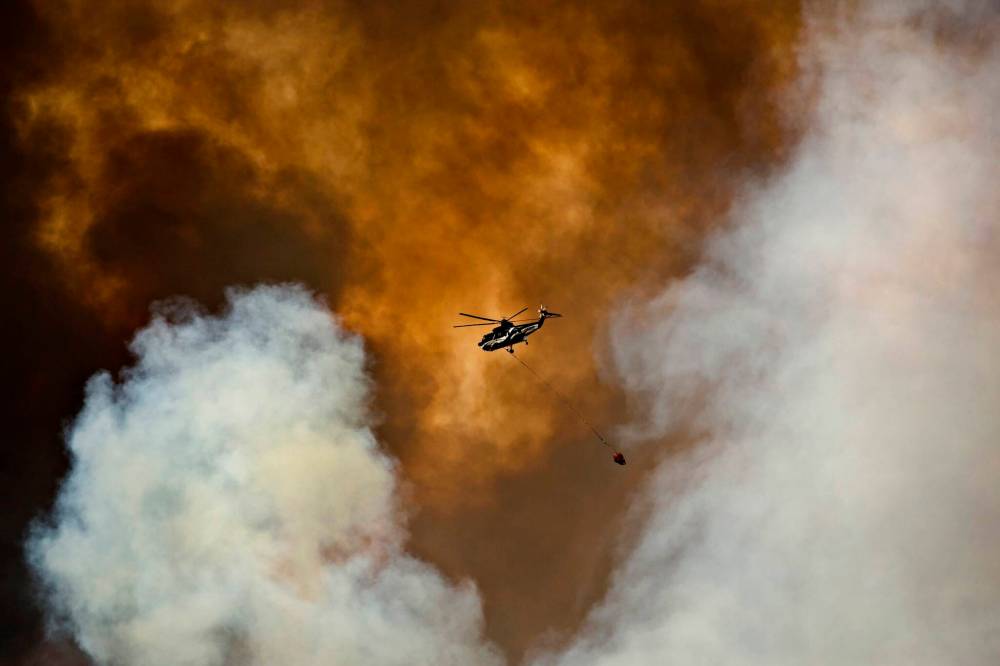
For hundreds of millennia, fire has been a partner in our evolution, shaping culture, civilization, and, very likely, our brains. Fire has enabled us to cook our food, defend and heat our homes, and power the machines that drive our titanic economy. Yet this volatile energy source has always threatened to elude our control, and in our new age of intensifying climate change, we are seeing its destructive power unleashed in previously unimaginable ways.
Vaillant takes us on a riveting journey through the intertwined histories of North America’s oil industry and the birth of climate science, to the unprecedented devastation wrought by modern forest fires, and into lives forever changed by these disasters. John Vaillant’s urgent work is a book for — and from — our new century of fire, which has only just begun.
“The National Weather Service issues a Fire Weather Watch when weather and fuel conditions may lead to rapid or dramatic increases in wildfire activity. In this great chain of causes and effects, no single fact can be considered in isolation.” — Alexander von Humboldt
On a hot afternoon in May 2016, five miles outside the young petro-city of Fort McMurray, Alberta, a small wildfire flickered and ventilated, rapidly expanding its territory through a mixed forest that hadn’t seen fire in decades. This fire, farther off than the others, had started out doing what most human-caused wildfires do in their first hours of life: working its way tentatively from the point of ignition through grass, forest duff, and dead leaves — a fire’s equivalent to baby food. These fuels, in combination with the weather, would determine what kind of fire this one was going to be: a creeping, ground-level smoulder doomed to smother in the heavy dew of a cool and windless spring night, or something bigger, more durable, and dynamic — a fire that could turn night into day and day into night, that could, unchecked and all-consuming, bend the world to its will.
JONATHAN HAYWARD / THE CANADIAN PRESS FILES Heat waves ripple as people in vehicles flee a wildfire south of Fort McMurray, Alta., in May 2016.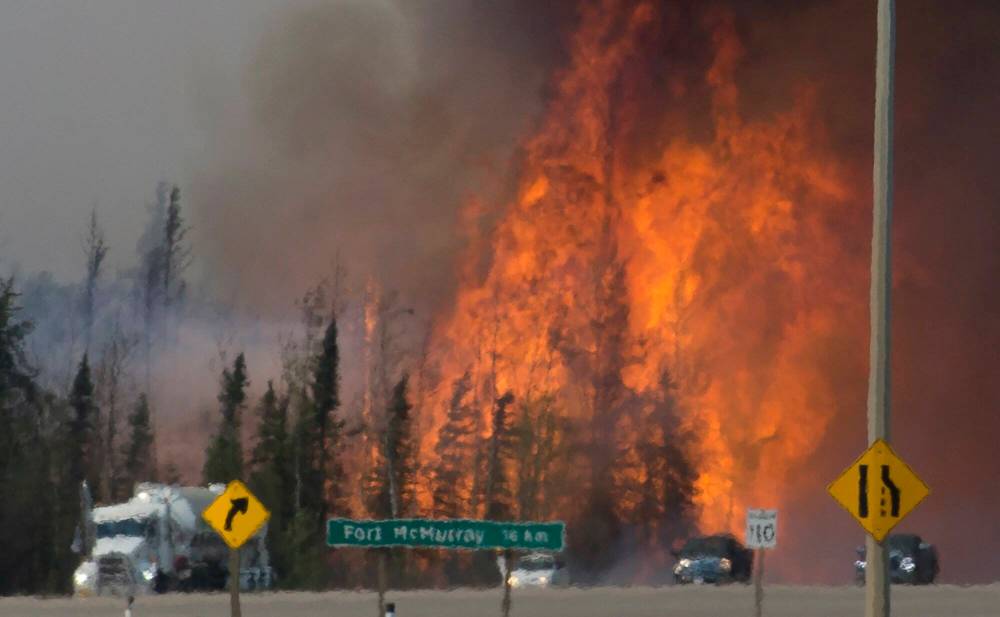
It was early in the season for wildfires, but crews from the Wildfire Division of Alberta’s Ministry of Forestry and Agriculture were on alert. As soon as smoke was spotted, wildland firefighters were dispatched, supported by a helicopter and water bombers. First responders were shocked by what they saw: by the time a helicopter with a water bucket got over it, the smoke was already black and seething, a sign of unusual intensity. Despite the firefighters’ timely intervention, the fire grew from four acres to 150 in two hours. Wildfires usually settle down overnight, as the air cools and the dew falls, but by noon the following day this one had expanded to nearly 2,000 acres. Its rapid growth coincided with a rash of broken temperature records across the North American subarctic that peaked at 33 C on May 3 in a place where temperatures are typically between 15 and 20 C. On that day, Tuesday, a smoke- and wind-suppressing inversion lifted, winds whipped up to 20 knots, and a monster leaped across the Athabasca River.
Within hours, Fort McMurray was overtaken by a regional apocalypse that drove serial firestorms through the city from end to end — for days. Entire neighbourhoods burned to their foundations beneath a towering pyrocumulus cloud typically found over erupting volcanoes. So huge and energetic was this fire-driven weather system that it generated hurricane-force winds and lightning that ignited still more fires many miles away. Nearly 100,000 people were forced to flee in what remains the largest, most rapid single-day evacuation in the history of modern fire. All afternoon, cellphones and dashcams captured citizens cursing, praying, and weeping as they tried to escape a suddenly annihilating world where fists of heat pounded on the windows, the sky rained fire, and the air came alive in roaring flame. Choices that day were stark and few: there was Now, and there was Never.
A week later, the fire’s toll conjured images of a nuclear blast: there was not just “damage,” there was total obliteration. Trying to articulate what she saw during a tour of the fire’s aftermath, one official said, “You go to a place where there was a house and what do you see on the ground? Nails. Piles and piles of nails.” More than 2,500 homes and other structures were destroyed, and thousands more were damaged; 2,300 square miles of forest were burned. By the time the first photos were released, the fire had already belched 100 million tons of carbon dioxide into the atmosphere, much of it from burning cars and houses. The Fort McMurray Fire, destined to become the most expensive natural disaster in Canadian history, continued to burn, not for days, but for months. It would not be declared fully extinguished until August of the following year.
Iam Hinkle photo John Vaillant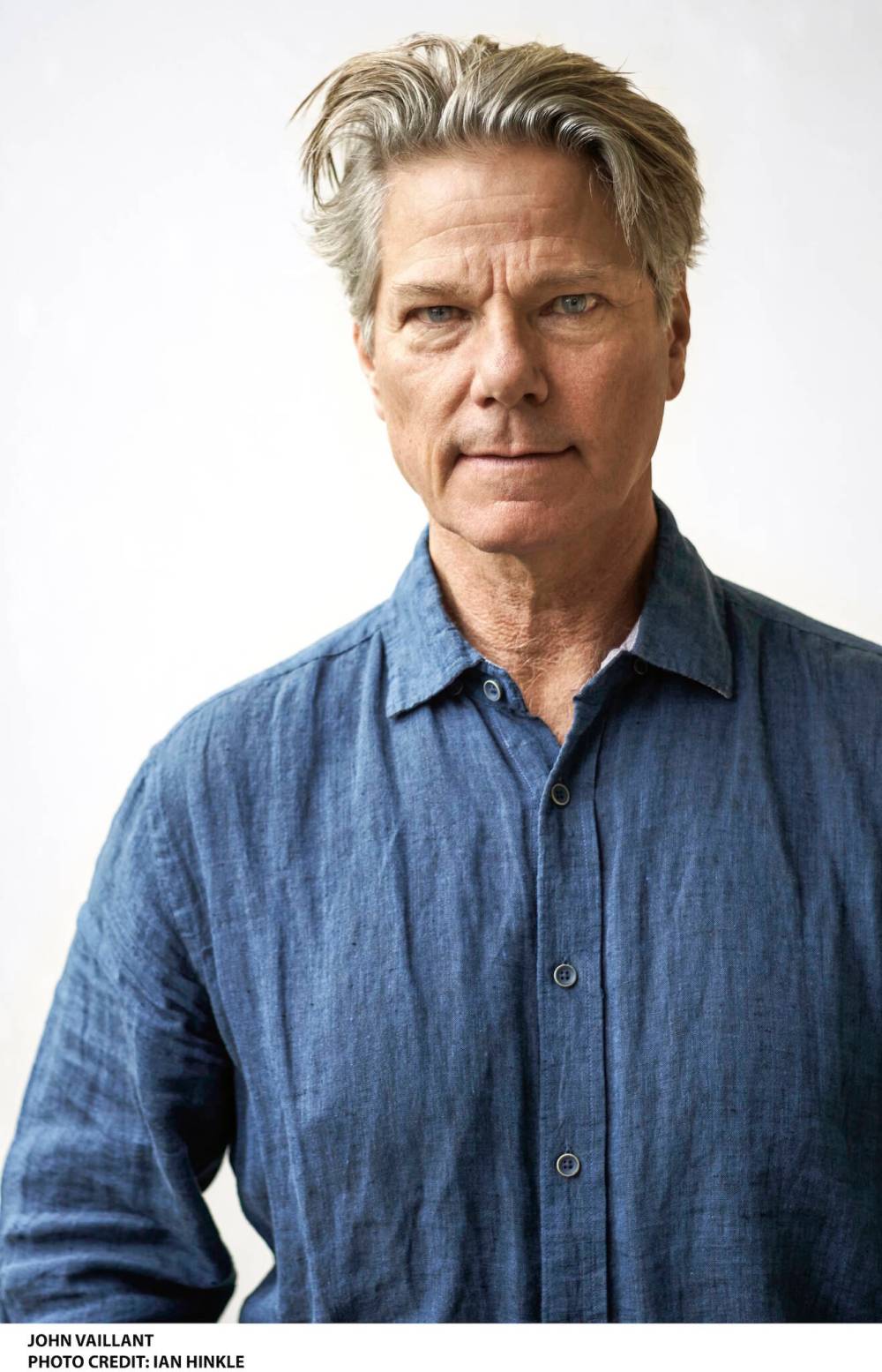
Wildfires live and die by the weather, but “the weather” doesn’t mean the same thing it did in 1990, or even a decade ago, and the reason the Fort McMurray Fire trended on newsfeeds around the world in May 2016 was not only because of its terrifying size and ferocity, but also because it was a direct hit — like Hurricane Katrina on New Orleans — on the epicentre of Canada’s multibillion-dollar petroleum industry. That industry and this fire represent supercharged expressions of two trends that have been marching in lockstep for the past century and a half. Together, they embody the spiralling synergy between the headlong rush to exploit hydrocarbons at all costs and the corresponding increase in heat-trapping greenhouse gases that is altering our atmosphere in real time. In the spring of 2016, halfway through the hottest year of the hottest decade in recorded history, a new kind of fire introduced itself to the world.
“No one’s ever seen anything like this,” Fort McMurray’s exhausted and grieving fire chief said on national TV. “The way this thing happened, the way it travelled, the way it behaved — this is rewriting the book.”
John Vaillant’s acclaimed, award-winning non-fiction books, The Golden Spruce and The Tiger, were national bestsellers. His debut novel, The Jaguar’s Children, was a finalist for the Rogers Writers’ Trust Fiction Prize and the International Dublin Literary Award. Vaillant has received the Governor General’s Literary Award, British Columbia’s National Award for Canadian Non-Fiction, the Windham-Campbell Literature Prize and the Pearson Writers’ Trust Prize for Non-fiction. He has written for, among others, The New Yorker, The Atlantic, National Geographic and The Walrus. He lives in Vancouver.