Up close and personal
Chronicle of JFK, LBJ years highlights White House’s accomplishments and failures of the 1960s
Advertisement
Read this article for free:
or
Already have an account? Log in here »
To continue reading, please subscribe:

Digital Subscription
One year of digital access for only $205*
- Enjoy unlimited reading on winnipegfreepress.com
- Read the E-Edition, our digital replica newspaper
- Access News Break, our award-winning app
- Play interactive puzzles
*First annual payment billed as $205.00 + GST for one year. This annual subscription will automatically renew at $233.00 + GST every 52 weeks (10% off the regular annual price of $259.35). Offer available to new and qualified returning subscribers only. Cancel any time.
To continue reading, please subscribe:
Add Free Press access to your Brandon Sun subscription for only an additional
$1 for the first 4 weeks*
- Enjoy unlimited reading on winnipegfreepress.com
- Read the E-Edition, our digital replica newspaper
- Access News Break, our award-winning app
- Play interactive puzzles
*Your next Brandon Sun subscription payment will increase by $1.00 and you will be charged $17.95 plus GST for four weeks. After four weeks, your payment will increase to $24.95 plus GST every four weeks.
Read unlimited articles for free today:
or
Already have an account? Log in here »
Hey there, time traveller!
This article was published 15/06/2024 (845 days ago), so information in it may no longer be current.
Doris Kearns Goodwin, who has been described as “America’s historian-in-chief,” has written a combination memoir, heartfelt love letter and word-woven security blanket for anyone fearful of the unhinged chaos of contemporary American politics.
In An Unfinished Love Story Kearns Goodwin, author of bestselling books on presidents Lincoln, Roosevelt and Johnson, wants to remind us of a time when there was widespread belief that the inequities of capitalism could be softened by the pursuit of social justice and collective action to mitigate wealth inequality.
For Kearns Goodwin, that idealism was exemplified by political activist Richard (Dick) Goodwin, who she met in 1972 and married in 1975. Goodwin had won a scholarship to Harvard Law School and, in 1954, finished his first year at the top of the class. Just as he appeared set on a path to wealth and security, he suddenly suspended his studies to join the army. Wary of being locked into a predictable future, he wanted time to think in an environment as different from Harvard as he could find.
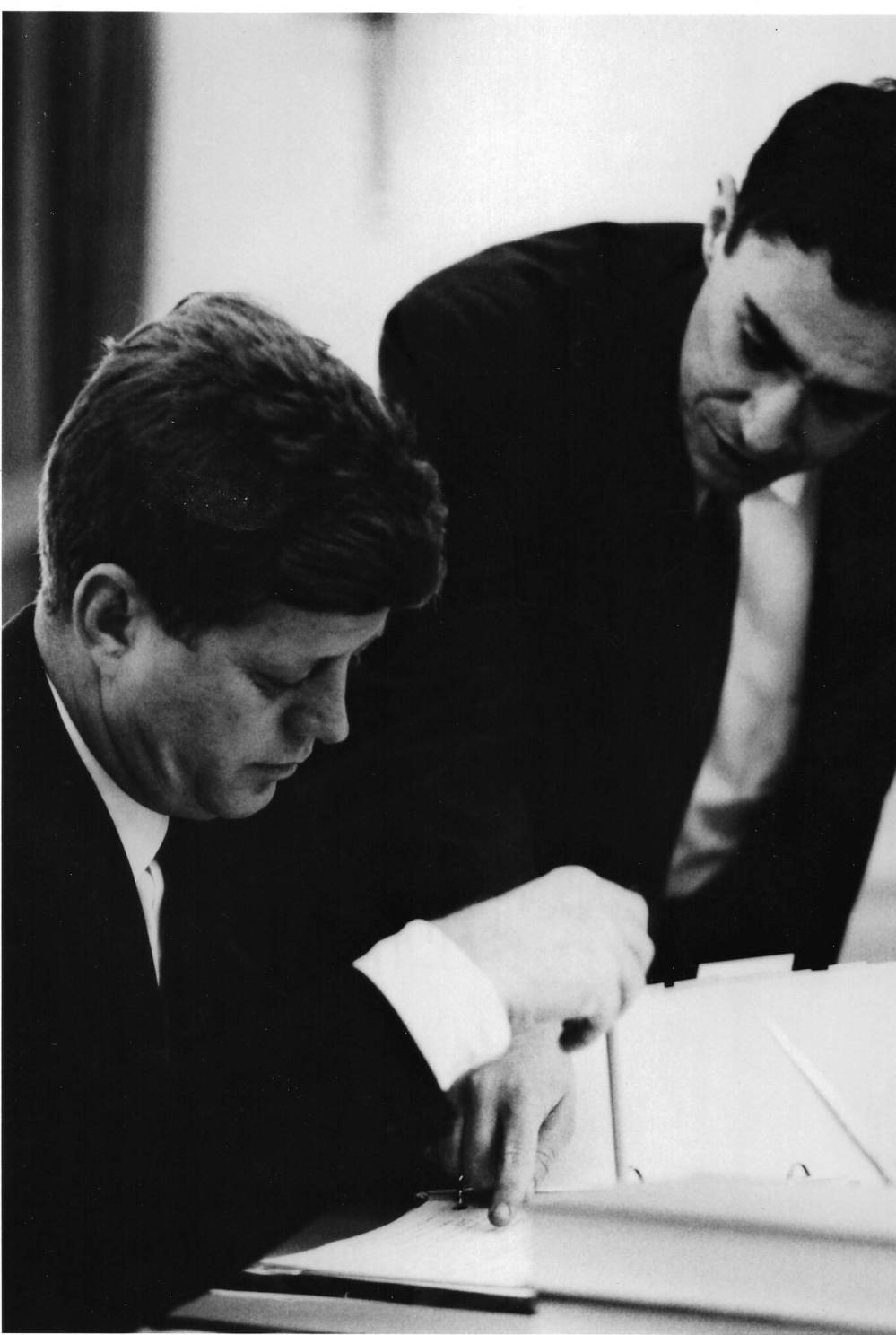
Jacques Lowe / courtesy of the Jacques Lowe Estate
In this undated photo, Dick Goodwin and then-U.S. president John F. Kennedy work on a speech together.
Posted to an American army base in France, he distinguished himself running its education department. In 1956, he returned to Harvard and completed his law degree. In spite of lucrative offers from major law firms, Goodwin decided to work in government service as counsel to a House investigative subcommittee. In 1959, as Senator John F. Kennedy was preparing to run for the presidency, Goodwin became assistant to Kennedy’s speechwriter, Ted Sorenson. Thus began a career that spanned the 1960s as speechwriter and advisor to Kennedy, Lyndon B. Johnson and Robert Kennedy.
Throughout his life, Goodwin had hoarded over 300 boxes of notes, draft speeches and various documents and mementos of his experiences with the Kennedys and Johnson. In his late 80s and in failing health, he and Doris opened the boxes with the intention of using them as the basis for a book. After Dick died in 2018, Doris wrote that book by herself.
During the 1960 presidential campaign, criss-crossing the country with his campaign team, Kennedy maintained a hectic pace. Working in shifts, Goodwin and Sorensen churned out speech after speech. In one six-day period, Kennedy delivered 43 speeches in eight states. He emphasized the nobility of public service and the need for progress in African-American civil rights.
To Goodwin’s disappointment Kennedy, elected only by the thinnest of margins and at heart a calculating Boston politician, procrastinated on divisive Civil Rights progress. Only in the last months of his life, disgusted at the brutal violence directed against African-American protesters in Alabama, did he finally put the full weight of his presidency behind the most sweeping Civil Rights bill in history. Five months later, he was assassinated in Dallas, Texas.

In spite of the mutual animosity between the Kennedy loyalists and the successor president, Lyndon B. Johnson, Goodwin was hired by LBJ as one of his speechwriters. To the surprise of many, Johnson — who hailed from Texas and had a political history of support from southern segregationists — drew on his profound insight into the political process to push not only Kennedy’s Civil Rights bill through Congress but also a powerful voting rights bill.
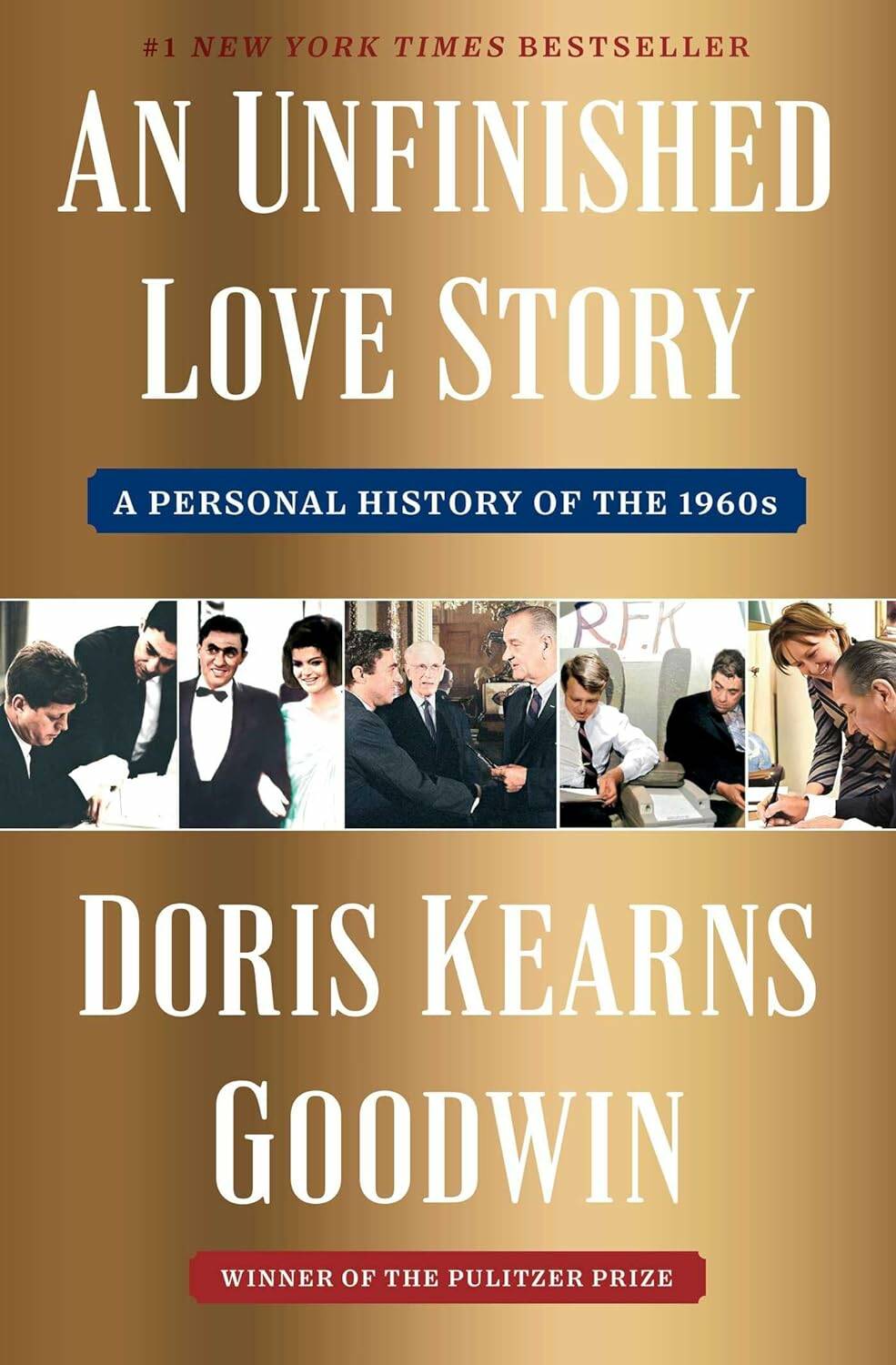
An Unfinished Love Story
Goodwin wrote the stirring speeches Johnson used to convince the Congress and the nation. Later, he coined the phrase “The Great Society” to describe Johnson’s comprehensive social program to ensure every child had access to education, provide free medical care for the elderly and underprivileged and work to end air and water pollution. However, the better America that Johnson dreamed of fell foul of his misjudgments in Vietnam.
Dick, a Kennedy loyalist and Doris, a firm Johnson partisan, eventually agreed that Kennedy’s ability to inspire a generation to dedicate itself to the common good and Johnson’ legislative skills were more powerfully influential together than they ever were separately.
For Goodwin, the decade that began with such high hopes ended with one last heartbreaking twist of fate as Robert Kennedy’s campaign to become the Democratic presidential candidate was cut short by his assassination.
Instead of burying his head in the sand, Winnipegger John K. Collins binges on old episodes of The West Wing.
Susan Walsh / The Associated Press files
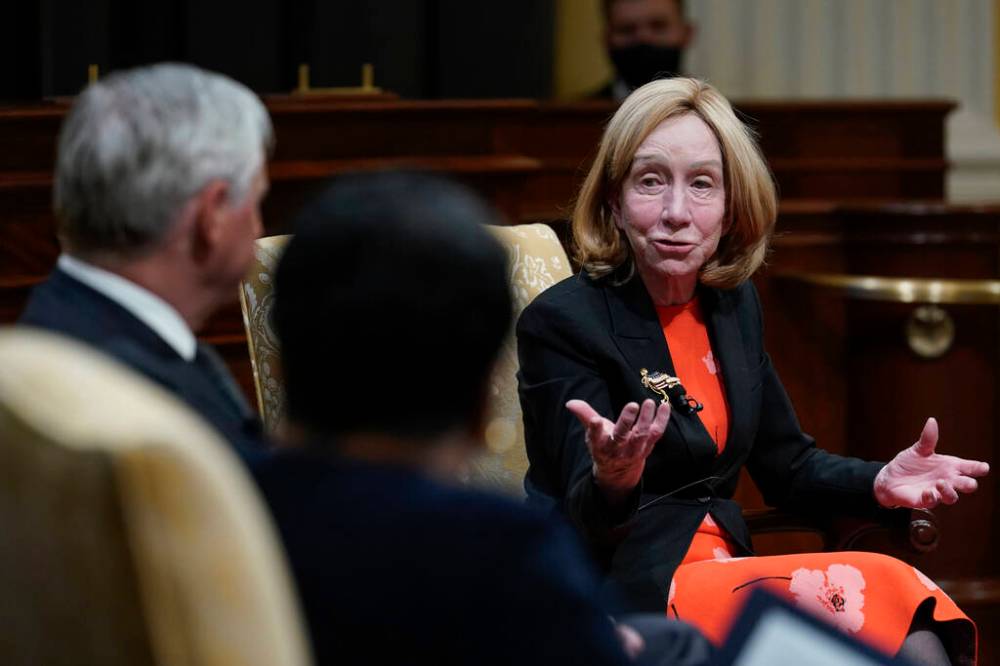
Doris Kearns Goodwin met Richard (Dick) Goodwin in 1972; then a political activist, there was an idealism in him that she admired. The two married in 1975.
Yoichi Okamoto / courtesy of LBJ Presidential Library
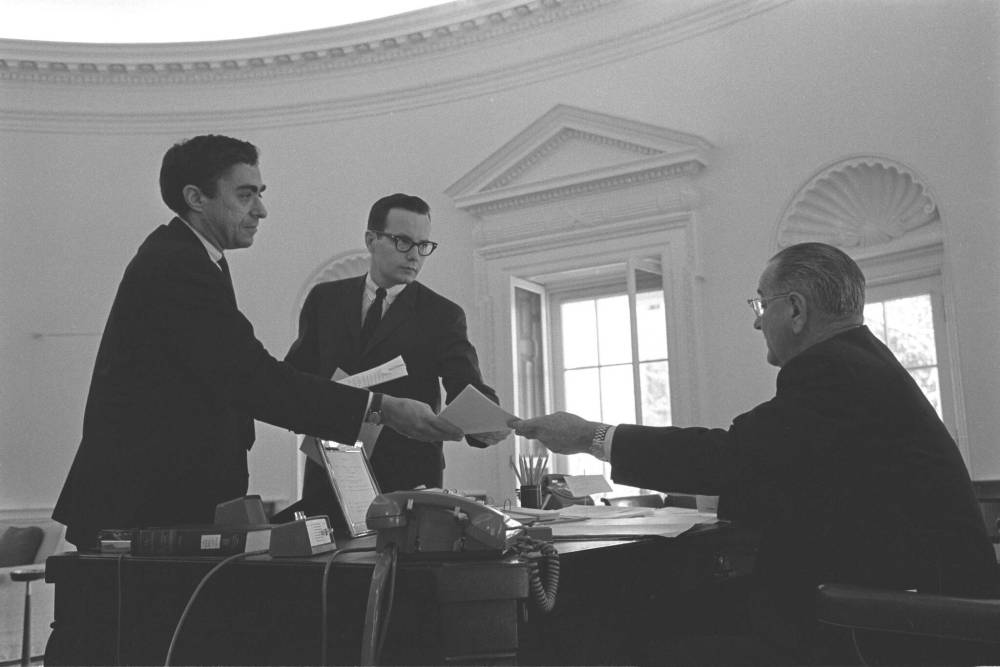
In this 1965 photo, Dick Goodwin (left) and White House aide Bill Moyers (centre) work on a speech with then-U.S. president Lyndon B. Johnson in the Oval Office.