Diving deep into big ideas
Pandemic sparks musings on humanity, anthropology and out perilous path forward
Advertisement
Read this article for free:
or
Already have an account? Log in here »
To continue reading, please subscribe:

Digital Subscription
One year of digital access for only $205*
- Enjoy unlimited reading on winnipegfreepress.com
- Read the E-Edition, our digital replica newspaper
- Access News Break, our award-winning app
- Play interactive puzzles
*First annual payment billed as $205.00 + GST for one year. This annual subscription will automatically renew at $233.00 + GST every 52 weeks (10% off the regular annual price of $259.35). Offer available to new and qualified returning subscribers only. Cancel any time.
To continue reading, please subscribe:
Add Free Press access to your Brandon Sun subscription for only an additional
$1 for the first 4 weeks*
- Enjoy unlimited reading on winnipegfreepress.com
- Read the E-Edition, our digital replica newspaper
- Access News Break, our award-winning app
- Play interactive puzzles
*Your next Brandon Sun subscription payment will increase by $1.00 and you will be charged $17.95 plus GST for four weeks. After four weeks, your payment will increase to $24.95 plus GST every four weeks.
Read unlimited articles for free today:
or
Already have an account? Log in here »
Hey there, time traveller!
This article was published 29/06/2024 (818 days ago), so information in it may no longer be current.
It seems now more than ever that we’re quick to judge — or perhaps we always have been quick to vilify the other, to name the transgressions of our neighbour or relative across the ocean or wall. As a species, we have created lethal categories based on race, class and creed — all in the name of making judgments that will bolster our lot in life.
But what if we suspended this judgment, particularly as it relates to culture and how it is created, nurtured and poisoned?
In Beneath the Surface of Things, Canadian anthropologist (and perhaps world’s most interesting person) Wade Davis attempts to do just that in his essays.
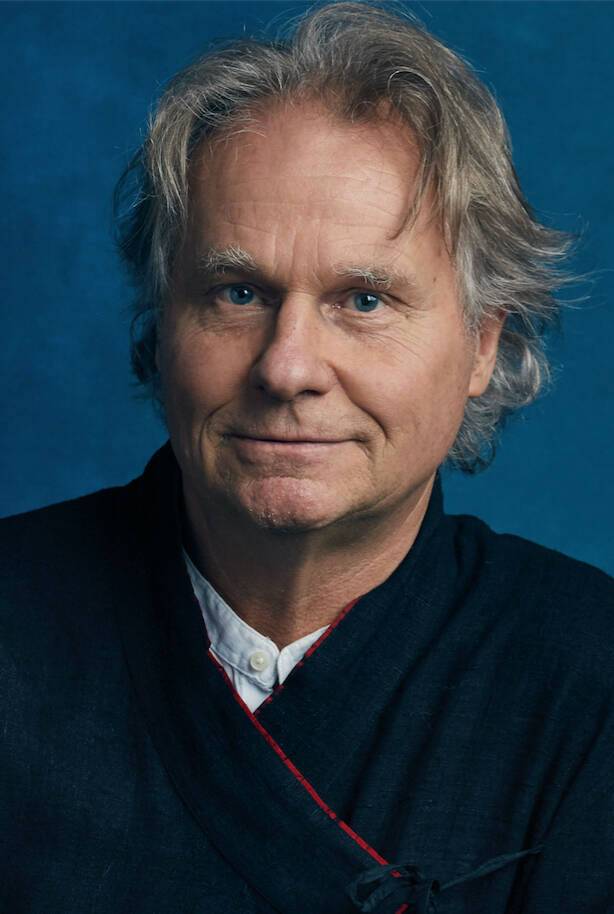
Adam Dillon photo
Wade Davis uses his writing to call into question the human tendency to leap to conclusions.
Author of The Serpent and the Rainbow, Into the Silence (one of this reviewer’s favorites) and The Wayfinders, Davis wrote many of these essays during the COVID-19 pandemic, his adventures having come to an abrupt halt.
From subjects ranging from the demise of the American empire (in an essay that went viral in Rolling Stone), to his obsession with Mount Everest, to the conflict in the Middle East and to the existential catastrophe of climate change, Davis used the shutdown as a means to draw attention to the often-taken-for-grantedness and causal nature of many human phenomena.
Oozing with restlessness while locked down at his B.C. home, Davis quips: “Books took the place of ethnographic expeditions. Writing was a way of making sense of what whirlwind of solitude that has become our lives.”
For Davis, writing to read (and reading to write) became not only therapy for the loneliness and stillness the pandemic could cause, but also a means to call into question the human tendency to leap to conclusions and skim the conceptual surface of things. Davis, using an anthropological lens, invites the reader “to see, and perhaps seek, the wisdom in the middle way.”
Part conceptual analysis on culture, part rebuke of the contemporary field of anthropology and wholeheartedly a cris de coeur for humanity, Davis tackles an diverse range of topics that, much like his expeditions, crisscross a myriad of issues — by way of example the founding of the United States, Israel, India, the word Indigenous and the notion of the sacred.
Beginning with a deep dive into the history of the United States, Davis thinks historically, employing cause and consequence, to make sense of the fact that “race is the story of America.” We simply cannot make sense of Donald Trump, the horrid divide between rich and poor, between Black and white and the vitriol that smears across media, both social and corporate, that acts as fuel for a failed state — much of which is also cultivated in this country.
But in Davis’ writing there is always hope. He sees the lens of anthropology as the means to better understand culture and seek connection with the other. As Davis writes in his ode to anthropology, when you begin to dig beneath the surface and suspend judgment, “you share a vision of compassion and inclusion that is perhaps the most sublime revelation of our species, the scientific realization that all of humanity is one interconnected and undivided whole.” Or, more simply and succinctly, “…one preserves jam, not culture.”

The taken-for-grantedness of our perceived difference and supremacy of our cultures is conceptually and scientifically challenged by Davis. In The Unraveling of America, Davis calls for an intervention, but admits that “For better or for worse, America has had its time.” The fall of the American empire should not be a shock, but a reckoning for other countries, even Canada, to come to grips when we no longer have the imagination and empathy to care for each other. Davis opines: “How can the rest of the world expect America to lead on global threats — climate change, the extinction crisis, pandemics — when the country no longer has a sense of benign purpose of collective well-being?”
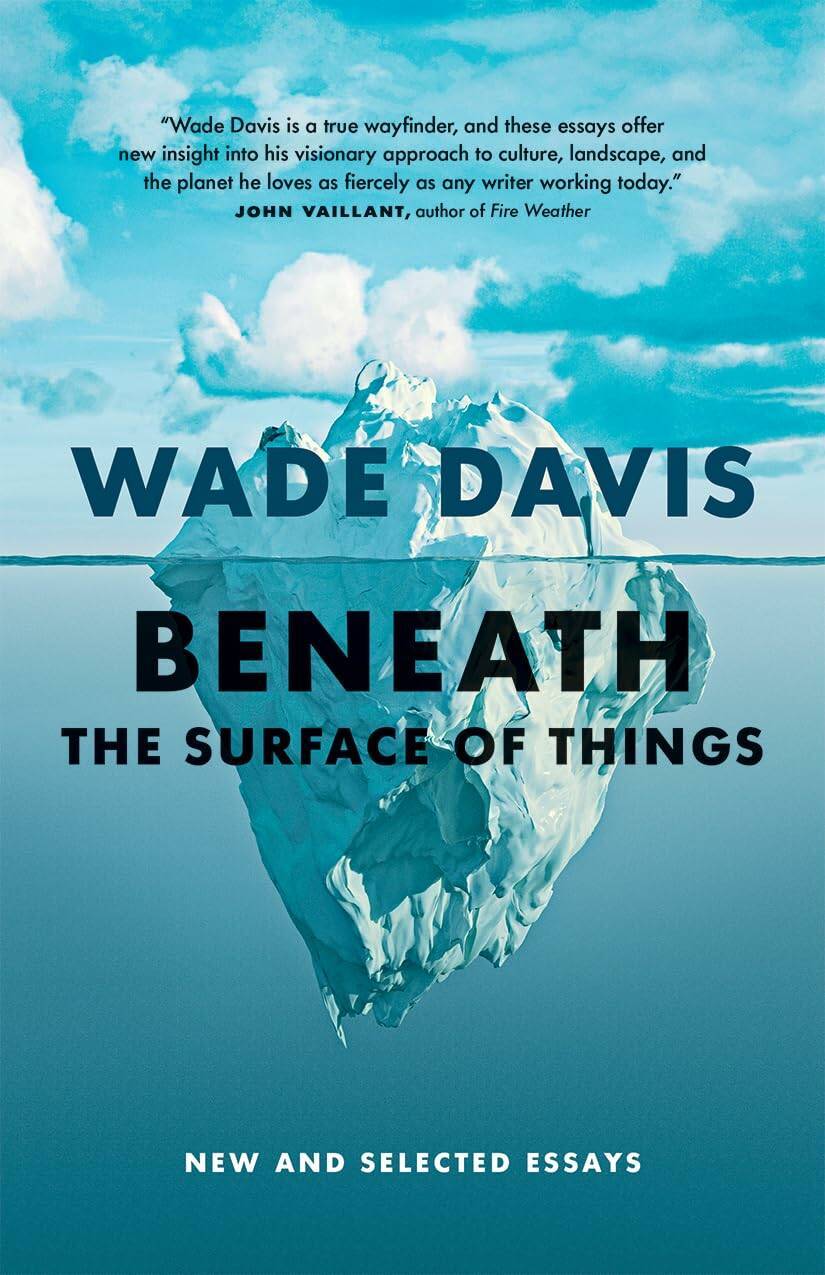
Beneath the Surface of Things
This malaise and lack of compassion culminates in the greatest challenge our species has faced — the warming of the climate through the burning of ancient solar energy. Here, Davis calls for deep thinking and not reactionary ideological stances. Electric cars are not the answer — they use more fossil fuels than conventional vehicles simply in their production. And if the energy to power vehicles is coming from coal or natural gas, we simply add to the catastrophe.
By looking beneath the surface, Davis argues that the solution is not in production, but in a shifting of our cultural norms. “A carbon-free energy grid won’t realize its promise of clean power is used to maintain or extend patterns of consumption that lay waste to the natural world,” he writes. In other words, we need to curb both our cultural addiction to stuff and our contempt of nature.
Beneath the Surface of Things is a call to think more carefully and clearly — to pause, as Davis did during the pandemic, and think, read and write more deeply. We must suspend judgment and call into question those things we hold so dear. This might very well be our only hope if we wish to create a world for our children that is just and founded on joy and love.
Matt Henderson is superintendent of Winnipeg School Division.