Prime time
Highs and lows of Trudeau’s tenure as PM chronicled in new account
Advertisement
Read this article for free:
or
Already have an account? Log in here »
To continue reading, please subscribe:

Digital Subscription
One year of digital access for only $205*
- Enjoy unlimited reading on winnipegfreepress.com
- Read the E-Edition, our digital replica newspaper
- Access News Break, our award-winning app
- Play interactive puzzles
*First annual payment billed as $205.00 + GST for one year. This annual subscription will automatically renew at $233.00 + GST every 52 weeks (10% off the regular annual price of $259.35). Offer available to new and qualified returning subscribers only. Cancel any time.
To continue reading, please subscribe:
Add Free Press access to your Brandon Sun subscription for only an additional
$1 for the first 4 weeks*
- Enjoy unlimited reading on winnipegfreepress.com
- Read the E-Edition, our digital replica newspaper
- Access News Break, our award-winning app
- Play interactive puzzles
*Your next Brandon Sun subscription payment will increase by $1.00 and you will be charged $17.95 plus GST for four weeks. After four weeks, your payment will increase to $24.95 plus GST every four weeks.
Read unlimited articles for free today:
or
Already have an account? Log in here »
Hey there, time traveller!
This article was published 29/06/2024 (823 days ago), so information in it may no longer be current.
During the 2013 Liberal leadership race, the party looked to Pierre Trudeau’s son Justin, the “prince,” for salvation. After the disastrous federal elections of 2008, and 2011 under the uncharismatic leadership of Stéphane Dion and Michael Ignatieff, might the party rekindle the Trudeaumania of the late 1960s? Such was the hope of Liberals.
The 2015 federal election was the longest in living memory, commencing in early August and ending on Oct. 15. It began with the Liberals trailing in third place behind incumbent prime minister Stephen Harper’s Conservatives and Thomas Mulcair’s NDP. The NDP quickly moved up in the polls, taking the lead for much of the summer only to fade into third place in the fall.
On the night of the election, with a Liberal majority victory in hand, Justin Trudeau proclaimed a new era that would be marked by “sunny ways” — a slogan borrowed from longtime Liberal leader and prime minister Wilfrid Laurier, who first used it in 1895.
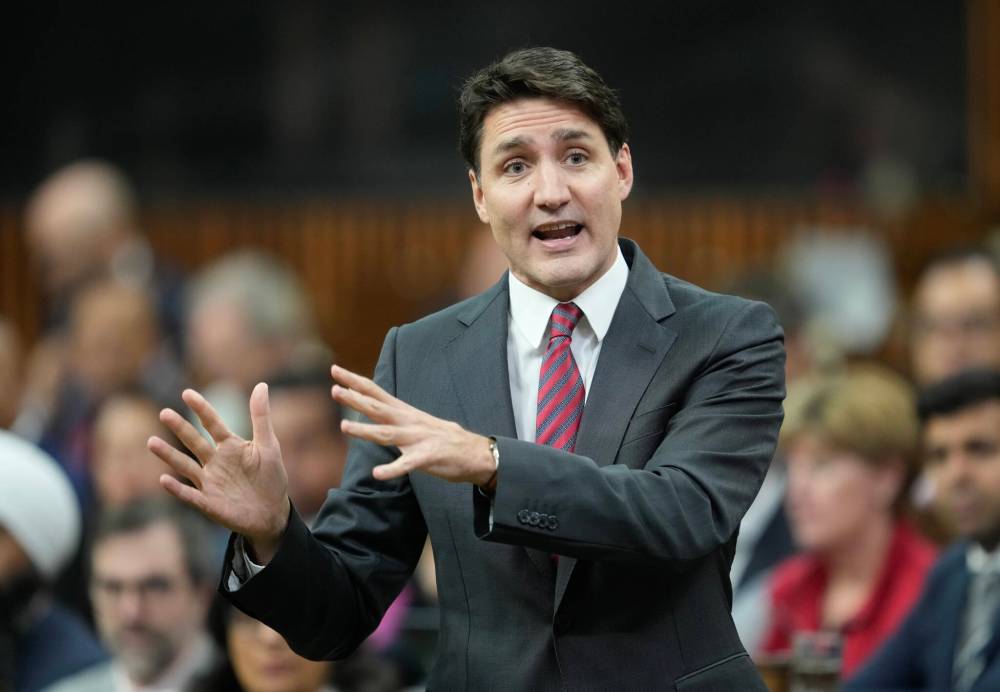
Adrian Wyld / The Canadian Press files
In contrast to former prime minister Stephen Harper’s dour, introverted nature, Justin Trudeau began his tenure by playing to the media, wading into crowds and speaking about reconciliation with Indigenous Peoples.
Stephen Maher, a seasoned writer for such outlets as iPolitics, Postmedia and Maclean’s, has captured the rise and decline of Justin Trudeau in The Prince: The Turbulent Reign of Justin Trudeau.
There was a sense of euphoria early on in Trudeau’s reign. In contrast to the introverted and dour Stephen Harper, the new prime minister played to the media, waded into crowds (including Pride parades) and spoke about reconciliation with Indigenous Peoples. Proclaiming that his cabinets will always be balanced with women and men, when asked why he cleverly responded with “because this is 2015.”
Trudeau also harkened back to the internationalism of Lester Pearson and Pierre Trudeau by promising to rejuvenate Canada’s reputation as peacekeepers. As the new PM on a visit to the foreign affairs building in Ottawa, he was enthusiastically greeted with cheers and applause by civil servants who, by their position, are supposed to be politically neutral.
Maher has produced a well-written and insightful work, which shares a similar focus with such books as John Ivison’s Trudeau: The Education of a Prime Minister, published in 2019, and Paul Wells’ very recent and well-received Justin Trudeau on the Ropes: Governing in Troubled Times. Rather than providing detailed biographies of the prime minister, all three zero in on Trudeau’s governing years and their complications.
Throughout The Prince Maher weighs the good and the bad, with the scales usually leaning to the negative. This includes the PM’s penchant for accepting invitations for luxury vacations and his entanglements with the multifaceted WE Charity scandal. The scandal involved speaking fees for family members, the close relationship between the agency and then-finance minister Bill Morneau (which triggered his resignation) and an untendered contract of $912 million for the WE Charity to operate the Canada Student Service Grant program. In the end the program failed to launch, with the WE Charity ceasing operations after returning the initial funds it received.
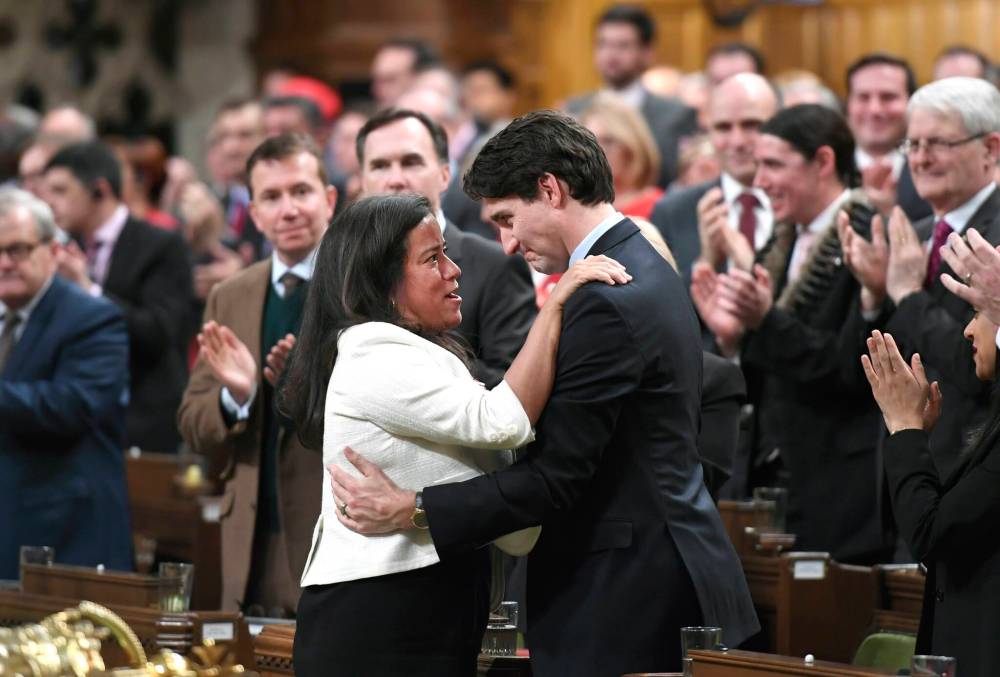
Justin Tang / The Canadian Press files
In this 2018 photo, Trudeau shares a moment with then-justice minister and attorney general Jody Wilson-Raybould, who quit the party the following year after a dispute with the prime minister over the SNC-Lavalin affair.
Other embarrassments abound, including a visit to India in which the family dressed in Bollywood-style traditional costumes and when, during the 2019 federal election, photos were released to the media showing a younger Trudeau in blackface.
Among the positives is Trudeau’s support for reconciliation, with many First Nations peoples voting Liberal in 2015. This was followed by the appointment of Jody Wilson-Raybould, Canada’s first Indigenous justice minister and attorney general. Yet things soured when the PM’s staff began pressuring Wilson-Raybould to intervene in the criminal prosecution of SNC-Lavalin, a prominent Quebec engineering firm.
A very public dispute between Wilson-Raybould and Trudeau ensued, with principal secretary Gerald Butts resigning and Wilson-Raybould quitting the party. Trudeau’s reputation with First Nations peoples was left badly damaged.
During the COVID-19 lockdown, Trudeau showed strong leadership, providing daily statements to the media, even while he and his family were infected, and ensuring those thrown out of work would have an income. Yet even here Maher finds fault: the lockdown occurred too late, he notes, money was spent with few constraints and vaccinations were slow to reach the public.

On the other hand, in the face of an aggressively hostile U.S. president Donald Trump, who threatened to tear up our existing trade arrangements, Maher writes of the government’s complicated yet successful renegotiation of the North American Free Trade Agreement (NAFTA).
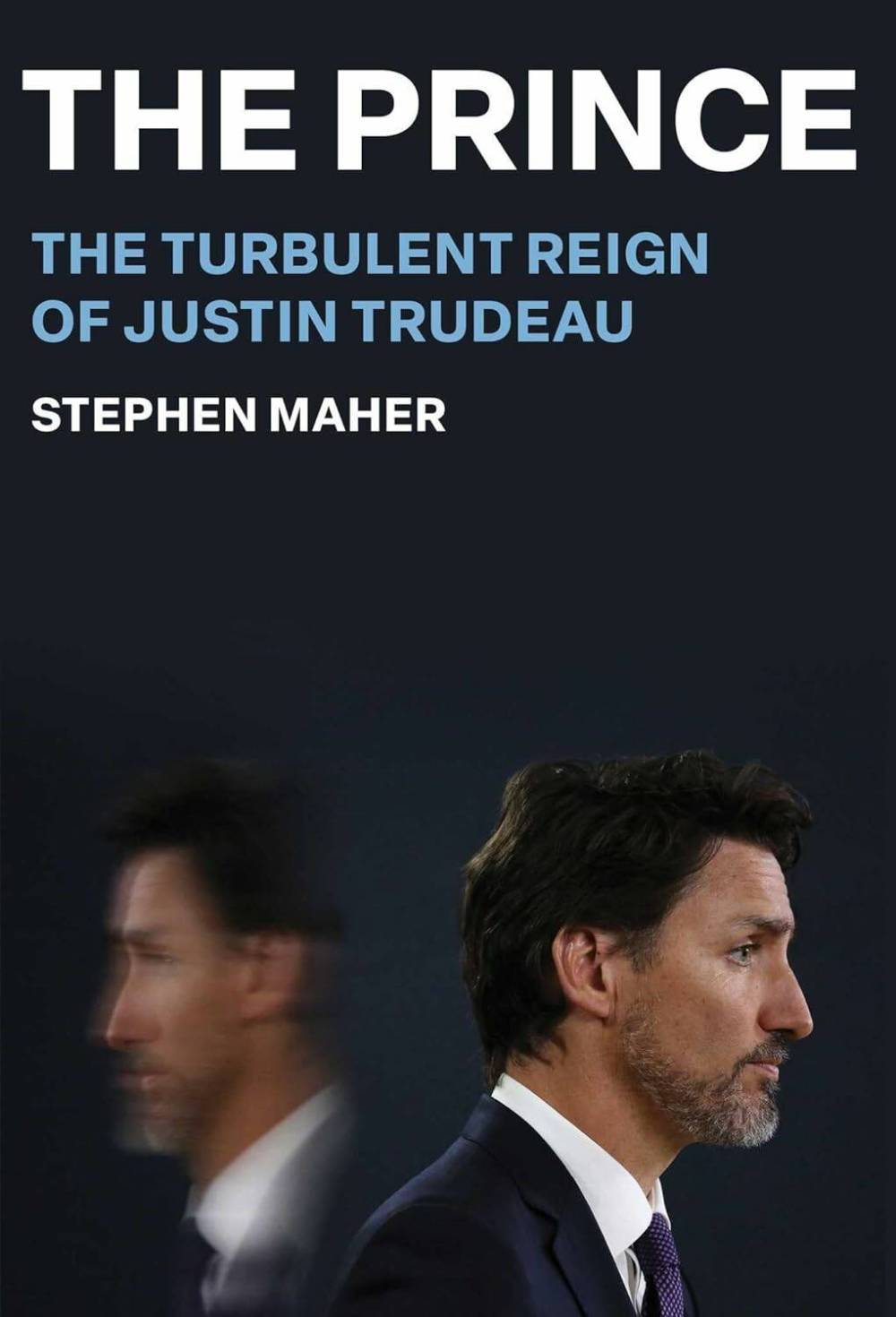
The Prince
For those looking to see where Manitoba fits into what Mayer describes as Trudeau’s “turbulent reign,” there is very little. The exceptions are that he mentions how Trudeau unsuccessfully attempted to recruit NDP premier Wab Kinew for his 2015 election team about one year before Kinew became the provincial NDP leader. Maher also mistakenly refers to the now-deceased Liberal MP and cabinet minister Jim Carr as a former provincial cabinet minister. Carr’s highest provincial office was serving as an MLA in Sharon Carstairs’ Liberal opposition.
One might think that Brian Pallister’s consistently bad relations with Trudeau on such issues as the federal carbon tax might have warranted a small amount of attention, and how these improved when Pallister was replaced by Heather Stefanson, yet there is nothing. In contrast, Trudeau’s battles with Saskatchewan premiers Brad Wall and Scott Moe on this issue are both mentioned multiple times.
Despite such minor concerns, The Prince is a readable and sometimes entertaining account of the ups and downs of Justin Trudeau’s longtime reign. With recent national polls showing the Liberals behind the opposition Conservatives by double digits, and the recent byelection loss in the Toronto-St. Paul’s riding, a Liberal stronghold, this reign might soon end.
Christopher Adams is an adjunct professor in political studies at the University of Manitoba, and rector of St. Paul’s College.

Tim Krochak photo
Stephen Maher