The myth and the man

Riel proven to be a problematic figurehead in thorough examination of his life and death

Advertisement

Advertise with us

Louis Riel’s metamorphosis in Canadian history and culture from villainous traitor to paragon hero is extraordinary.

Read this article for free:


or

Already have an account? Log in here »

To continue reading, please subscribe:

Subscribe and receive a limited-edition Free Press branded hat or tote.

Digital Subscription

One year of digital access for only $205*

  • Enjoy unlimited reading on winnipegfreepress.com
  • Read the E-Edition, our digital replica newspaper
  • Access News Break, our award-winning app
  • Play interactive puzzles

*First annual payment billed as $205.00 + GST for one year. This annual subscription will automatically renew at $233.00 + GST every 52 weeks (10% off the regular annual price of $259.35). Offer available to new and qualified returning subscribers only. Cancel any time.

To continue reading, please subscribe:

Add Free Press access to your Brandon Sun subscription for only an additional

$1 for the first 4 weeks*

  • Enjoy unlimited reading on winnipegfreepress.com
  • Read the E-Edition, our digital replica newspaper
  • Access News Break, our award-winning app
  • Play interactive puzzles
Start now

*Your next Brandon Sun subscription payment will increase by $1.00 and you will be charged $17.95 plus GST for four weeks. After four weeks, your payment will increase to $24.95 plus GST every four weeks.

Hey there, time traveller!
This article was published 14/09/2024 (728 days ago), so information in it may no longer be current.

Louis Riel’s metamorphosis in Canadian history and culture from villainous traitor to paragon hero is extraordinary.

But the current laudatory depiction of Riel is as false and misrepresentative as the prior negative one, according to University of Alberta professor emeritus of comparative literature and English Albert Braz.

Both the book’s title, positing Riel’s reputation as problematic, and its subtitle’s reference to a “resistant hero” allude to the fact that, as Braz puts it, the historical Riel “can be as much of a problem for Métis as for Canadians in general.”
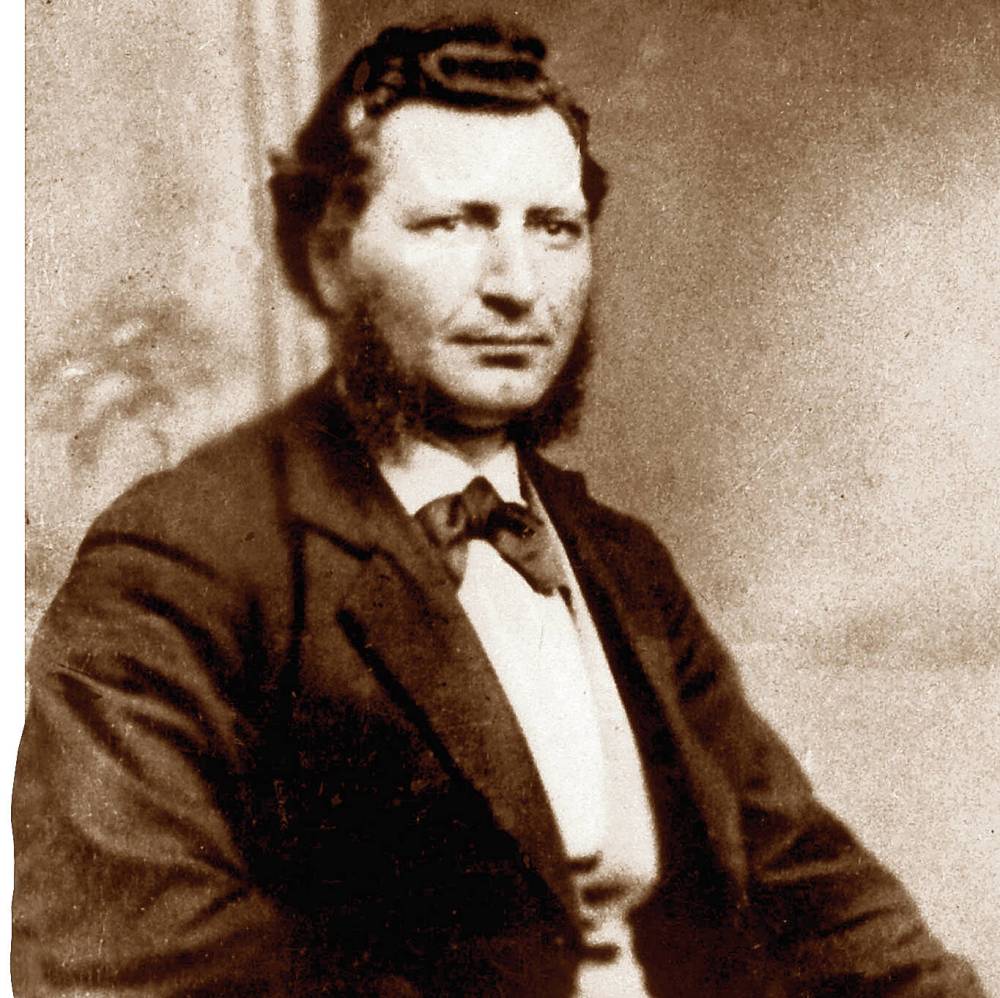
Manitoba archives
                                Louis Riel’s righteous conduct in defence of Métis rights in Manitoba is unarguable.

Manitoba archives

Louis Riel’s righteous conduct in defence of Métis rights in Manitoba is unarguable.

Louis Riel’s righteous conduct in defence of Métis rights and landholdings in Manitoba is unarguable. It was precipitated by the Canadian government imperiously sending surveyors to Red River to re-stake Métis family lots.

But there was a dark side to the man this province celebrates via Louis Riel Day on the third Monday of every February, and who just this past December was proclaimed Manitoba’s honorary “first premier.”

Braz offers a cerebral yet raw and honest survey of Riel in both popular and academic historical treatments and the arts (fiction, plays, opera, poetry, sculpture). He weaves past and present via textual and plastic-arts analysis. He also presents an accurate historical record of Riel’s conduct and, critically, draws heavily on Riel’s own written record.

The major stain on Riel’s legacy is the execution of Thomas Scott at what was then the Red River settlement.

Scott was a member of the Canadian Party, a settlers’ group that challenged the authority of the 1869-1870 Riel-led Métis provisional government. Captured and imprisoned by the Métis in 1870, he was executed by firing squad at Upper Fort Garry on March 4, 1870.

Never formally charged with any crime, let alone a capital crime, Scott was executed for allegedly being abusive to, and getting into fights with, his guards.

Worse, “besides not being provided with a lawyer, Scott is not permitted to speak at his own trial… since his presence is ‘not necessary in a hunter’s court’,” writes Braz. “This is a peculiar rationale, given that the proceedings do not take place in the middle of the plains but at Fort Garry and under the jurisdiction, not of a hunting party, but of the supposedly duly constituted provisional government.”

Even Riel latterly came to see Scott’s summary execution as a fatal blunder to his cause, but temporized, calling it merely a “political mistake.”
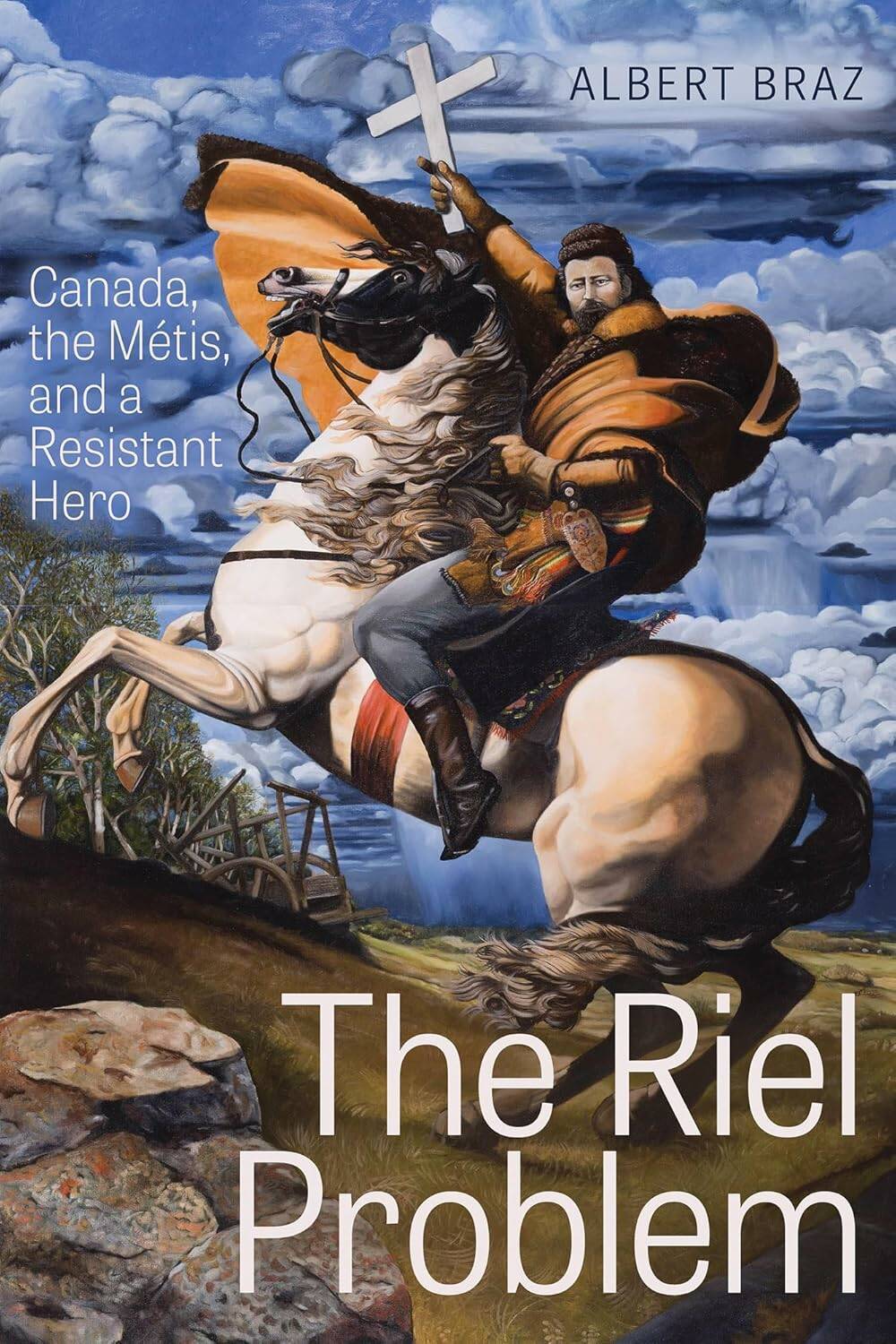
The Riel Problem

The Riel Problem

Contrast this with Riel’s 1885 trial in Regina on charges of high treason for his role in the North-West Rebellion, also known as the North-West Resistance.

Riel was defended by a crack team of four lawyers, led by prominent Quebec lawyer and future chief justice of the Supreme Court of Canada, Charles Fitzpatrick, and equally prominent Francois-Xavier Lemieux, later chief justice of the Superior Court of Quebec.

Riel’s defence team presented a defence of not guilty by reason of insanity — a position widely credited today by most historical and legal scholars as supported by available evidence.

By 1885 Riel had twice been committed, by his friends, to Quebec institutions for the insane, messianically proclaimed himself “Prophet of the New World,” denounced the Catholic church of his upbringing, started his own rival “Catholic” church and advocated for a Canadian pope. One of his oddest god-anointed aims, writes Braz, “was to relocate the Holy See from the Vatican to his hometown of St. Vital.”

Riel objected to his defence counsel’s insanity-defence strategy at trial, proclaiming his sanity at every turn. It proved his undoing, and led to his conviction and execution.

In addition to examining works about Riel, Braz meticulously mined Riel’s published five-volume Collected Writings (letters, diaries, speeches, declarations and poetry).

One of the hits to Riel’s exalted reputation his own writing discloses, Braz underlines, is his aversion to identifying the Métis as an “aboriginal” people — a position contra to Canada’s 1982 Constitution Act, which defines “Indian, Inuit and Métis” as aboriginal peoples, and a position also contra to claims for his being a pan-Indigenous leader.
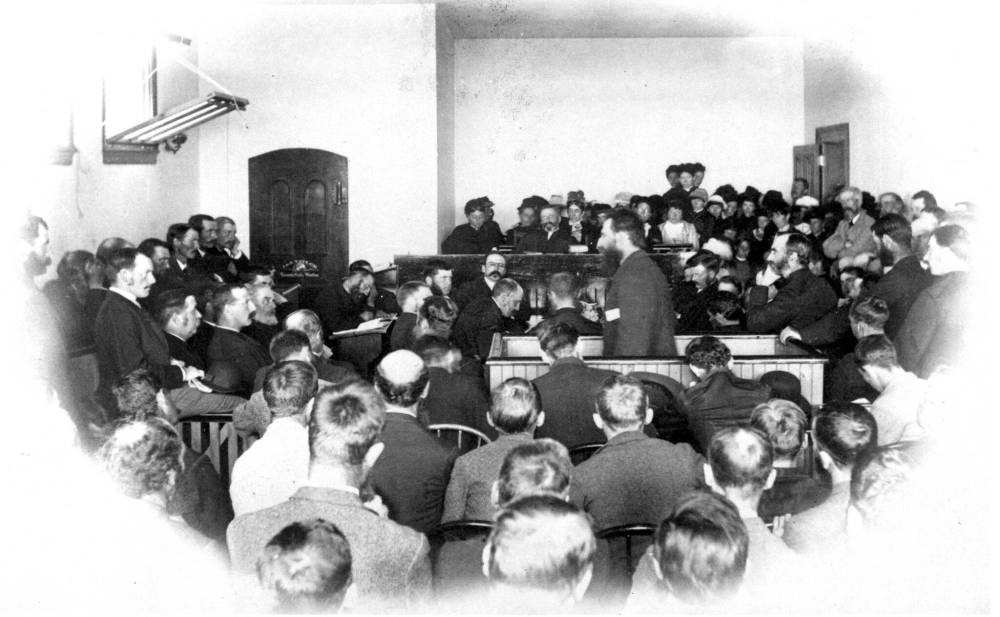
In this 1885 photo, Louis Riel is shown on trial in Regina, Sask.

In this 1885 photo, Louis Riel is shown on trial in Regina, Sask.

The book is published by an academic publishing house, University of Alberta Press. Perhaps for that reason, Braz unfortunately felt compelled to adhere to an academic protocol that requires every sourced reference to be credited by lengthy parenthetical insertion right in the body of his text, instead of via footnotes.

This makes for unnecessarily long and cumbersome sentences and paragraphs, impairing the natural flow of his thesis. Which is doubly unfortunate because, absent this, Braz is a lucid and crisp writer.

Stylistic quibbles aside, this is a fresh and erudite consideration of Riel that separates the man and the mythos.

Douglas J. Johnston is a Winnipeg lawyer and writer.

Report Error Submit a Tip

More Stories

City to hire consultant to analyze 911 staffing levels amid skyrocketing calls

Joyanne Pursaga 4 minute read Preview

City to hire consultant to analyze 911 staffing levels amid skyrocketing calls

Joyanne Pursaga 4 minute read 5:36 PM CDT

The Winnipeg Fire Paramedic Service is ordering a detailed analysis of its 911 communications staffing level to cope with a surge in emergency calls and the demands of new technology.

WFPS emergency communications staff handled calls for 136,198 separate incidents in 2025. That number has risen every year since at least 2020, when 104,250 incidents were reported, the service’s annual report notes.

The total number of calls to the centre reached almost 275,000 last year. That broader figure also includes multiple calls per event and administrative calls.

“Things have changed in the last decade and call volumes have increased dramatically. That puts pressure on our systems,” said Coun. Vivian Santos (Point Douglas).

Read
5:36 PM CDT

AI poses threat to Indigenous culture, knowledge, creativity

Niigaan Sinclair 5 minute read 5:23 PM CDT

It’s the beginning of the school year and the now-annual conversation every teacher and professor has to have with students about the ethics of using artificial intelligence.

It used to be that computers were a tool primarily used to express an individual’s creativity, critical thought and support their research.

Nowadays, and especially since the invention of the internet, computers come with AI programs that instantly summarize vast amounts of data, create content and images, and even write 10-page essays based on information found on sites from across the world.

This is why AI, whether people like it or not, is basically theft – or the action of using someone else’s ideas and creations without the consent of the original creator.

Highway-safety upgrades in progress after tragic Interlake crash

Chris Kitching 5 minute read Preview

Highway-safety upgrades in progress after tragic Interlake crash

Chris Kitching 5 minute read Updated: 6:25 PM CDT

Provincial workers have started to update or install safety measures at a rural Interlake intersection where four teenage friends died in a crash on Labour Day weekend.

Pavement markings were repainted at Highway 8 and Provincial Road 229, just west of Winnipeg Beach, ahead of work to refresh worn-down rumble strips, starting Monday, and install flashing lights atop two stop signs, following an assessment earlier this week.

“They will also need to incorporate any information from the RCMP report that might be helpful if we were to consider any additional safety measures at this intersection,” Transportation and Infrastructure Minister Lisa Naylor said of department staff.

“The most important thing is safety, and any kinds of changes we make at any intersection actually have to make it safer.”

Read
Updated: 6:25 PM CDT

Riel proven to be a problematic figurehead in thorough examination of his life and death

Reviewed by Douglas J. Johnston 5 minute read Preview

Riel proven to be a problematic figurehead in thorough examination of his life and death

Reviewed by Douglas J. Johnston 5 minute read Saturday, Sep. 14, 2024

Louis Riel’s metamorphosis in Canadian history and culture from villainous traitor to paragon hero is extraordinary.

But the current laudatory depiction of Riel is as false and misrepresentative as the prior negative one, according to University of Alberta professor emeritus of comparative literature and English Albert Braz.

Both the book’s title, positing Riel’s reputation as problematic, and its subtitle’s reference to a “resistant hero” allude to the fact that, as Braz puts it, the historical Riel “can be as much of a problem for Métis as for Canadians in general.”

Louis Riel’s righteous conduct in defence of Métis rights and landholdings in Manitoba is unarguable. It was precipitated by the Canadian government imperiously sending surveyors to Red River to re-stake Métis family lots.

Read
Saturday, Sep. 14, 2024

Exhibition examines the bonds we make with humanoid objects

Jen Zoratti 8 minute read Preview

Exhibition examines the bonds we make with humanoid objects

Jen Zoratti 8 minute read 6:27 PM CDT

For the past few years, Winnipeg visual artist Emilie St-Hilaire has been fascinated by the way humans relate to artificial bodies — dolls, robots, mannequins — through play, care and connection, and how those synthetic relationships can produce very real emotions in humans.

Objects of Fidelity: Barbies, bots, bébés, her solo exhibition on view now at La Maison des artistes visuels francophones, explores this space between object and companion. It’s what she calls the “visual culmination” of work that began with her 2024 PhD dissertation at Concordia University in Montreal, which examined Reborn Dolls — hyper-realistic art dolls that resemble newborns — from a feminist perspective.

But when a robot included in the exhibition started malfunctioning and giving signs that it was at the end of its life, St-Hilaire was given a new question to puzzle: what does it mean for a robot, or any other artificial body, to “die”?

To understand that, one must first understand how these human attachments to humanlike objects form in the first place.

Read
6:27 PM CDT

Retired sportscaster Scott Oake determined as fundraising for women's addictions treatment facility enters home stretch

Melissa Martin 5 minute read Preview

Retired sportscaster Scott Oake determined as fundraising for women's addictions treatment facility enters home stretch

Melissa Martin 5 minute read Yesterday at 7:08 PM CDT

For now, the patch of land just east of the Victoria Hospital doesn’t look like much: just a field of rocks, mounded dirt, and concrete piles driven into the earth. Yet when Scott Oake looks over the site, he can already imagine how it will look in just over a year’s time, when the new Anne Oake Family Recovery Centre is expected to open.

It’s easier to picture this time around. In 2020, when the recently-retired CBC sportscaster and his late wife, Anne, were building their first labour of intermingled grief and love, the Bruce Oake Recovery Centre for men, it was hard for him to wrap his mind around how a raw construction site could transform into a welcoming addictions treatment facility.

When that centre opened in 2021, Oake found it looked “almost identical” to the architect’s renderings. So it’s easy to hope the Anne Oake Centre will be the same. It will be the first facility of its kind, its founders believe, not only in Canada but in North America: a place where 50 to 70 women can pursue sobriety while staying with their children.

“At Bruce Oake there’s a culture of love, and most of all a culture of hope,” Oake said, speaking at the site Thursday after a media conference to announce the final push of the centre’s fundraising campaign. “I can feel it every time I walk into that building. And I know it will be the same here.”

Read
Yesterday at 7:08 PM CDT