Democracy on the ballot

Ukraine elections offer insight on the inherently fragile nature of the political process

Advertisement

Advertise with us

Although praised as the most-inclusive form of governance, democracy has always been fraught with opportunities for subversion or selfish gain, and historically misused by preventing some citizens from participating.

Read this article for free:


or

Already have an account? Log in here »

To continue reading, please subscribe:

Subscribe and receive a limited-edition Free Press branded hat or tote.

Digital Subscription

One year of digital access for only $205*

  • Enjoy unlimited reading on winnipegfreepress.com
  • Read the E-Edition, our digital replica newspaper
  • Access News Break, our award-winning app
  • Play interactive puzzles

*First annual payment billed as $205.00 + GST for one year. This annual subscription will automatically renew at $233.00 + GST every 52 weeks (10% off the regular annual price of $259.35). Offer available to new and qualified returning subscribers only. Cancel any time.

To continue reading, please subscribe:

Add Free Press access to your Brandon Sun subscription for only an additional

$1 for the first 4 weeks*

  • Enjoy unlimited reading on winnipegfreepress.com
  • Read the E-Edition, our digital replica newspaper
  • Access News Break, our award-winning app
  • Play interactive puzzles
Start now

*Your next Brandon Sun subscription payment will increase by $1.00 and you will be charged $17.95 plus GST for four weeks. After four weeks, your payment will increase to $24.95 plus GST every four weeks.

Hey there, time traveller!
This article was published 28/09/2024 (701 days ago), so information in it may no longer be current.

Although praised as the most-inclusive form of governance, democracy has always been fraught with opportunities for subversion or selfish gain, and historically misused by preventing some citizens from participating.

At its core, the democratic process is “a feat of the imagination, relying as it does on faith and confidence in processes that are inevitably out of sight of the average citizen’s eye,” writes Ottawa-based author, researcher and election critic Jane Cooper.

Cooper is a seasoned international election observer; past assignments with the OSCE (Organization for Security and Co-operation in Europe) have allowed her to observe democratic elections in places as diverse as Sri Lanka and Kyrgystan, in addition to several separate assignments in Ukraine.

Sergei Grits / Associated Press files
                                Since gaining independence in 1991, Ukraine has fully embraced the opportunity to move away from the Soviet-style, one-party rule.

Sergei Grits / Associated Press files

Since gaining independence in 1991, Ukraine has fully embraced the opportunity to move away from the Soviet-style, one-party rule.

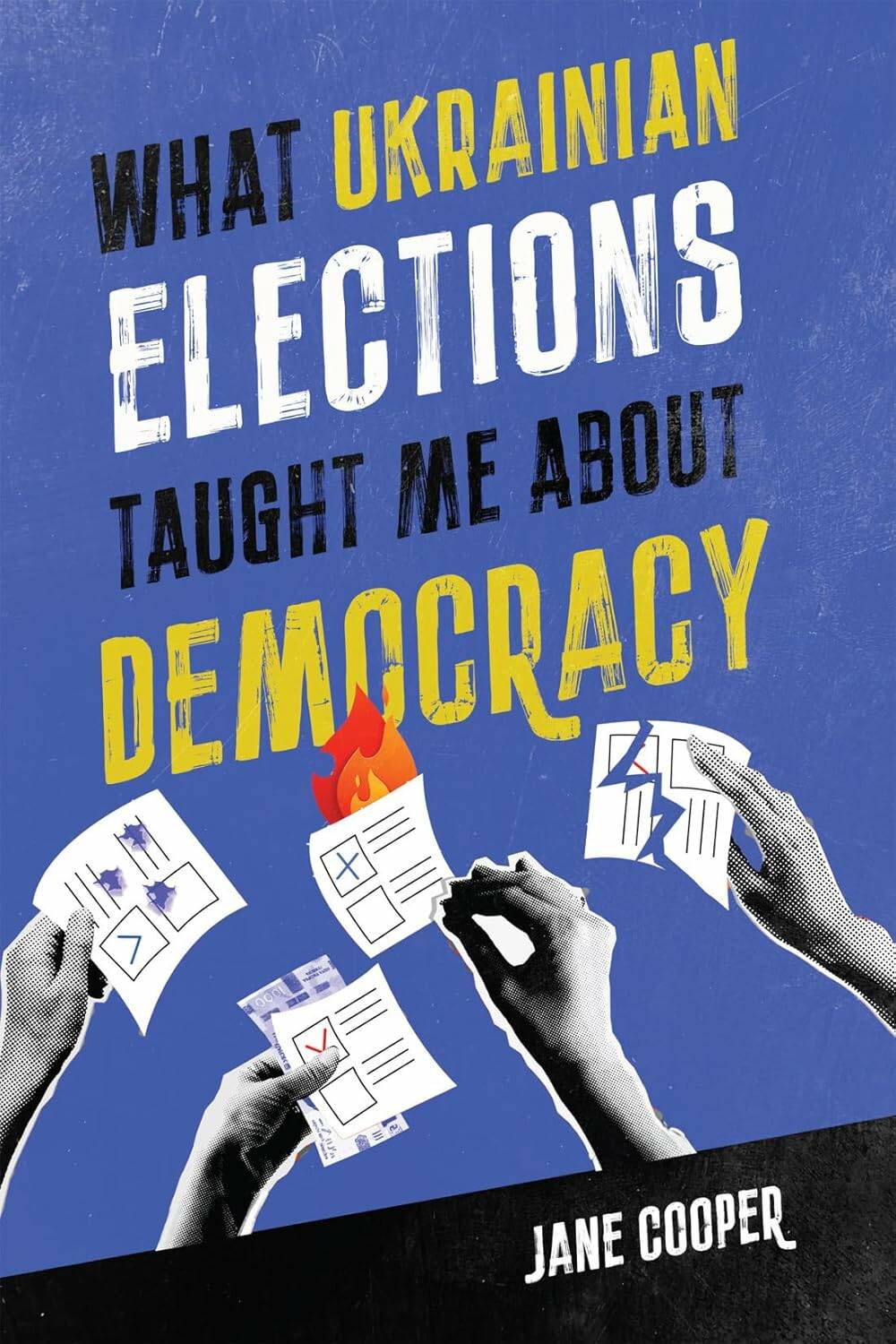
In What Ukrainian Elections Taught Me About Democracy, Cooper depicts how human weakness, pride and greed can sully a process that relies on trust, dissuading skeptical voters from using the very tool that helps determine how they are governed.

Her revelations are especially compelling given the current war in Ukraine and the looming U.S. presidential election, where at least one candidate is prone to casting doubts about the electoral process while openly admiring autocratic leaders.

Since its independence in 1991, Ukraine has fully embraced the opportunity to move from the previous Soviet-style, one-party rule, establishing a political landscape where multiple parties have often merged with others, showing that ideology matters less than having a candidate with a recognizable personality or a proven record of promoting strong ethnic and regional ties.

Cooper’s observations of municipal elections held in the central Ukrainian city of Kirovohrad, during her last electoral trip in 2015, make up most of the book and offer insight into why disenchanted Ukrainian voters in 2019 rejected the policies of past politicians, handing former actor and comic Volodymyr Zelenskyy an unexpected electoral victory over incumbent Ukrainian president and oligarch Petro Poroshenko.

Zelenskyy’s surprising success prompted Cooper to consult her notes from previous Ukrainian elections, which she now combines with an impressive array of bibliographic sources, offering readers valuable insight into the inherent fragility of a democracy — not only the one in Ukraine, but wherever competitive elections are held.
Ukrainian Presidential Press Office
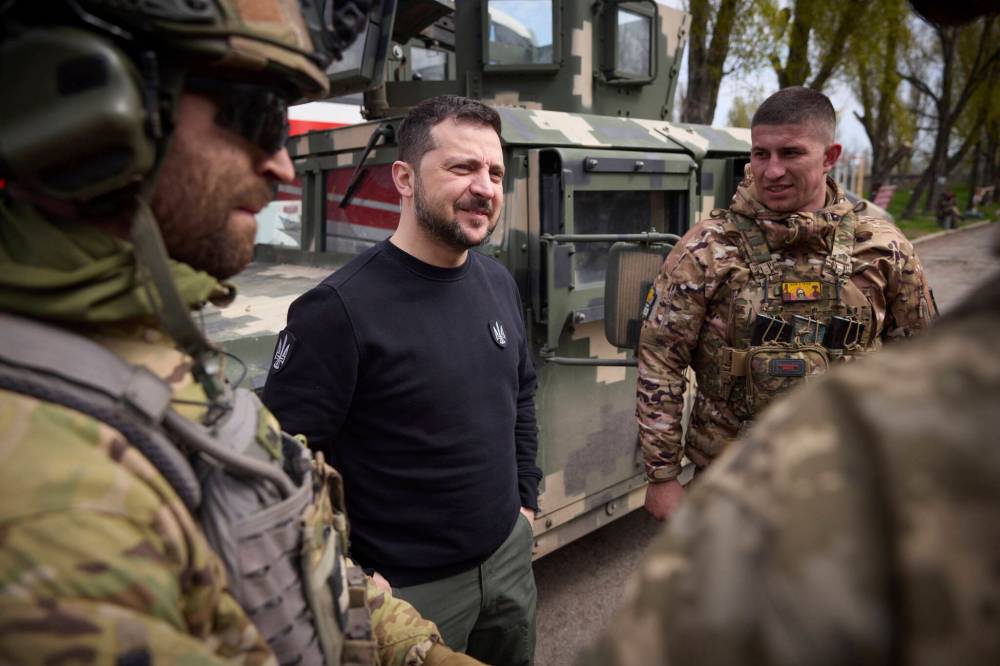
                                Former actor and comic Volodymyr Zelenskyy (centre) has been president of Ukraine since 2019.

Ukrainian Presidential Press Office

Former actor and comic Volodymyr Zelenskyy (centre) has been president of Ukraine since 2019.

Where past generations have had more than their share of political turmoil and deadly wars, over the course of four elections in Ukraine, Cooper writes, “I saw trust in democratic processes set back,” adding “it is a lesson we can all learn from.”

Cooper reveals how voter lists and vote counting, two basic hallmarks of democracy, can also be the most fertile ground for abuse, and if these don’t yield the expected victory, three blatant methods of affecting election results can be attempted which are often hard to prove: buying votes, stealing votes and invalidating votes.

Ukraine’s electoral record may be markedly better than what Cooper has observed in other countries, but the kind of lazy trust voters in Canada place on the democratic process appears to have been replaced in Ukraine by a lazy assumption that someone, somewhere, is manipulating the vote count.

Readers may rightfully wonder if the mayhem that followed the 2020 U.S. election, when an obvious majority vote was challenged, could have been instigated by astute observers of how election results in places such as Ukraine have been altered or, failing that, referred to courts where desired outcomes could be attained.

Since Russia’s invasion of Ukraine in February 2022, Ukrainians are rightfully being praised for the stalwart defence of their homeland and are now being touted as “the new defenders of democracy,” writes Cooper, while cautioning, “(f)or a country that Transparency International ranks 122 out of 180 countries in 2021 for public sector corruption, this might seem a bit ironic.”
What Ukrainian Elections Taught Me about Democracy

What Ukrainian Elections Taught Me about Democracy

Supporters of democracy everywhere can only hope Ukraine’s relatively brief experience with the democatic process will foster an even stronger commitment to free and fair elections when the wartime necessity of martial law ends — a goal as worthy as its robust defence of a sovereign state.

Joseph Hnatiuk is a retired teacher and former election worker.

Report Error Submit a Tip

More Stories

As camp fees increase, Sunshine Fund delivers another summer of adventures

Ken Wiebe 4 minute read Preview

As camp fees increase, Sunshine Fund delivers another summer of adventures

Ken Wiebe 4 minute read 2:01 AM CDT

Dana Moroz is on the other end of the line and the manager of the Sunshine Fund can hardly contain her enthusiasm.

With the summer winding down and school on the verge of being back in session, Moroz was asked about the 46th season of the program that sent children in need to 31 accredited camps across the province and northwestern Ontario.

Although the final numbers are still being calculated, it was a banner year for the program, which benefited from the Free Press Sunshine Fund campaign that ran throughout the past several months.

“We had over 700 kids that we supported to go to summer camp,” said Moroz, noting the cost of doing so eclipsed $300,000.

Read
2:01 AM CDT

Council candidates call out vandalism after campaign signs defaced in Waverley West

Scott Billeck 5 minute read Preview

Council candidates call out vandalism after campaign signs defaced in Waverley West

Scott Billeck 5 minute read Updated: 3:15 PM CDT

A council candidate in Waverley West said she will not be intimidated after 16 of her campaign signs were vandalized this week — some with apparent gang symbols.

Nafiya Naso is the second candidate in the ward whose signs were defaced this month. Jasmine Brar, who is also running for the council seat, had some of her signs broken on Friday along Kenaston Boulevard and signs near Naso’s that were also defaced on Saturday.

Earlier this month, Eaglewood Park in the nearby Prairie Pointe neighbourhood was also vandalized with graffiti that included homophobic slurs, anti-India messages and repeated references to “3LK” — a symbol Naso believes is associated with a gang.

Naso’s signs, located along Waverley Street near Tim Sale Drive and across from École South Pointe School in southwest Winnipeg, were spray-painted with apparent gang signs, crude drawings and other messages, including “loser” and “Ur not winning” written across her name and photograph.

Read
Updated: 3:15 PM CDT

Motion seeks to remove longtime head of Southern Chiefs’ Organization due to ‘behaviour’ concerns

Carol Sanders 4 minute read Preview

Motion seeks to remove longtime head of Southern Chiefs’ Organization due to ‘behaviour’ concerns

Carol Sanders 4 minute read Wednesday, Aug. 26, 2026

For the second time in a year, the leadership of Southern Chiefs’ Organization Grand Chief Jerry Daniels is being called into question.

A motion obtained by the Free Press calls “immediately” for a special summit of the 33 SCO chiefs to consider removing Daniels, who’s been at the helm since 2017.

The Aug. 17 motion, put forward by Lake Manitoba First Nation Chief Cornell McLean and Bloodvein First Nation Chief Lisa Young, cites concerns about “governance, leadership, accountability, transparency, organizational decision-making and confidence of member Nations in the current leadership of the organization.”

McLean would not provide specific examples Wednesday but said the “behaviour” of Daniels is a concern.

Read
Wednesday, Aug. 26, 2026

Security guard in stable condition after grocery store assault

Scott Billeck 2 minute read Preview

Security guard in stable condition after grocery store assault

Scott Billeck 2 minute read Updated: 12:35 PM CDT

A security guard was taken to hospital after an assault at a Sargent Avenue FreshCo Friday, just days after another guard was stabbed during a robbery at a St. James Dollarama.

Winnipeg police said officers were called to a store in the 600 block of Sargent Avenue shortly after 1 p.m. for a report of an assault.

An adult victim was taken to hospital in stable condition. Police did not provide details about what led to the assault or whether any arrests were made.

The incident comes three days after a 22-year-old security guard was stabbed during a robbery at a Dollarama in the Courts of St. James.

Read
Updated: 12:35 PM CDT

Former care home nurse fined $8,000 for ‘disturbing in the extreme’ 2025 incident

Morgan Modjeski 3 minute read Preview

Former care home nurse fined $8,000 for ‘disturbing in the extreme’ 2025 incident

Morgan Modjeski 3 minute read Thursday, Aug. 27, 2026

A former nurse has been fined $8,000 and is facing numerous restrictions after making a mistake “no registered nurse should have made” by inserting 10 centimetres of gauze into a patient’s anus instead of dressing a nearby wound.

Read
Thursday, Aug. 27, 2026

Beware invasive, ‘frightening’ waterhemp

Laura Rance-Unger 4 minute read Preview

Beware invasive, ‘frightening’ waterhemp

Laura Rance-Unger 4 minute read 2:01 AM CDT

There’s a threat lurking on the edge of Manitoba farmers’ fields this fall that’s even scarier than the escalating trade war with their biggest customer.

Provincial extension advisers are warning farmers to watch for a weed known as “tall waterhemp,” which, true to its name, may already be towering above ready-to-harvest crops.

Those wispy tentacles waving in the breeze look pretty innocuous from a distance. But this highly invasive member of the pigweed family produces hundreds of thousands of seeds that are just itching for dispersal through farmers’ combines and across their fields.

Each of those tiny seeds — one small pill container filled halfway holds 44,000 — can produce plants with stems the width of saplings and heights of two to five metres. One or two plants can quickly turn into a patch. If waterhemp takes over a field, it can choke out the growing crop and cut yields by more than 90 per cent.

Read
2:01 AM CDT